
The Seoul subway is one of the easiest and most affordable ways to explore the city.
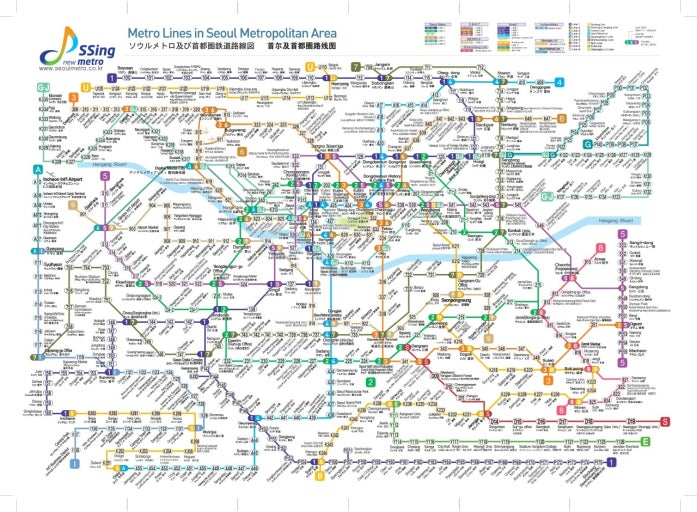
If you’ve just landed in Seoul and you’re staring at a subway map with 23 lines and hundreds of stations, take a breath.
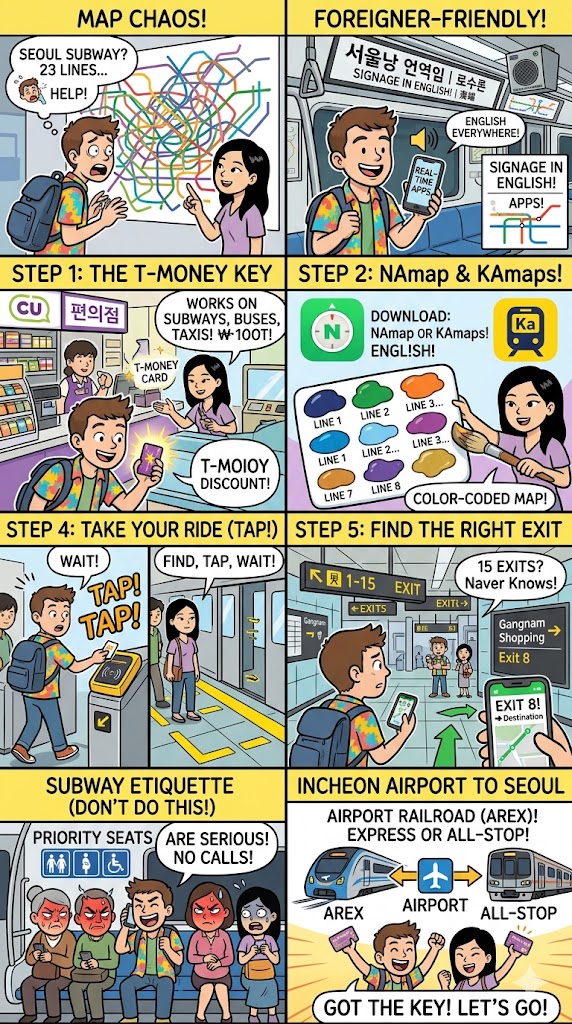
The Seoul subway looks intimidating. It isn’t. In fact, it’s one of the most foreigner-friendly transit systems in the world — with English signage everywhere, real-time apps, and trains that run like clockwork.
This guide covers everything you need to know to get around Seoul like a local from day one.
Why the Seoul Subway Is One of the Best in the World
Before the how-to, here’s why locals and expats love it.
The Seoul Metropolitan Subway covers over 300 stations across 23 lines, making it one of the largest subway networks on the planet. Trains run every 2–5 minutes during peak hours, and the system operates from around 5:30 AM to midnight daily.
Fares start at just ₩1,400 (about $1.05) for a basic trip — making it one of the most affordable urban transit systems anywhere. Air conditioning in summer, heated seats in winter, and free Wi-Fi throughout the network make it genuinely comfortable.
Simply put: if you’re visiting Seoul, the Seoul subway is almost always your best option.
Step 1 — Get a T-money Card
The T-money card is your key to the entire Seoul transit system. It’s a rechargeable prepaid card that works on subways, buses, and even taxis.
Why T-money instead of single-use tickets?
- ₩100 discount per ride vs. single-use tickets
- Works on buses, subways, and taxis seamlessly
- No need to buy a new ticket every time
- Refundable balance when you leave Korea
Where to buy one: Any convenience store — CU, GS25, 7-Eleven — near a subway station sells T-money cards. They cost ₩2,500–₩4,000 for the card itself.
How to recharge: At any convenience store counter or at the recharge machines inside subway stations. Add ₩10,000–₩20,000 to start — enough for 7–14 rides.
How to use it: Tap the yellow card reader when entering AND exiting the station. The exit tap is important — fares are calculated by distance, and failing to tap out can result in a penalty charge.
Step 2 — Download the Right App
Before you take your first ride, download one of these apps, you can find the Seoul subway system
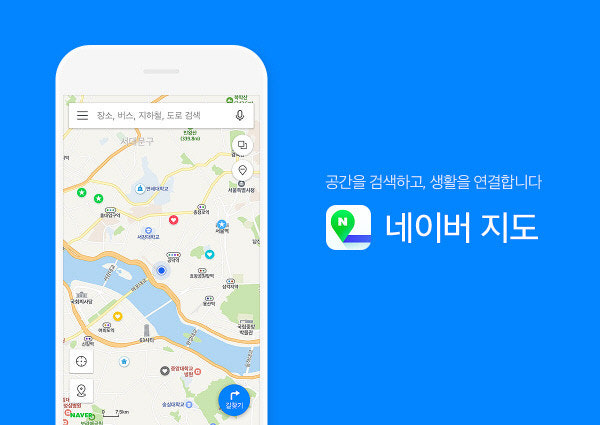
Naver Maps — The most accurate navigation app for Korea. Better than Google Maps for local transit, especially for bus connections. Available in English.
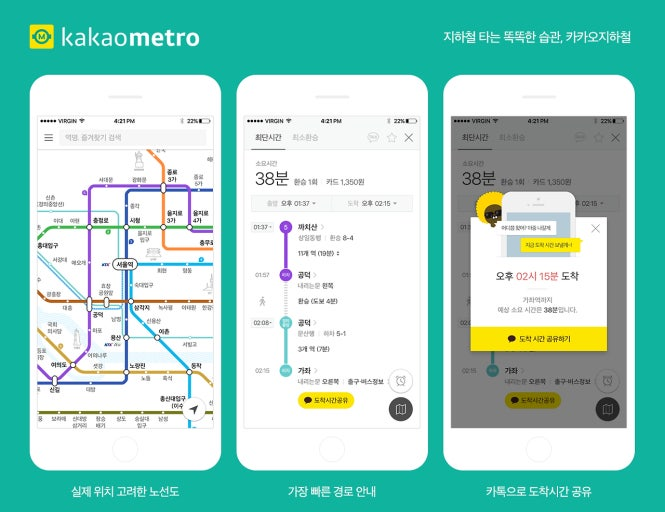
Kakao Metro — The best app specifically for subway navigation. Shows real-time train arrivals, platform numbers, and which subway car to board to be closest to the exit. Incredibly useful.
KakaoTalk — Not a transit app, but essential for life in Korea generally.

Set your language to English in Naver Maps or Kakao Metro and you’re ready to go.
For real-time subway information, visit the official Seoul Metro website.
Step 3 — Read the Subway Map
The Seoul subway map looks overwhelming but follows a simple logic.
Each line has a number and a color:
- Line 1 — Dark Blue
- Line 2 — Green (the most important line — circles central Seoul)
- Line 3 — Orange
- Line 4 — Light Blue
- Line 9 — Gold (express service, very fast)
- Airport Railroad (AREX) — Blue/Navy (direct to Incheon Airport)
Transfer stations are marked with circles showing multiple line colors. These are the key hubs — Hongik University, Sindorim, Seoul Station, and Express Bus Terminal are the most important ones to know.
English is everywhere. Every station name is displayed in Korean, English, and Chinese. Announcements on trains are made in all four languages. You will not get lost due to language barriers.
Step 4 — Take Your First Ride (Step by Step)
Here’s exactly what to do:
- Find the subway entrance — Look for the colored circle with a line number, or the letter M on signage
- Tap your T-money card on the yellow reader at the turnstile
- Check the platform signs — platforms are separated by direction (e.g., “Toward Gimpo Airport” vs “Toward Sindang”)
- Board the train — Stand behind the yellow line until the doors open. Let passengers exit first.
- Check the in-car display — Every train has screens showing upcoming stations in Korean and English
- Exit at your station — Follow signs for the exit number you need (exits are numbered, and signs tell you what’s near each exit)
- Tap out — Always tap your T-money card on the reader at the exit turnstile
Step 5 — Find the Right Exit
Seoul subway stations can have 10–15 exits, each leading to a different street or landmark. This trips up a lot of first-timers.
How to find the right exit:
- Use Naver Maps or Kakao Metro — they tell you exactly which exit number to use
- Look at the exit directory boards inside the station — they list nearby landmarks, streets, and buildings for each exit number
- When in doubt, exit and use your phone GPS to orient yourself
Pro tip: Search your destination on Naver Maps before boarding. It will tell you which line to take, where to transfer, how long it takes, and which exit to use. Takes 30 seconds and saves a lot of confusion.
Useful Subway Etiquette (Don’t Get Stared At)
Seoul’s subway has unwritten rules that locals follow religiously. Here’s what you need to know:
Priority seats are serious. The pink/blue seats at the ends of each car are reserved for elderly passengers, pregnant women, and people with disabilities. Do not sit in them even if the car is empty — locals will notice and it’s considered very rude.
No phone calls. Koreans almost never take calls on the subway. Text, yes. Talk on the phone, no. Keep your voice down generally.
Stand on the right on escalators. The left side is for walking. Standing on the left will earn you impatient stares.
Eating is frowned upon. Snacks are technically allowed but eating a full meal on the subway is considered bad manners.
Boarding queues exist. Yellow marks on the platform floor show where to line up. Use them.
Key Stations Every Visitor Should Know
| Station | Line | Why It Matters |
|---|---|---|
| Seoul Station | 1, 4, AREX | Central hub, KTX trains, Airport Express |
| Hongik University | 2, Airport | Hongdae nightlife, cafés, shopping |
| Gangnam | 2 | Upscale shopping, restaurants |
| Myeongdong | 4 | Shopping, street food, tourist center |
| Dongdaemun | 1, 2, 4, 5 | 24-hour shopping, fashion markets |
| Insadong/Anguk | 3 | Traditional culture, Gyeongbokgung Palace |
| Itaewon | 6 | International food, expat hub |
How to Get from Incheon Airport to Seoul by Subway
The AREX (Airport Railroad Express) connects Incheon Airport directly to central Seoul.
Two options:
- All-stop train — Stops at every station, takes ~60 minutes to Seoul Station, costs ₩4,150. Runs every 30 minutes.
- Express train — Non-stop to Seoul Station, takes 43 minutes, costs ₩11,000. Runs every 30–40 minutes.
Buy tickets at the AREX ticket machines in the arrivals hall, or use your T-money card on the all-stop train.
Final Tips for First-Timers
Charge your T-money card more than you think you need. Running out mid-journey is annoying.
Screenshot your route before you go underground. Data can be spotty in tunnels on some carriers.
The subway closes around midnight. Last trains vary by line — check the schedule if you’re out late. Taxis are affordable alternatives after midnight.
Luggage storage exists. Most major stations have coin lockers near the exits — great for storing bags while you explore.
Enjoying Seoul? Read next: Korean BBQ Complete Guide: How to Order, Cook & Eat Like a Local
If you’re new to Korea, also check out our guide on Korean convenience stores.

Korea Insider has lived in South Korea for 50 years and worked at international companies for over two decades — explaining Korean culture, food, and society to colleagues from the US, Europe, and Australia.
Internationally married with a Japanese spouse, Korea Insider brings both an insider’s depth and an outsider’s perspective to every topic on My Korea Tip.
Pingback: Cost of Living in Seoul 2026: What You Actually Need Per Month - My Korea Tip