
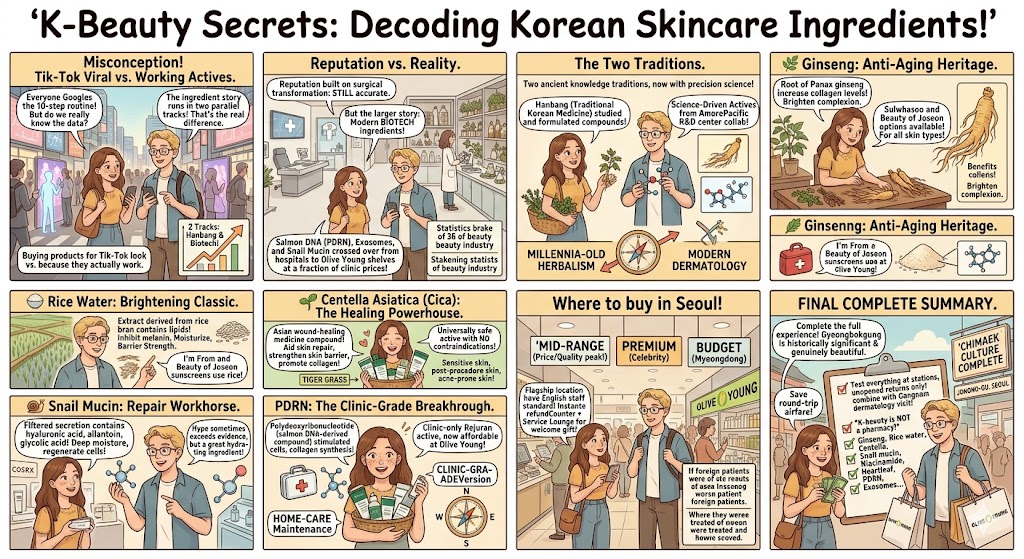
Korean skincare ingredients are what separate K-beauty from every other skincare tradition in the world — and understanding them is the difference between buying products because they look good on TikTok and buying them because they will actually work on your skin.
The K-beauty ingredient story runs in two parallel tracks. The first is hanbang (한방) — Korea’s millennia-old tradition of medicinal herbalism, which gave the world ginseng serums, mugwort masks, and fermented rice water, all of which have been studied and formulated with increasing scientific precision. The second is modern biotech: ingredients like PDRN, exosomes, and snail mucin that emerged from Korean dermatology clinics and pharmaceutical research before arriving on Olive Young shelves at a fraction of clinic prices. Korea is estimated to be 10–12 years ahead of Western markets in terms of beauty innovation and ingredients — and those two tracks explain why. Tira
This guide covers every major Korean skincare ingredient you will encounter — what it does, who it’s for, and which products to look for at Olive Young when you’re standing in front of 300 options with no idea where to start.
For how these ingredients translate into a clinic treatment context, read our Korea Plastic Surgery & Skin Clinics Guide. For where to buy these products in Seoul, read our Olive Young Seoul Guide.
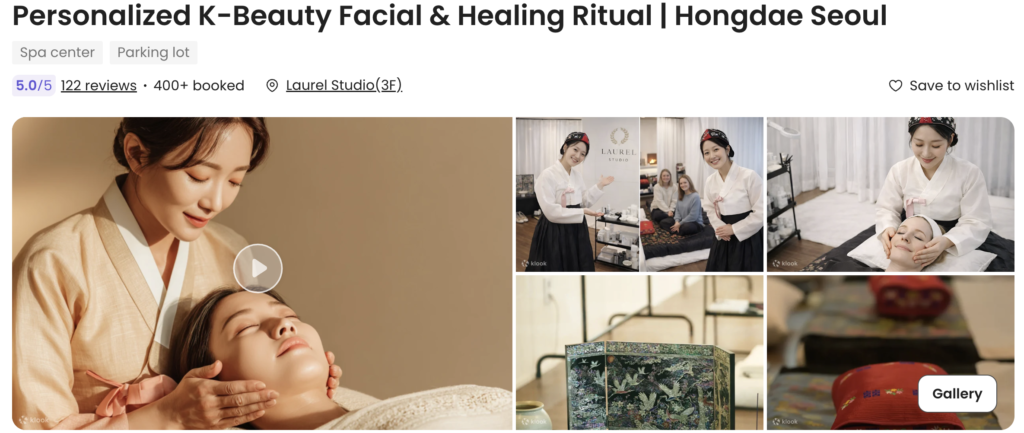
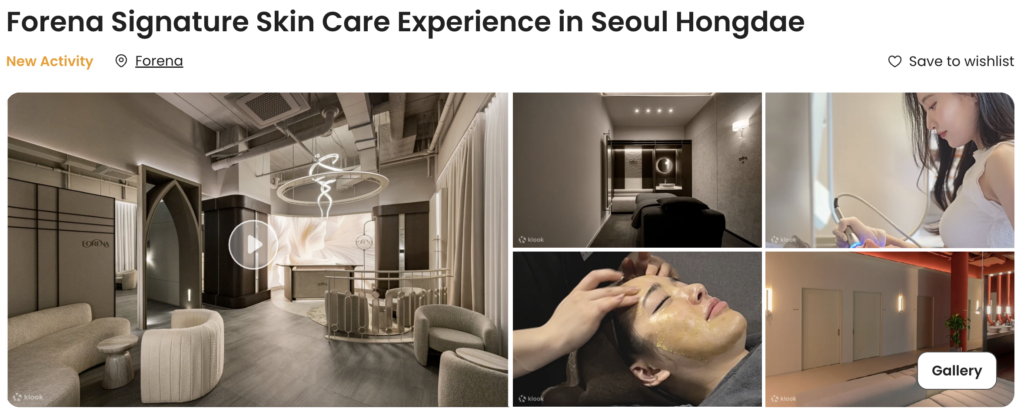
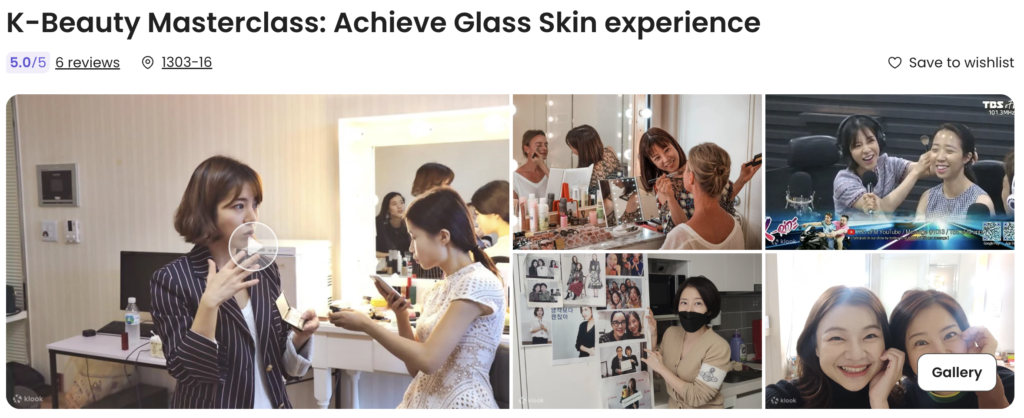
Want to experience Korean skincare ingredients firsthand, guided by a professional who explains what each product actually does for your skin type? How about below experience on Klook.
Korean Skincare Ingredients: The Two Traditions
한방 (Hanbang) — Traditional Korean Medicine Ingredients
Hanbang is Korea’s traditional system of herbal medicine, practiced for over 2,000 years. The skincare applications of hanbang ingredients are not folk remedies repurposed for packaging appeal — they are studied compounds that Korean cosmetic scientists have spent decades extracting, stabilizing, and formulating. The result is a category of ingredients that simultaneously draw on ancient knowledge and modern delivery technology.
바이오텍 (Biotech) — Science-Driven Korean Actives
Korea’s pharmaceutical and dermatology industries developed ingredients — PDRN, snail mucin, adenosine, fermented actives — that were initially used in hospital wound-healing and clinical skin repair contexts before being reformulated for consumer skincare. AmorePacific, South Korea’s largest beauty conglomerate, maintains R&D centers in Seoul and globally, with ongoing collaborations with researchers from institutions including Singapore’s A*STAR and Johns Hopkins University Department of Dermatology. The science behind Korean skincare ingredients is not marketing language. Refinery29
Korean Skincare Ingredients: The Complete Breakdown
🌿 인삼 (Ginseng) — The Anti-Aging Heritage Ingredient
What it is: The root of Panax ginseng, grown primarily on the Korean Peninsula, where soil conditions produce the highest concentration of active compounds globally.
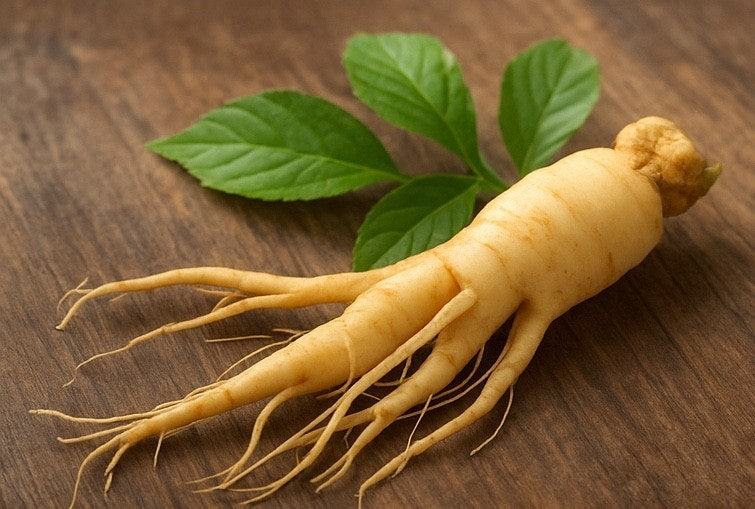
What it does: The active compounds in ginseng — ginsenosides — increase collagen levels, lighten hyperpigmentation, and resist the skin’s natural aging processes. Ginseng also improves blood circulation, leading to a healthier, more radiant complexion. Who it’s for: All skin types, particularly mature skin or anyone focused on anti-aging and brightening. Dr Rachel Ho
What to look for: Sulwhasoo First Care Activating Serum (luxury tier), Beauty of Joseon Ginseng Essence Water (accessible tier). On the Olive Young label: look for Panax ginseng root extract.
🍚 쌀뜨물 (Rice Water / Rice Bran) — The Brightening Classic
What it is: Extract derived from rice bran — the outer hull of rice — which has been used in Korean and Japanese beauty rituals for centuries.
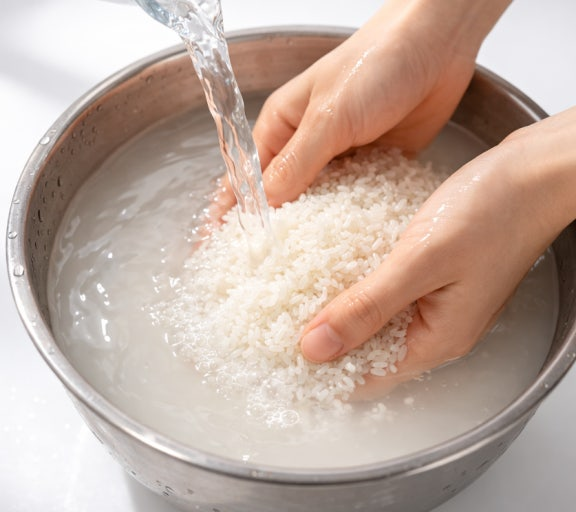
What it does: Rice bran contains essential lipids including phytosterols and fatty acids that offer moisturizing and barrier-strengthening benefits. In-vitro studies have found rice bran extracts can inhibit melanin production, contributing to its brightening reputation.
Who it’s for: All skin types. Particularly effective for dullness, uneven tone, and dry skin. Dr Rachel Ho
What to look for: Beauty of Joseon Relief Sun: Rice + Probiotics (the most globally sold Korean sunscreen), I’m From Rice Toner, Haruharu WONDER Black Rice Hyaluronic Toner. On the label: Oryza sativa extract.
🌱 센텔라 아시아티카 / 시카 (Centella Asiatica / Cica) — The Healing Powerhouse
What it is: A plant-based compound — also called tiger grass or Cica — used in Asian wound-healing medicine for centuries before Korean skincare brands reformulated it for mass market products.
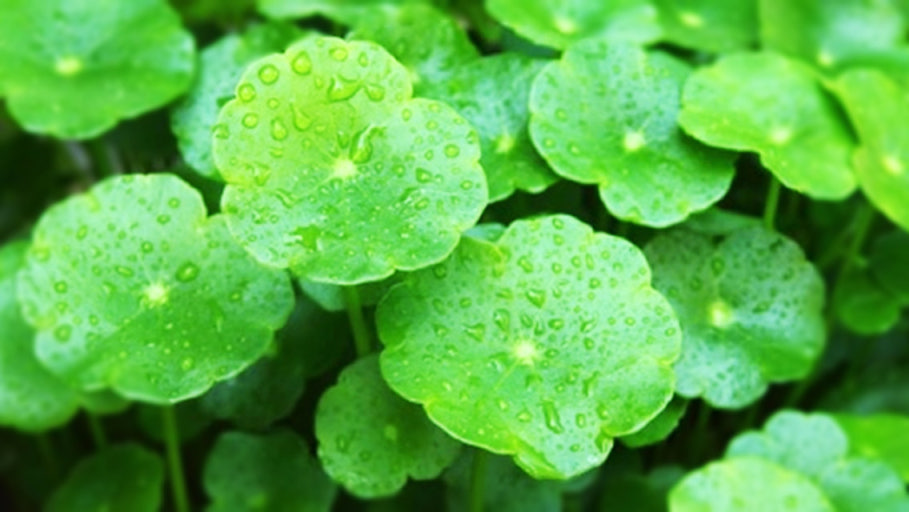
What it does: Centella asiatica promotes collagen production, aids skin repair, reduces the appearance of scars and fine lines, and strengthens the skin barrier. Its soothing and calming effects make it ideal for sensitive and acne-prone skin.
- Who it’s for:* Sensitive skin, post-procedure skin, acne-prone skin, anyone dealing with redness or irritation. The most universally safe K-beauty active — almost no contraindications. DODOSKIN
What to look for: Dr. Jart+ Cicapair line, COSRX Centella Blemish Cream, Purito Centella Unscented Serum. On the label: Centella asiatica extract or Cica.
쑥 (Mugwort) — The Calming Herb
What it is: Artemisia (mugwort) — a bitter, strongly scented herb used in Korean traditional medicine and cuisine (it’s the herb in ssukgat), now one of the fastest-growing K-beauty ingredients globally.
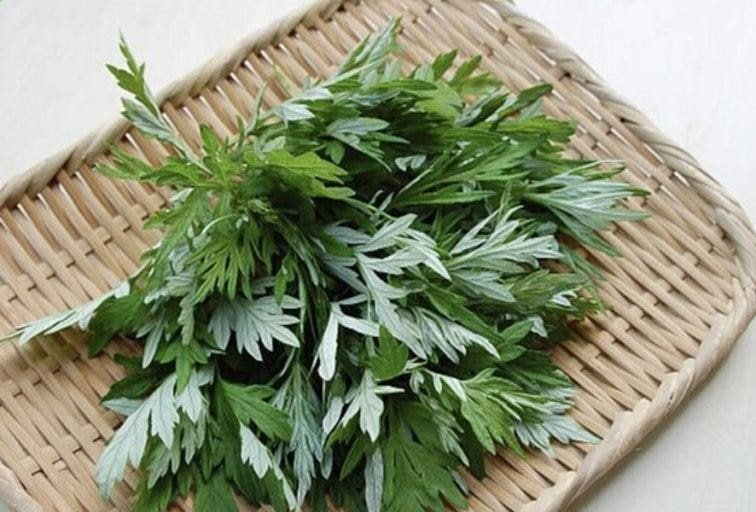
What it does: Mugwort is known for its anti-inflammatory and antioxidant properties that work across all skin types. It hydrates, soothes, and nourishes dry and irritated skin, improves the skin’s barrier function, reduces inflammation, and stimulates collagen production.
- Who it’s for:* Sensitive, redness-prone, or acne-prone skin. Also effective for seasonal skin stress — particularly relevant for Seoul’s fine dust season (spring). Mykoreatip
What to look for: I’m From Mugwort Mask, One Thing Artemisia Capillaris Extract Toner. On the label: Artemisia vulgaris or Artemisia princeps.
🐌 달팽이 점액 (Snail Mucin) — The Repair Workhorse
What it is: Filtered secretion from Helix aspersa snails — the ingredient that first brought K-beauty to Western attention via viral social media reviews.
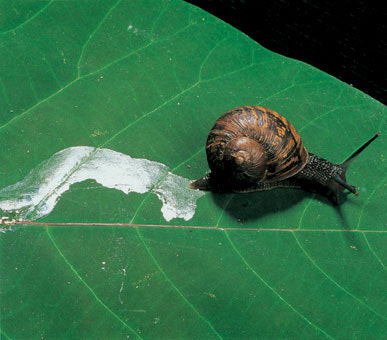
What it does: Snail mucin’s high concentration of hyaluronic acid, allantoin, and glycolic acid provides deep moisture, promotes cell regeneration, and reduces fine lines. It hydrates, repairs the skin barrier, and has healing properties derived from its original biological role in protecting the snail’s body.
**What the experts say:** Dermatologists note that snail mucin is a good hydrating ingredient, but its anti-ageing effects are not as robustly proven as more established actives like retinol or niacinamide. The hype sometimes exceeds the evidence — though as a hydrating, barrier-supporting ingredient, it genuinely works. DODOSKIN
**Who it’s for:** Dry, dehydrated, or compromised skin. A forgiving ingredient — hard to overuse. Marie Claire UK
What to look for: COSRX Advanced Snail 96 Mucin Power Essence (the category-defining product). On the label: Snail secretion filtrate.
나이아신아마이드 (Niacinamide) — The Multi-Tasker
What it is: A form of Vitamin B3, now one of the most studied and validated actives in dermatology globally — and a staple of Korean formulation for decades before it became a Western trend.
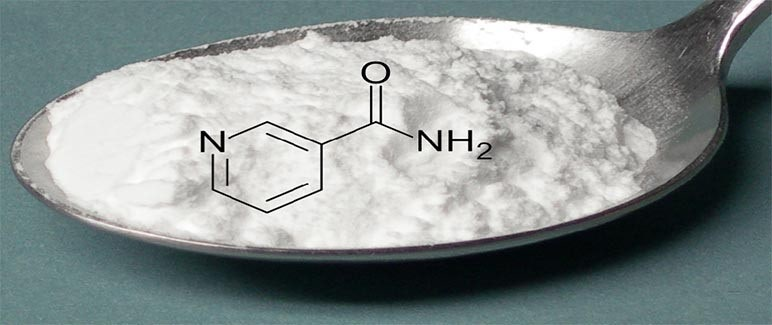
What it does: Niacinamide brightens the complexion by reducing dark spots and evening skin tone, strengthens the skin barrier to improve moisture retention, has anti-inflammatory properties ideal for sensitive and acne-prone skin, and minimizes the appearance of pores.
**Who it’s for:** Everyone. The most universally recommended Korean skincare active by Korean dermatologists. Start at 5% concentration; sensitive skin should begin at 2%. DODOSKIN
What to look for: SOME BY MI Niacinamide 30 Days Miracle Toner, COSRX The Niacinamide 15 Serum. On the label: Niacinamide (same in all languages).
어성초 (Heartleaf / Houttuynia Cordata) — The 2024–2026 Breakout
What it is: A herb called eoseongcho in Korean — known in English as heartleaf or fish mint, native to East Asia, used in traditional medicine for respiratory and anti-inflammatory applications before entering skincare.
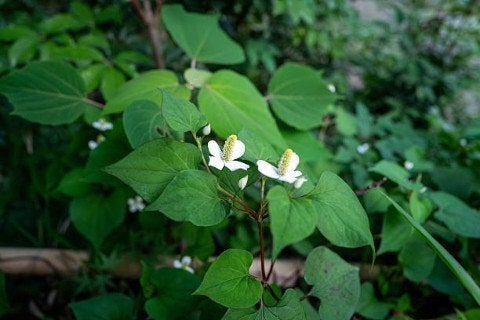
What it does: Heartleaf extract contains flavonoids, polyphenols, and other bioactive compounds that provide anti-inflammatory and antibacterial benefits, making it effective for acne-prone and sensitive skin. It was among the most popular K-beauty ingredient releases in 2023–2024.
**Who it’s for:** Oily, acne-prone, or congested skin. Functions similarly to centella asiatica but with stronger antibacterial properties. Dr Rachel Ho
What to look for: Anua Heartleaf 77% Soothing Toner (the product that made this ingredient globally famous), Abib Heartleaf Toner Pad. On the label: Houttuynia cordata extract.
프로폴리스 (Propolis) — The Antibacterial Antioxidant
What it is: A resinous substance produced by bees — used by honeybees to seal and protect the hive — with a long history in Korean traditional medicine and a growing presence in K-beauty.
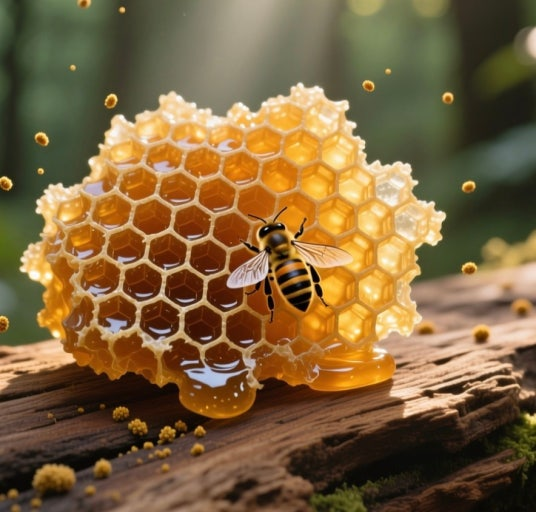
What it does: Propolis is valued in Korean skincare for its antibacterial, anti-inflammatory, and antioxidant properties. It helps prevent and treat acne, soothes irritated skin, promotes skin healing and regeneration, and retains moisture.
**Who it’s for:** Acne-prone or stressed skin. Also beneficial as a general antioxidant for pollution-exposed urban skin. DODOSKIN
What to look for: COSRX Full Fit Propolis Light Ampoule, Benton Propolis High Content Essence. On the label: Propolis extract.
PDRN / 폴리데옥시리보뉴클레오티드 — The Clinic-Grade Breakthrough
What it is: Polydeoxyribonucleotide — a salmon-DNA-derived compound originally developed for wound healing in Korean medical settings before being reformulated for consumer skincare. The active ingredient in Rejuran, the injectable skin booster that drives significant medical tourism to Seoul.

What it does: PDRN stimulates cell regeneration, promotes collagen synthesis, and repairs damaged skin at a cellular level. It was clinic-only for years — the consumer products now available at Olive Young deliver a lower concentration of the same compound at a fraction of the clinic price.
Who it’s for: Mature skin, skin recovering from sun damage or acne scarring, or anyone seeking the “clinic glow” without the appointment. Increasingly recommended by Korean dermatologists as a daily maintenance product between professional treatments.
What to look for: Medicube PDRN Pink Peptide Serum, VT Reedle Shot 100/300. On the label: Polydeoxyribonucleotide or PDRN.
For the clinic-grade version of PDRN — the injectable Rejuran treatment — read our Korea Plastic Surgery & Skin Clinics Guide.
엑소좀 (Exosomes) — The Frontier Ingredient
What it is: Nano-sized extracellular vesicles derived from stem cells, carrying growth factors and signaling proteins. One of the newest and most discussed ingredients in Korean dermatology, now crossing into consumer skincare.
What it does: Exosomes deliver growth factors directly to skin cells, promoting regeneration, calming inflammation, and accelerating repair. Currently used in clinical settings post-laser and post-needling; consumer versions apply the same biology at lower concentrations.
Who it’s for: Post-procedure skin, mature skin, or anyone seeking the cutting edge of Korean ingredient innovation. Not yet fully validated by large-scale clinical trials — but the mechanism is scientifically sound and the early results are compelling.
What to look for: Biodance Bio-Collagen Real Deep Mask (exosome-containing), MEDI-PEEL Bor-Tox Peptide Cream. On the label: Exosome or EGF (Epidermal Growth Factor).
Korean Skincare Ingredients: Quick Reference by Skin Concern
| Skin Concern | Key Ingredients | What to Look For |
|---|---|---|
| Hydration / Dryness | Hyaluronic acid, Snail mucin, Rice water | COSRX Snail Mucin, I’m From Rice Toner |
| Brightening / Pigmentation | Niacinamide, Ginseng, Rice bran | Beauty of Joseon Ginseng Essence |
| Acne / Oily skin | Heartleaf, Centella, Propolis, Niacinamide | Anua Heartleaf 77%, COSRX Propolis Ampoule |
| Sensitive / Redness | Centella (Cica), Mugwort, Heartleaf | Dr. Jart+ Cicapair, I’m From Mugwort Mask |
| Anti-aging / Repair | PDRN, Ginseng, Adenosine, Exosomes | Medicube PDRN Serum, VT Reedle Shot |
| Barrier repair | Ceramides, Centella, Snail mucin | COSRX Centella Cream, Purito Serum |
Korean Skincare Ingredients: What to Know Before You Buy
Layer from thinnest to thickest. Korean skincare works on a layering system — water-based toners first, then essences, then serums, then creams. The order matters because thicker products block thinner ones from penetrating.
Patch test actives. PDRN, niacinamide at high concentrations, and exfoliant acids can cause reactions on first use. Apply to the inner arm for 24 hours before full facial application — standard Korean dermatologist advice.
Consistency over quantity. The biggest K-beauty misconception is the 10-step routine. In Korea, the actual practice prioritizes gentle, consistent application of fewer targeted ingredients — the “deep treatments” are reserved for dermatologists. Three well-chosen products used consistently outperform ten products used inconsistently. Mykoreatip
Read the percentage on niacinamide. 5% is the standard effective dose. Above 10% can cause irritation, especially on sensitive skin. Korean brands typically formulate at 5–8% — check the label before purchasing.
Sunscreen is non-negotiable. Every Korean dermatologist’s first recommendation is SPF 50 daily, regardless of other concerns. The most effective anti-aging, anti-pigmentation, and anti-damage ingredient in the entire guide is sunscreen — used before anything else. Read our Olive Young Seoul Guide for which Korean sunscreens to buy.
Korean Skincare Ingredients: FAQ
Which Korean skincare ingredient should a complete beginner start with? Niacinamide, centella asiatica, and a Korean SPF 50 sunscreen. These three cover brightening, barrier support, and UV protection — the foundation of the Korean skincare philosophy — with almost no risk of adverse reactions for any skin type.
Is snail mucin really worth the hype? As a hydrating, barrier-supporting ingredient, yes. However, its anti-aging effects are not as robustly proven as more established actives. Dermatologists note that hyaluronic acid and ceramides provide similar hydration results for most skin types. Worth using — just not a miracle ingredient. Marie Claire UK
What’s the difference between Korean ingredients and Western skincare actives? Korean formulations tend to use lower concentrations of multiple actives in lightweight, layerable textures rather than high concentrations of single actives in heavy creams. The philosophy is cumulative gentle impact rather than acute correction — which produces fewer irritation reactions and better long-term results.
Are PDRN and exosome products worth buying at Olive Young? The consumer versions deliver lower concentrations than clinic treatments but use the same active compounds. For anyone who cannot access a Seoul dermatology clinic, the Olive Young versions are a legitimate and significantly cheaper alternative. For anyone who can, combining the clinic treatment with the consumer product for maintenance between sessions is the approach most Korean dermatologists recommend.
Which ingredients should not be combined? Vitamin C and niacinamide at high concentrations can occasionally cause flushing — use at different times of day (Vitamin C in the AM, niacinamide in the PM). Exfoliating acids (AHAs, BHAs) should not be combined with PDRN or active treatments in the same routine — too much cellular stimulation at once. When in doubt: introduce one ingredient at a time, one week apart.

Korea Insider has lived in South Korea for 50 years and worked at international companies for over two decades — explaining Korean culture, food, and society to colleagues from the US, Europe, and Australia.
Internationally married with a Japanese spouse, Korea Insider brings both an insider’s depth and an outsider’s perspective to every topic on My Korea Tip.