
The best things to do in Busan are not what the travel brochures emphasise. Gamcheon Culture Village — the pastel hillside neighbourhood that appears in every Busan photograph — is genuinely worth visiting, but it takes two hours and represents approximately five percent of what makes Busan worth the trip from Seoul.
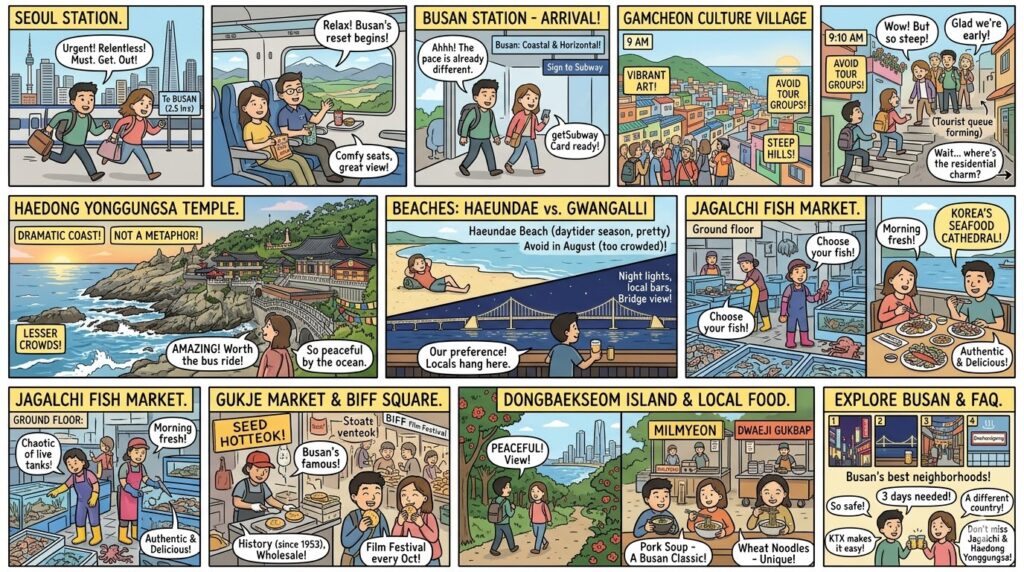
I was born in Seoul in 1975 and have spent significant time in Busan across my life — for work, for food, and for the specific quality of reset that Korea’s second city provides. Busan and Seoul are the same country and feel entirely different. Seoul is vertical, urgent, and relentless. Busan is horizontal, coastal, and operates at a pace that makes you realise how much Seoul asks of its residents. Both cities are worth understanding. Busan is where you go when Seoul has given you everything it has.
Before You Arrive: Getting to Busan
The KTX high-speed train from Seoul Station to Busan Station takes approximately 2 hours 30 minutes and is the recommended transport for almost everyone. Multiple departures run daily, the seats are comfortable, and the window views of the Korean countryside — particularly through the mountain sections — are part of the journey. My how to get from Seoul to Busan guide covers every transport option in detail, including the cost comparison between KTX, bus, and budget airlines.
Once in Busan, the subway system covers the major districts efficiently. A local T-Money card top-up handles all transport within the city.
Gamcheon Culture Village — The Famous One, Done Right
District: Saha-gu Time needed: 2–3 hours
Yes, visit Gamcheon. The hillside neighbourhood of brightly coloured houses that tumble down toward the sea is genuinely photogenic, the art installations scattered through the alleyways are worth finding, and the views from the upper levels over the city and the port justify the climb.
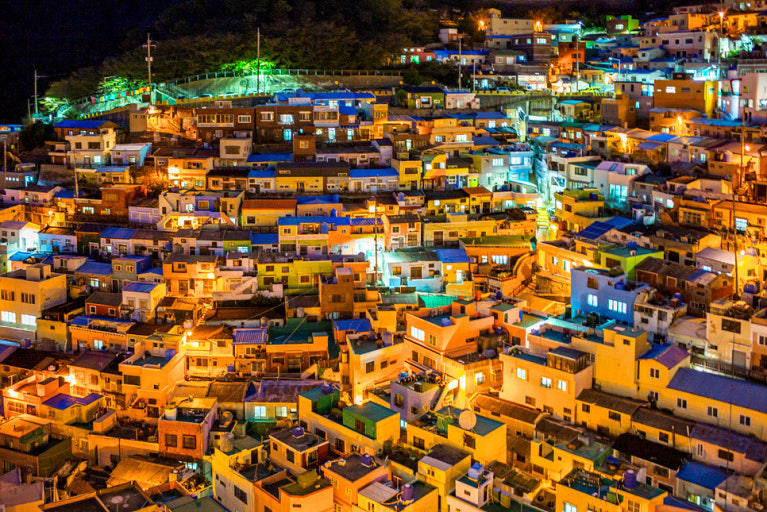
The caveats: come before 10 AM on weekends to get ahead of the group tours that transform the narrow alleyways into queues. The neighbourhood is steep — comfortable shoes are not optional. And the commercial layer that has developed around the tourism (the cafés, the souvenir shops, the photo spots marked with arrows) is heavier than it used to be. Find the residential streets behind the main tourist circuit and the original character of the place is still there.
Haedong Yonggungsa Temple — The Most Dramatic Site in Busan
District: Gijang-gun Time needed: 1–2 hours
A Buddhist temple built directly on coastal rocks at the sea’s edge, with waves breaking below the prayer halls and the East Sea stretching to the horizon. This is not a metaphor for dramatic — the temple buildings literally sit on the cliff face, connected by stone stairs carved into the rock.
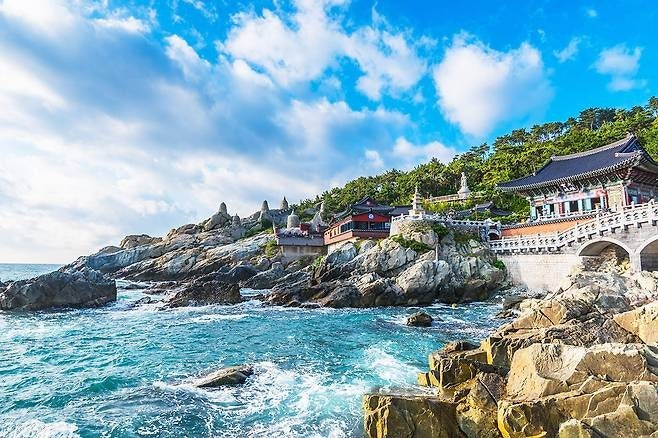
Most visitors to Busan skip Haedong Yonggungsa because it’s on the northeastern edge of the city, about 30 minutes by local bus from Haeundae. That’s the reason to go. The combination of active Buddhist worship, extraordinary coastal architecture, and dramatically lower crowds than any comparable site in Seoul makes this the single experience I’d recommend most strongly to first-time Busan visitors.
Visit in the morning when the light is best and before the afternoon tour groups arrive.
Haeundae & Gwangalli Beaches — Understanding the Difference
Busan has two major beach areas and they attract different visitors for different reasons.
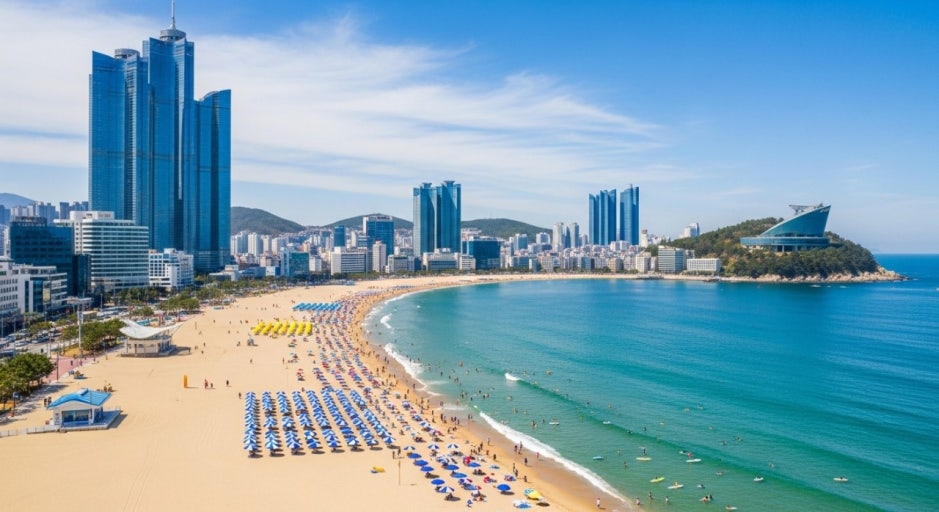
Haeundae Beach is Korea’s most famous beach — long, wide, and in August, so crowded that the sand is barely visible. The resort hotels, the seafood restaurants along the main strip, and the APEC Naru Park make it the more developed and internationally familiar option. Worth visiting in shoulder season (May–June, September–October) when it’s beautiful; worth avoiding in peak summer unless crowds are your preference.
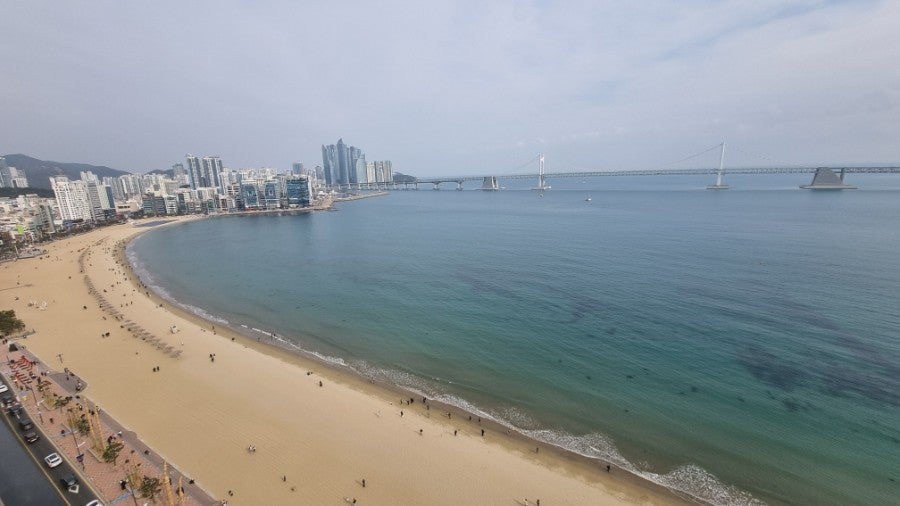
Gwangalli Beach is smaller, less famous, and more interesting. The Gwangan Bridge lights up the sky at night in a way that Haeundae doesn’t have, the bars and restaurants along the waterfront are where Busan locals actually go rather than where they send tourists, and the atmosphere at 10 PM on a Friday — outdoor tables, cold beer, bridge reflections on the water — captures something specific about Busan that Haeundae doesn’t. My preference, and the recommendation I give to anyone who asks.
Jagalchi Fish Market — Korea’s Seafood Cathedral
District: Jung-gu Time needed: 1–2 hours + meal
Jagalchi is Korea’s largest seafood market and one of the most visually overwhelming food environments in Asia. The ground floor is a wholesale operation — tanks of live fish, crabs, octopus, and shellfish, vendors in rubber boots, the specific smell of very fresh seafood mixed with salt water. The upper floors have restaurants where you choose your seafood from the market below and have it prepared immediately.
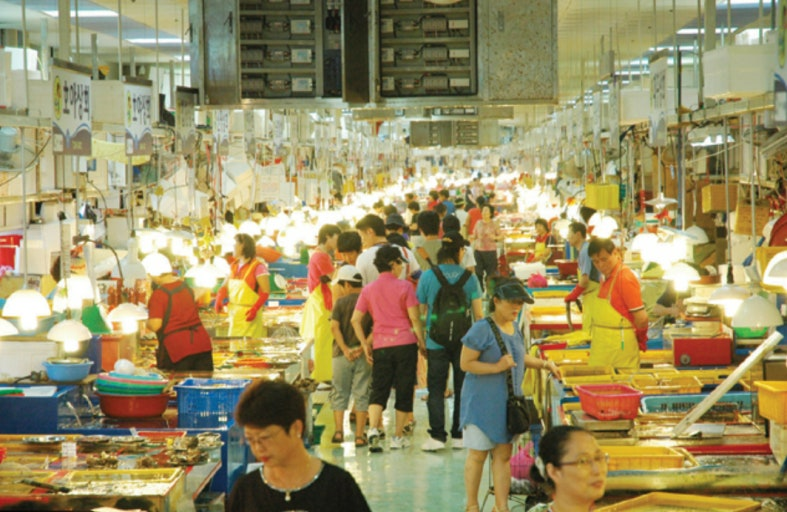
The process: walk the tanks on the ground floor, choose what you want (point and the vendor will weigh it), negotiate the price (expected), and take it to a restaurant upstairs for preparation (a small additional fee for the cooking service). The combination of sashimi, grilled fish, and whatever is in season constitutes the most authentic seafood meal available in Korea.
Come hungry, come with time, and come in the morning when the selection is widest and the fish is freshest.
Gukje Market & BIFF Square — History and Street Food
District: Jung-gu Time needed: 1–2 hours
Gukje (국제) Market began as a market for refugees and displaced persons during the Korean War, when Busan was the last major city not to fall during the conflict. It has been feeding the city continuously since 1953 and feels it — the stalls are permanent, the vendors are generational, and the prices are wholesale.
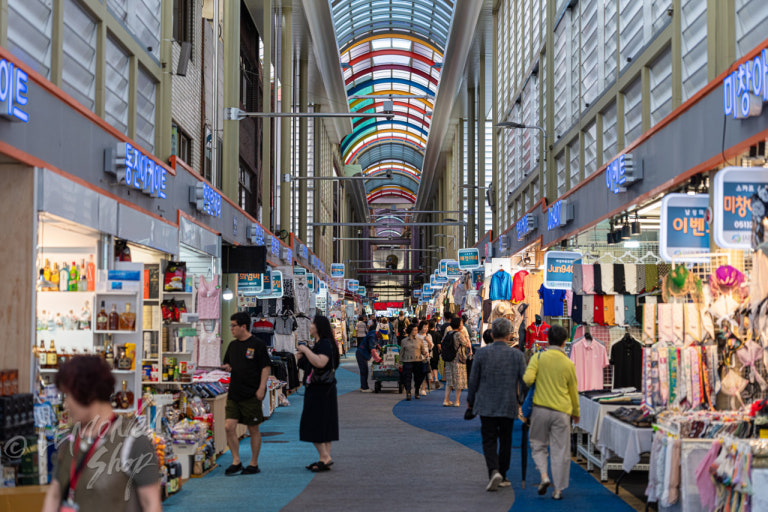
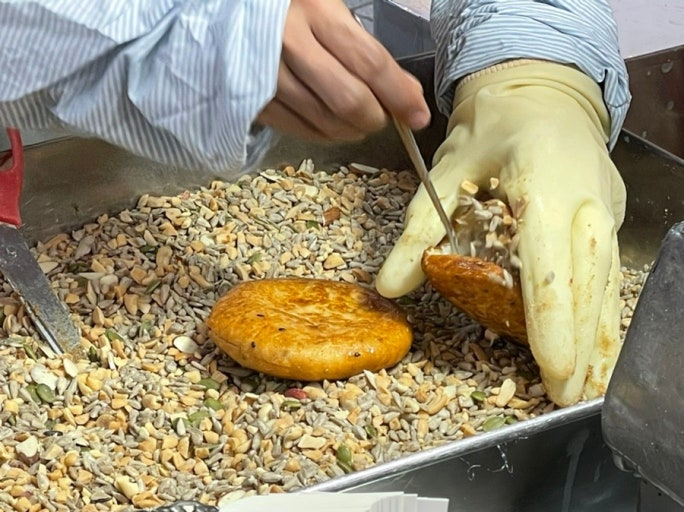
Adjacent BIFF (Busan International Film Festival) Square — the main pedestrian strip through the area — becomes the centre of Korea’s most important film festival every October. Year-round, it hosts street food vendors selling Busan’s specific version of hotteok (씨앗호떡, seed hotteok — stuffed with a mixture of sugar, honey, and various seeds) that is materially different from the Seoul version and worth trying specifically.
Dongbaekseom Island & APEC Naru Park
District: Haeundae-gu Time needed: 1–2 hours
A small forested peninsula connected to the Haeundae beachfront by a narrow causeway, Dongbaekseom offers 30-minute walking circuits through camellia forest with views back toward the Haeundae skyline and the East Sea. Free to enter, consistently uncrowded compared to the beach itself, and one of the more peaceful hours available in Busan.
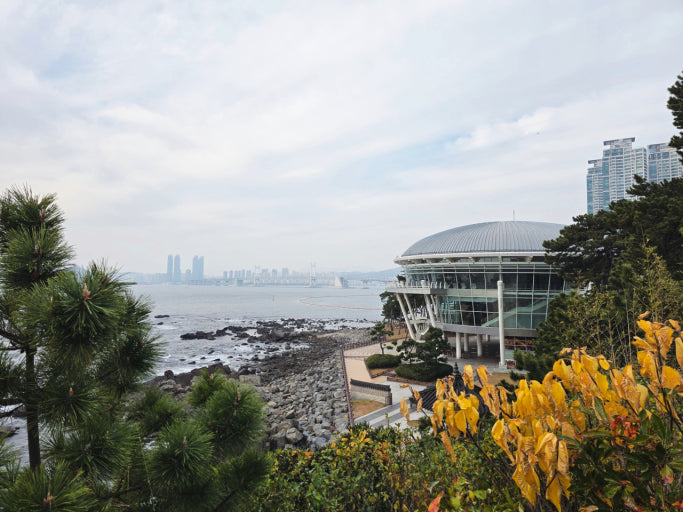
The APEC Naru Park adjacent to the peninsula was built for the 2005 APEC Summit and has remained one of Busan’s better-maintained green spaces — worth combining with a Dongbaekseom walk for a coastal morning.
Busan’s Best Neighbourhoods to Explore
Seomyeon — Busan’s commercial heart, with department stores, underground shopping, and the restaurant and bar density that makes it the city’s best evening neighbourhood. The subway intersection of Lines 1 and 2 makes it the most convenient base for a Busan stay.
Nampo-dong — The historic commercial district adjacent to Gukje Market, with independent shops, street food, and the street film culture of BIFF Square. Best on foot, best in the afternoon.
Millak Waterfront — A stretch of restaurants and bars along the coast near Gwangalli, less developed than the main Gwangalli strip, with excellent raw fish restaurants and a more local atmosphere. The view of Gwangan Bridge from the outdoor tables at sunset is one of Busan’s best.
Oncheonjeong — A neighbourhood built around Busan’s traditional hot spring bathing culture, with jjimjilbang facilities that use actual geothermal water rather than heated tap water. Worth a visit for the bathhouse culture specifically.
Busan Food: What to Eat and Where
Busan has a specific food identity distinct from Seoul, built around seafood, spicy broth dishes, and the Gyeongsang regional cuisine that most international visitors never encounter.
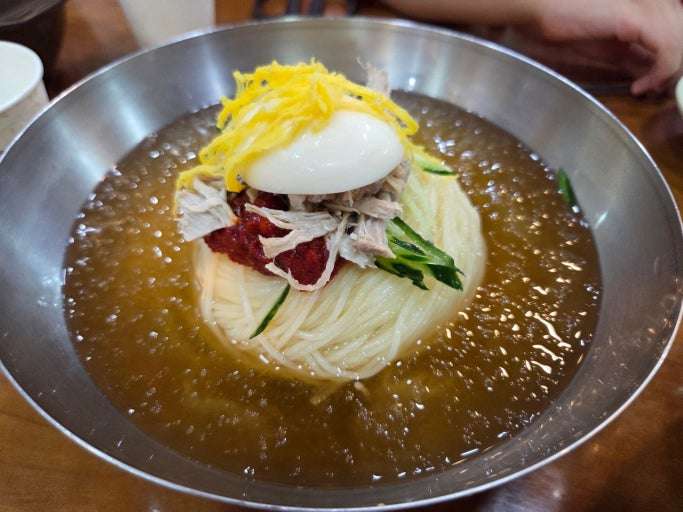
Milmyeon (밀면) — Busan’s version of cold noodles, made from wheat rather than the buckwheat used in Pyongyang naengmyeon. Lighter, slightly chewier, and specific to Busan in a way that makes it worth ordering whenever you see it.
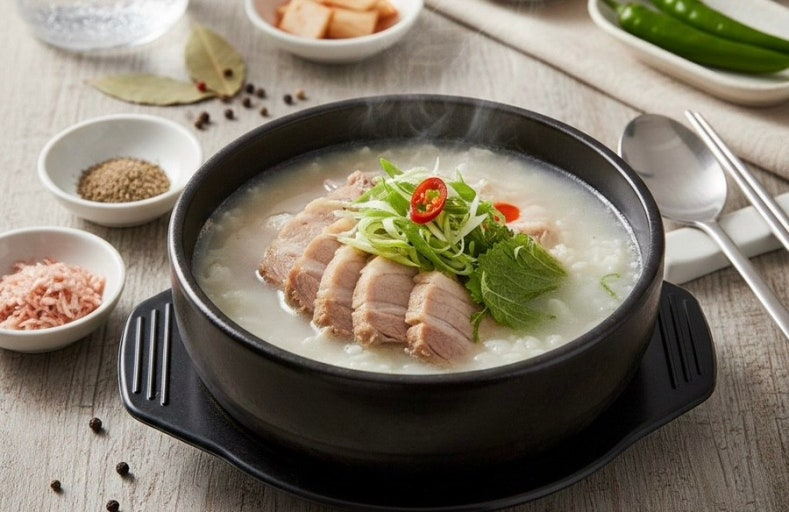
Dwaeji gukbap (돼지국밥) — Pork and rice soup, served with the broth and the rice separate, combined at the table. The Busan version is the definitive version — deeply flavoured, served at dedicated restaurants that have been doing this for decades. Order it at a local restaurant in Seomyeon or Nampo-dong for under ₩10,000.
Ssiat hotteok (씨앗호떡) — The seed-filled sweet pancakes sold at BIFF Square and Gukje Market are Busan’s street food signature. The combination of sugar, honey, and mixed seeds inside a fried dough exterior is more interesting than the Seoul version and worth the ₩2,000.
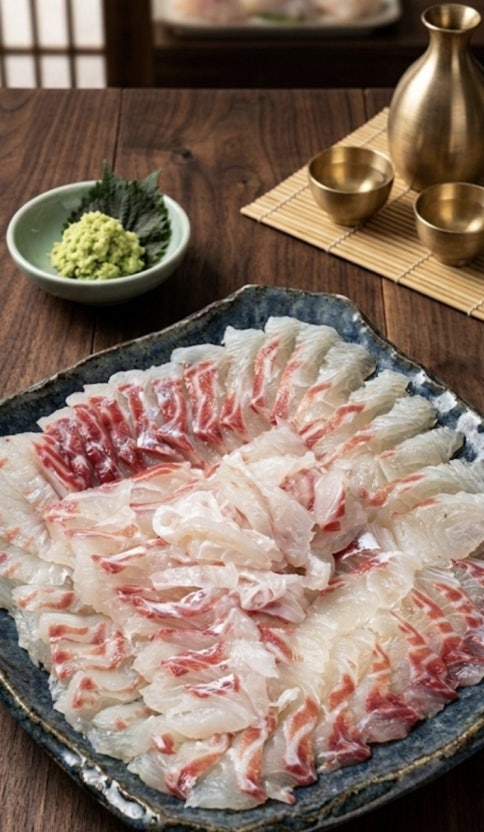
Raw fish (회) — Buy it at Jagalchi, eat it upstairs, and don’t over-complicate the experience.
FAQ
How many days do you need in Busan? Two nights and three days is the minimum that does Busan justice. One day covers the highlights rushed; two days lets you eat properly, explore two or three neighbourhoods, and get a genuine feel for the city’s pace. Three days is comfortable.
Is Busan worth visiting from Seoul? Emphatically yes. Busan is Seoul’s opposite in the most useful ways — coastal, relaxed, seafood-focused, and genuinely different in atmosphere. The KTX makes it a 2 hour 30 minute journey that feels like a different country.
What is Busan most famous for? Internationally: Gamcheon Culture Village and Haeundae Beach. Among Koreans: the seafood (particularly at Jagalchi), the dwaeji gukbap, and Gwangalli Beach’s night atmosphere. The Korean version is more accurate.
Is Busan safe for tourists? Yes. Busan is one of the safer large cities in Asia. The same general common sense that applies in Seoul applies in Busan.
When is the best time to visit Busan? May–June and September–October for beach weather without peak summer crowds. October also coincides with the Busan International Film Festival. Winter is mild by Korean standards and the seafood markets are active year-round.
Book These Before You Go
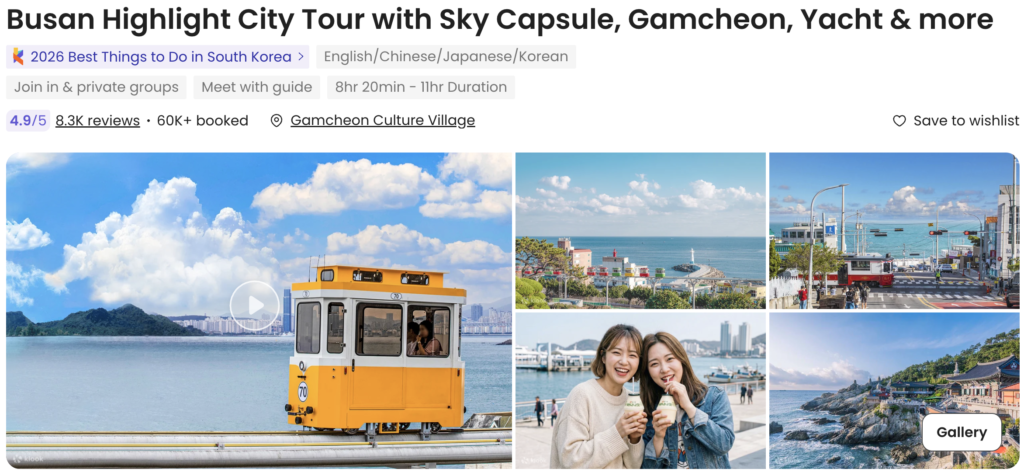
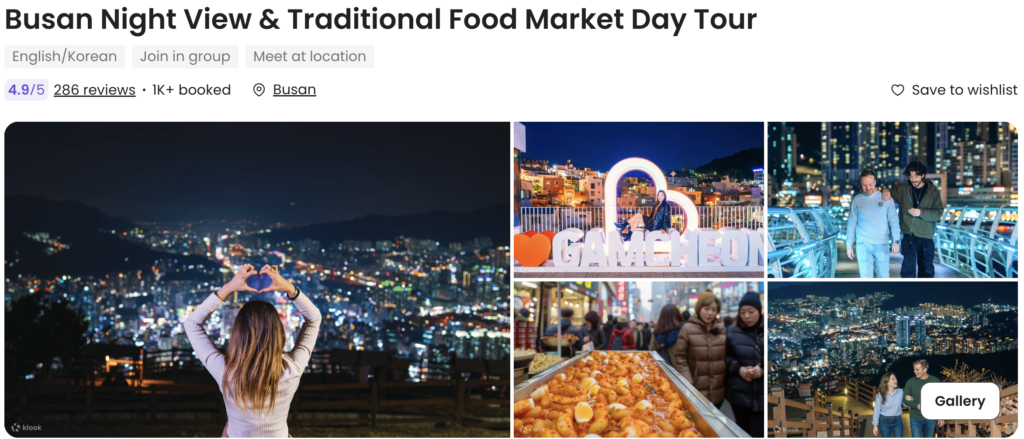
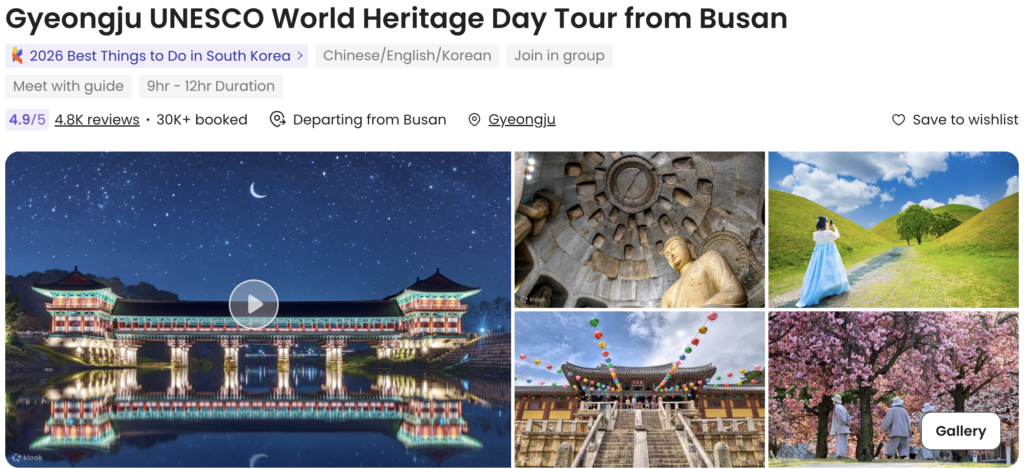
→ Busan to Gyeongju Day Trip on Klook — If you’re based in Busan for two or more nights, Gyeongju — Korea’s ancient Silla capital — is 40 minutes east by KTX and one of the most rewarding day trips in the country. Royal tombs, UNESCO temple complexes, and a city that has preserved its historical landscape in ways that Seoul never could. This organized day trip handles all transport and narration, leaving Busan in the morning and returning for the evening.

Korea Insider has lived in South Korea for 50 years and worked at international companies for over two decades — explaining Korean culture, food, and society to colleagues from the US, Europe, and Australia.
Internationally married with a Japanese spouse, Korea Insider brings both an insider’s depth and an outsider’s perspective to every topic on My Korea Tip.