
Hongdae Seoul is not one neighbourhood — it is three different cities layered on top of each other, operating simultaneously and attracting entirely different visitors depending on the hour and the day of the week. There’s the Hongdae of street performers and independent fashion shops that the university students built in the 1990s. There’s the Hongdae of K-pop dance studios and idol merchandise that the global Korean Wave brought in the 2010s. And there’s the Hongdae of 3 AM cocktail bars and club queues that has always existed underneath both, regardless of what was happening culturally on the street above.
I was born in Seoul in 1975 and watched Hongdae transform from a quiet arts neighbourhood around Hongik University into one of the most internationally recognised districts in Asia. Some of what made it interesting in its early form has been replaced by commercial versions of the same thing. Enough of the original character remains to justify the visit — if you know where to look and what time to arrive.
What Hongdae Is: A Brief History
Hongdae takes its name from Hongik University (홍익대학교) — one of Korea’s leading arts and design institutions, whose graduates shaped the neighbourhood’s visual culture from the 1980s onward. The streets around the university became gathering points for musicians, painters, and designers who couldn’t afford the rents of more central Seoul districts, and the creative density that accumulated produced Korea’s most significant indie music scene and an art culture that was genuinely underground for a decade before it became fashionable.
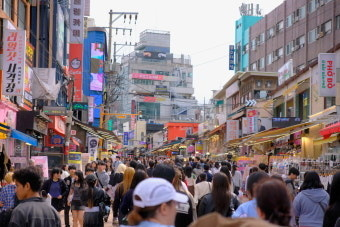
The commercial arrival — the franchise cafés, the K-pop merchandise stores, the global fashion brands — was gradual through the 2000s and rapid after 2012 when Korean Wave tourism began directing international visitors here specifically. The neighbourhood is now more expensive, more crowded at peak times, and considerably more polished than the version I knew in my twenties.
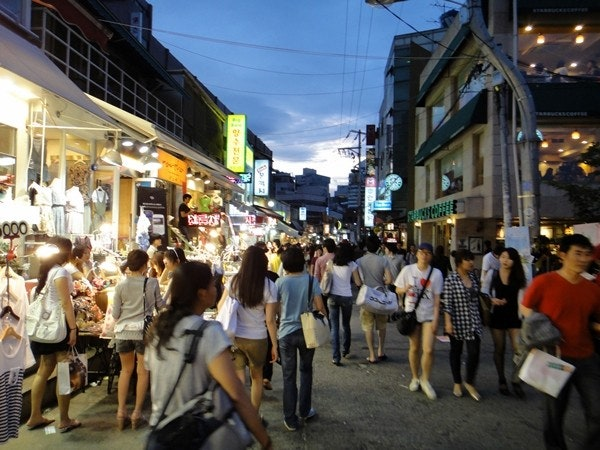
What hasn’t changed is the energy — specifically the evening energy after 7 PM, when the street performers appear, the independent venues open, and Hongdae becomes the version of itself that no commercial overlay has fully replaced.
Best Things to Do in Hongdae
Hongdae Street Performance Area
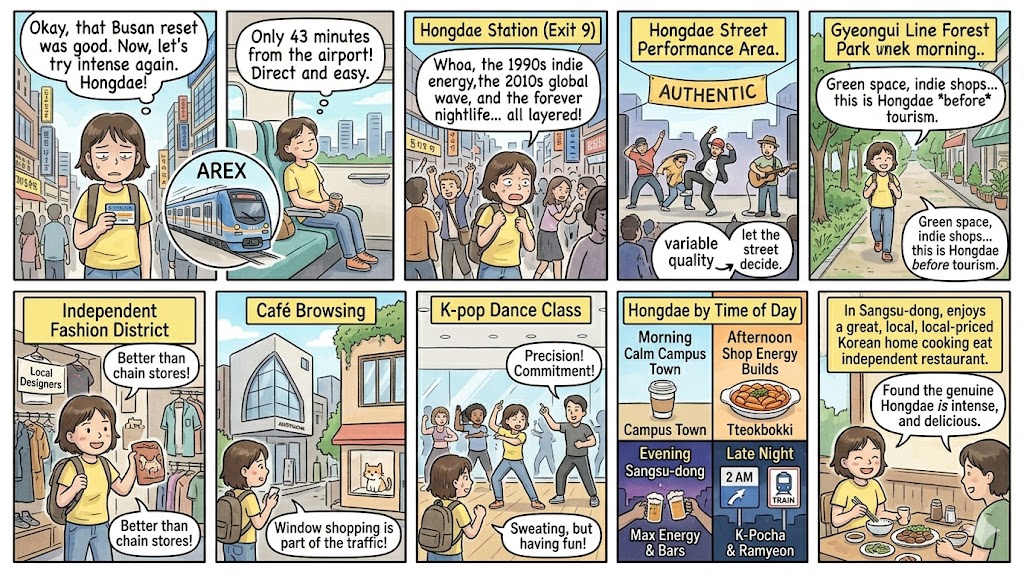
The main performance plaza near Exit 9 of Hongdae Station becomes Seoul’s most entertaining free entertainment on weekend afternoons and evenings. K-pop dance crews, solo musicians, buskers, and occasional performance art appear from approximately 3 PM onward on Saturdays, later on Fridays. The audience participation culture is relaxed — stand, watch, move on, return.
This is the authentic version of Hongdae street culture rather than a tourist attraction, and the quality varies enormously. The best acts are genuinely impressive. Arrive without expectations and let the street decide what kind of afternoon it’s going to be.
Gyeongui Line Forest Park
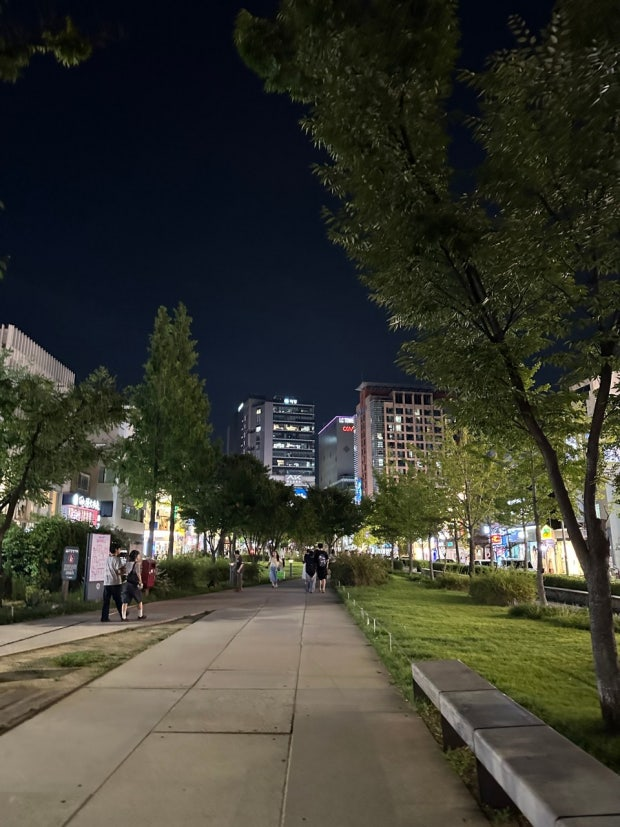
A former railway line converted into a 6-kilometre linear park that connects Hongdae to Sinchon and continues east. Free to walk, bordered by independent bookshops, plant cafés, and vintage clothing stores that have opened along the route since the park’s completion. The most pleasant version of Hongdae is found along this corridor on a weekday morning before the crowds arrive — the combination of green space, independent retail, and the specific creative visual language of the neighbourhood is what Hongdae looked like before tourism arrived in volume.
Hongdae’s Independent Fashion District
The streets between the main Hongdae commercial strip and the university grounds contain the independent fashion stores that the neighbourhood built its reputation on. Vintage shops, local designers, streetwear labels that exist nowhere else — the selection is genuinely different from the chain-dominated streets closer to the station. Prices are accessible; quality ranges from excellent to variable. Budget an hour and bring less than you think you’ll need to spend.
Café Browsing
Hongdae’s café scene has become one of the most competitive in Seoul — which, given that Seoul’s café culture is already extraordinary, means the standard is high. The themed cafés (specific animal cafés, object-specific concepts, architectural statement spaces) cluster in Hongdae and the adjacent Yeonnam-dong neighbourhood. Browsing without necessarily committing is entirely acceptable — most cafés in this area expect window-shoppers as part of the foot traffic.
Yeonnam-dong specifically — the residential neighbourhood immediately north of the Gyeongui Line park — has developed the best café and restaurant scene adjacent to Hongdae without the commercial pressure of the main strip. Walk north from the park and follow whatever looks interesting.
K-pop Dance Studios
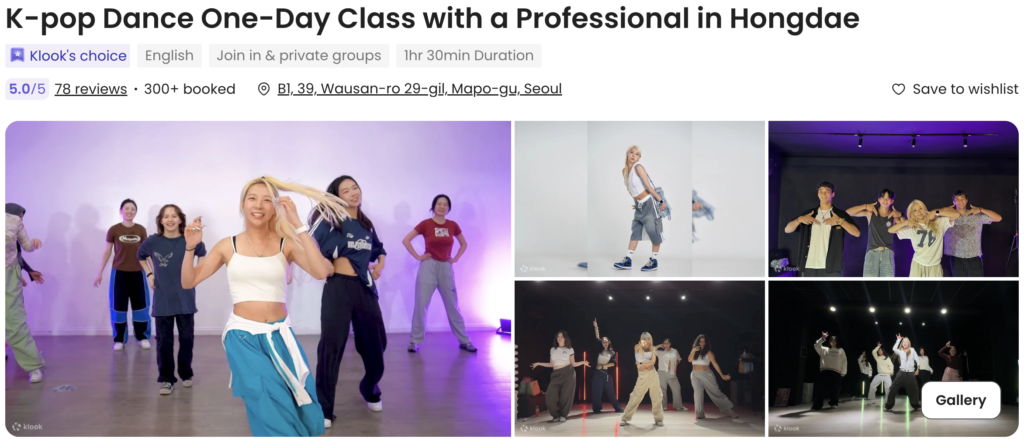
Hongdae is where Seoul’s K-pop dance studio scene is most concentrated, offering classes for tourists and serious learners that range from one-hour beginner sessions to multi-week training programmes. These are the actual studios where Korean idol training culture becomes physically accessible — not a performance, but a working dance class where you learn choreography from K-pop releases with a professional instructor.
The experience is genuinely useful context for understanding the K-pop experience in Seoul more broadly — the precision and physical commitment required to execute even beginner-level choreography explains considerably about the idol training system.
Hongdae by Time of Day
Morning (before 11 AM) The neighbourhood at its quietest and most residential. Coffee shops open from 7–8 AM, the Gyeongui Line park is accessible from 6 AM, and the streets between the commercial zone and the university have a campus-town calm that disappears entirely by afternoon. The best time to walk the independent fashion streets and browse without pressure.
Afternoon (11 AM–6 PM) Shops open, the commercial energy builds, and by 2 PM on weekends the performance plaza begins to activate. Street food vendors appear along the main strip selling tteokbokki, hotteok, and the seasonal items that change monthly. Café-hopping is the primary afternoon activity — the density of interesting options within walking distance of any point in Hongdae is genuinely unusual.
Evening (6 PM–midnight) The neighbourhood’s peak. Restaurants fill, the street performance culture reaches maximum energy, and the bars and live music venues open to early crowds. The stretch of restaurants in Sangsu-dong just south of Hongdae station is where the food quality is highest and the tourist-to-local ratio is most balanced. The Seoul nightlife guide covers the evening options in more detail.
Late Night (midnight–4 AM) The clubs and 24-hour pojangmacha (street stall) culture that defines Hongdae’s reputation among Korean twentysomethings. The area between Hongdae station and the main club district maintains energy until dawn on weekends. This is a specifically Korean late-night experience — the ramyeon stall at 2 AM, the convenience store tables occupied by people who missed the last subway and decided to wait for the first one.
Where to Eat in Hongdae
Hongdae’s restaurant scene ranges from excellent to expensive-and-mediocre, and the tourist-oriented strip immediately around the station exit skews toward the latter. Walk two or three blocks in any direction from Exit 9 and the quality improves immediately.
Sangsu-dong (immediately south): The best concentration of quality restaurants in the Hongdae area — Korean home cooking restaurants, craft beer bars with food, and independent cafés that serve proper meals. Prices are local, quality is high.
Yeonnam-dong (north of the park): The residential neighbourhood that has become Hongdae’s premium dining address — brunch spots, international restaurants, and Korean fusion concepts. Slightly more expensive than Sangsu-dong; noticeably more interesting than the main strip.
Street food on the main strip: Tteokbokki, hotteok, corn dogs (the Korean version, dipped in batter and fried), and takoyaki (octopus balls, a Japanese import that has established itself firmly in Hongdae’s street food culture). Budget ₩3,000–₩8,000 per item, eat standing up, repeat.
Where to Shop in Hongdae
Independent fashion (streets south and west of the station): The most interesting shopping in Hongdae — vintage, local designers, streetwear. Budget ₩30,000–₩100,000 for a good find.
K-pop merchandise stores: Multiple shops on the main strip stock official and unofficial merchandise for major acts. Prices are fixed; selection is comprehensive.
Gyeongui Line park corridor: The small independent shops along the park — books, stationery, plants, handmade goods — are the shopping equivalent of the café scene: specific, considered, and worth more time than they look.
Underground shopping (Hongdae station underpass): The underground arcade connecting Hongdae station to adjacent streets has accessory vendors, phone case shops, and street fashion at genuinely low prices. Less curated than the independent stores above ground; good for budget shopping.
Getting to Hongdae
Subway: Hongdae station (홍대입구역) is served by Line 2 (green), the Airport Railroad (AREX), and the Gyeongui-Jungang Line. From central Seoul (Myeongdong or Jongno), Line 2 takes approximately 20 minutes. From Incheon Airport, the AREX runs direct to Hongdae station in approximately 43 minutes — making Hongdae a practical first or last stop on any Seoul trip.
From Gangnam: Line 2 connects Gangnam directly to Hongdae in approximately 30 minutes.
Where to Stay in Hongdae
Hongdae has the highest concentration of guesthouses and boutique hostels in Seoul, catering specifically to younger international travelers and solo visitors. The area around Exits 3 and 4 has the most accommodation options at the widest price range. For couples or travelers prioritising quiet, the Sangsu-dong and Yeonnam-dong edges of the neighbourhood offer boutique hotel options that are a 10-minute walk from the main Hongdae energy without being in the middle of it.
FAQ
Is Hongdae good for tourists? Yes — with managed expectations. The commercial strip around the station is oriented toward visitors, which means high foot traffic and variable quality. The surrounding streets (Sangsu-dong, Yeonnam-dong, Gyeongui Line corridor) are where Hongdae’s genuine character lives. Spend your time in the latter and use the former for its street food.
What is Hongdae known for? Historically: Korea’s indie music and arts scene. Currently: K-pop dance culture, nightlife, independent fashion, and the street performance area. Practically: one of Seoul’s best evening and late-night neighbourhoods for visitors of most ages and interests.
Is Hongdae safe at night? Yes. Hongdae at night is busy rather than dangerous — the volume of people on the street creates a public safety environment that is actually more comfortable than many quieter neighbourhoods. Standard urban common sense applies.
When is the best time to visit Hongdae? Weekend evenings from 5 PM onward for maximum energy and street performance culture. Weekday mornings for the neighbourhood at its most local and walkable. Avoid peak Saturday afternoon (2–5 PM) if you’re sensitive to crowds.
How do I get from Hongdae to other Seoul neighbourhoods? Line 2 connects Hongdae directly to Gangnam (30 min), Sinchon (2 min), and the city centre. The AREX connects directly to Incheon Airport. For Itaewon or Myeongdong, a combination of subway lines or a taxi is faster than a single-line connection.
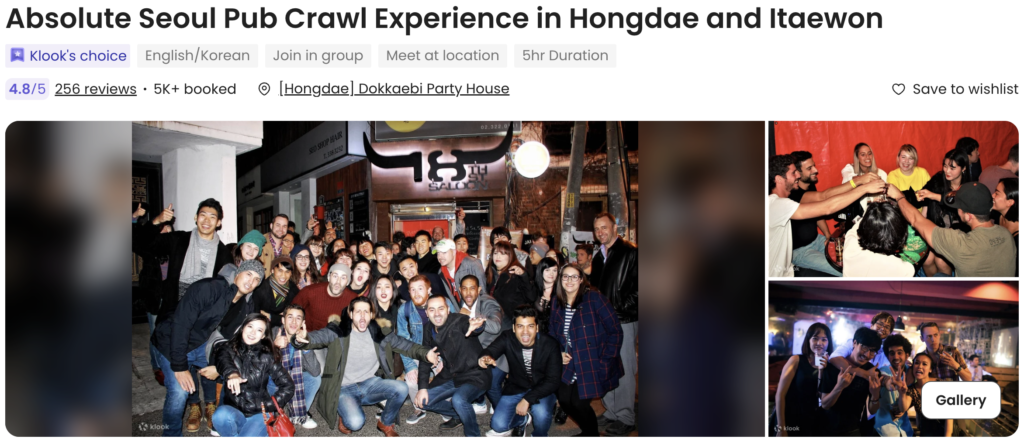
Experience Hongdae Properly

Korea Insider has lived in South Korea for 50 years and worked at international companies for over two decades — explaining Korean culture, food, and society to colleagues from the US, Europe, and Australia.
Internationally married with a Japanese spouse, Korea Insider brings both an insider’s depth and an outsider’s perspective to every topic on My Korea Tip.