
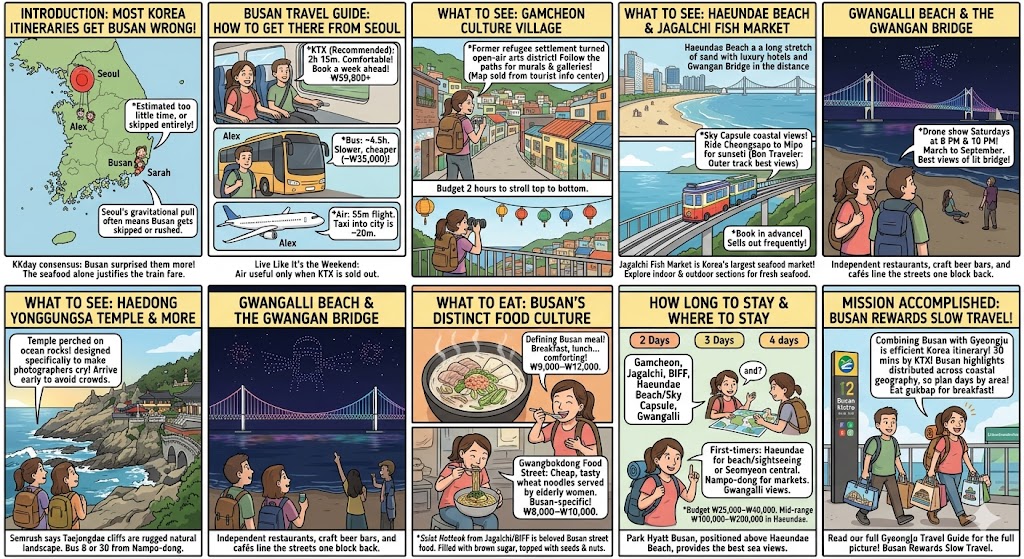
This Busan travel guide exists because most Korea itineraries get Busan wrong. They either skip it entirely — squeezed out by Seoul’s gravitational pull on first-time visitors who underestimate how much there is to do — or they allocate a single rushed day, arrive by the first KTX from Seoul, sprint between Gamcheon Village and Haeundae Beach, and leave on the last train having seen the highlights without understanding why those highlights matter.
Busan deserves more than a day trip. It is the second-largest city in South Korea, a working port city with a coastline of dramatic cliffs and sandy beaches, a seafood culture unlike anywhere else in the country, a hillside refugee village turned open-air arts district, and a temple perched on ocean rocks that looks like it was designed specifically to make photographers cry. It is also, by the consensus of most travelers who do both, the more surprising city — Seoul is anticipated; Busan almost always exceeds expectations.
Most travellers who do both say Busan surprised them more. The seafood alone justifies the train fare. KKday
This guide covers everything: how to get to Busan from Seoul, what to see, where to eat, how long to stay, and where to sleep. Read our Gyeongju Travel Guide alongside this one — Gyeongju sits 30 minutes from Busan by KTX and makes the most efficient combined itinerary in Korea.
Busan Travel Guide: How to Get There from Seoul
By KTX (Strongly Recommended)
The KTX high-speed train from Seoul Station to Busan Station takes approximately 2 hours and 15 minutes — the most comfortable and time-efficient way to get between Korea’s two largest cities. The train from Seoul to Busan takes anywhere from 2 hours 15 minutes to 3 hours, depending on which rail line you choose. Live Like It’s the Weekend
Book through the Korail website (letskorail.com) or the Korail app. Tickets cost approximately ₩59,800 one-way for standard class. Weekend trains and holiday periods sell out — book at least one week ahead.
By Express Bus
Express buses from Seoul’s Gangnam Express Bus Terminal run directly to Busan’s Central Bus Terminal in approximately 4 to 4.5 hours. Cost: approximately ₩30,000–₩35,000 one-way. The journey is slower and less comfortable than KTX but meaningfully cheaper. The Busan bus terminal connects directly to the subway.
By Air
Domestic flights from Gimpo Airport (Seoul) to Gimhae Airport (Busan) take approximately 55 minutes. Useful only when KTX is sold out or prices are competitive after booking fees. If arriving by air, it takes at least 20 minutes by taxi from Gimhae International Airport into the main area of the city. Live Like It’s the Weekend
For complete transport guidance from Seoul, read our Korea Travel Tips Guide.
Busan Travel Guide: What to See
Gamcheon Culture Village (감천문화마을)
The houses that run up and down the mountain in Gamcheon Culture Village used to house refugees from the Korean War. What began as an improvised settlement of colorful houses stacked against the hillside — each one painted to avoid blocking the light and view of the house behind — has become one of the most visually extraordinary neighborhoods in South Korea. Nickkembel
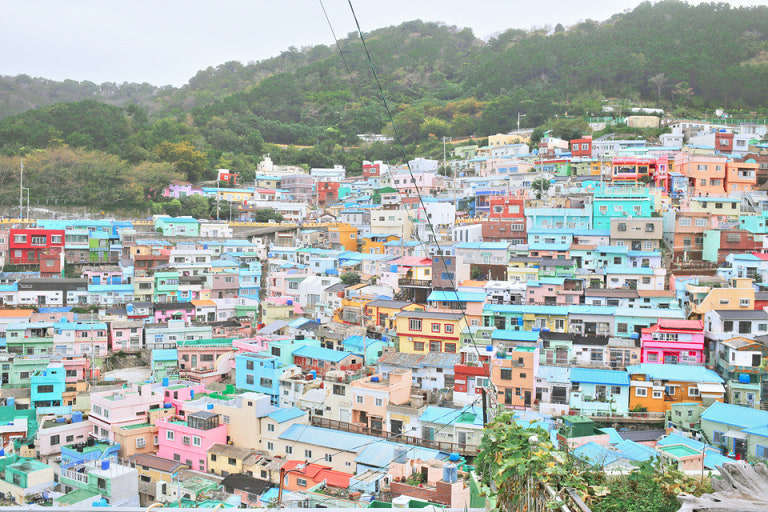
The village has been developed into an arts district with galleries, murals, installations, and small cafés woven between the original homes, many of which are still occupied. Budget at least two hours to stroll through the village from top to bottom, following one of the paths outlined on the maps sold from the tourist information center at the top of the village near the bus stop. Along the way, you’ll pass numerous art installations, galleries, cafés, restaurants, and more. Helena Bradbury
While Gamcheon Culture Village is popular during the day, visiting at night is a completely different experience — lanterns glow in the alleys, shops close quietly, and the hillside takes on a more intimate, magical feeling. Epic Cebu
Getting there: Take the Busan Metro to Toseong Station (Line 1), then Bus 2 or 2-2 to the village entrance. Or take a taxi directly — approximately ₩10,000–₩15,000 from central Busan.
Entry: Free to walk through the village. Some installations and viewpoints have small fees (₩2,000–₩3,000).
Haeundae Beach (해운대해수욕장)
Korea’s most famous beach — a 1.5km stretch of white sand backed by a skyline of luxury hotels, with the sea on one side and the mountains of the Busan urban park visible to the east. Haeundae functions simultaneously as a resort beach, a local weekend destination, and a neighborhood with its own distinct character beyond the waterfront.
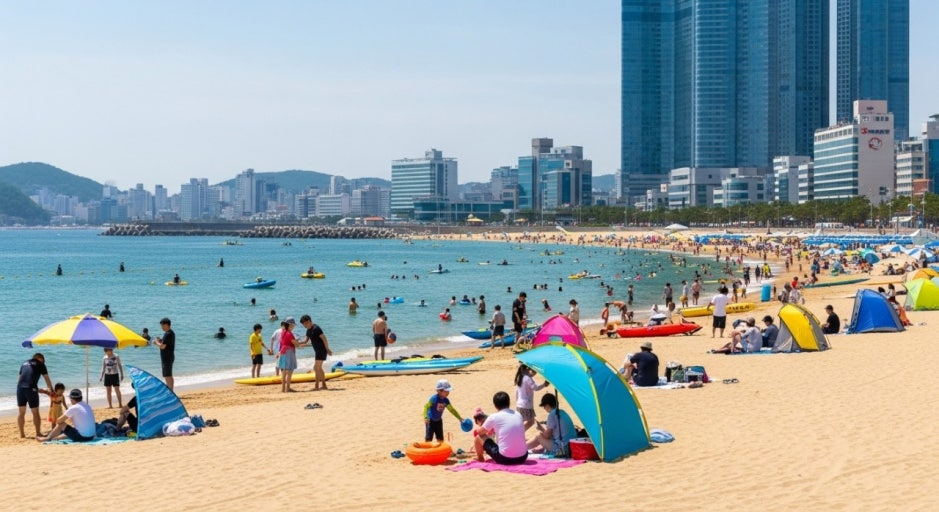
Best sunset and night view spots near Haeundae: Gwangalli Beach and the area’s night yacht tours. The walk along the beachfront at night — neon signage reflecting in the water, the Gwangan Bridge lit up in the distance — is one of Busan’s most photographed experiences. Semrush
Haeundae Blueline Park Sky Capsule: The Sky Capsule at Haeundae Blueline Park runs along a former coastal railway track above the sea — colorful four-person capsules with glass sides providing unobstructed views of the ocean below. Book tickets in advance on the Haeundae Blueline Park website — they sell out frequently on weekends and peak season. For the best sunset views, ride from Cheongsapo to Mipo. For the best photography, the Mipo to Cheongsapo direction puts you on the outer track closest to the ocean. Bon TravelerBon Traveler
Getting there: Haeundae Station, Line 2, Exit 3 or 5. The beach is a 5-minute walk from the station.
Jagalchi Fish Market (자갈치시장)
Jagalchi Fish Market — Korea’s largest seafood market — offers a glimpse into the local way of life and Busan’s maritime culture. Visitors can explore the indoor and outdoor sections to see a wide variety of fresh seafood. It’s an ideal place to experience Korea’s unique dining culture by having seafood prepared right after you pick it — choose your seafood downstairs, then eat it cooked upstairs in the restaurant level. Nomadic Samuel
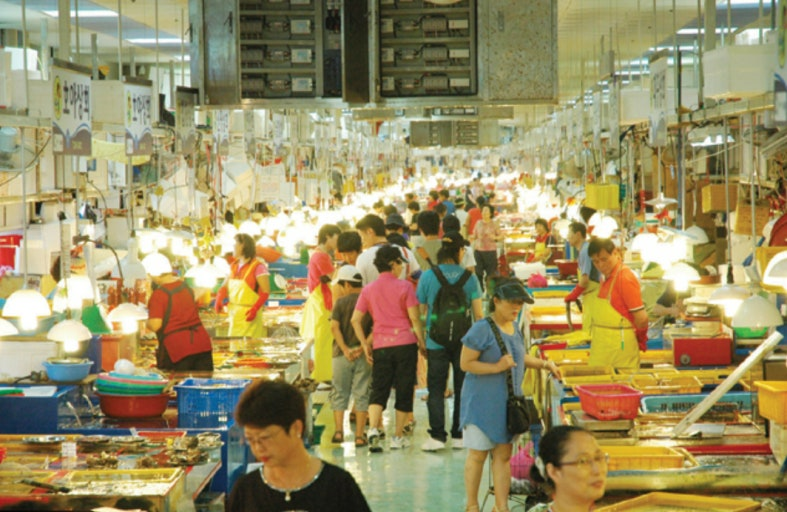
The market is at its most alive in the early morning when the catch arrives and the auction floors are active. The afternoon is more manageable for first-time visitors. The outdoor stalls along the waterfront, run predominantly by older women (the famous Jagalchi ajeossi and ajumma), offer raw seafood eaten on the spot — live octopus, sea cucumber, sea squirt — alongside more approachable grilled and steamed options.
What to eat: Fresh hoe (raw sliced fish), grilled mackerel (godeungeo gui), spicy seafood stew (haemul tang), and the Busan classic, ssiat hotteok (sesame seed hotteok from the nearby street stalls).
Getting there: Jagalchi Station, Line 1, Exit 10. The market is immediately visible from the exit.
Haedong Yonggungsa Temple (해동 용궁사)
Most Korean Buddhist temples are built in mountain forests, following a tradition that places sacred spaces away from human habitation in natural settings. Haedong Yonggungsa breaks this pattern entirely — it sits on the ocean, built directly onto the rocky cliffs of Busan’s northeastern coastline, with the sea crashing below the main hall and the sound of waves replacing the usual mountain silence.
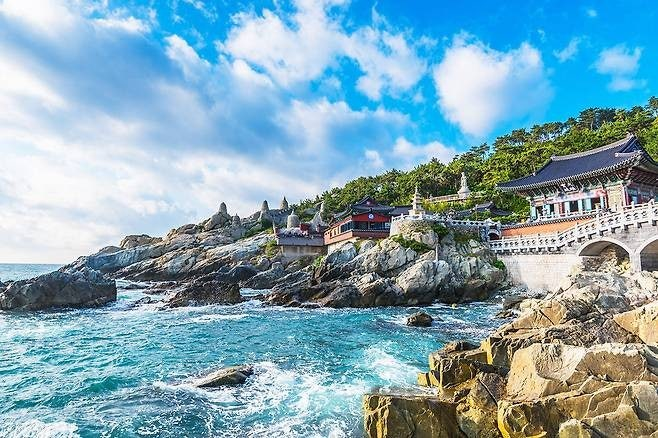
Haedong Yonggungsa is quite a distance from the city center in Busan’s far northeast and can get quite crowded midday. It’s also a popular place to see sunrise — if you plan to do that, consider staying in the area overnight. Helena Bradbury
The combination of temple architecture, coastal cliffs, and the particular light quality of a coastal sunrise makes Haedong one of the most photographed temples in Korea — and genuinely deserves the photographs. Arrive before 9 AM on weekdays to experience it with manageable crowds.
Getting there: Busan Metro to Osiria Station (Line 2), then Bus 181 to the temple entrance. Alternatively, take a taxi from Haeundae — approximately ₩15,000–₩20,000.
Entry: Free.
Gwangalli Beach & the Gwangan Bridge (광안리해수욕장)
Slightly smaller and significantly less crowded than Haeundae, Gwangalli Beach offers one of Busan’s defining views: the Gwangan Bridge spanning the bay, illuminated at night in shifting colors that reflect in the water below.
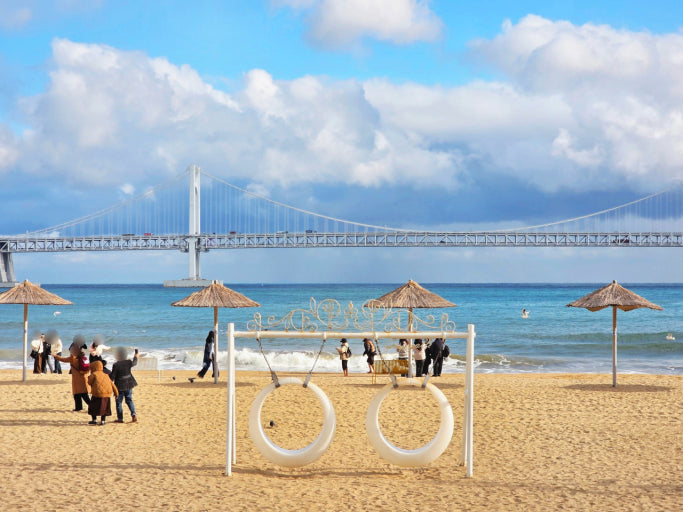
If you’re in Busan on a weekend, don’t miss a trip to Gwangalli Beach at night to witness the ongoing drone show that takes place on Saturdays — featuring hundreds of drones above the beach, the show lasts 10 minutes and has two showtimes at 8 PM and 10 PM from March to September. Check the official calendar before you go as occasional special schedules apply. Live Like It’s the Weekend
The neighborhood behind Gwangalli is Busan’s most interesting eating and drinking district — independent restaurants, craft beer bars, and cafés line the streets one block back from the beach.
Getting there: Gwangalli Station, Line 2, Exit 3 or 5.
Taejongdae (태종대)
The rocky cliffs of Taejongdae are a must see in Busan — the southernmost tip of Yeongdo-gu, where on a clear day you can spot Tsushima Island of Japan. Admission to the cliff park is free but you can also purchase a ticket for the hop-on hop-off tram that goes up and around the cliffs. The dramatic coastal scenery — sheer cliffs dropping into the sea, lighthouse, and observatory — provides Busan’s most rugged natural landscape. Semrush
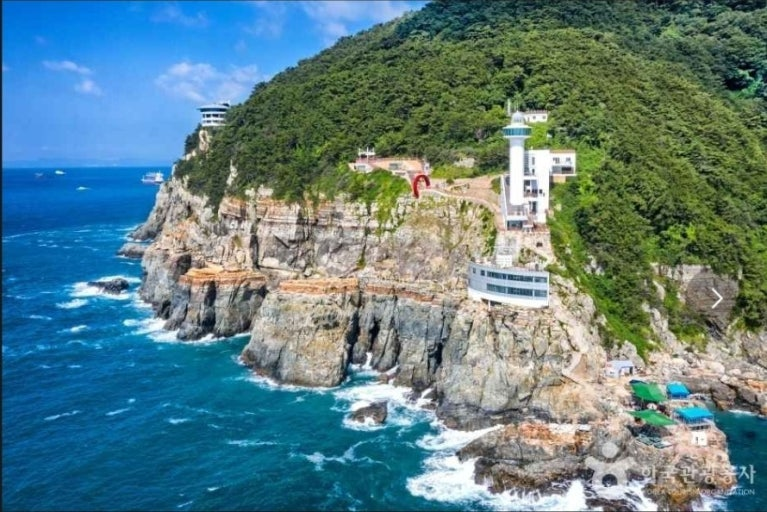
Allow 2–3 hours for a full Taejongdae visit including the tram circuit and cliff walks.
Getting there: Bus 8 or 30 from Nampo-dong, or taxi from central Busan (approximately ₩15,000).
Busan Travel Guide: What to Eat
Busan has a distinct food culture shaped by its identity as a coastal city and its history as the destination of Korean War refugees from across the country. The most important Busan foods are not available in Seoul — or if they are, they’re not the same.
Dwaeji gukbap (돼지국밥) — Pork Rice Soup
The defining Busan meal — a deep, milky pork bone broth with thick slices of pork, served with rice either in the broth or on the side, and an array of condiments including salted shrimp (saeujeot), green onions, and fermented radish. Dwaeji gukbap is one of the must-eat Busan foods and one of the most comforting meals in Korean cuisine. Available at dedicated gukbap restaurants throughout the city from early morning — this is a breakfast food as much as a lunch food in Busan. Semrush
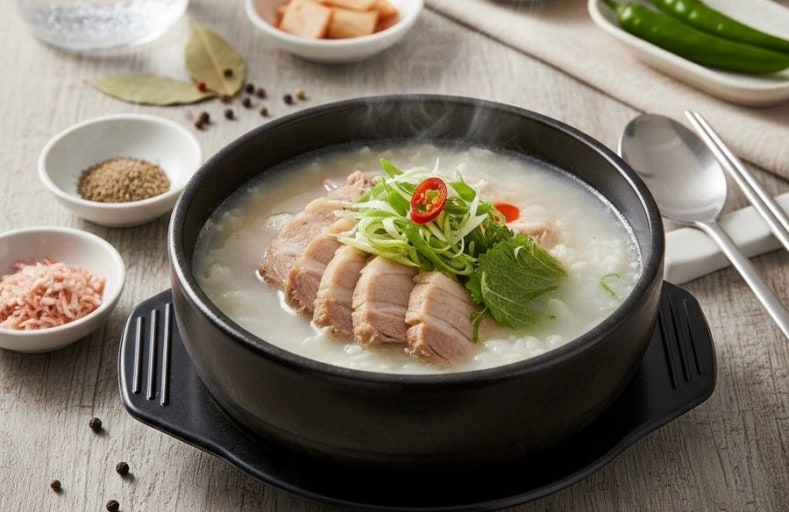
Cost: ₩9,000–₩12,000.
Milmyeon (밀면) — Cold Wheat Noodles
The famous thing to do at Gwangbokdong Food Street is to sit on a little stool and eat cheap, tasty milmyeon (wheat noodles) or bibimyeon (glass noodles) served by elderly Korean women in the middle of the narrow lane. Milmyeon was invented by Korean War refugees in Busan who substituted locally available wheat flour for the buckwheat used in naengmyeon — the result is a Busan-specific dish available nowhere else in the country. Helena Bradbury
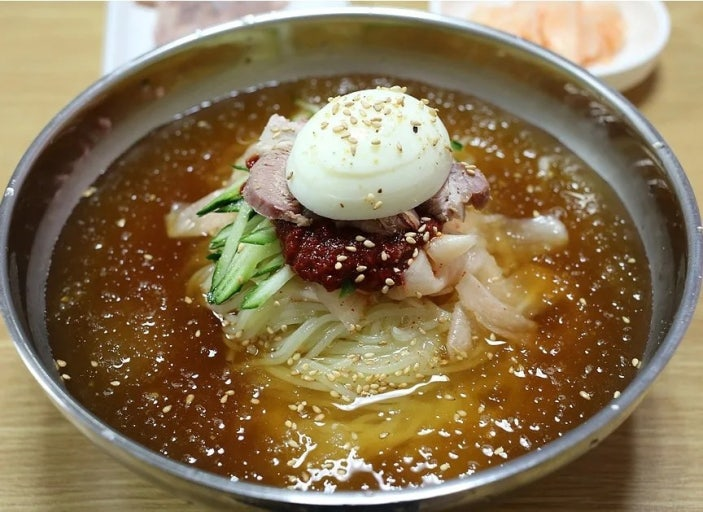
Cost: ₩8,000–₩10,000.
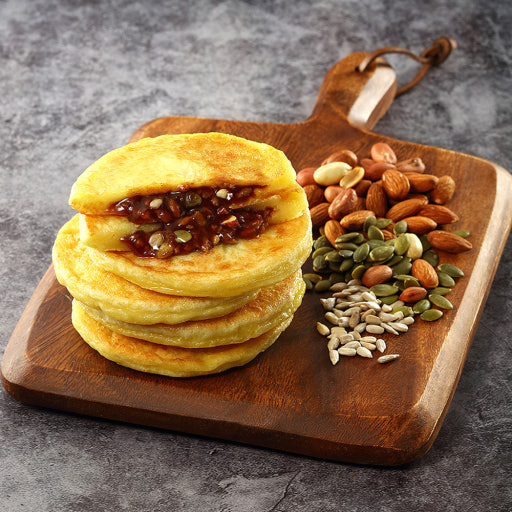
Ssiat Hotteok (씨앗 호떡) — Seed Hotteok
The Busan version of hotteok — filled with brown sugar and topped with a mix of seeds and nuts rather than the plain version found elsewhere. Sold at stalls near Jagalchi Market and BIFF Square. One of the most beloved Busan street foods. Cost: ₩2,000–₩3,000.
Fresh Seafood at Jagalchi
Order your seafood downstairs at Jagalchi, carry it upstairs to the restaurant level, and pay a small preparation fee (approximately ₩5,000–₩10,000) for it to be served as hoe (raw) or grilled. The most straightforward way for first-time visitors is to point at what looks appealing and ask the market vendor to recommend a preparation. English communication is limited but the vendor-to-restaurant system is well-established for tourists.
Busan Travel Guide: How Long to Stay
Two days covers the highlights; three days lets you get more of the coast and culture; four days is ideal. Semrush
Two days: Gamcheon Village, Jagalchi Market, and BIFF Square on day one. Haedong Yonggungsa Temple, Haeundae Beach, and the Sky Capsule on day two. Gwangalli at night.
Three days: Adds Taejongdae, a proper Gwangalli morning, the Songdo Cable Car, and time to eat properly at Gwangbokdong Food Street without rushing.
Four to five days: For those who want to add a Gyeongju day trip (30 minutes by KTX — see our Gyeongju Travel Guide), the Beomeosa Temple hiking trail, or Lotte World Adventure Busan.
Busan rewards slow travel. KKday
Busan Travel Guide: Where to Stay
Best area for first-timers: Haeundae for beach and easy sightseeing, or Seomyeon for a central location close to transit. Semrush
| Area | Best For | Price Range |
|---|---|---|
| Haeundae | Beach access, resort atmosphere | ₩80,000–₩300,000+ |
| Seomyeon | Central location, nightlife, transit | ₩50,000–₩150,000 |
| Gwangalli | Beach views, independent dining scene | ₩70,000–₩200,000 |
| Nampo-dong | Markets, Jagalchi, BIFF Square proximity | ₩40,000–₩120,000 |
Budget guesthouses and hostels are available in all four areas from ₩25,000–₩40,000 per night. Mid-range hotels in Haeundae run ₩100,000–₩200,000. The Park Hyatt Busan, positioned above Haeundae Beach, provides the best sea views of any hotel in the city.
Busan Travel Guide: Getting Around Busan
Busan is a huge city and it’s not walkable because everything is so spread out. Public transportation, taxi, or tour guides are the best way to get around. Helena Bradbury
The Busan Metro covers the main areas: Line 1 (orange) runs through Nampo-dong, Seomyeon, and connects to Busan Station. Line 2 (green) covers Seomyeon, Gwangalli, Haeundae, and the eastern coast. T-Money cards from Seoul work on all Busan transit — read our Seoul Subway Guide for T-Money guidance.
Taxis are affordable and the most practical option for reaching Gamcheon Village and Taejongdae, which are less convenient by public transit. Use Kakao T app for booking.
Busan one day tour on Klook handles transport between all major sites with an English-speaking guide — the most efficient way to see Busan’s highlights if you’re working with limited time.
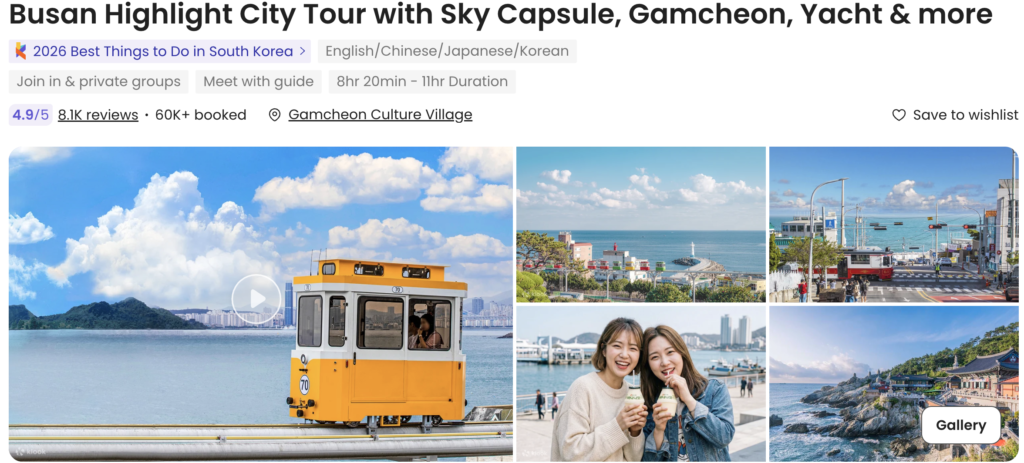
and here is another option to enjoy for Busan city tour on Klook.
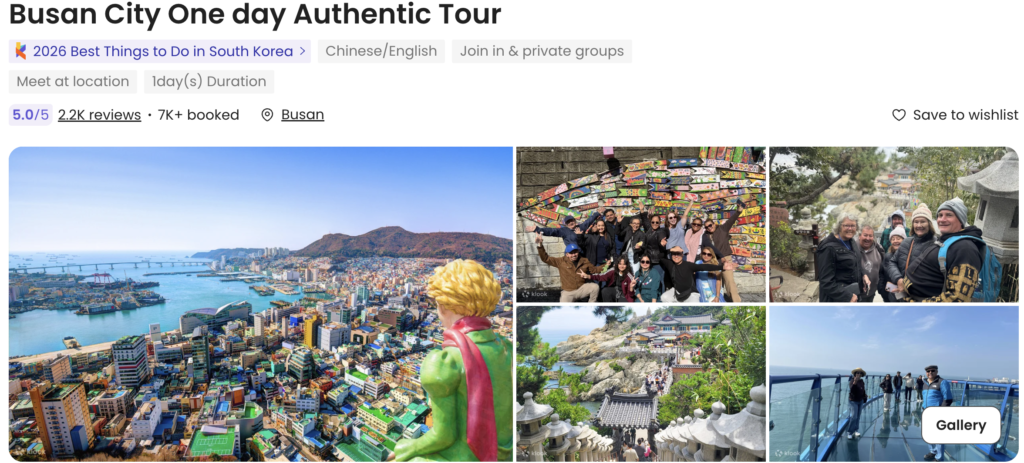
Busan Travel Guide: Practical Tips
Combine Busan with Gyeongju. The most efficient Korea itinerary runs Seoul → Gyeongju → Busan as a connected sequence. Gyeongju is 30 minutes from Busan by KTX — read our Gyeongju Travel Guide for the full picture.
The Sky Capsule sells out. Book Haeundae Blueline Park Sky Capsule tickets online at least 2–3 days ahead for weekends. Walking up without a reservation results in a 1–2 hour wait or no entry.
Busan is spread out. Unlike central Seoul, where the main attractions cluster around subway stops, Busan’s highlights are distributed across a large coastal geography. Plan your days by area rather than trying to cross the city multiple times.
Gwangalli drone show is free. Saturday nights at Gwangalli Beach, 8 PM and 10 PM (March–September). One of the best free experiences in Busan — arrive 20 minutes early for a good viewing position.
Eat gukbap for breakfast. The classic Busan meal is eaten in the morning at dedicated gukbap restaurants that open at 6 AM and fill with local workers. Starting a Busan day with a bowl of dwaeji gukbap and a glass of makgeolli is the most local thing a visitor can do.

Korea Insider has lived in South Korea for 50 years and worked at international companies for over two decades — explaining Korean culture, food, and society to colleagues from the US, Europe, and Australia.
Internationally married with a Japanese spouse, Korea Insider brings both an insider’s depth and an outsider’s perspective to every topic on My Korea Tip.