
This is one of the most Googled questions about Korea — and I understand why. If you’ve spent time around Koreans, watched Korean dramas, or followed K-pop, you’ve almost certainly noticed it. A Korean woman in her mid-forties with skin that reads a decade younger. A Korean man at fifty with the kind of complexion most people lose in their thirties. It happens consistently enough that it clearly isn’t coincidence.
I’ve lived in Korea my entire life, and I’ve watched this question come up repeatedly from foreign colleagues and visitors. The honest answer involves several factors working together — genetics plays a role, but it’s genuinely the smallest part of the explanation. The bigger factors are learnable, replicable habits that most Koreans develop early and maintain consistently.
For the full skincare breakdown, read our Korean Skincare Guide and Why Korean Skincare Is the Best.
Is It Just Genetics?
Let’s address this first, because it’s where most people start.
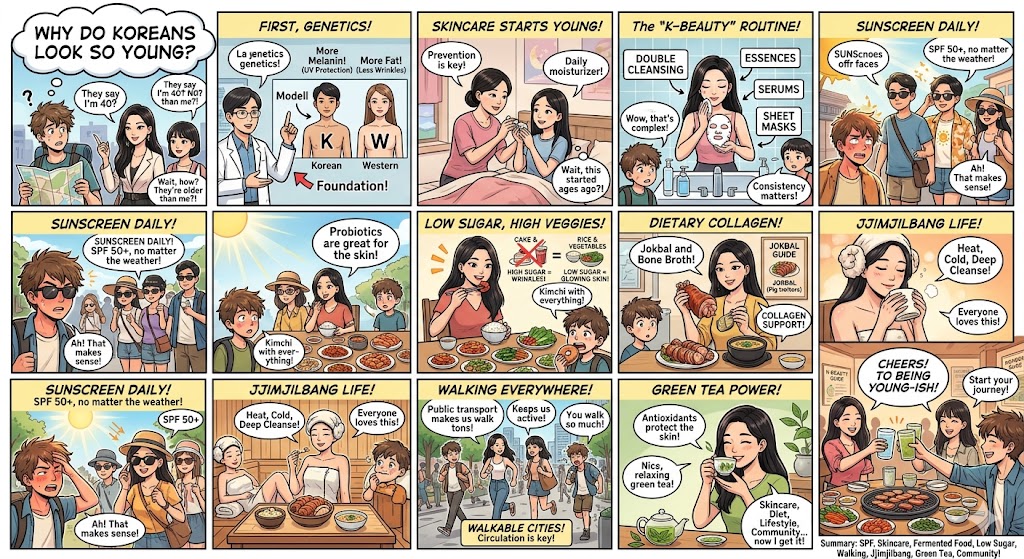
East Asian skin does have certain characteristics that contribute to slower visible aging. Higher melanin content provides more natural UV protection. More subcutaneous fat in the face reduces the appearance of fine lines. These are real biological factors.
But genetics alone doesn’t explain the gap. Genetics sets the baseline — what Koreans do with that baseline is what creates the difference you actually notice. The lifestyle, skincare habits, and dietary patterns that Koreans maintain from early adulthood amplify whatever genetic advantage exists. Take those habits away and the gap narrows considerably.
The more interesting question is what those habits actually are.
1. Sunscreen — The Single Most Important Factor
If I had to identify one practice above everything else, it’s this: Koreans apply sunscreen every single morning, regardless of weather, season, or whether they plan to be outdoors.
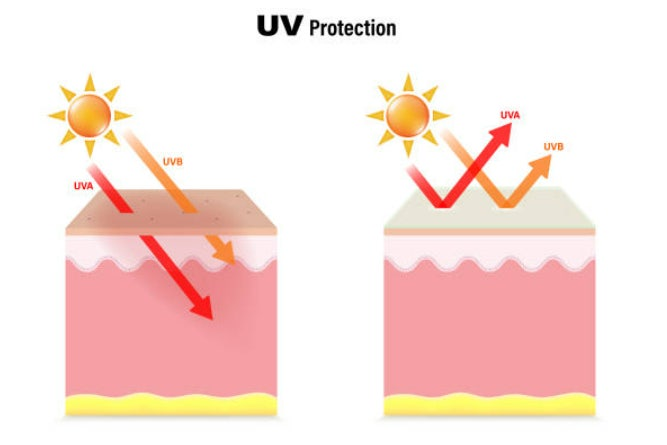
UV radiation is responsible for up to 80% of visible skin aging — wrinkles, dark spots, loss of elasticity, uneven texture. This is not a controversial claim in dermatology; it’s one of the most well-established findings in the field. Decades of daily SPF protection produce results that no amount of corrective treatment can fully replicate after the fact.
Korean sunscreens have also contributed to this habit in a practical way. Korean formulations are lightweight, non-greasy, and genuinely comfortable to wear daily — a significant contrast to the heavy, white-cast products that gave sunscreen a bad reputation in Western markets for years. When a product feels good to use, people use it consistently. Consistency, maintained over twenty or thirty years, is where the visible difference accumulates.
I’ve worn sunscreen every day since my twenties. My Japanese spouse — who grew up with similar habits — does the same. It’s not a beauty ritual. It’s just part of getting dressed.
2. Skincare Culture That Starts in Childhood
The second major factor is when skincare habits begin — and in Korea, they begin early.
Korean mothers introduce children to basic skincare from a young age. Moisturizer and sunscreen are taught as hygiene, not vanity — in the same category as washing your face or brushing your teeth. By the time a Korean woman is in her forties, she has twenty-plus years of consistent skin investment behind her.
This prevention-first philosophy is the core difference from the Western approach, which tends to focus on correction rather than prevention. The cumulative effect of starting early and being consistent is precisely what produces the results that surprise foreign visitors.
The famous Korean skincare routine — sometimes called the 10-step routine — is the practical expression of this philosophy. Double cleansing removes every trace of sunscreen, makeup, and pollution. Essences and serums deliver active ingredients. Sheet masks provide intense hydration two or three times weekly. The routine varies by person and season, but the underlying commitment to consistent, layered care is consistent across Korean skincare culture.
For Koreans, this is simply how you take care of your skin. For most Westerners encountering it for the first time, it reads as unusually intensive — which is itself revealing about how different the baseline investment is.
3. The Korean Diet
Korean traditional food is genuinely one of the healthiest diets in the world, and its effects on skin are real and well-supported.
Fermented foods are the cornerstone. Kimchi — eaten at virtually every Korean meal — is packed with probiotics, vitamins C and K, and antioxidants. The gut-skin connection is well-established in dermatology research: healthy gut microbiome reduces systemic inflammation, which directly affects skin health and aging. Doenjang (fermented soybean paste) and gochujang (fermented chili paste) provide similar benefits.
I eat kimchi daily, as virtually every Korean does. It’s not a health choice — it’s just food. But the cumulative effect of decades of probiotic-rich eating is meaningful.
Low processed sugar is the second significant dietary factor. Traditional Korean meals are built around rice, vegetables, fermented foods, and lean proteins — not the high-sugar processed foods that dominate Western diets. Sugar accelerates skin aging through a process called glycation, which breaks down collagen. A diet that keeps blood sugar stable preserves collagen integrity over time.
Collagen-rich foods feature prominently in Korean cuisine — bone broths, jokbal (pig trotters), and various slow-cooked dishes that Western diets rarely include. Dietary collagen supports skin elasticity in ways that topical products cannot fully replicate.
Read our Korean BBQ Guide and Korean Street Food Guide for a practical introduction to the foods that anchor this diet.
4. Lifestyle Habits
Beyond skincare and diet, several specific Korean lifestyle patterns contribute to the overall picture.
Jjimjilbang culture — Regular visits to Korean public bathhouses and saunas are mainstream across all ages and demographics. The combination of heat exposure, cold plunging, and deep cleansing has documented skin benefits: improved circulation, pore clearing, and stress reduction. Most Koreans visit regularly throughout their lives — it’s a social activity as much as a wellness one. Read our Korean Jjimjilbang Guide for how these work.
Walking — Seoul is one of the most walkable major cities in the world. Between the subway system, dense neighborhoods, and cultural habits around walking, Koreans average significantly more daily steps than most Western populations. Regular cardiovascular exercise improves circulation, reduces chronic inflammation, and supports skin cell renewal. This is rarely mentioned in discussions of Korean skincare, but the contribution is real.
Green tea consumption — Korea has a strong green tea culture. Green tea contains EGCG, a potent antioxidant that protects skin cells from oxidative stress and UV damage. Regular consumption complements the topical sun protection habits.
Lower smoking rates among younger generations — Smoking is one of the fastest ways to accelerate visible skin aging, and younger Korean generations smoke significantly less than previous ones. The skin effects of not smoking compound over decades in the same way that sunscreen does.
5. Beauty Standards and Social Reinforcement
A less comfortable but honest factor is Korea’s intense beauty culture and the social expectations around appearance.
Korea has one of the highest cosmetic procedure rates in the world. Skincare, hair care, and grooming are taken seriously by both Korean men and women. The social expectation to maintain a well-groomed, youthful appearance creates consistent motivation to invest in skin health across the lifespan — not just occasionally, but as ongoing maintenance.
This isn’t a criticism. It’s context. The social reinforcement of skincare habits means that the behaviors driving the visible difference are maintained consistently throughout life rather than adopted sporadically. The consistency is as important as the habits themselves.
6. Community and Stress Management
The final factor is the one least often discussed: social connection.
Korean culture places significant value on communal eating, shared meals, and social gathering across generations. Regular meaningful social connection — sharing Korean BBQ with friends, family dinners, neighborhood community — reduces chronic stress, which is one of the leading drivers of accelerated aging.
Chronic stress elevates cortisol, which breaks down collagen, disrupts sleep, and creates systemic inflammation that manifests visibly in skin over time. The Korean cultural emphasis on communal eating and social bonding creates a lifestyle that manages this stress pathway in ways that isolated modern lifestyles often don’t.
Summary: What Actually Drives the Difference
| Factor | Impact Level |
|---|---|
| Daily sunscreen habit | ⭐⭐⭐⭐⭐ Highest |
| Consistent skincare from youth | ⭐⭐⭐⭐⭐ Highest |
| Fermented food diet | ⭐⭐⭐⭐ Very high |
| Low processed sugar diet | ⭐⭐⭐⭐ Very high |
| Regular walking | ⭐⭐⭐ High |
| Jjimjilbang culture | ⭐⭐⭐ High |
| Green tea consumption | ⭐⭐⭐ High |
| Genetics | ⭐⭐ Contributing |
| Social connection | ⭐⭐ Contributing |
How to Apply These Habits Yourself
The practical value of understanding this is that most of these factors are completely replicable regardless of your ethnicity or location.
Start with sunscreen. SPF 50, every morning, rain or shine. This single habit — if maintained consistently over years — produces more visible results than any other skincare investment. Korean sunscreen brands like Anessa, Beauty of Joseon, and Round Lab are widely available internationally and formulated for comfortable daily wear.
Add a Korean essence. After cleansing and toning, a hydrating essence applied daily significantly improves skin texture and moisture retention over time. This is the most accessible entry point into the Korean skincare approach.
Eat more fermented foods. Kimchi is widely available internationally and can be incorporated into meals in ways that don’t require cooking Korean food specifically. The probiotic benefit is real and cumulative.
Reduce processed sugar. This is the dietary change with the most direct impact on skin collagen preservation — and it benefits overall health well beyond skin.
Walk more. Seoul’s walkability is a structural advantage that isn’t fully replicable everywhere — but intentionally increasing daily steps is available to anyone.
The gap between Korean skin aging and Western skin aging is real. But it’s driven primarily by habits that were built early and maintained consistently — not by genetic luck that’s unavailable to everyone else.
FAQ
Do all Koreans have good skin? No — but the cultural baseline for skincare investment is genuinely higher than most countries. The habits are widespread rather than exceptional, which is why the visible difference appears across the population rather than only among people with specific genetic profiles.
Is the Korean skincare routine necessary for results? The full multi-step routine is not required. The highest-impact habits are sunscreen and consistent moisturizing — everything else adds incremental benefit. Starting simple and building gradually is more sustainable than attempting a complete overhaul at once.
At what age should skincare habits begin? The Korean approach suggests starting basic moisturizing and sun protection in the teenage years. Prevention is the entire point — corrective treatments are significantly less effective than consistent early protection.
Do Korean men follow the same skincare habits? Increasingly yes. Korean men’s skincare culture is significantly more developed than in most Western countries. BB cream, toner, and sunscreen use among Korean men is mainstream rather than exceptional.
Does diet really affect skin appearance? Yes, with meaningful scientific support. The gut-skin connection, sugar’s effect on collagen through glycation, and the anti-inflammatory benefits of fermented foods are all well-documented in dermatology and nutrition research.
Explore more: Korean Skincare Ingredients Guide · Olive Young Seoul Guide · Korean Beauty Standards Guide
For a complete roadmap, read our K-Beauty Skincare Routine Guide — the practical implementation of everything that makes Koreans look so young.
Inspired to experience Korean culture in person? Read our Incheon Airport to Seoul Guide to start your Korean adventure.

Korea Insider has lived in South Korea for 50 years and worked at international companies for over two decades — explaining Korean culture, food, and society to colleagues from the US, Europe, and Australia.
Internationally married with a Japanese spouse, Korea Insider brings both an insider’s depth and an outsider’s perspective to every topic on My Korea Tip.