
Best Time to Visit Korea: Spring (March–May) ⭐ Most Recommended
Spring is the best time to visit Korea for most travelers — and it’s not even close.
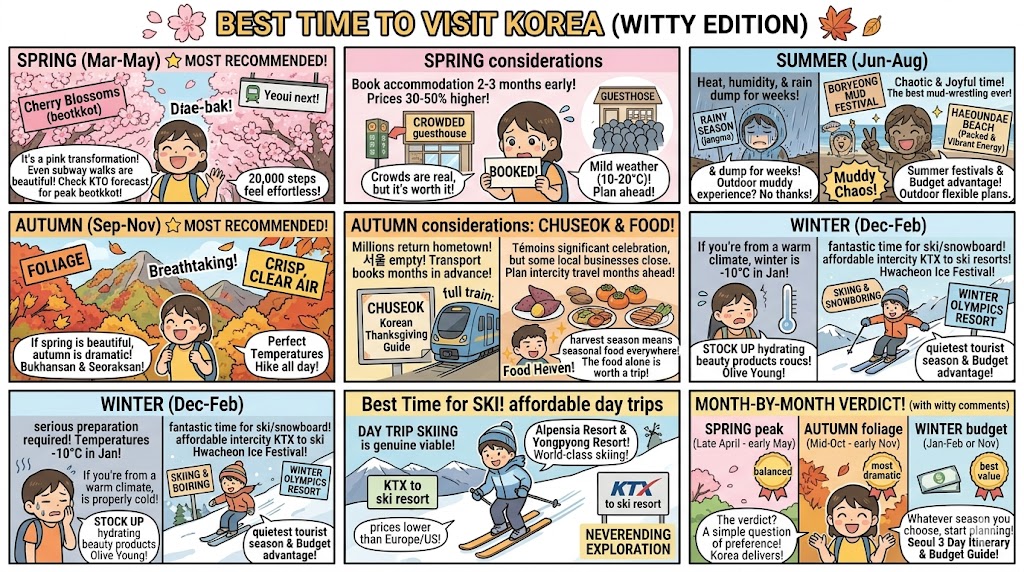
From late March through May, Korea transforms into something genuinely spectacular. Cherry blossoms (벚꽃, beotkkot) explode across every city, park, and riverside path in the country. Seoul’s Yeouido Park becomes a sea of pink that attracts hundreds of thousands of visitors. Gyeongju, Korea’s ancient capital, looks like it was designed specifically to be photographed during cherry blossom season. Even the walk between subway stations becomes beautiful when the trees lining the streets are in full bloom.
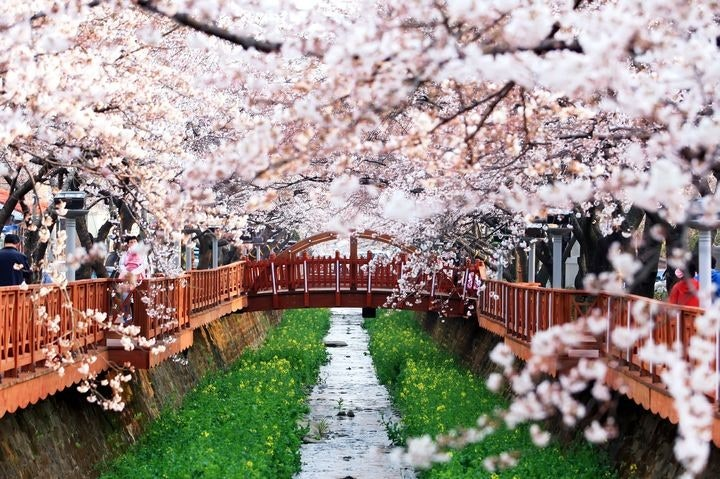
Cherry blossom timing varies by year and location, but the general window is:
- Jeju Island: mid-March (first in the country)
- Seoul: late March to early April
- Northern regions: early to mid-April
The 2026 Seoul cherry blossom peak is expected around late March to early April — check the Korea Tourism Organization website closer to your travel date for the most accurate forecast.
Beyond cherry blossoms, spring offers mild temperatures (10–20°C / 50–68°F), low humidity, and long daylight hours. It’s genuinely comfortable weather for walking, hiking, and outdoor exploration — the kind of weather that makes a 20,000-step day feel effortless.
Spring considerations: Spring is Korea’s most popular season for international tourists, which means accommodation prices rise and popular spots get crowded. Book accommodation at least 2–3 months in advance for cherry blossom peak weeks. Prices in popular guesthouses can be 30–50% higher than off-season rates during peak bloom.
Best Time to Visit Korea: Summer (June–August)
Let’s be honest: Korean summer is not for everyone.
June through August brings heat, humidity, and Korea’s rainy season (장마, jangma) — typically running from late June through mid-July. Temperatures regularly hit 30–35°C (86–95°F) with humidity that makes it feel significantly hotter. The rainy season dumps heavy rainfall for weeks, which can disrupt outdoor plans and turn outdoor attractions into muddy, miserable experiences.
So why do people visit in summer? Several very good reasons.
Boryeong Mud Festival (보령 머드 축제): Mid-July at Daecheon Beach. Koreans and tourists cover themselves in mud, play games, attend concerts, and generally have a chaotic, joyful time. It’s one of Korea’s most internationally famous festivals and genuinely worth the summer heat if the timing works for your trip.
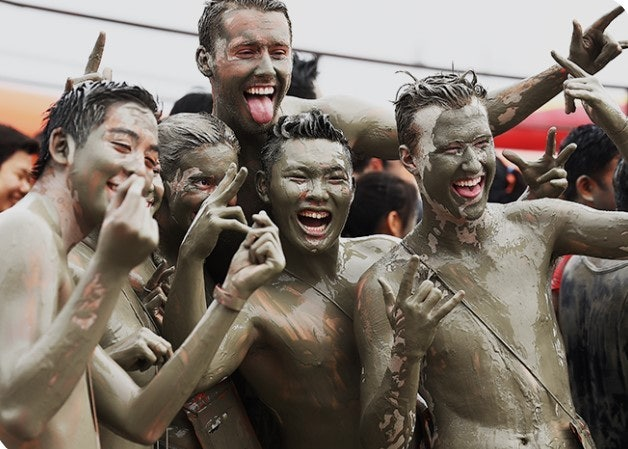
Beaches: Busan’s Haeundae Beach becomes the heart of Korean summer — packed, vibrant, and full of the kind of beach energy that doesn’t exist anywhere else in Korea during other seasons. Read our Busan vs Seoul Guide for why Busan in summer is an experience entirely different from Seoul.
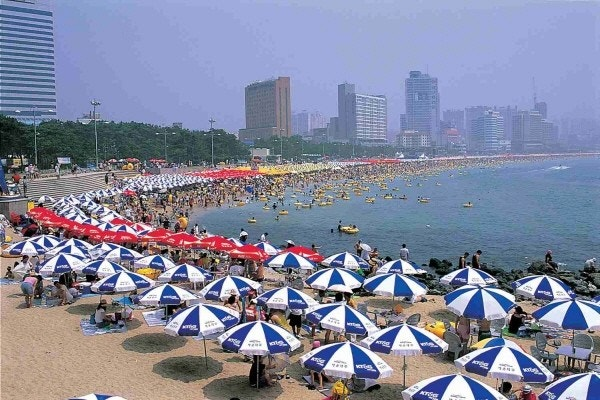
Summer festivals: Korean cities run outdoor music festivals, food festivals, and cultural events throughout summer. Seoul’s Han River parks host evening events that become genuinely pleasant once the sun goes down.
Budget advantage: Summer (outside of peak festival weeks) is lower season for international tourism, meaning accommodation prices are more competitive and popular attractions are less crowded than during spring and autumn.
Summer tip: If visiting in summer, plan outdoor activities for early morning or evening. Midday heat is brutal. Keep a portable fan (sold everywhere in Korea for ₩5,000–₩15,000) and stay hydrated with Korea’s excellent convenience store drinks.
Best Time to Visit Korea: Autumn (September–November) ⭐ Most Recommended
If spring is Korea’s most beautiful season, autumn is its most dramatic.
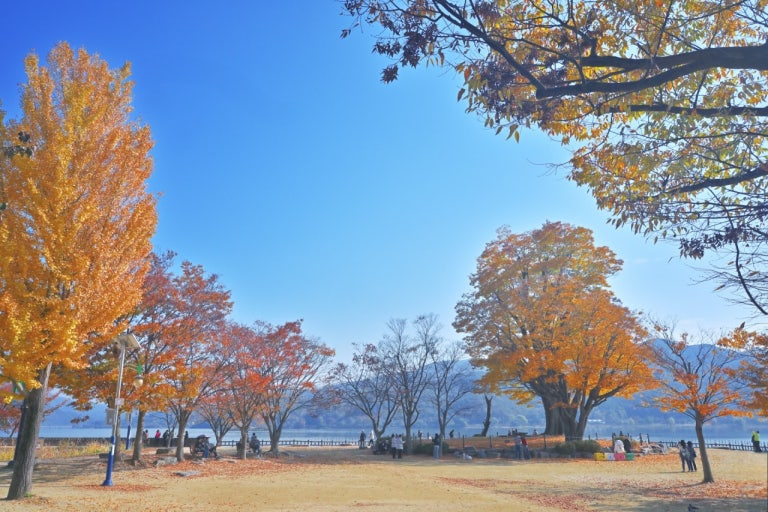
From mid-October through early November, Korea’s mountains and parks transform into vivid red, orange, and gold as the leaves change. Bukhansan National Park — entirely within Seoul’s city limits — becomes one of the most visually spectacular urban hiking destinations in Asia. Seoraksan National Park in Gangwon Province, about 3 hours from Seoul, offers some of the most breathtaking autumn foliage scenery in all of Northeast Asia.
Autumn foliage timing:
- Seoraksan: early to mid-October (first in the country)
- Seoul: mid to late October
- Southern regions: late October to early November
October temperatures (15–22°C / 59–72°F) are arguably the most comfortable in the entire year — warm enough for outdoor exploration without a jacket for most of the day, cool enough to actually enjoy walking. The humidity drops dramatically after summer, leaving crisp, clear air that makes Seoul’s skyline particularly sharp and beautiful.
Chuseok (추석): Korea’s most important national holiday falls in autumn — typically September or October. During Chuseok, millions of Koreans return to their hometowns, which means Seoul empties out, tourist attractions become unusually uncrowded, and you get a chance to witness one of Korea’s most culturally significant celebrations. However, transportation (trains, buses) books out months in advance and some local businesses close. Plan ahead. Read our Chuseok Korean Thanksgiving Guide for everything you need to know.
Autumn food culture: Autumn is harvest season, which means seasonal Korean foods appear everywhere — sweet potatoes roasting on street carts, persimmons hanging to dry outside traditional homes, and special autumn menus at Korean restaurants. The food alone is worth timing a trip around.
Best Time to Visit Korea: Winter (December–February)
Korean winter is cold. Properly cold — temperatures in Seoul regularly drop to -10°C (14°F) in January, and the wind coming off the Siberian steppe makes it feel significantly colder. If you’re coming from a warm climate, Korean winter requires serious preparation.
But here’s what the travel guides don’t always tell you: winter is actually a fantastic time to visit Korea if you know what to do with it.
Skiing and snowboarding: Korea has excellent ski resorts within 2 hours of Seoul. Alpensia Resort and Yongpyong Resort (which hosted the 2018 Winter Olympics) offer world-class skiing at prices significantly lower than European or North American equivalents. Day trip skiing from Seoul is genuinely viable.
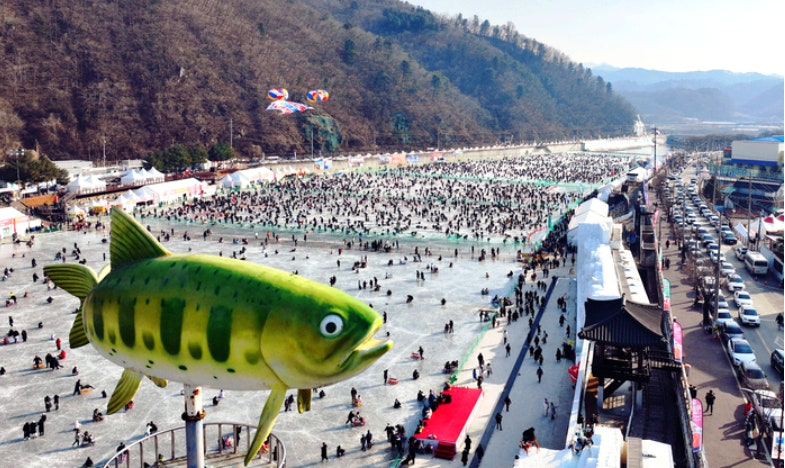
Winter festivals: Korea celebrates winter with genuine enthusiasm. Hwacheon Sancheoneo Ice Festival (화천 산천어축제) — where participants fish through holes in frozen rivers and eat what they catch — is one of the most uniquely Korean experiences available at any time of year. It typically runs in January.
Budget advantage: Winter is Korea’s quietest tourist season. Accommodation prices drop 20–40% compared to spring and autumn peaks. Popular attractions have minimal queues. Flights are cheapest. Your Korea travel budget goes significantly further in winter.
Lunar New Year (설날, Seollal): Korea’s second major national holiday falls in January or February (date changes annually). Similar to Chuseok — cities empty, transportation books out, and some businesses close, but the cultural experience of witnessing Seollal is unique and memorable.
Winter skin care note: Korean winter air is extremely dry, which wreaks havoc on skin. Stock up on hydrating products from Olive Young — Korea’s largest beauty chain — when you arrive. Read our K-Beauty Skincare Routine Guide for what to use.
Best Time to Visit Korea: Month-by-Month Breakdown
January: Coldest month. Ski resorts at their best. Hwacheon Ice Festival. Lowest prices and thinnest crowds of the year. Seollal (Lunar New Year) in some years.
February: Still cold but days lengthen noticeably. Ski season continues. Early Seollal preparations visible in markets. Excellent budget timing.
March: Winter ends. Temperature starts rising. First cherry blossoms appear on Jeju Island late in the month. Anticipation builds. A genuinely exciting time to arrive.
April: Peak cherry blossom season in Seoul and most of the country. Most beautiful and most crowded month. Book everything well in advance. Worth every bit of planning.
May: Cherry blossoms fade but weather remains perfect. Crowds thin slightly from April peaks. Buddha’s Birthday (연등회, Lotus Lantern Festival) brings spectacular lantern parades through Seoul streets. Often the best overall month to visit Korea.
June: Rainy season begins mid-month. Temperatures rise quickly. Outdoor plans require flexibility. Prices remain reasonable before peak summer.
July: Hottest and most humid month. Boryeong Mud Festival mid-month. Rainy season continues. Not ideal for most visitors but beach culture is in full swing.
August: Heat continues but rainy season typically ends. Busan beach season peaks. Korea’s Liberation Day (광복절) on August 15th brings public celebrations.
September: Autumn begins. Perfect temperatures return. Chuseok falls in September or October — plan around it. Tourism season rebuilds.
October: Peak autumn foliage. Best hiking conditions of the year. Excellent food festival season. Arguably Korea’s single best month if you can only visit once.
November: Foliage fades through the month. Last warm days of autumn before winter arrives. Quieter than October but still beautiful. Good value period before Christmas pricing.
December: Winter arrives. Christmas is celebrated enthusiastically across Seoul — decorated streets, pop-up markets, and a festive atmosphere that surprises many visitors who don’t expect it. Skiing season begins.
Best Time to Visit Korea: What to Pack by Season
Spring: Light layers — temperatures vary significantly between morning and afternoon. A light rain jacket for April showers. Comfortable walking shoes for the ridiculous amount of walking you’ll do.
Summer: Breathable, lightweight clothing. Portable fan. Sunscreen (SPF 50 — Korean standards, naturally). Umbrella for rainy season. Read our K-Beauty Skincare Routine Guide for sun protection recommendations.
Autumn: Layers again — mornings and evenings get cool while afternoons stay warm through October. A mid-weight jacket for November. Good hiking shoes if Bukhansan or Seoraksan are on the itinerary.
Winter: Serious cold weather gear. Thermal base layers, a proper winter coat, gloves, and a hat are not optional in January and February. Hand warmers (available everywhere in Korea for ₩500–₩1,000) are essential.
Best Time to Visit Korea: The Verdict
If you can only choose one time to visit Korea, late April to early May offers the most balanced combination of beautiful weather, lingering cherry blossoms, comfortable temperatures, and full tourist infrastructure.
If foliage appeals more than blossoms, mid to late October delivers arguably Korea’s most dramatic scenery and the most comfortable hiking conditions of the year.
If your Korea travel budget is the primary constraint, January–February or November offer the best value — lower prices, thinner crowds, and the full range of Korean experiences minus the peak season premiums.
Whatever season you choose, Korea delivers. The question is simply which version of extraordinary you prefer.
Ready to start planning? Read our Seoul 3 Day Itinerary and Korea Travel Budget Guide to build your complete trip plan.

Korea Insider has lived in South Korea for 50 years and worked at international companies for over two decades — explaining Korean culture, food, and society to colleagues from the US, Europe, and Australia.
Internationally married with a Japanese spouse, Korea Insider brings both an insider’s depth and an outsider’s perspective to every topic on My Korea Tip.