
Korean cafe culture is one of the most distinctive and most photographed aspects of life in Seoul.
Seoul has more cafes per capita than almost any city in the world — and Korean cafe culture has transformed the simple act of drinking coffee into an elaborate social ritual, an architectural art form, and a cultural experience that attracts visitors from around the globe.
This complete guide to Korean cafe culture explains why Korean cafe culture is so unique, what makes Seoul’s cafes unlike anywhere else, the best types of cafes to visit, and everything you need to know to experience Korean cafe culture authentically.
Before exploring Korean cafe culture, read our Things to Do in Seoul Guide — Korean cafe culture visits are among the most essential Seoul experiences.
Why Korean Cafe Culture Is Unlike Anywhere Else
Korean cafe culture is unique for reasons that go beyond the coffee itself.
Korean Cafe Culture Reason #1 — Cafes as Social Spaces
Korean cafe culture treats cafes as primary social venues — not just places to drink coffee. Korean cafe culture provides the neutral ground where friendships are maintained, dates happen, study sessions occur, and business meetings take place.
In a country where home entertaining is less common than in Western cultures and restaurant dining is often reserved for meals, Korean cafe culture fills the social space that living rooms occupy in Western homes. Korean cafe culture is where Korean social life happens.
Korean Cafe Culture Reason #2 — The Design Obsession
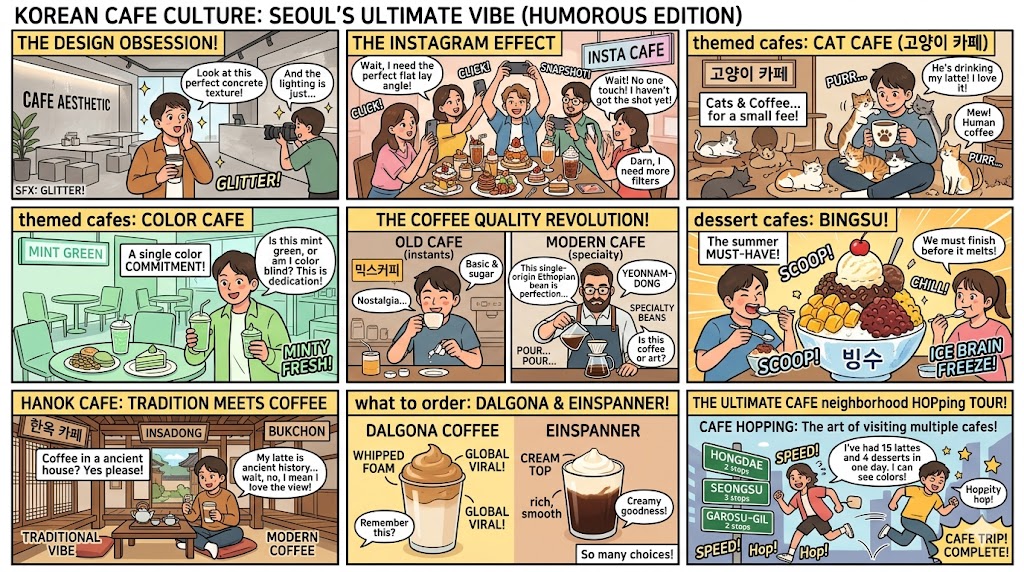
Korean cafe culture places extraordinary emphasis on visual design — Korean cafes are architectural and interior design showcases as much as coffee shops.
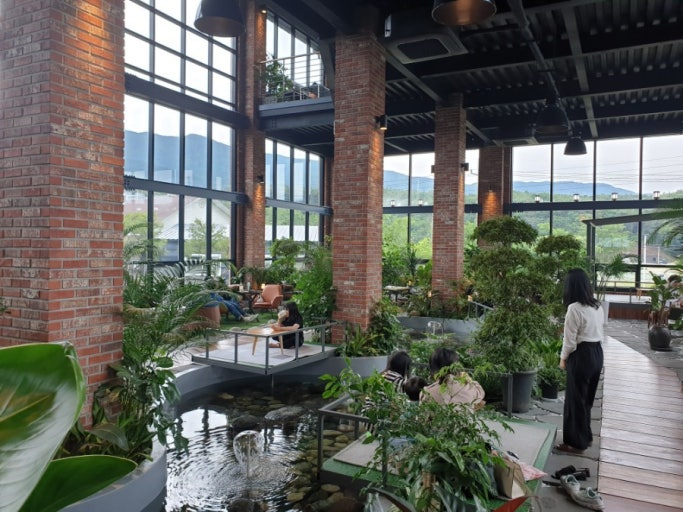
Korean cafe culture design ranges from industrial warehouse conversions to hanok traditional Korean house transformations to minimalist Scandinavian-influenced spaces. Korean cafe culture designers approach each cafe as a complete sensory experience — lighting, materials, music, tableware, and food presentation are all considered holistically.
This Korean cafe culture design obsession directly connects to Korean beauty standards — read our Korean Beauty Standards Guide for the aesthetic values that shape Korean cafe culture visual priorities.
Korean Cafe Culture Reason #3 — The Instagram Effect
Korean cafe culture and social media are inseparable. Korean cafe culture spaces are designed to be photographed — unusual architecture, photogenic drinks, and carefully composed food presentations make Korean cafe culture content some of the most shared on Instagram and TikTok globally.
Korean cafe culture “hidden cafes” (숨은 카페, sumeun kape) — tucked into alleyways, rooftops, or unexpected locations — have become destinations in their own right, discovered and shared through Korean cafe culture social media communities.
Korean Cafe Culture Reason #4 — The Coffee Quality Revolution
Korean cafe culture has undergone a quality revolution. Early Korean cafe culture was dominated by instant coffee (믹스커피, mikseu keopi) — a sweet instant coffee-creamer-sugar mixture that remains beloved in Korean cafe culture nostalgia.
Modern Korean cafe culture has embraced specialty coffee with the same intensity Koreans apply to everything. Korean cafe culture barista championships, single-origin roasters, and precise brewing methods have made Seoul one of the world’s most sophisticated Korean cafe culture destinations for coffee quality.
Korean Cafe Culture: Types of Cafes
Korean Cafe Culture Type #1 — Themed Cafes (테마 카페)
Themed cafes are the most distinctly Korean cafe culture phenomenon — cafes built around a specific concept, character, or experience that extends far beyond coffee.
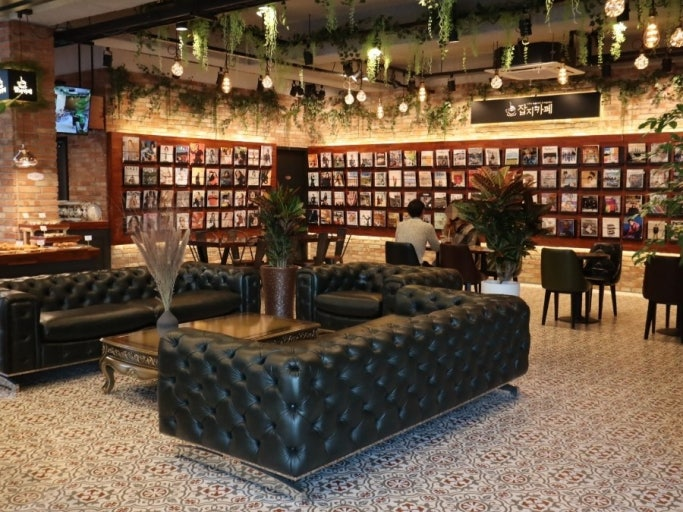
Korean cafe culture themed cafe examples:
Animal cafes: Korean cafe culture animal cafes feature cats, dogs, raccoons, hedgehogs, and even sheep as interactive companions while you drink. Cat cafes (고양이 카페, goyangi kape) are the most established Korean cafe culture animal category — entry fees cover unlimited coffee and cat interaction time.
Character cafes: Korean cafe culture character cafes are pop-up or permanent spaces dedicated to specific IP — BTS, Kakao Friends, Line Friends, and various anime characters inspire Korean cafe culture character cafe designs.
Color cafes: Korean cafe culture color cafes commit entirely to a single color — everything from walls to furniture to food to tableware is one color. Korean cafe culture color cafe experiences are entirely designed for the perfect Instagram grid photo.
Bookstore cafes: Korean cafe culture bookstore cafes (북카페, buk kape) combine curated book collections with coffee — Korean cafe culture spaces for reading, studying, and quiet contemplation.
Korean Cafe Culture Type #2 — Specialty Coffee Shops
Korean cafe culture specialty coffee scene rivals Tokyo and Melbourne for quality and innovation.
Korean cafe culture specialty coffee shops feature:
- Single-origin beans sourced directly from farms
- Multiple brewing methods — pour over, siphon, cold brew, espresso
- Korean cafe culture baristas with competition-level training
- Minimal design that lets coffee quality speak
Korean cafe culture specialty coffee areas: Yeonnam-dong and Mangwon in Mapo-gu have become Korean cafe culture specialty coffee destinations — narrow streets lined with Korean cafe culture independent roasters and brewing bars.
Korean Cafe Culture Type #3 — Dessert Cafes (디저트 카페)
Korean cafe culture dessert cafes are as much about food as coffee — elaborate, photogenic desserts that have made Korean cafe culture dessert content globally viral.
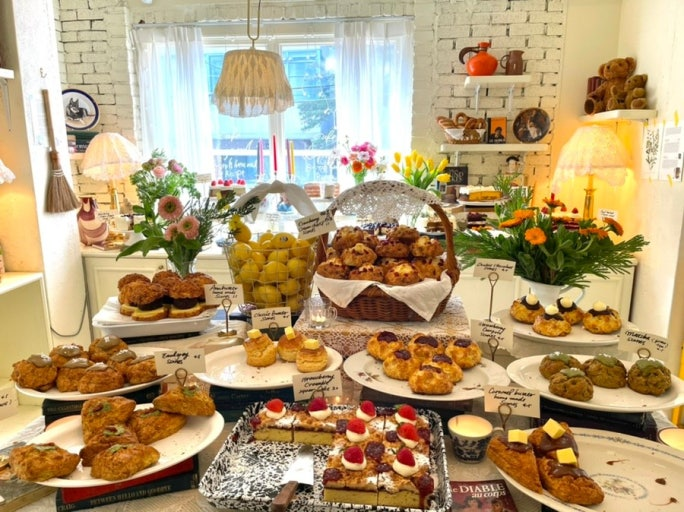
Korean cafe culture dessert specialties:
Bingsu (빙수): Shaved milk ice with sweet toppings — the quintessential Korean cafe culture summer dessert. Korean cafe culture bingsu ranges from traditional red bean versions to elaborate seasonal fruit constructions.
Dalgona: The honeycomb toffee that went globally viral during COVID — and has been a Korean cafe culture staple for decades. Korean cafe culture dalgona cafes serve the traditional street version alongside elaborate dalgona-flavored beverages.
Tteok (떡) desserts: Korean cafe culture traditional rice cake desserts have been reimagined for modern Korean cafe culture — matcha tteok, strawberry tteok, and elaborate tteok cake constructions.
Croffle: Korean cafe culture innovation — croissant dough cooked in a waffle iron, served with cream and fruit. One of the most successful Korean cafe culture food innovations of recent years.
Korean Cafe Culture Type #4 — Hanok Cafes (한옥 카페)
Hanok cafes are Korean cafe culture experiences in traditional Korean architecture — wooden beams, clay tile roofs, and courtyard gardens providing a Korean cafe culture contrast to Seoul’s modern cityscape.
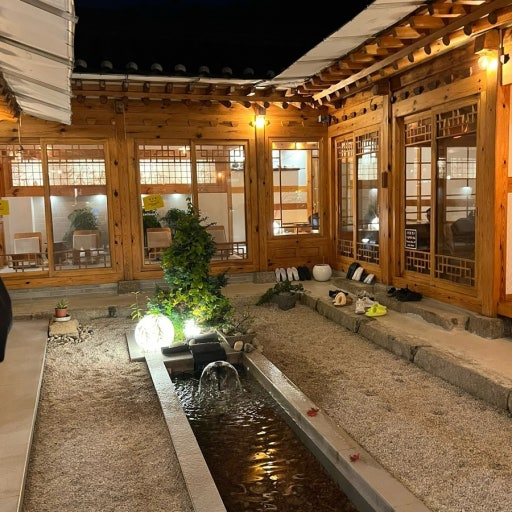
Korean cafe culture hanok cafes are concentrated in Bukchon Hanok Village and Insadong — neighborhoods where traditional architecture has been preserved. Drinking traditional Korean tea or specialty coffee in a Korean cafe culture hanok space while looking at ancient rooftops is one of the most atmospheric Korean cafe culture experiences in Seoul.
Korean Cafe Culture Type #5 — Rooftop Cafes (루프탑 카페)
Korean cafe culture rooftop cafes leverage Seoul’s dramatic skyline — offering Korean cafe culture coffee experiences with panoramic city views.
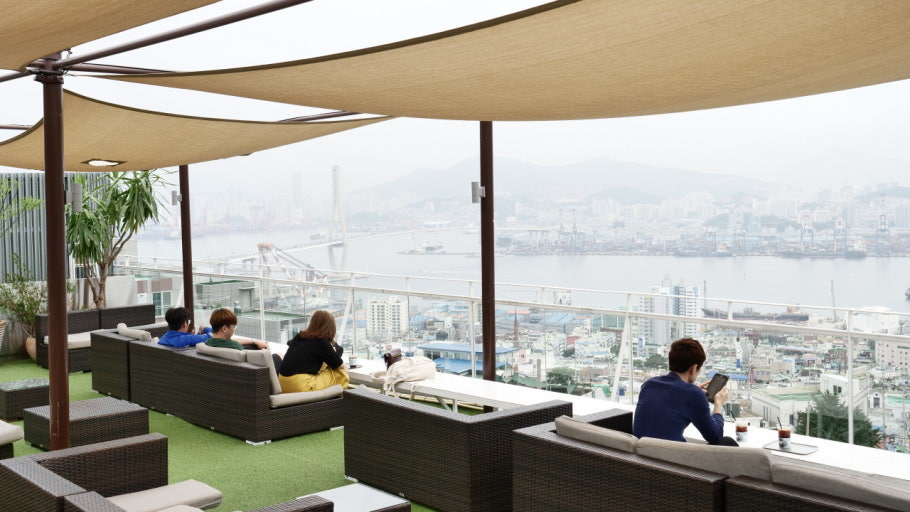
Korean cafe culture rooftop experiences are particularly popular in Yongsan (near Namsan Tower), Mapo (Han River views), and Gangnam (city skyline views). Korean cafe culture rooftop cafes are most magical at golden hour and after dark.
Korean Cafe Culture: What to Order
Korean Cafe Culture Drinks
Dalgona Coffee (달고나 커피): Korean cafe culture’s most globally famous drink — whipped instant coffee foam over iced milk. Despite going viral internationally during COVID, Korean cafe culture dalgona coffee has been a local staple for decades.
Einspanner (아인슈페너): Korean cafe culture’s most popular cafe drink — cold brew or espresso topped with thick, lightly sweetened whipped cream. Korean cafe culture einspanner is consumed by stirring the cream into the coffee — the result is rich, smooth, and intensely satisfying.
Yuzu Ade (유자에이드): Korean cafe culture citrus drink made from yuzu — a Korean citrus fruit with a flavor between lemon and grapefruit. Korean cafe culture yuzu drinks are refreshing, aromatic, and distinctly Korean.
Sikhye Latte (식혜 라떼): Korean cafe culture innovation combining traditional fermented rice punch with espresso — a Korean cafe culture beverage that bridges traditional and contemporary Korean flavors.
Matcha Everything: Korean cafe culture matcha drinks — lattes, smoothies, soft serves — are ubiquitous. Korean cafe culture matcha quality is generally excellent.
Korean Cafe Culture: The Best Cafe Neighborhoods in Seoul
Korean Cafe Culture: Yeonnam-dong (연남동)
Yeonnam-dong is Korean cafe culture’s most charming neighborhood — a residential area transformed by Korean cafe culture into Seoul’s most walkable cafe district.
Korean cafe culture Yeonnam-dong features independent cafes in converted houses, street-level garden cafes, and the Gyeongui Line Forest Park — a linear park lined with Korean cafe culture spots perfect for coffee walks.
Getting there: Hongik University Station, Line 2
Korean Cafe Culture: Seongsu-dong (성수동)
Seongsu-dong is Korean cafe culture’s industrial chic neighborhood — former factories and warehouses converted into Korean cafe culture spaces with raw concrete, exposed steel, and designer coffee.
Korean cafe culture Seongsu-dong is also Seoul’s “Brooklyn” — vintage shops, craft breweries, and Korean street fashion boutiques mix with Korean cafe culture spaces.
Getting there: Seongsu Station, Line 2
Korean Cafe Culture: Insadong (인사동)
Insadong Korean cafe culture combines traditional Korean aesthetics with contemporary cafe culture — the ideal Korean cafe culture destination for visitors who want cultural context alongside coffee.
Korean cafe culture Insadong highlight: Ssamziegil courtyard cafe cluster — multiple Korean cafe culture spots surrounding a traditional courtyard.
Getting there: Anguk Station, Line 3
Korean Cafe Culture: Garosu-gil (가로수길)
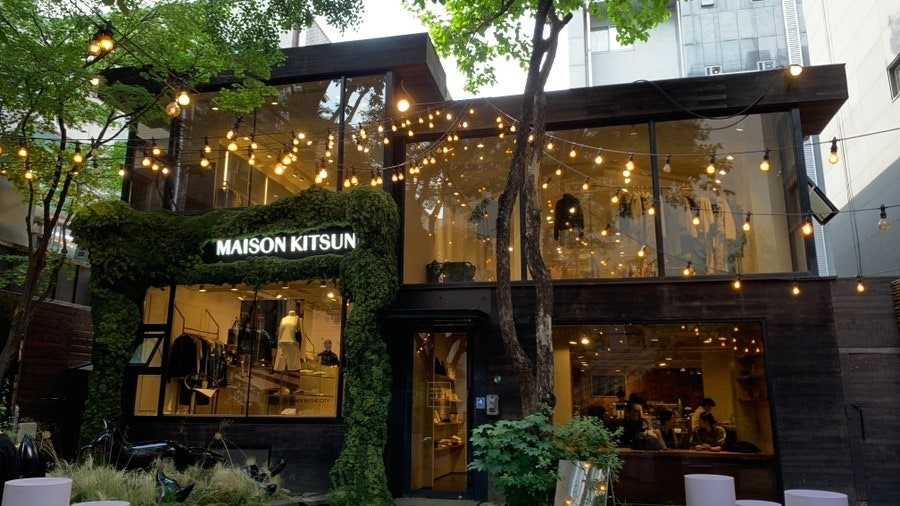
Garosu-gil — “tree-lined street” — is Korean cafe culture’s fashion-meets-coffee district in Gangnam. Upscale Korean cafe culture spaces alternate with Korean street fashion boutiques along a ginkgo tree-lined street.
Getting there: Sinnonhyeon Station, Line 9
Korean Cafe Culture: Practical Tips for Visitors
No time limit. Korean cafe culture etiquette allows unlimited stay after purchase — Korean cafes are working spaces as much as social spaces. Bring your laptop, books, or just enjoy the Korean cafe culture atmosphere without pressure.
Order at the counter. Korean cafe culture service is typically counter-service — order and pay first, then find a seat. Table service is uncommon in Korean cafe culture except at higher-end establishments.
Kiosk ordering. Many Korean cafe culture spots now use self-ordering kiosks — select your drink, pay by card, and receive a number or name call. Korean cafe culture kiosks usually have English options.
Cafe hopping. Korean cafe culture is best experienced through “cafe hopping” (카페 투어, kape tuo) — visiting multiple Korean cafe culture spots in a neighborhood in a single afternoon. Plan 2–4 Korean cafe culture stops for the full experience.
Timing matters. Korean cafe culture weekends are crowded — particularly at popular Korean cafe culture Instagram destinations. Korean cafe culture weekday mornings offer the most peaceful experience.
For the full Seoul experience beyond Korean cafe culture, read our Seoul 3 Day Itinerary and Korea Travel Tips Guide.
Hungry after Korean cafe culture hopping? Read our Korean Street Food Guide and Korean Food Guide for the best eating between cafe visits.

Korea Insider has lived in South Korea for 50 years and worked at international companies for over two decades — explaining Korean culture, food, and society to colleagues from the US, Europe, and Australia.
Internationally married with a Japanese spouse, Korea Insider brings both an insider’s depth and an outsider’s perspective to every topic on My Korea Tip.