
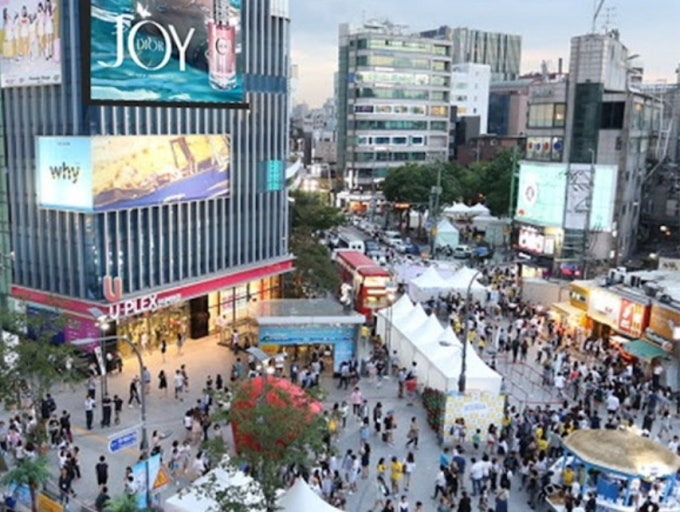
Seoul neighborhoods are as diverse as the city itself — and choosing the right Seoul neighborhood as your base dramatically shapes your entire experience.
Seoul neighborhoods range from ancient palace districts to K-pop youth culture hubs to luxury shopping enclaves to gritty industrial creative spaces. This complete Seoul neighborhoods guide covers every major area — what each Seoul neighborhood is known for, who it’s best for, and what you’ll find when you get there.
Before diving into this Seoul neighborhoods guide, read our Seoul Subway Guide — Seoul’s subway system is what makes every neighborhood in this Seoul neighborhoods guide easily accessible from every other.
Seoul Neighborhoods Guide: How to Choose Your Base
The right Seoul neighborhood depends entirely on your travel style. This Seoul neighborhoods guide organizes areas by character — so you can match your personality to your Seoul neighborhood before you book.
Seoul Neighborhoods Guide: Central Seoul
Seoul Neighborhoods Guide #1 — Myeongdong (명동)
Myeongdong is the most tourist-friendly Seoul neighborhood — the undisputed capital of K-beauty shopping, street food, and first-time visitor infrastructure.
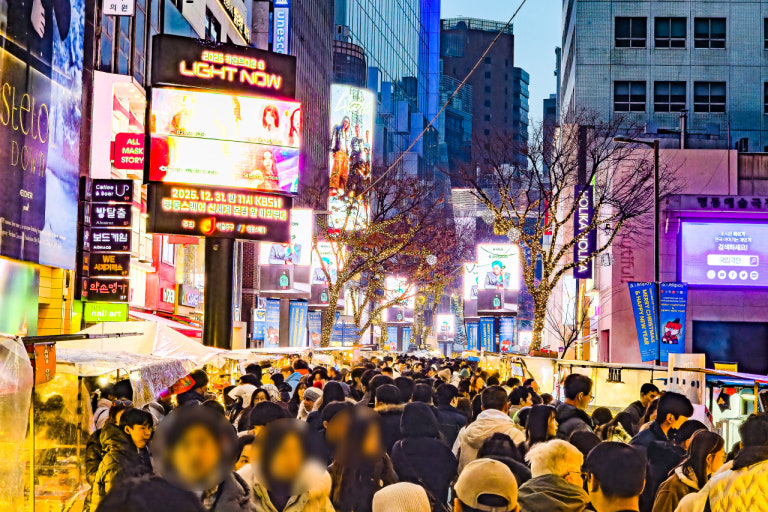
This Seoul neighborhood is where most first-time visitors to Korea spend their first days — and for good reason. Everything is accessible, English is widely spoken, and the concentration of shopping, food, and transport links makes Myeongdong the most convenient Seoul neighborhood for orientation.
Seoul neighborhoods guide Myeongdong highlights:
- K-beauty flagship stores — Innisfree, Etude House, The Face Shop, Laneige all have major Myeongdong presences
- Evening street food corridor — active from 5 PM with tteokbokki, corn dogs, egg bread, and more
- Namdaemun Market walking distance — budget shopping Seoul neighborhood crossover
- Excellent hotel density — every price range available in this Seoul neighborhood
Seoul neighborhoods guide Myeongdong best for: First-time visitors, K-beauty shoppers, travelers who want maximum convenience
Seoul neighborhoods guide Myeongdong nearest subway: Myeongdong Station, Line 4
For K-beauty shopping in this Seoul neighborhood, read our K-Beauty Skincare Routine Guide. For street food, read our Korean Street Food Guide.
Seoul Neighborhoods Guide #2 — Insadong (인사동)
Insadong is the most culturally authentic Seoul neighborhood for traditional Korean arts, crafts, and atmosphere — a pedestrian street lined with galleries, tea houses, craft shops, and the famous Ssamziegil courtyard.
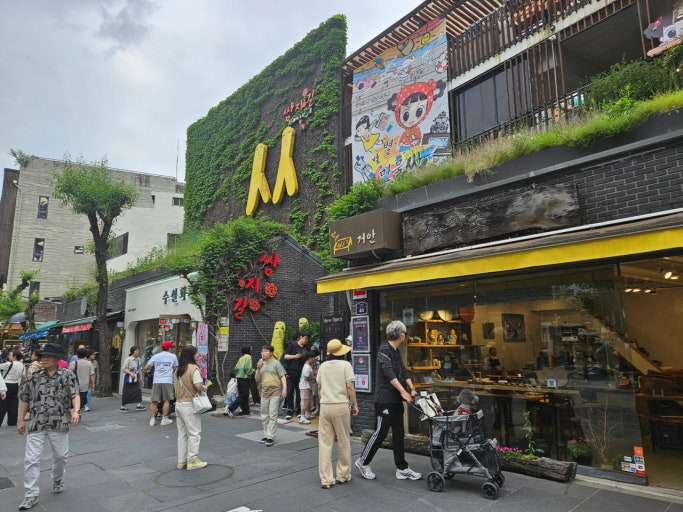
This Seoul neighborhood moves at a slower pace than the rest of the city — making it the best Seoul neighborhood for cultural immersion without overwhelming stimulation.
Seoul neighborhoods guide Insadong highlights:
- Traditional Korean craft shopping — ceramics, hanji paper goods, calligraphy
- Tea houses serving traditional Korean tea in beautiful settings
- Jogyesa Temple — Korea’s most important Buddhist temple, immediately adjacent
- Ssamziegil courtyard — charming independent shops and cafes
- Bukchon Hanok Village walking distance
Seoul neighborhoods guide Insadong best for: Cultural travelers, couples, anyone wanting traditional Korean atmosphere
Seoul neighborhoods guide Insadong nearest subway: Anguk Station, Line 3
Seoul Neighborhoods Guide #3 — Jongno (종로)
Jongno is Seoul’s historical heart — the Seoul neighborhood where Korea’s royal past is most visibly preserved.
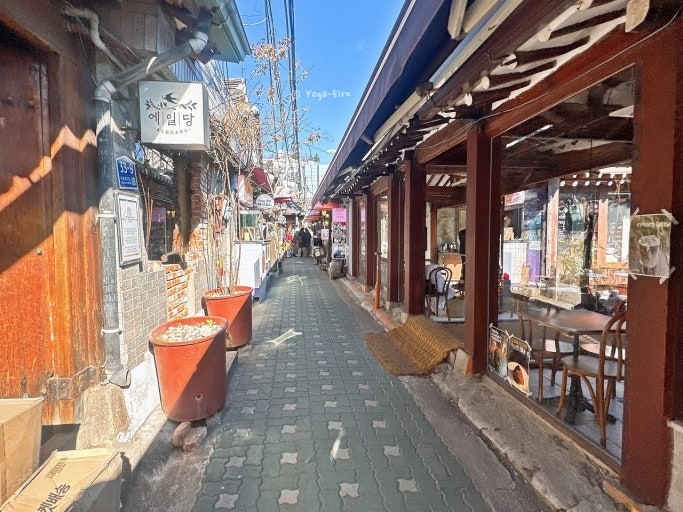
Gyeongbokgung Palace, Changdeokgung Palace, and Bukchon Hanok Village all sit within or adjacent to this Seoul neighborhood, making Jongno the best Seoul neighborhood base for history-focused visitors.
Seoul neighborhoods guide Jongno highlights:
- Gyeongbokgung Palace — Korea’s grandest royal palace
- Bukchon Hanok Village — Seoul’s most photographed neighborhood
- Cheonggyecheon Stream — urban waterway perfect for evening walks
- Gwanghwamun Plaza — Seoul’s ceremonial civic center
- Affordable traditional restaurants serving Seoul neighborhood locals
Seoul neighborhoods guide Jongno best for: History enthusiasts, palace visitors, cultural immersion
Seoul neighborhoods guide Jongno nearest subway: Gyeongbokgung Station or Jongno 3-ga Station, Line 3
Seoul Neighborhoods Guide: Youth Culture Districts
Seoul Neighborhoods Guide #4 — Hongdae (홍대)
Hongdae is the most energetic Seoul neighborhood — the youth culture hub surrounding Hongik University that never really sleeps.
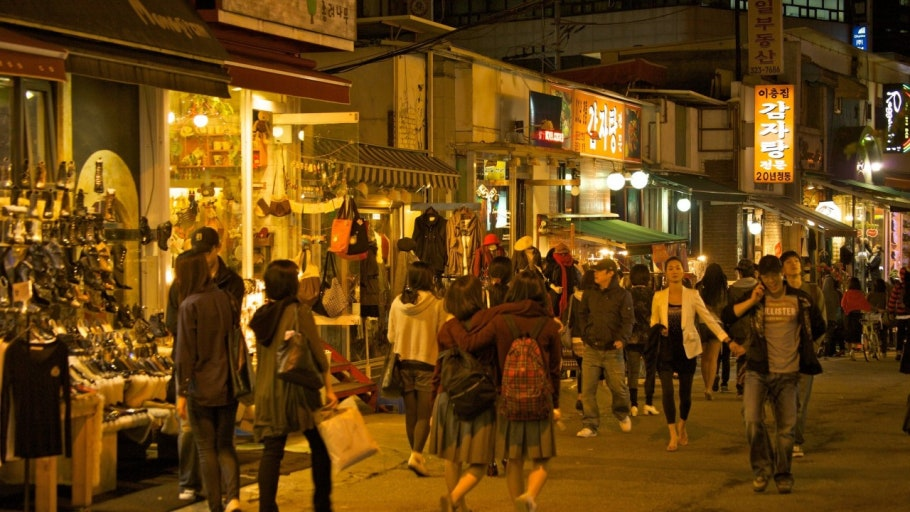
This Seoul neighborhood is where Korean creativity, nightlife, street performance, indie fashion, and K-pop culture collide. Hongdae is the Seoul neighborhood that most surprises visitors who expect Korea to be formal and reserved — the energy here is anything but.
Seoul neighborhoods guide Hongdae highlights:
- Independent boutiques and vintage stores — Seoul neighborhood’s best indie shopping
- Street performances in the main park most evenings
- Club and bar scene operating until dawn
- Korean street fashion at its most experimental — read our Korean Street Fashion Guide
- Norebang (private karaoke) density — highest in Seoul
- Excellent transport — Airport Railroad connects directly to Incheon Airport
Seoul neighborhoods guide Hongdae best for: Young travelers, nightlife seekers, K-pop fans, creatives
Seoul neighborhoods guide Hongdae nearest subway: Hongik University Station, Lines 2 and Airport Railroad
Seoul Neighborhoods Guide #5 — Sinchon and Ewha (신촌/이화)
Sinchon and the Ewha Womans University area form a connected Seoul neighborhood cluster — university culture, affordable shopping, and accessible nightlife in a slightly calmer Seoul neighborhood than Hongdae.
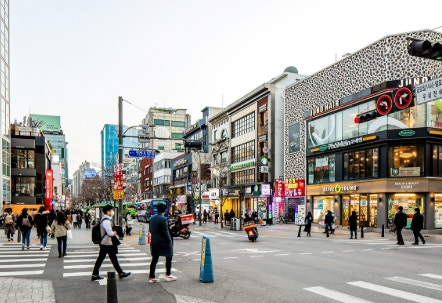
This Seoul neighborhood is where Seoul’s student population shops, eats, and socializes — making it one of the most affordable Seoul neighborhood options for budget travelers who still want youth culture energy.
Seoul neighborhoods guide Sinchon highlights:
- Extremely affordable fashion shopping in multi-story Seoul neighborhood malls
- Yonsei University and Ewha campuses — beautiful Seoul neighborhood walking
- Local restaurant density — authentic Korean food at student prices
- Easy Hongdae access — 10-minute walk from this Seoul neighborhood
Seoul neighborhoods guide Sinchon best for: Budget travelers, students, anyone wanting affordable Seoul neighborhood base
Seoul neighborhoods guide Sinchon nearest subway: Sinchon Station, Line 2
Seoul Neighborhoods Guide #6 — Seongsu-dong (성수동)
Seongsu-dong is Seoul’s most rapidly evolving Seoul neighborhood — a former industrial district transformed into the city’s creative capital.
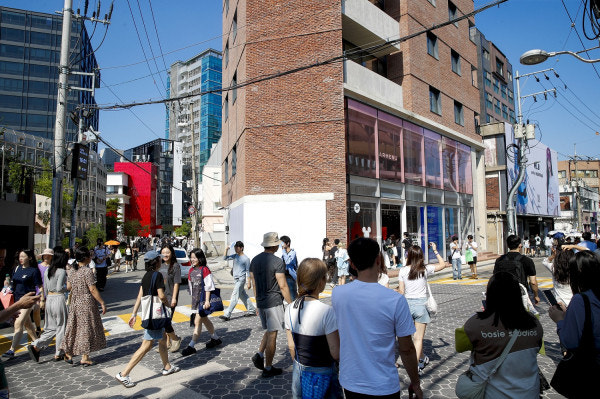
This Seoul neighborhood is Seoul’s answer to Brooklyn or Shoreditch — raw concrete warehouses converted into design studios, specialty coffee shops, craft breweries, and Korean street fashion concept stores. Seongsu-dong is the Seoul neighborhood where Seoul’s creative class actually lives and works.
Seoul neighborhoods guide Seongsu-dong highlights:
- Korean cafe culture at its most design-forward — read our Korean Cafe Culture Guide
- Vintage shopping and upcycled fashion in Seoul neighborhood warehouses
- Craft breweries and creative food concepts
- Seoul Forest — large green space immediately adjacent to this Seoul neighborhood
- Pop-up stores and rotating concept spaces
Seoul neighborhoods guide Seongsu-dong best for: Creative travelers, design enthusiasts, specialty coffee lovers
Seoul neighborhoods guide Seongsu-dong nearest subway: Seongsu Station, Line 2
Seoul Neighborhoods Guide: Upscale Districts
Seoul Neighborhoods Guide #7 — Gangnam (강남)
Gangnam is Seoul’s most internationally recognized Seoul neighborhood — made globally famous by PSY and representing Korea’s economic transformation most dramatically.
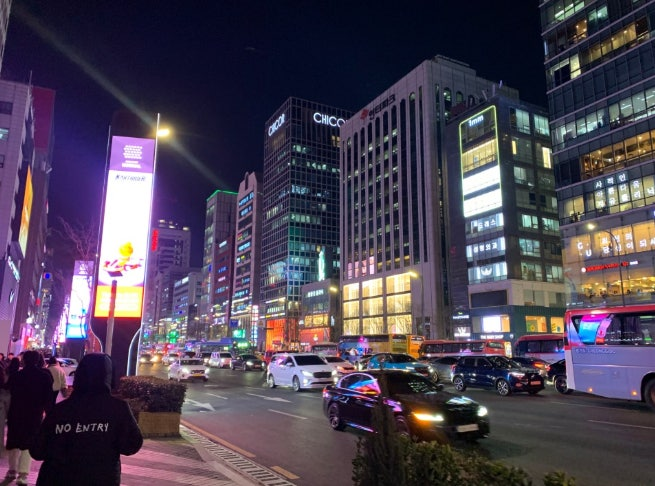
This Seoul neighborhood is upscale, polished, and expensive — the Seoul neighborhood where Korea’s affluent professional class lives, shops, and entertains. Gangnam is also the Seoul neighborhood with the highest concentration of Korean plastic surgery clinics — read our Korean Plastic Surgery Guide for context.
Seoul neighborhoods guide Gangnam highlights:
- COEX Mall — one of Asia’s largest underground malls with the stunning Starfield Library
- Apgujeong Rodeo Street — Seoul neighborhood luxury shopping boulevard
- Bongeunsa Temple — serene Buddhist temple surrounded by glass towers
- Premium Korean BBQ restaurants — read our Korean BBQ Guide
- Garosu-gil — fashion and cafe street in this Seoul neighborhood
Seoul neighborhoods guide Gangnam best for: Luxury travelers, shopping enthusiasts, business visitors
Seoul neighborhoods guide Gangnam nearest subway: Gangnam Station, Line 2
Seoul Neighborhoods Guide #8 — Apgujeong and Cheongdam (압구정/청담)
Apgujeong and Cheongdam form Seoul’s most exclusive Seoul neighborhood cluster — where Korea’s entertainment industry, luxury brands, and beauty industry converge.
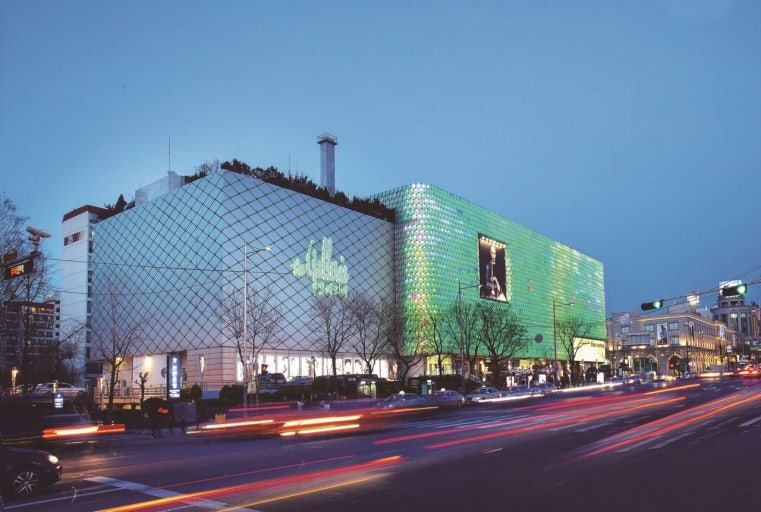
This Seoul neighborhood is where K-pop entertainment companies have offices, where celebrities dine, and where international luxury brands choose their Seoul flagship locations. Cheongdam is the Seoul neighborhood where Michelin-starred restaurants cluster most densely.
Seoul neighborhoods guide Apgujeong/Cheongdam highlights:
- SM, YG, and JYP Entertainment offices nearby — K-pop fan pilgrimage Seoul neighborhood
- Luxury brand flagship stores — Chanel, Dior, Prada
- Michelin-starred Korean restaurants — Jungsik, Mingles
- Dosan Park — pleasant Seoul neighborhood green space
Seoul neighborhoods guide Apgujeong best for: K-pop fans, luxury shoppers, fine dining enthusiasts
Seoul neighborhoods guide Apgujeong nearest subway: Apgujeong Rodeo Station, Bundang Line
Seoul Neighborhoods Guide: Character Neighborhoods
Seoul Neighborhoods Guide #9 — Itaewon (이태원)
Itaewon is Seoul’s most internationally diverse Seoul neighborhood — historically the area surrounding the US military base that evolved into Seoul’s most global, most cosmopolitan district.
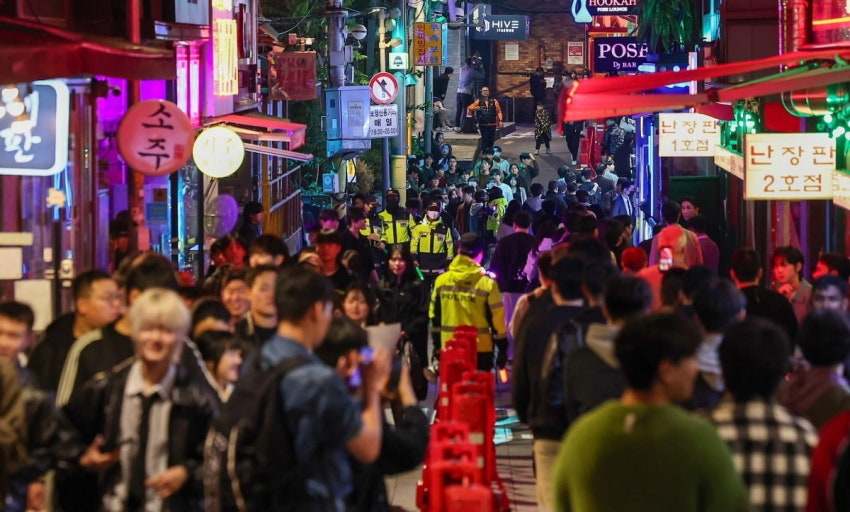
This Seoul neighborhood has the most international restaurant variety in Seoul — Middle Eastern, Mexican, Indian, Ethiopian, and virtually every other cuisine is represented in Itaewon. It’s also the Seoul neighborhood most comfortable for LGBTQ+ travelers.
Seoul neighborhoods guide Itaewon highlights:
- International food diversity — the most globally varied Seoul neighborhood for dining
- Antique furniture and vintage stores along Antique Alley
- Itaewon’s Gyeongnidan-gil — artisanal cafes and independent restaurants
- Haebangchon (HBC) — adjacent Seoul neighborhood with bohemian character
- Large English-speaking expat community
Seoul neighborhoods guide Itaewon best for: Foodies wanting non-Korean cuisine, LGBTQ+ travelers, expats, diverse dining
Seoul neighborhoods guide Itaewon nearest subway: Itaewon Station, Line 6
Seoul Neighborhoods Guide #10 — Yeonnam-dong (연남동)
Yeonnam-dong is Seoul’s most charming Seoul neighborhood for cafe culture and local Seoul neighborhood life — a residential area transformed by independent cafes, small restaurants, and creative businesses.
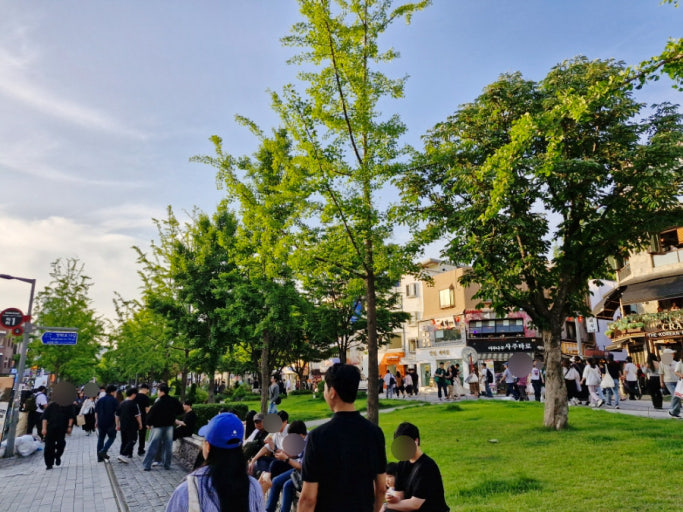
This Seoul neighborhood feels like discovering Seoul’s secret — a quiet, tree-lined Seoul neighborhood where young Seoul residents actually live, shop at local bakeries, and spend weekend afternoons. The Gyeongui Line Forest Park runs through this Seoul neighborhood, creating a linear green space lined with cafes perfect for afternoon walks.
Seoul neighborhoods guide Yeonnam-dong highlights:
- Korean cafe culture in its most charming form — read our Korean Cafe Culture Guide
- Small independent restaurants serving Seoul neighborhood residents
- Gyeongui Line Forest Park — Seoul neighborhood green corridor
- Immediate Hongdae proximity — best of both Seoul neighborhoods
Seoul neighborhoods guide Yeonnam-dong best for: Cafe hoppers, travelers wanting local Seoul neighborhood atmosphere, repeat visitors
Seoul neighborhoods guide Yeonnam-dong nearest subway: Hongik University Station, Line 2
Seoul Neighborhoods Guide #11 — Bukchon and Samcheong-dong (북촌/삼청동)
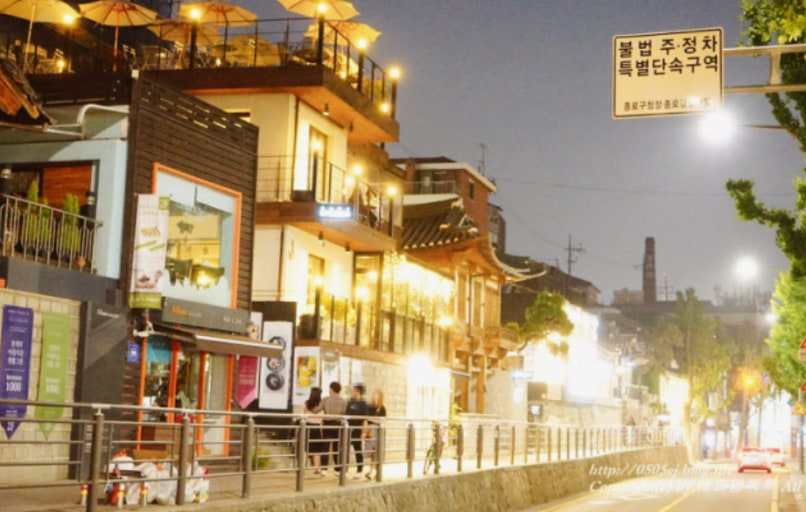
Bukchon and adjacent Samcheong-dong form Seoul’s most visually stunning Seoul neighborhood — traditional hanok houses climbing hillsides between two royal palaces, with Samcheong-dong’s art galleries and boutiques extending the Seoul neighborhood cultural experience.
This Seoul neighborhood is where ancient Seoul is most tangibly preserved — and where the contrast between traditional architecture and modern city views is most dramatic.
Seoul neighborhoods guide Bukchon/Samcheong-dong highlights:
- Bukchon-ro 11-gil — the most photographed Seoul neighborhood alley
- Art galleries along Samcheong-dong’s main street
- Charming independent cafes in converted hanok spaces
- Gyeongbokgung Palace and Changdeokgung Palace immediately accessible
Seoul neighborhoods guide Bukchon best for: Photographers, cultural travelers, couples, architecture enthusiasts
Seoul neighborhoods guide Bukchon nearest subway: Anguk Station, Line 3
Seoul Neighborhoods Guide: Emerging Districts
Seoul Neighborhoods Guide #12 — Mangwon-dong (망원동)
Mangwon-dong is the Seoul neighborhood Seoul insiders recommend when visitors ask where locals actually go — a residential Seoul neighborhood along the Han River with authentic restaurants, local markets, and the most genuinely neighborhood-y Seoul atmosphere.
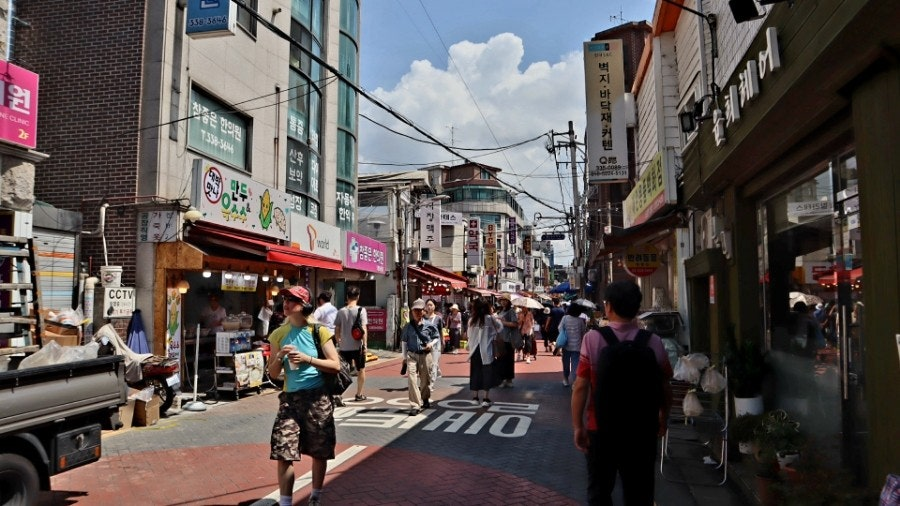
This Seoul neighborhood has been “discovered” but hasn’t yet been overwhelmed — making it one of the best Seoul neighborhoods for experiencing everyday Seoul life alongside genuine cafes and restaurants that serve the Seoul neighborhood community.
Seoul neighborhoods guide Mangwon-dong highlights:
- Mangwon Market — traditional local market Seoul neighborhood staple
- Han River access at Mangwon Hangang Park
- Specialty coffee shops without tourist markup
- Local restaurants at Seoul neighborhood prices
Seoul neighborhoods guide Mangwon-dong best for: Travelers wanting authentic local Seoul neighborhood experience
Seoul neighborhoods guide Mangwon-dong nearest subway: Mangwon Station, Line 6
Seoul Neighborhoods Guide: Practical Comparison
| Seoul Neighborhood | Best For | Price Range | Vibe |
|---|---|---|---|
| Myeongdong | First-timers, K-beauty | Mid-high | Tourist-friendly |
| Hongdae | Nightlife, youth culture | Budget-mid | Energetic |
| Gangnam | Luxury, shopping | High | Upscale |
| Itaewon | International food, diversity | Mid | Cosmopolitan |
| Insadong | Culture, tradition | Budget-mid | Traditional |
| Jongno | History, palaces | Budget-mid | Historical |
| Seongsu-dong | Creative, design | Mid | Industrial chic |
| Yeonnam-dong | Cafes, local life | Budget-mid | Charming |
| Bukchon | Photography, hanok | Budget-mid | Traditional |
| Mangwon-dong | Authentic local | Budget | Residential |
Seoul Neighborhoods Guide: Where to Stay
Budget Seoul neighborhoods: Sinchon, Hongdae, Jongno — hostels and guesthouses from ₩20,000–₩50,000 per night
Mid-range Seoul neighborhoods: Myeongdong, Itaewon, Insadong — hotels from ₩80,000–₩200,000 per night
Upscale Seoul neighborhoods: Gangnam, Cheongdam, Yongsan — hotels from ₩200,000–₩800,000+ per night
For the full cost breakdown of staying in each Seoul neighborhood, read our Cost of Living in Seoul Guide.
Seoul Neighborhoods Guide: Getting Between Neighborhoods
The best thing about this Seoul neighborhoods guide situation: every Seoul neighborhood described here is 10–30 minutes from every other Seoul neighborhood by subway. Seoul’s transit system makes Seoul neighborhood-hopping effortless — you can experience Hongdae in the morning, Bukchon in the afternoon, and Gangnam in the evening without stress.
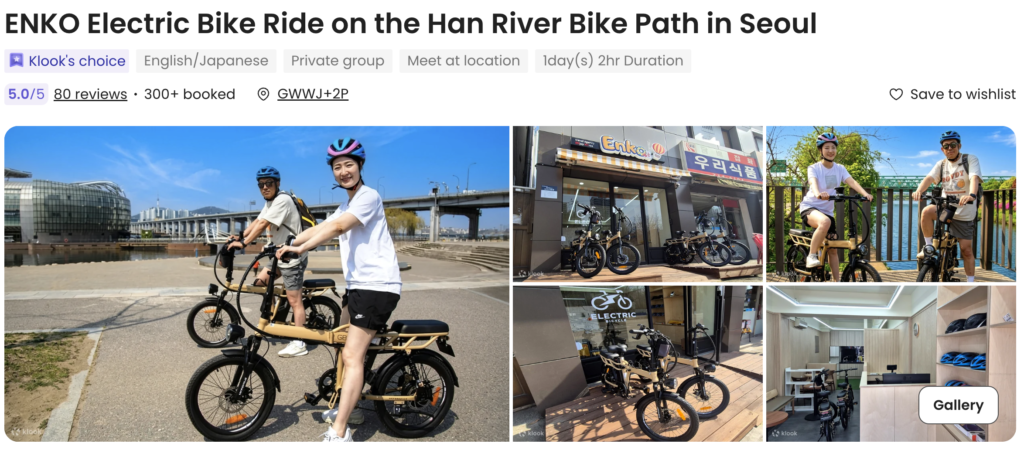
One of the best ways to explore Seoul’s neighborhoods at your own pace is by bike — book a Seoul bike rental on Klook and follow the Han River cycling paths connecting Hongdae, Yeouido, and beyond.
Read our Seoul Subway Guide for complete navigation guidance between every Seoul neighborhood in this guide.
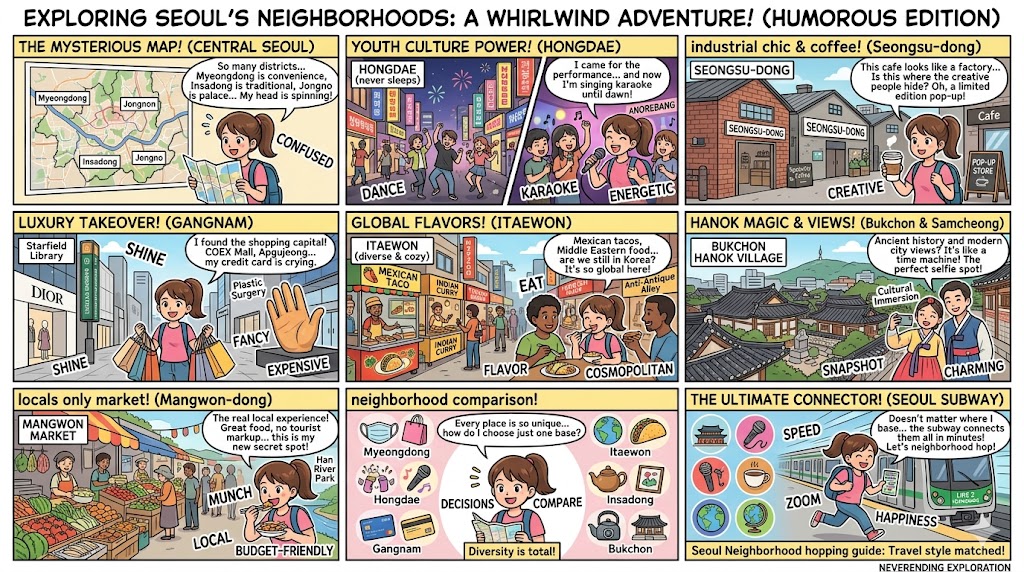
Ready to plan your Seoul neighborhood itinerary? Read our Seoul 3 Day Itinerary for a day-by-day plan covering the best Seoul neighborhoods, and our Things to Do in Seoul Guide for the top experiences in each area.

Korea Insider has lived in South Korea for 50 years and worked at international companies for over two decades — explaining Korean culture, food, and society to colleagues from the US, Europe, and Australia.
Internationally married with a Japanese spouse, Korea Insider brings both an insider’s depth and an outsider’s perspective to every topic on My Korea Tip.