
Korean marriage culture is one of the most distinct in the world — and one of the most misread by outsiders who assume that K-drama romance translates directly into how Koreans actually get married.
It does not. The reality is more interesting: a society where couples meet through blind dates arranged by family acquaintances, where wedding gifts arrive in cash envelopes handed to a friend at the door, where a groom’s family sends a wooden box full of silk fabric to the bride’s parents before the ceremony, and where a separate private ritual performed in hanbok immediately after the Western-style wedding ceremony is considered more emotionally significant than the ceremony itself.
Korean weddings contain two parallel systems — the modern and the traditional — operating simultaneously. Understanding both is what separates visitors who witness a Korean wedding from those who actually understand what they’re watching.
For the dating culture that precedes marriage, read our Korean Dating Culture Guide. For the social pressures surrounding marriage and children, read our Korea Birth Rate Guide.
Korean Marriage Culture: The Numbers
Before the culture, the statistics — because they tell the story more efficiently than anything else.
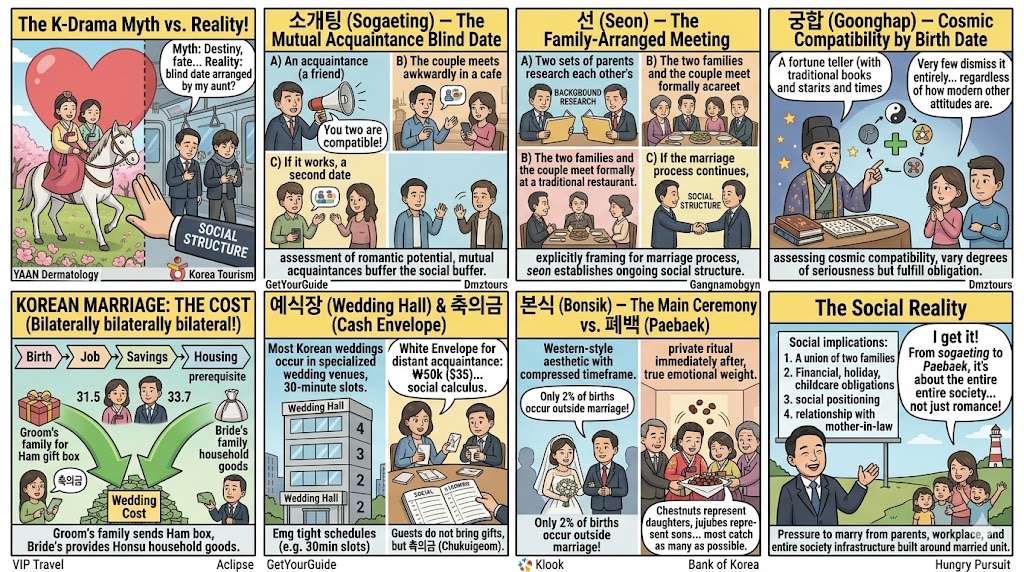
The average age at first marriage for Korean women is 31.5 years — among the highest in the world. Korean men marry at an average age of 33.7 years. Both figures have risen steadily for decades as financial prerequisites for marriage — a stable job, housing, sufficient savings — become harder to meet in major cities.
Total marriages in Korea rose significantly in recent years, reaching 222,000 in a single year — a sharp rebound driven by a cohort of people in their 30s who had delayed marriage decisions during the pandemic period. Despite this recovery, marriage rates remain historically low compared to a generation ago.
Perhaps the most revealing statistic: only 2% of Korean births occur outside of marriage — compared to 30–50% in most Western countries. In Korea, having a child almost universally means being married first. This makes marriage not just a personal milestone but a demographic variable — declining marriage rates translate almost directly into declining birth rates, without the buffer that cohabitation and non-marital births provide in other societies.
Korean Marriage Culture: How Couples Meet
소개팅 (Sogaeting) — The Blind Date System
The dominant method of meeting a potential marriage partner in Korea is not dating apps, not meeting organically at work or through friends, and not the arranged marriages of older generations. It is 소개팅 (sogaeting) — a blind date arranged by a mutual acquaintance.
The format is specific: two people meet for the first time, usually at a café, introduced by a friend, colleague, classmate, or family connection who believes they might be compatible. The meeting is understood by both parties to be an assessment of romantic potential — not casual socializing. Both parties arrive knowing that the other is also evaluating them as a potential partner.
If both feel positively, a second meeting follows. If not, both move on without social awkwardness — the mutual acquaintance absorbs the social buffer.
선 (Seon) — The Family-Arranged Meeting
More formally, 선 (seon) is a blind date arranged specifically with marriage in mind, often by parents or family connections. The families involved typically conduct background research on each other — family background, education, career, financial situation — before the meeting takes place.
Seon is distinct from sogaeting in its explicit framing: both parties and both families understand that this meeting is a step in the marriage process, not simply dating. If the couple proceeds to marriage, the family-to-family relationship established through seon becomes an ongoing social structure.
궁합 (Goonghap) — Compatibility by Birth Date
Even in modern Korea, many families consult a fortune teller or traditional practitioner to assess 궁합 — the cosmic compatibility between two people based on their birth dates and birth times. The reading considers whether the couple’s energies complement or conflict with each other.
Most young Koreans approach this tradition with varying degrees of seriousness — some treat it as a meaningful cultural step, others as a family obligation to fulfill before moving forward. Very few dismiss it entirely, regardless of how modern their other attitudes are.
Korean Marriage Culture: The Cost
Korean weddings are expensive. This is not a reputation exaggeration.
The financial expectations surrounding Korean marriage are distinct from Western countries in their scope and their bilateral nature — both families are expected to contribute significantly, and the contributions are understood to follow specific patterns.
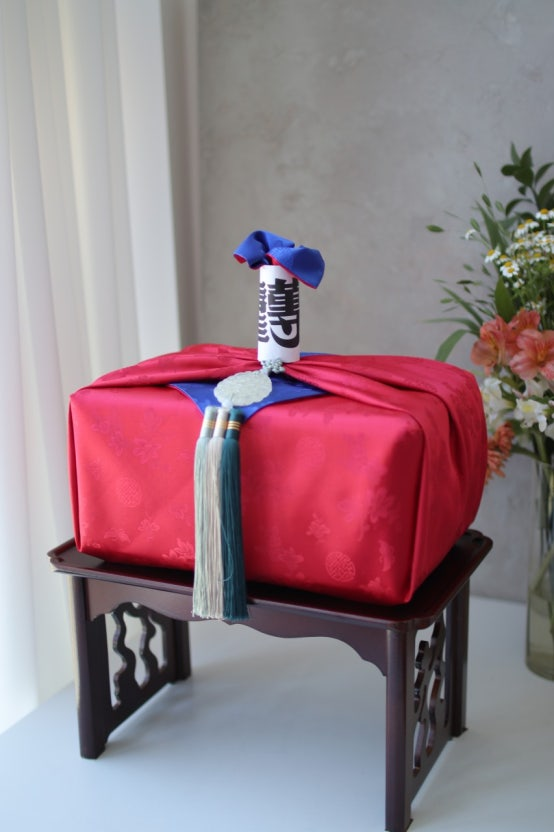
함 (Ham) — The Groom’s Gift Box Before the wedding, the groom’s family sends a 함 — a wooden box — to the bride’s family. Inside: silk fabric (symbolizing the wife’s future clothing), the official marriage papers, and additional gifts including jewelry and household goods. Traditionally, the groom’s friends carry the box to the bride’s home in a ritual procession, “selling” it to the bride’s family for a fee that goes to the friends. The ceremony is loud, festive, and deliberately theatrical.
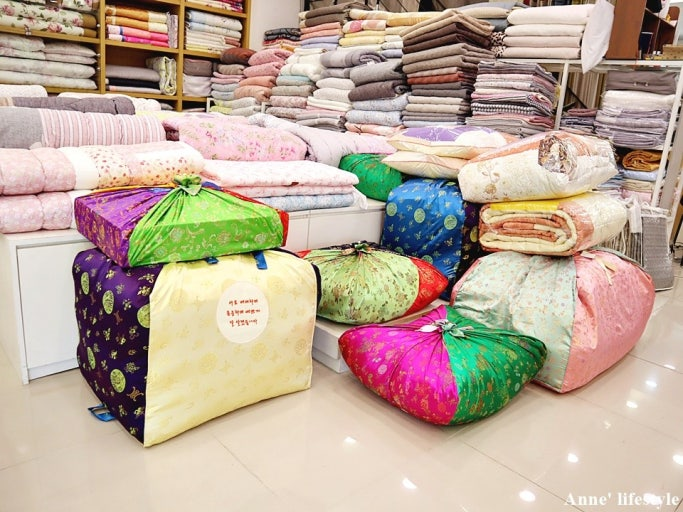
혼수 (Honsu) — The Bride’s Contribution The bride’s family is expected to provide 혼수 — household goods for the new home, including bedding, kitchen equipment, electronics, and furniture. The scale of honsu expected by the groom’s family has been a source of significant social tension and controversy in modern Korea, with some families demanding honsu that constitutes a major financial burden.
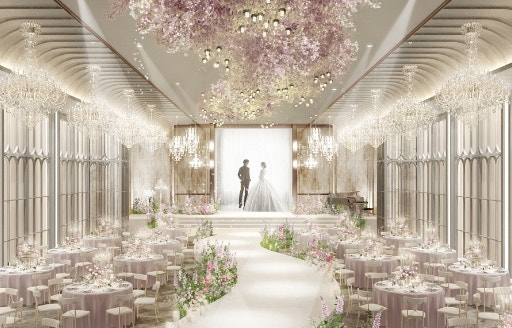
예식장 (Wedding Hall) Most Korean weddings take place in a dedicated 예식장 — a specialized wedding venue distinct from hotels, churches, or outdoor spaces. Wedding halls operate multiple ceremonies simultaneously on different floors, running on tight schedules, often 30-minute ceremony slots. This is not a criticism — it is a practical adaptation to the volume of Korean weddings and the financial efficiency it creates.
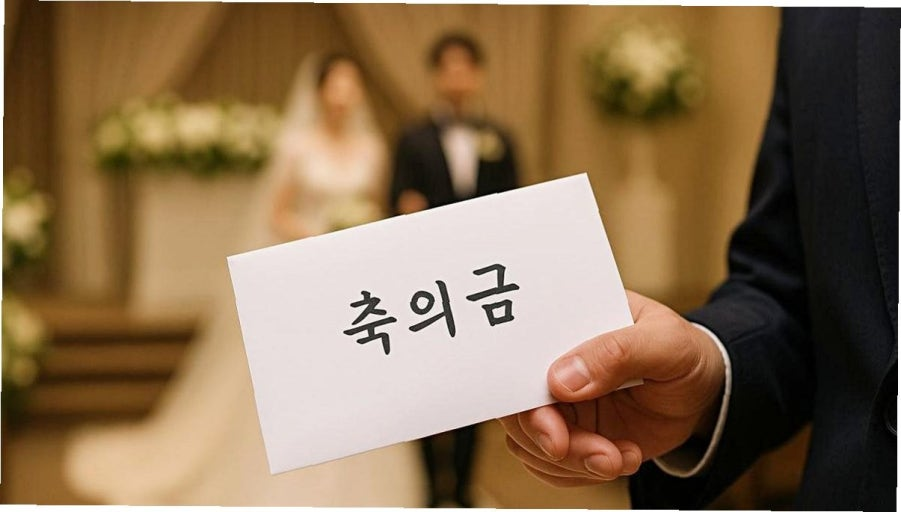
축의금 (Chukuigeom) — The Cash Envelope Wedding guests do not bring gifts. They bring 축의금 — a white envelope containing cash. The amount follows a social calculus: the closeness of the relationship determines the appropriate sum, typically ranging from ₩50,000 ($35) for a distant acquaintance to several hundred thousand won for close friends or family. A friend stationed at the entrance records each guest’s name and the amount given — creating a social ledger that the couple will reference when attending the weddings of those same guests in future years.
Korean Marriage Culture: The Wedding Day
본식 (Bonsik) — The Main Ceremony
Modern Korean weddings combine Western visual aesthetics with Korean structural elements. The bride wears a white Western-style wedding dress. The groom wears a suit. The ceremony follows a roughly Western format — processional, vows, declaration of marriage — but compressed into a shorter timeframe than Western equivalents, reflecting the wedding hall scheduling system.
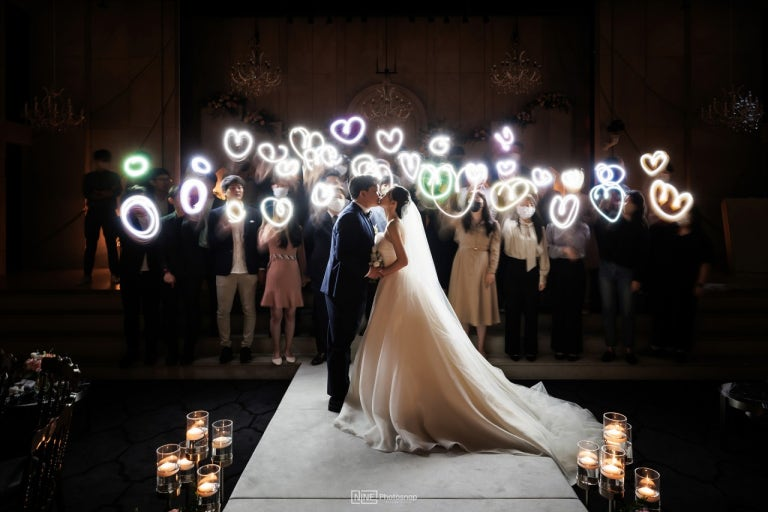
The ceremony is notably efficient. Most Korean wedding ceremonies run 20–30 minutes. Guests arrive, the ceremony occurs, guests proceed to lunch. The social gathering happens around the meal rather than extending the ceremony.
폐백 (Paebaek) — The Family Ritual
Immediately after the Western ceremony, the couple changes into traditional hanbok for the 폐백 — a private ritual performed only for close family, not the general wedding guests.
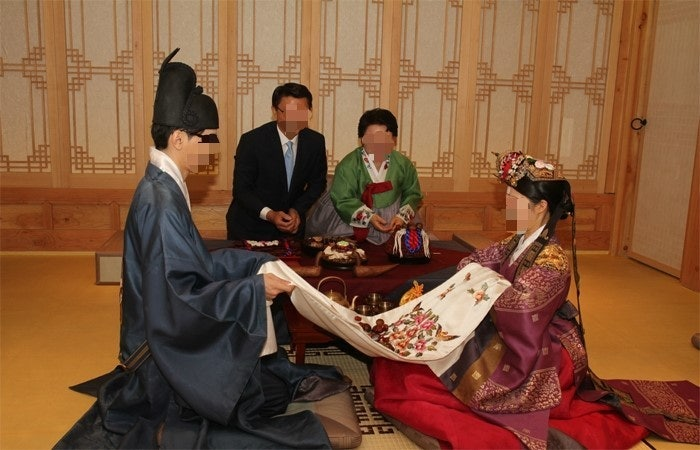
The paebaek is where the emotional weight of the Korean wedding actually lives.
The couple kneels before the groom’s parents and elders, serving traditional foods — jujubes and chestnuts — and bowing deeply in a formal expression of respect and gratitude. The parents and elders offer wisdom, blessing, and acceptance of the new spouse into the family. The ceremony ends with the parents tossing jujubes and chestnuts at the couple as they hold out a cloth — the number caught traditionally symbolizing future children.
Chestnuts represent daughters. Jujubes represent sons. Most couples catch as many as possible.
The paebaek takes place in a separate room in the wedding hall, often simultaneously with the reception happening in the main hall. It is the ritual that most Korean couples describe as the most genuinely moving part of their wedding day — the moment that feels most distinctly and irreducibly Korean.
Korean Marriage Culture: What It Means Socially
Marriage in Korea is understood differently from the Western conception of two individuals choosing each other. It is, at its structural core, a union of two families — with the attendant implications for ongoing family relationships, financial obligations, holiday obligations, and social positioning.
The bride’s relationship with her 시어머니 (mother-in-law) is a defining element of Korean married life that has generated enough cultural conversation to fill entire television drama genres. The expectations — around housework, childcare, holiday preparation, deference — have evolved significantly but remain distinct from Western norms.
The pressure to marry comes from multiple directions simultaneously: parents who view a child’s marriage as a social and familial milestone, a workplace culture that still subtly views unmarried professionals differently, and a society where the financial and emotional infrastructure of adult life is still largely built around the married household unit.
Korean Marriage Culture: FAQ
What is the average age of marriage in Korea? Korean women marry at an average age of 31.5 years and men at 33.7 — among the highest first-marriage ages in the world. Both figures have risen steadily as housing costs and financial prerequisites for marriage have increased in major cities.
How do Koreans typically meet their spouses? The dominant method is sogaeting — a blind date arranged by a mutual acquaintance — or seon, a more formal family-arranged meeting with marriage explicitly in mind. Dating apps are also widely used, particularly in urban areas. Meeting organically through work or social settings is common but less likely to lead directly to marriage than these structured introductions.
What do you bring to a Korean wedding as a guest? Cash in a white envelope — not a gift. The amount follows social convention based on your closeness to the couple. A general acquaintance gives ₩50,000–₩100,000. A close friend gives ₩100,000–₩300,000 or more. The couple records each guest’s contribution in a ledger and is expected to reciprocate when attending the guest’s wedding in future.
What is the paebaek ceremony? The paebaek is a private traditional ceremony performed by the couple in hanbok for close family immediately after the main wedding ceremony. The couple bows to the groom’s parents and elders, serves traditional foods, receives blessings, and participates in the jujube-and-chestnut tossing ritual. Most Koreans describe it as the most emotionally meaningful part of their wedding day.
Is it common for foreigners to marry Koreans? Increasingly, yes. International marriages accounted for nearly 10% of all Korean marriages in recent years, with the number growing steadily. Korean men most commonly marry Vietnamese and Chinese women; Korean women most commonly marry American and Chinese men.
What is a Korean wedding hall? A dedicated venue that hosts multiple wedding ceremonies simultaneously, operating on tight schedules — often 30-minute ceremony slots. Most Korean weddings take place in these specialized facilities rather than churches, hotels, or outdoor venues. They are efficient, fully equipped, and specifically designed for the Korean wedding format.

Korea Insider has lived in South Korea for 50 years and worked at international companies for over two decades — explaining Korean culture, food, and society to colleagues from the US, Europe, and Australia.
Internationally married with a Japanese spouse, Korea Insider brings both an insider’s depth and an outsider’s perspective to every topic on My Korea Tip.