
North Korea facts are among the most shocking, most bizarre, and most hard-to-believe pieces of information about any country on Earth.
The Democratic People’s Republic of Korea — known to the world as North Korea — is the most secretive, most controlled, and most isolated nation in modern history. North Korea facts that seem like fiction are reality for 26 million people living inside its borders right now.
This guide covers 20 North Korea facts that will genuinely shock you — and explain what life is actually like inside the world’s most closed country.
Before diving into North Korea facts, understand the Korean peninsula’s divided history through our Korean Military Service Guide — South Korea’s mandatory military service exists entirely because of the North Korea threat that these North Korea facts make real.
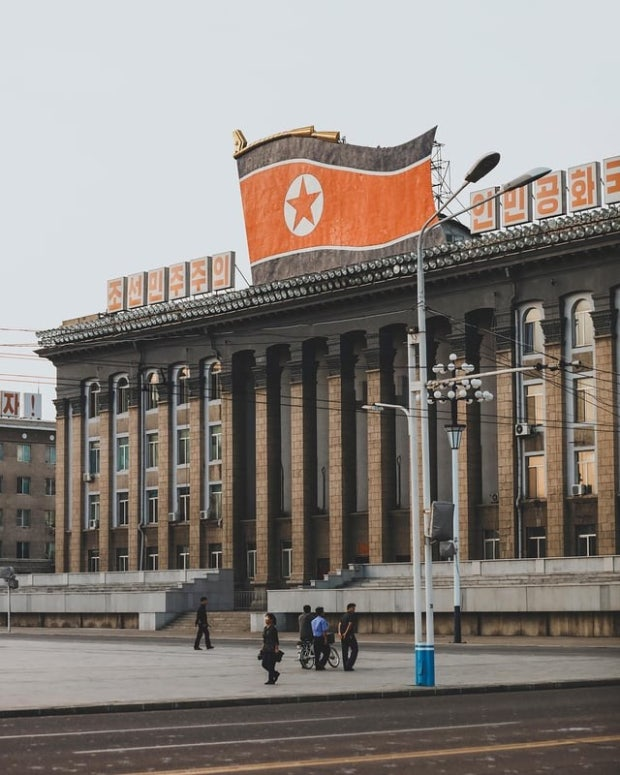
North Korea Facts: The Country Itself
North Korea Fact #1 — North Korea Is Technically Still at War with South Korea
The single most important of all North Korea facts: the Korean War never officially ended.
The 1950–1953 Korean War concluded with an armistice agreement — a ceasefire — not a peace treaty. North Korea, South Korea, the United States, and China never signed a formal peace agreement. The two Koreas remain technically in a state of war more than 70 years after fighting stopped.
This North Korea fact explains why South Korea maintains mandatory military service, why 28,500 US troops remain stationed in South Korea, and why every diplomatic development involving North Korea carries such weight.
North Korea Fact #2 — North Korea Uses Its Own Calendar System
North Korea facts about time itself are disorienting. North Korea operates on the Juche calendar — the country’s official ideological system — which counts years from the birth of Kim Il-sung in 1912.
This means the year 2026 in the outside world is Juche 115 in North Korea. This North Korea fact reflects the complete reorganization of North Korean society around the Kim dynasty — even time itself is measured from the founding leader’s birth.
North Korea Fact #3 — North Korea Has Three Capitals (Technically)
Among the most obscure North Korea facts: North Korea technically recognizes Seoul — the capital of South Korea — as its legitimate capital city. Pyongyang is designated as the “provisional capital” in North Korea’s constitution, based on the official position that Korea will eventually reunify under North Korean leadership.
This North Korea fact reveals the fundamental political reality of the Korean peninsula — both Koreas officially claim sovereignty over the entire peninsula, making the division simultaneously a political reality and a constitutional fiction.
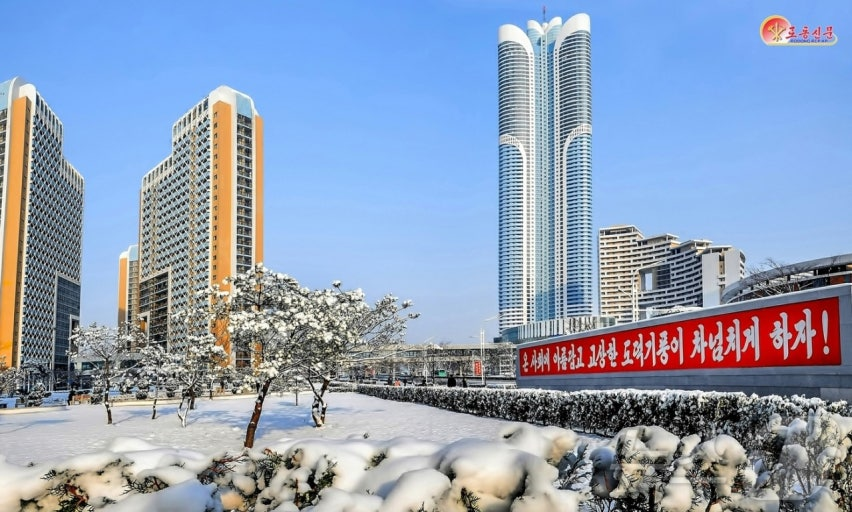
North Korea Fact #4 — North Korea Has Its Own Time Zone
North Korea facts include a literal manipulation of time. In 2015, North Korea unilaterally created “Pyongyang Time” — moving its clocks back 30 minutes from South Korea and Japan to mark the 70th anniversary of liberation from Japanese colonial rule.
This North Korea fact — creating a separate time zone shared by no other country — illustrates the North Korean government’s willingness to literally reshape reality to serve political symbolism.
In 2018, North Korea moved its clocks back to align with South Korea as a diplomatic gesture before inter-Korean summit talks — one of the more remarkable North Korea facts from that brief period of engagement.
North Korea Facts: Daily Life
North Korea Fact #5 — Most North Koreans Have No Internet Access
Among the most significant North Korea facts for digitally connected foreigners: regular North Korean citizens have no access to the global internet.
Instead, North Korea operates an internal intranet called Kwangmyong — a closed network with government-approved content only. Access to the global internet is restricted to a tiny elite of government officials, military leadership, and select academics.
This North Korea fact means that most of North Korea’s 26 million citizens have never sent an email, used Google, or accessed social media. The information isolation created by this North Korea fact is one of the primary mechanisms of North Korean social control.
North Korea Fact #6 — North Korea Has a Three-Generation Punishment System
One of the most disturbing North Korea facts concerns the country’s prison camp system. North Korea operates political prison camps — known as kwanliso — holding an estimated 80,000–120,000 people.
The most shocking North Korea fact about these camps: punishment is transgenerational. When a person is deemed a political criminal in North Korea, their entire family — parents, siblings, children — can be imprisoned alongside them. This three-generation punishment system (연좌제) means that a grandfather’s political crime can result in his grandchildren being born in a prison camp.
Human rights organizations including Amnesty International have documented this North Korea fact extensively through testimony from defectors.
North Korea Fact #7 — North Koreans Are Assigned Jobs and Housing
Among the most fundamental North Korea facts about daily life: North Korean citizens do not choose their careers or where they live. The state assigns both.
Job assignments in North Korea are determined by the government based on family background, political loyalty scores, and state needs. Housing is similarly assigned — moving between cities in North Korea requires government permission.
This North Korea fact about the absence of economic freedom applies to virtually every aspect of North Korean civilian life. The market economy that South Korea shares with the rest of the world simply does not exist inside North Korea in the same form.
North Korea Fact #8 — North Korea Has a Songbun Class System
North Korea facts about social structure reveal a rigid hereditary caste system called songbun (성분). Every North Korean citizen is classified into one of approximately 51 sub-categories across three broad classes:
Core class (핵심계층): Descendants of Korean War veterans, Workers’ Party loyalists, and ideologically reliable families. Top access to education, housing, food rations, and career opportunities.
Wavering class (동요계층): The middle group — average citizens whose families have no particularly positive or negative political history.
Hostile class (적대계층): Descendants of landowners, religious practitioners, defectors, or anyone deemed politically unreliable. Worst access to resources, assigned to hardest labor, barred from Pyongyang.
This North Korea fact about songbun means that a person’s life outcomes in North Korea are determined significantly by their grandparents’ political history — not their own abilities or efforts.
North Korea Fact #9 — There Are Only 28 State-Approved Hairstyles
Among the more surreal North Korea facts: the North Korean government has at various points issued lists of approved hairstyles for citizens. Reports from defectors and state media have described guidelines specifying acceptable haircut styles for men and women.
Men’s styles reportedly must not be too long. Women’s styles are similarly regulated. This North Korea fact illustrates the extent to which the state attempts to control even the most personal aspects of citizens’ appearance and self-expression.
North Korea Fact #10 — North Koreans Cannot Freely Travel Within Their Own Country
Among the North Korea facts that most surprise foreigners: movement within North Korea itself is tightly controlled. Citizens require government-issued travel permits to move between cities or provinces.
Pyongyang — North Korea’s showcase capital — is particularly restricted. Living in Pyongyang is a privilege reserved for the politically reliable core class. This North Korea fact explains why Pyongyang looks relatively modern in state media footage while the rest of the country experiences significantly harder conditions.
North Korea Facts: The Kim Dynasty
North Korea Fact #11 — North Korea Has Been Ruled by One Family for Over 75 Years
Among the most historically remarkable North Korea facts: North Korea has been governed by a single family — the Kim dynasty — since its founding.
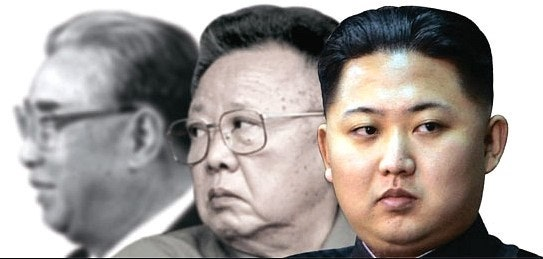
Kim Il-sung ruled from 1948 until his death in 1994. His son Kim Jong-il ruled from 1994 until his death in 2011. His grandson Kim Jong-un has ruled since 2011 and remains in power today.
This North Korea fact — three generations of single-family rule — is virtually unprecedented in modern political history outside of traditional monarchies.
North Korea Fact #12 — Kim Il-sung Is Still Technically the President of North Korea
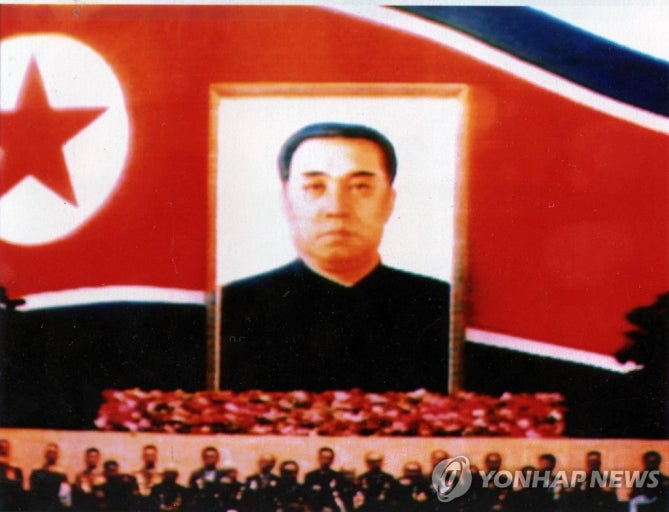
One of the most extraordinary North Korea facts involves constitutional posthumous governance. When Kim Il-sung died in 1994, North Korea’s constitution was amended to designate him “Eternal President of the Republic” — a position he holds forever, despite having been dead for over 30 years.
Kim Jong-il similarly holds the posthumous title of “Eternal General Secretary.” This North Korea fact means North Korea is technically governed by dead men — a constitutional arrangement with no parallel in any other country’s political history.
North Korea Fact #13 — North Korea’s State Ideology Claims Kim Il-sung Was Literally Born from Heaven
North Korea facts about the official mythology surrounding the Kim family are among the most extraordinary. State-approved North Korean history describes Kim Il-sung’s birth as accompanied by a double rainbow and a new star appearing in the sky. Similar supernatural birth stories surround Kim Jong-il.
This North Korea fact — the deliberate construction of a quasi-religious mythology around the ruling family — is a core element of the Juche ideology that governs North Korean society. The Kims are not presented merely as leaders but as near-divine figures.
North Korea Facts: Nuclear Program and Military
North Korea Fact #14 — North Korea Has Successfully Tested Nuclear Weapons
Among the most consequential North Korea facts globally: North Korea is a nuclear-armed state. North Korea has conducted six nuclear tests — in 2006, 2009, 2013, 2016 (twice), and 2017 — and has demonstrated intercontinental ballistic missile capability.
This North Korea fact makes the Korean peninsula one of the most significant nuclear flashpoints in the world. North Korea’s nuclear program is the primary reason the country commands such intense international attention despite its small size and economy.
North Korea Fact #15 — North Korea Spends Approximately 25% of GDP on Military
North Korea facts about military spending are staggering. Despite being one of the world’s poorest countries by GDP, North Korea maintains one of its largest standing armies — approximately 1.2 million active troops — and devotes an estimated 25% or more of its total economic output to military spending.
This North Korea fact explains the paradox of a country that cannot reliably feed its population yet possesses intercontinental ballistic missiles and nuclear weapons.
North Korea Fact #16 — North Korea Has Special Forces Trained Specifically to Assassinate South Korean Leaders
Among the most alarming North Korea facts about military capability: North Korea maintains special operations forces specifically trained for missions targeting South Korean government and military leadership.
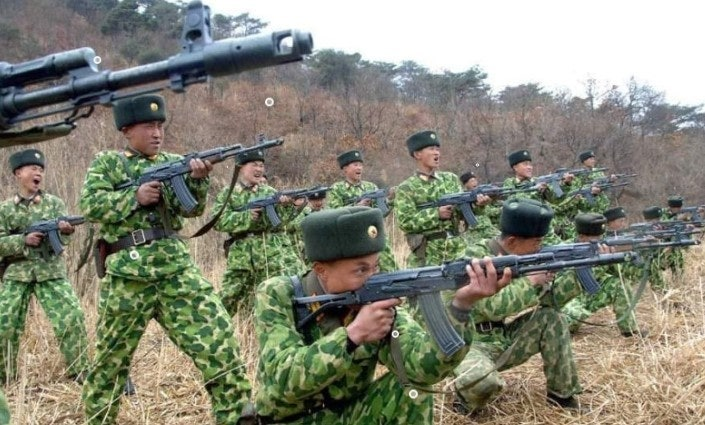
South Korean intelligence estimates North Korea has approximately 200,000 special operations forces — the largest special forces contingent of any military in the world. This North Korea fact directly informs why South Korea takes the threat so seriously and maintains mandatory military service as explained in our Korean Military Service Guide.
North Korea Facts: Economy and Food
North Korea Fact #17 — North Korea Experienced a Famine That Killed Hundreds of Thousands
Among the most tragic North Korea facts: the 1990s famine — known in North Korea as the “Arduous March” — killed an estimated 240,000–3,500,000 people depending on the source. The famine was caused by a combination of economic collapse following Soviet aid cutbacks, agricultural failures, and government mismanagement.
This North Korea fact — mass starvation in a country with a massive military — illustrates the human cost of North Korea’s political system and economic priorities.
North Korea Fact #18 — North Korea Counterfeits US Currency
Among the more surprising North Korea facts: the North Korean government has been credibly accused of producing high-quality counterfeit US $100 bills — known as “superdollars” — of sufficient quality to fool bank detection systems.
The US Treasury Department has attributed superdollar production to North Korean state entities. This North Korea fact about currency counterfeiting as a state revenue source illustrates the creative — and criminal — methods North Korea uses to generate hard currency under international sanctions.
North Korea Fact #19 — Electricity Is a Luxury in Most of North Korea
North Korea facts about infrastructure reveal an enormous gap between Pyongyang and the rest of the country. Satellite photographs taken at night show South Korea blazing with light while North Korea is almost entirely dark — one of the most visually striking North Korea facts available.
Electricity in North Korea outside Pyongyang is unreliable, limited to a few hours per day in many areas, and entirely unavailable in some regions. This North Korea fact stands in dramatic contrast to South Korea — one of the world’s most digitally connected and electricity-intensive societies.
North Korea Fact #20 — North Koreans Who Defect Cannot Contact Their Families
The final and perhaps most personally devastating of all North Korea facts: the approximately 34,000 North Koreans who have defected to South Korea since the 1990s generally cannot contact the family members they left behind.
Communication with defectors puts North Korean families at risk of punishment. Most North Korean defectors in South Korea live with the knowledge that they will likely never see or speak to their family members again.
This North Korea fact — the permanent family separation created by defection — is one of the most human dimensions of a political situation that is easy to discuss in abstract terms. Real people live with this reality every day.
For the contrast between these North Korea facts and South Korean life, read our Cost of Living in Seoul Guide and Korean Work Culture Guide — two countries that share a peninsula but inhabit entirely different worlds.
North Korea Facts: The Bottom Line
North Korea facts are shocking not because they are exotic — but because they are real. Every North Korea fact in this guide describes the actual daily reality of 26 million human beings living in the most controlled society in modern history.
Understanding North Korea facts matters because the Korean peninsula is one of the world’s most significant geopolitical flashpoints. The contrast between the North Korea facts in this guide and the vibrant, open, democratic South Korea that millions of foreigners visit every year is one of the most dramatic national contrasts in human history.
Want to understand South Korea better? Start with our Seoul Subway Guide and Korean Street Food Guide — the other side of the Korean peninsula.
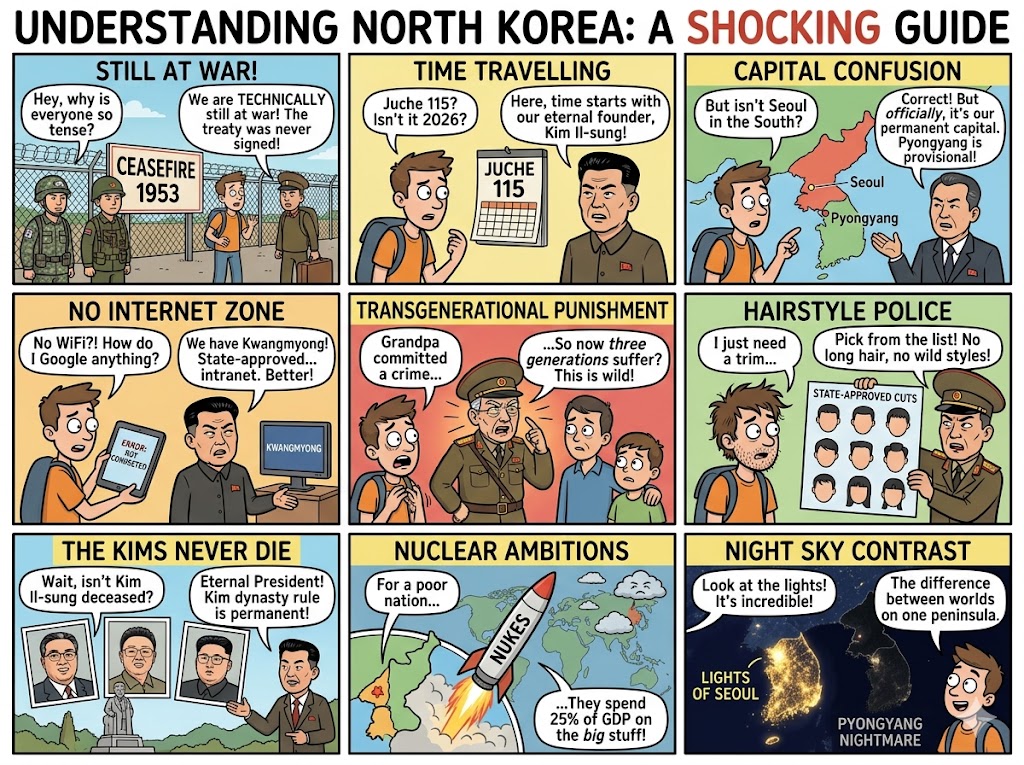

Korea Insider has lived in South Korea for 50 years and worked at international companies for over two decades — explaining Korean culture, food, and society to colleagues from the US, Europe, and Australia.
Internationally married with a Japanese spouse, Korea Insider brings both an insider’s depth and an outsider’s perspective to every topic on My Korea Tip.