
c is the city that makes Koreans pause mid-sentence when you mention you’re planning a trip to Korea and haven’t included it.
“You have to go to Gyeongju,” they’ll say, with the particular urgency Koreans reserve for things that are genuinely important. And they’re right. While Seoul gets virtually all of the international attention, Gyeongju sits three hours to the southeast quietly containing more history, more ancient beauty, and more genuine cultural depth than almost any other city in Northeast Asia.
For over a thousand years — from 57 BC to 935 AD — Gyeongju was the capital of the Silla Kingdom, one of the three kingdoms that dominated the Korean peninsula. At its peak, Gyeongju was one of the largest cities in the world, a center of Buddhist culture, royal power, and artistic achievement that shaped Korean civilization at its most formative. Today the city is essentially an open-air museum — royal burial mounds rise from the middle of suburban neighborhoods, UNESCO World Heritage temples sit in mountain valleys unchanged for thirteen centuries, and ancient stone pagodas stand where they’ve stood since before the Norman Conquest of England.
This complete Gyeongju travel guide covers everything you need — what to see, how to get there from Seoul, where to eat, and why Gyeongju deserves significantly more of your Korea itinerary than you’ve probably allocated to it.
Before planning your Gyeongju trip, read our Best Time to Visit Korea Guide — Gyeongju’s cherry blossoms and autumn foliage are among the most spectacular in the entire country, and timing matters.
Gyeongju Travel Guide: Why Gyeongju Is Different From Every Other Korean City
Every major Korean city has something that defines it. Seoul has scale and energy. Busan has beaches and seafood. Jeju has volcanic nature. Gyeongju has time.
Walking through Gyeongju feels genuinely different from anywhere else in Korea — because the past is not cordoned off behind museum glass here. It’s in the middle of the road. Tumuli Park, where Silla kings are buried under enormous grass-covered mounds, sits in the center of modern Gyeongju surrounded by restaurants and convenience stores. The Cheomseongdae observatory — the oldest surviving astronomical observatory in Asia, built in 634 AD — stands in an open field you can walk up and touch. Bulguksa Temple, one of Korea’s most revered Buddhist sites, is exactly where it’s been since 528 AD, functioning as an active place of worship rather than a tourist attraction that happens to be old.
UNESCO has recognized Gyeongju’s historical significance with multiple designations — the “Gyeongju Historic Areas” collectively form one of the most important archaeological zones in Asia. The entire city and its surrounding mountains contain thousands of years of continuous human history at a density that rivals Rome or Athens.
Read our Korean Education System Guide to understand why every Korean student makes a mandatory school trip to Gyeongju — it’s considered the most important single encounter with Korean history available in the country.
Gyeongju Travel Guide: How to Get There
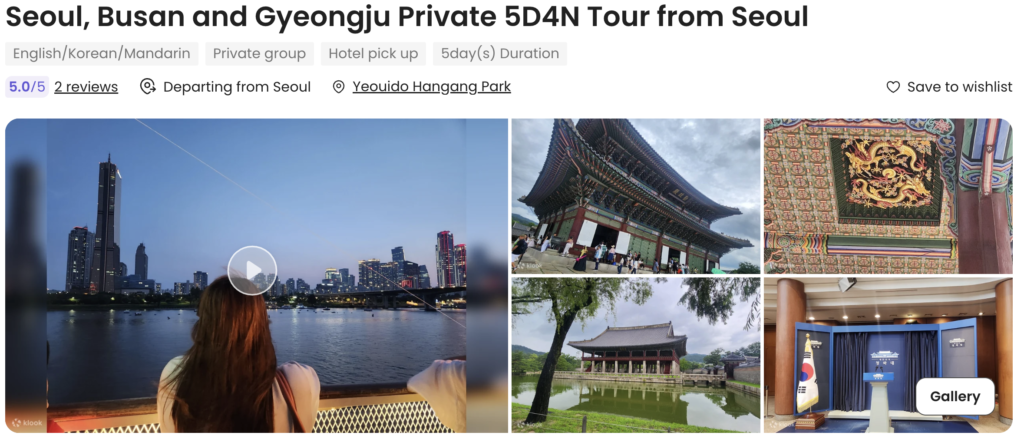
Want to visit Gyeongju without the hassle of planning transport and navigation? A Gyeongju day tour on Klook covers Bulguksa, Seokguram, Tumuli Park, and more — with an English-speaking guide and round-trip transport from Seoul or Busan included.
Getting to Gyeongju from Seoul is straightforward — and the journey itself is part of the pleasure.
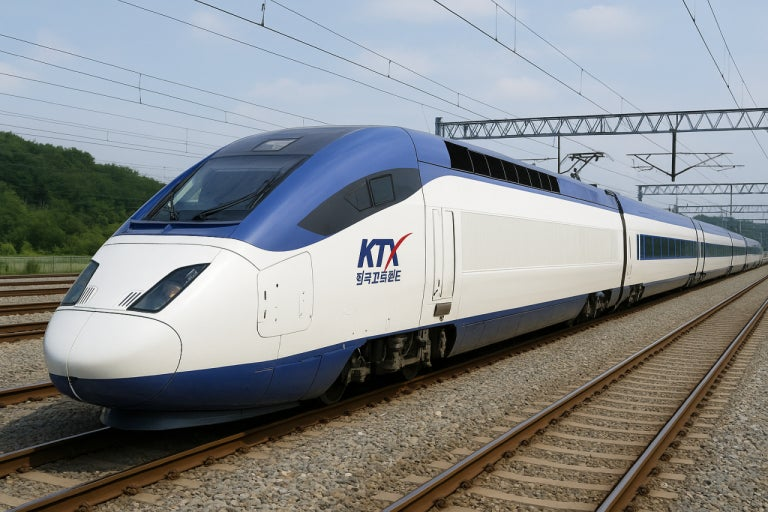
By KTX (Recommended)
The KTX high-speed train from Seoul Station to Singyeongju Station takes approximately 2 hours — dramatically faster than driving and significantly more comfortable. From Singyeongju Station, buses and taxis run to the city center. Tickets cost approximately ₩50,000–₩60,000 one-way and should be booked through Korail’s website in advance, especially for weekend travel.
By bus
Express buses from Seoul’s Gyeongbu Express Bus Terminal run directly to Gyeongju Bus Terminal in approximately 3.5–4 hours. The terminal is more centrally located than the KTX station. Cost: approximately ₩25,000–₩35,000 one-way.
By rental car
Driving to Gyeongju allows maximum flexibility for exploring the surrounding mountains and temple valleys. The journey from Seoul takes approximately 3.5–4 hours via the Gyeongbu Expressway. If you plan to explore Namsan Mountain’s hidden Buddha carvings and the Yangdong Folk Village in depth, a car makes a meaningful difference.
For complete transport guidance from Seoul, read our Seoul Subway Guide and Korea Travel Tips Guide.
Gyeongju Travel Guide: What to See
Gyeongju contains more UNESCO-recognized historical sites than any other Korean city. This Gyeongju travel guide covers the non-negotiables first.
Bulguksa Temple (불국사)
Bulguksa is the centerpiece of any Gyeongju travel guide — a masterpiece of Silla-period Buddhist architecture set against the forested slopes of Tohamsan Mountain. Built in 528 AD and extensively reconstructed after Japanese invasions, Bulguksa contains two of Korea’s most famous stone pagodas — Dabotap and Seokgatap — alongside the청운교 (Blue Cloud Bridge) stone staircase that has become one of the most photographed images in all of Korean heritage photography.
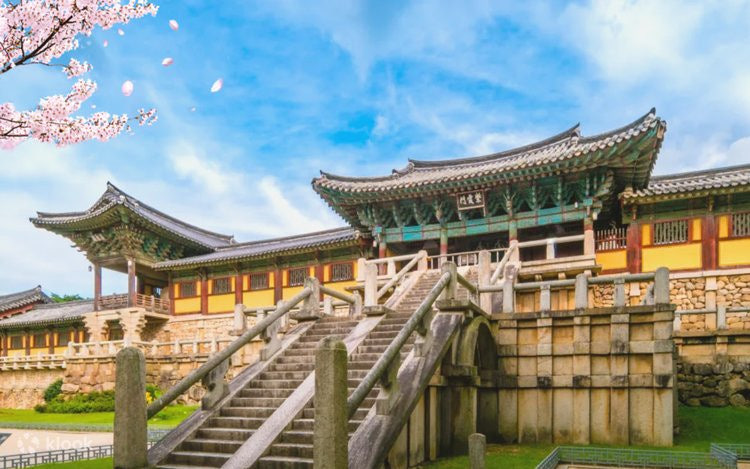
What distinguishes Bulguksa from other Korean temples is the quality of its setting and the ambition of its original design — this was a temple built to represent the Buddhist paradise on earth, and the architectural intention is still legible thirteen centuries later. Arrive early to experience the temple in morning light before tour groups arrive. Entry fee ₩6,000. Nearest bus stop from Gyeongju city center: approximately 40 minutes.
Seokguram Grotto (석굴암)
A 30-minute walk or short bus ride above Bulguksa sits Seokguram — a granite grotto containing a seated Buddha figure widely considered the finest example of Buddhist sculpture in Korea and among the most technically accomplished stone carvings anywhere in Asia.
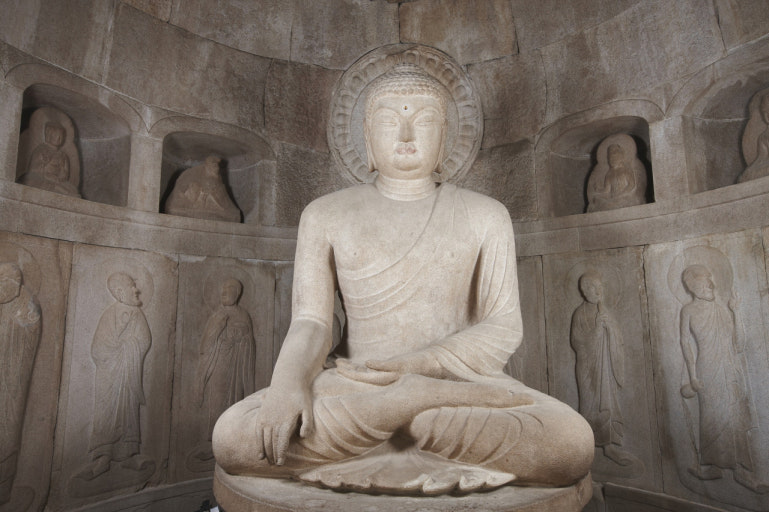
The main Buddha figure sits at the precise center of a domed stone chamber designed with mathematical precision to direct morning light across the face at specific angles. The artistry is genuinely astonishing — the gentle smile, the perfectly proportioned fingers, the sense of absolute serenity carved into unyielding stone — and seeing it in person produces the specific kind of quiet that important art creates. Entry fee ₩6,000 (combined ticket with Bulguksa available). Early morning visit strongly recommended.
Tumuli Park (대릉원)
Tumuli Park — also called Daereungwon — is the most visually striking entry in any Gyeongju travel guide: a park in the center of the modern city containing 23 enormous grass-covered burial mounds of Silla royalty, the largest of which stands 22 meters tall and 80 meters in diameter.
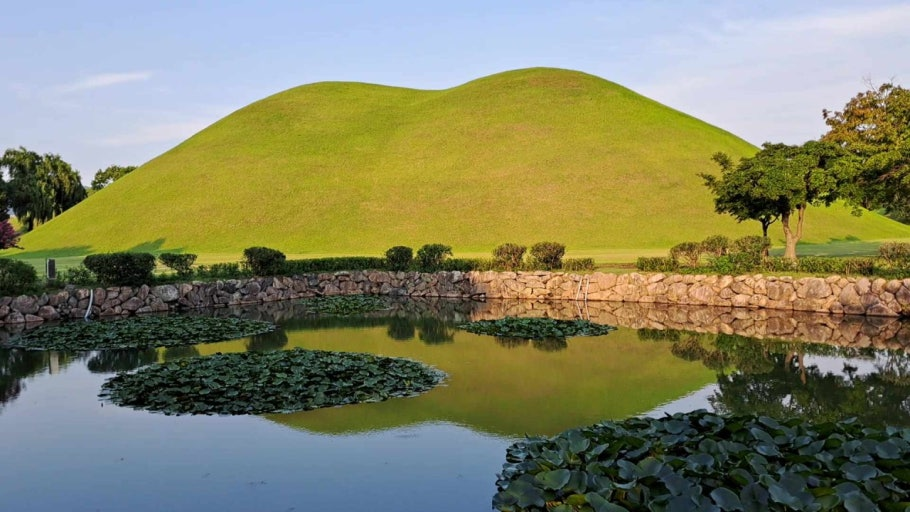
Walking through Tumuli Park is a genuinely surreal experience — the burial mounds dwarf the surrounding buildings, cherry trees bloom between them in April, and the combination of ancient and modern that Gyeongju does better than anywhere creates a particular kind of beauty here. The interior of Cheonmachong (천마총) mound is excavated and open to visitors, displaying the original burial goods including gold crowns, jewelry, and weapons that reveal the extraordinary material culture of the Silla Kingdom. Entry fee ₩3,000.
Cheomseongdae Observatory (첨성대)
Built in 634 AD during the reign of Queen Seondeok, Cheomseongdae is the oldest surviving astronomical observatory in Asia — a 9.4-meter tower of precisely fitted granite stones constructed to observe the heavens and predict the agricultural calendar. It stands in an open field in central Gyeongju, completely accessible, surrounded by wildflowers in spring and illuminated dramatically at night.
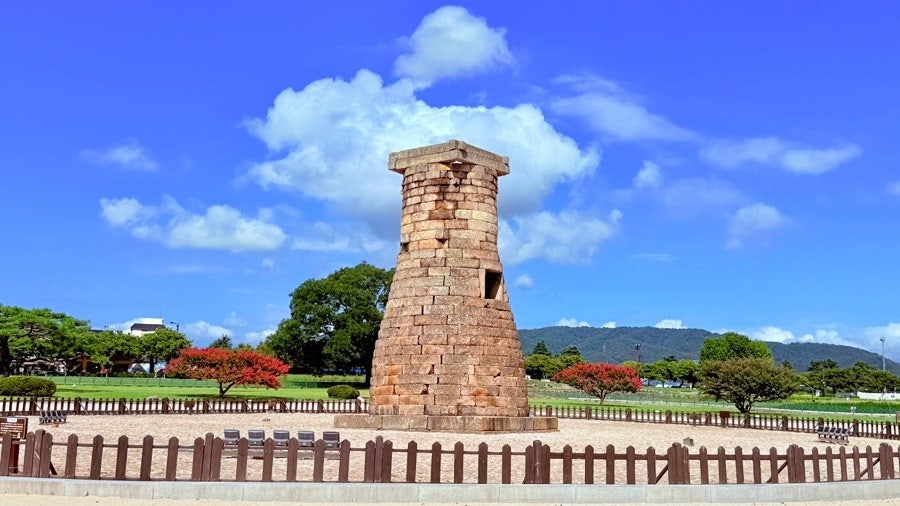
Cheomseongdae is the Gyeongju travel guide’s best example of the city’s remarkable habit of placing world-significant history in completely unpretentious settings. There’s no elaborate museum infrastructure here. It’s just a 1,400-year-old stone observatory in a field, with a convenience store visible in the background, and you can walk right up and touch it. Entry free.
Anapji Pond (안압지 / 동궁과 월지)
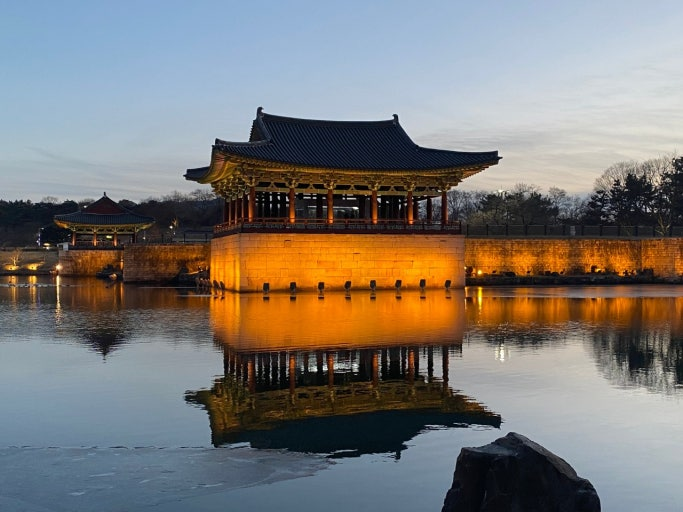
Anapji — now officially renamed Donggung and Wolji — was the pleasure garden of the Silla royal palace, built in 674 AD to celebrate the unification of the three kingdoms. The artificial pond, island pavilions, and surrounding gardens have been partially reconstructed based on excavation evidence.
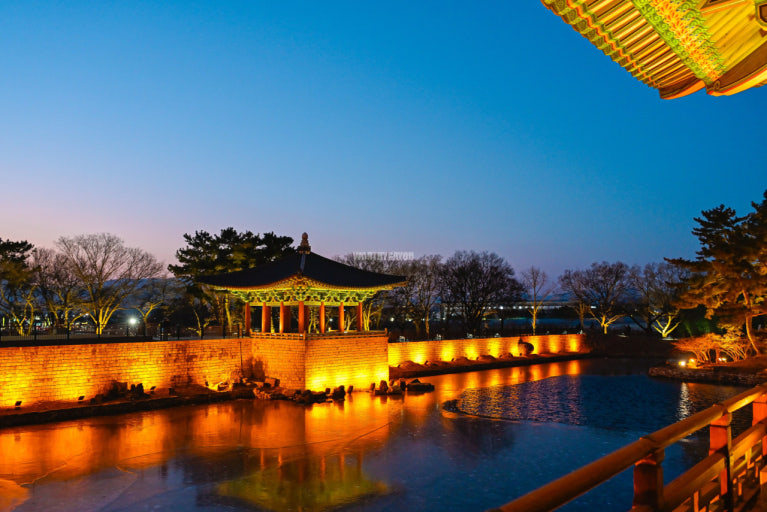
The Gyeongju travel guide’s essential timing note: visit Anapji at night. The pavilions are reflected in the still water under floodlights, and the atmosphere created is one of the most beautiful things you’ll see anywhere in Korea. The evening light makes this the best photograph in Gyeongju. Entry fee ₩3,000.
Gyeongju National Museum (국립경주박물관)
The Gyeongju National Museum houses the finest collection of Silla artifacts anywhere in the world — gold crowns, jade jewelry, bronze bells, and thousands of objects recovered from royal tombs throughout the Gyeongju area. The museum is large, well-organized, and provides essential context for everything else you’ll see in the city.
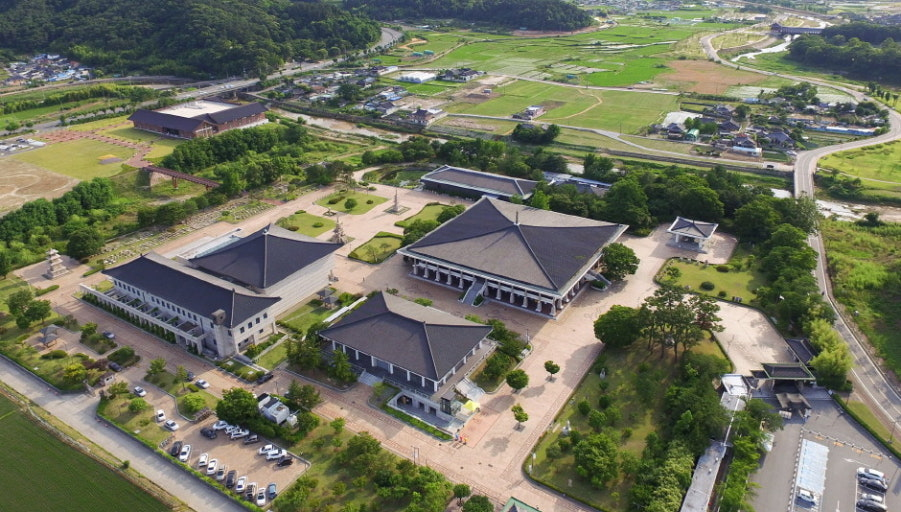
The Sacred Bell of King Seongdeok (성덕대왕신종) — cast in 771 AD and one of the largest and most beautifully decorated bronze bells in Asia — is the museum’s centerpiece and genuinely worth the visit alone. Entry free.
Namsan Mountain (남산)
Namsan is the Gyeongju travel guide’s most demanding and most rewarding recommendation — a mountain south of the city covered in hundreds of Buddha carvings, stone pagodas, and temple ruins spread along hiking trails through pine forests. Over two thousand historical relics are scattered across Namsan’s slopes, some well-marked and some requiring genuine exploration to find.
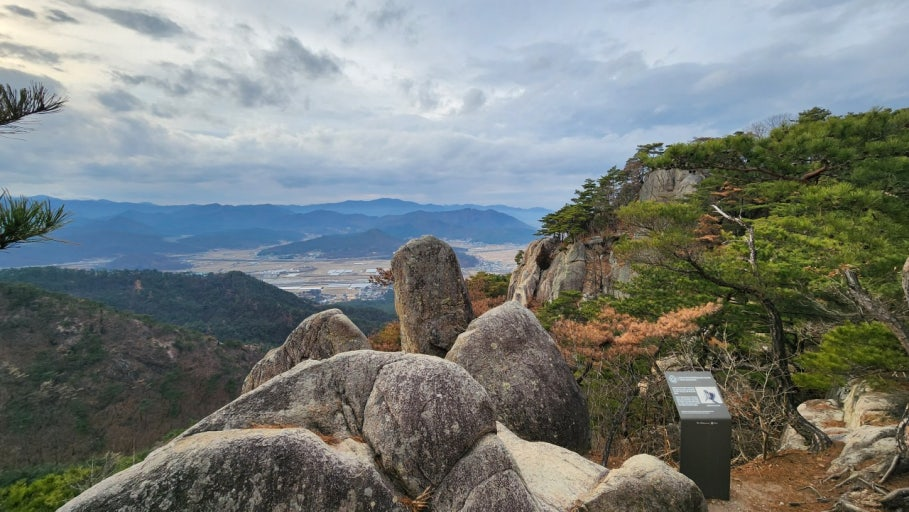
The Buddha carved directly into cliff faces at Bawi Peak, the three-story pagoda at Yongjang Valley, and the seated Buddhas at Chilbulam hermitage are the highlights for most hikers. A full Namsan traverse takes 5–7 hours. Shorter routes covering the main sites take 2–3 hours. Wear proper hiking shoes — the trails are steep and rocky.
Yangdong Folk Village (양동마을)
A UNESCO World Heritage Site, Yangdong Folk Village is the best-preserved traditional Korean village in the country — hundreds of years of continuous habitation by aristocratic families, their traditional wooden hanok homes still occupied today by descendants of the original families.
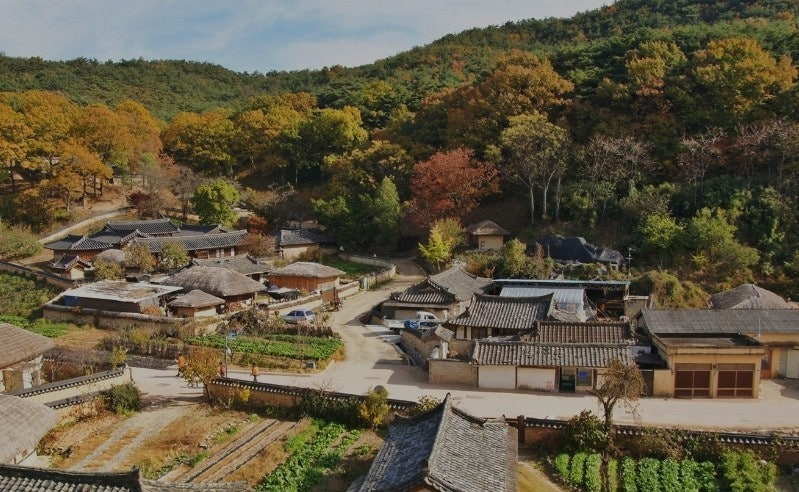
Walking through Yangdong is the Gyeongju travel guide experience that feels most removed from the present — it’s not a museum reconstruction, but a living village where people farm, maintain ancestral shrines, and go about daily life within architecture that hasn’t fundamentally changed since the Joseon Dynasty. Located 16km from Gyeongju city center; accessible by taxi or rental car.
Gyeongju Travel Guide: What to Eat
Gyeongju has its own distinct food culture separate from mainstream Korean cuisine — a product of centuries as a royal capital where culinary tradition was taken seriously.
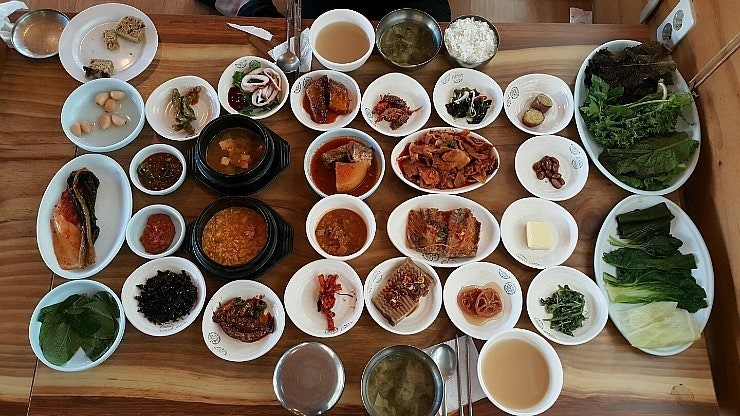
Ssambap (쌈밥): Gyeongju’s most representative meal — rice and dozens of small side dishes served with a variety of fresh leaves for wrapping. The Gyeongju version emphasizes wild herbs and vegetables specific to the region, creating a flavor profile distinct from Seoul-style ssambap.
Gyeongju bread (경주빵): The most famous Gyeongju souvenir — small pastries filled with sweet red bean paste, pressed into a shape resembling the Silla tombs. Every visitor to Gyeongju leaves with a box. Available at dedicated shops throughout the city center.
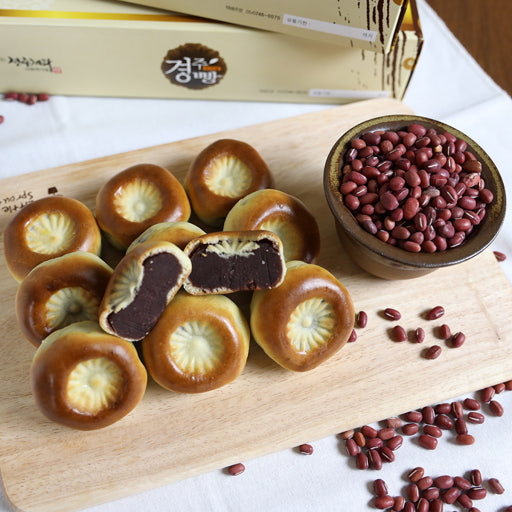
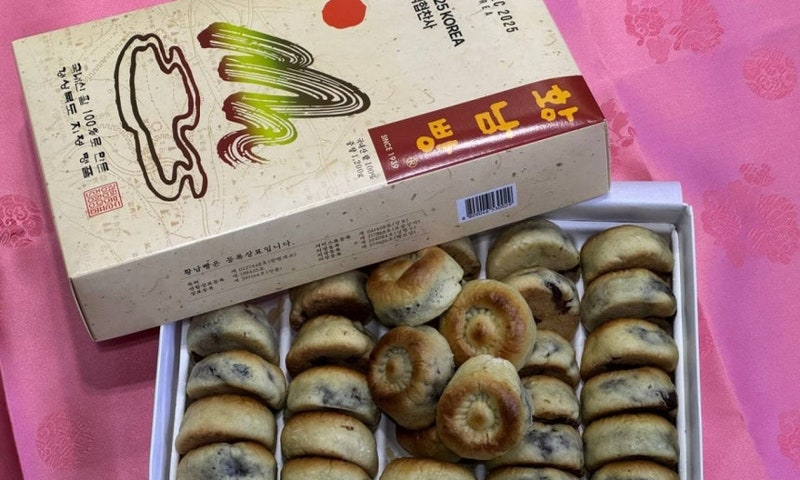
Hwangnam bread (황남빵): The original version of Gyeongju bread — thinner pastry, softer filling, and a slightly sweeter flavor. The original Hwangnam Bread shop near Tumuli Park has been producing these since 1939.
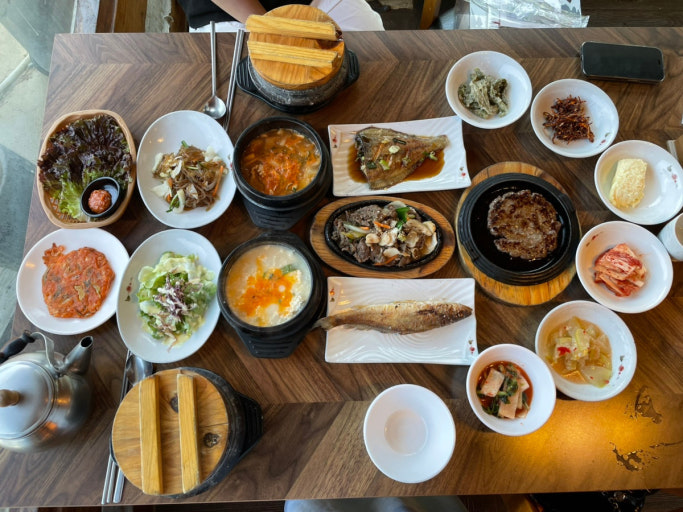
Hanjeongsik (한정식): Traditional Korean set meals are available at numerous restaurants around Bulguksa — elaborate spreads of seasonal dishes that represent the most formal expression of Korean food culture. Budget ₩30,000–₩60,000 per person for a full set.
Makgeolli: Gyeongju’s local rice wine has a strong regional tradition. The area around Tumuli Park contains several traditional makgeolli houses where you can drink from the original clay vessels with pajeon pancakes.
For the full Korean food culture context, read our Korean Food Guide and Korean BBQ Guide.
Gyeongju Travel Guide: How Long to Stay
One day: Covers Bulguksa, Seokguram, Tumuli Park, Cheomseongdae, and Anapji at night. Rushed but achievable with an early start. Best done as a day trip from Busan rather than Seoul given travel times.
Two days: The ideal Gyeongju travel guide allocation — adds the National Museum, Namsan hiking, and time to genuinely absorb the city rather than sprint between sites.
Three days: For serious history enthusiasts — adds Yangdong Folk Village, deeper Namsan exploration, and day trips to surrounding temple valleys. Genuinely worth it.
Gyeongju Travel Guide: Where to Stay
Gyeongju accommodation ranges from budget guesthouses near the bus terminal to hanok-style traditional guesthouses that let you sleep in the historical environment you’ve been exploring all day.
Budget: Guesthouses near Gyeongju Bus Terminal from ₩30,000–₩50,000 per night.
Mid-range: Hotels near Tumuli Park and the city center from ₩80,000–₩150,000. The Hilton Gyeongju offers a large resort experience near the historic sites.
Unique option: Hanok guesthouses (한옥 민박) — staying in a traditional wooden house in or near Gyeongju provides the most immersive historical experience available. Book through Airbnb Korea or dedicated hanok booking sites.
Gyeongju Travel Guide: Practical Tips
Rent a bicycle in Gyeongju. The city center sites — Tumuli Park, Cheomseongdae, Anapji, the National Museum — are all within comfortable cycling distance of each other. Bicycle rental is available near the bus terminal and Tumuli Park for approximately ₩5,000–₩10,000 per day. This is the best way to experience central Gyeongju.
Visit Bulguksa first. The mountain temples get crowded by midday. An 8 AM arrival at Bulguksa and Seokguram gives you the sites in morning light before the tour buses arrive.
Stay for Anapji at night. If you’re only doing a day trip, time your return to Seoul to catch Anapji after dark — the illuminated reflection in the pond is one of the most beautiful things in Korea and it’s free after sunset.
Combine with Busan. Gyeongju sits between Seoul and Busan — approximately 30 minutes from Busan by train. The most efficient Korea itinerary includes Seoul, Gyeongju, and Busan as a connected sequence. Read our Busan vs Seoul Guide for the complete Busan picture.
Download Naver Maps before you go. GPS navigation to Gyeongju’s historical sites — particularly the Namsan hiking trailheads and Yangdong village — requires Naver Maps’ Korea-specific accuracy. Google Maps works poorly for rural Gyeongju addresses.
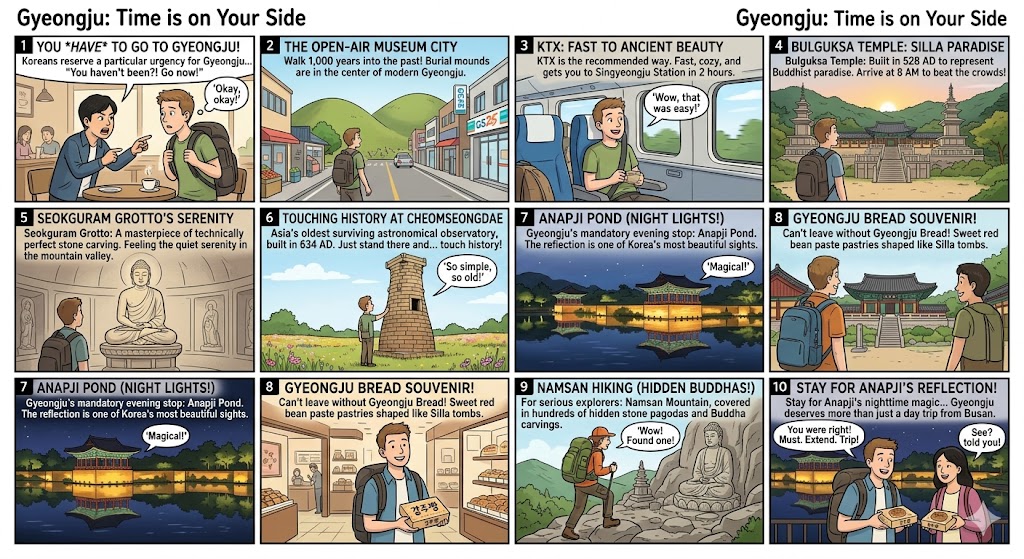
Ready to plan your full Korea itinerary? Read our Seoul 3 Day Itinerary for the Seoul portion of your trip, and our Korea Travel Budget Guide to understand exactly what Gyeongju will cost.

Korea Insider has lived in South Korea for 50 years and worked at international companies for over two decades — explaining Korean culture, food, and society to colleagues from the US, Europe, and Australia.
Internationally married with a Japanese spouse, Korea Insider brings both an insider’s depth and an outsider’s perspective to every topic on My Korea Tip.