
Korean drama filming locations in Seoul are not theme parks or studio sets. They are real neighborhoods, real palaces, real river parks, and real streets — the same ones locals walk through every day, now permanently layered with scenes that millions of people around the world have watched dozens of times.
That is what makes K-drama tourism different from any other entertainment-driven travel. When you stand at the Deoksugung Palace stonewall walkway and recognize it from three different dramas you’ve seen, you’re not visiting a recreation of something — you’re standing in the exact location where it was filmed, in a city that was already beautiful before the cameras arrived.
Korean drama tourism has become a global phenomenon, drawing travelers eager to walk in the footsteps of their favorite stars. Seoul’s neighborhoods have absorbed this attention in different ways — some spots have become international pilgrimage sites, others remain quietly identifiable only to fans who know exactly which corner to stand on. This guide covers both. Hilton
It is organized by location rather than by drama — because the most efficient approach to K-drama tourism in Seoul is building an itinerary around neighborhoods, not around individual shows. Most major filming spots are clustered, and a well-planned day can cover scenes from five or six different dramas across a single walkable area.
For the historical context that makes many of these locations meaningful beyond their drama appearances, read our Gyeongbokgung Palace Guide. For planning the full Seoul day around these spots, read our Seoul Neighborhoods Guide.
Korean Drama Filming Locations Seoul: Quick Reference
| Location | Key Dramas | District | Entry |
|---|---|---|---|
| Gyeongbokgung Palace | Kingdom, Mr. Sunshine, Goblin | Jongno-gu | ₩3,000 |
| Bukchon Hanok Village | Goblin, The Heirs, True Beauty | Jongno-gu | Free |
| Deoksugung Stonewall Walkway | Goblin, One Spring Night | Jung-gu | Free |
| N Seoul Tower / Namsan | Boys Over Flowers, My Love From the Star | Jung-gu | ₩16,000 |
| Cheonggyecheon Stream | Signal, My Mister | Jung-gu | Free |
| Itaewon / Noksapyeong | Itaewon Class | Yongsan-gu | Free |
| Han River Parks | Crash Landing on You, Itaewon Class | Multiple | Free |
| Hongdae | Coffee Prince, Love Alarm | Mapo-gu | Free |
| Squid Game Locations | Squid Game | Multiple | Free |
경복궁 (Gyeongbokgung Palace) — Kingdom, Mr. Sunshine, Goblin
Gyeongbokgung is the most filmed palace in Korea — and for good reason. As one of the Five Grand Palaces built during the Joseon Dynasty, Gyeongbokgung is a historical and cultural treasure whose stone courtyards, wooden pavilions, and mountain backdrop translate directly to screen as something that looks entirely unlike anywhere else in the world. Hallyu Trail Korea
Kingdom (킹덤): Netflix’s zombie-Joseon thriller used the palace’s throne hall, corridors, and gates extensively — the architecture of Joseon-era power is central to the show’s entire visual language. Scenes filmed at Geunjeongjeon (the throne hall) and Gwanghwamun Gate are immediately recognizable.
Mr. Sunshine (미스터 션샤인): The late Joseon-era drama used the palace to establish the collision between Korea’s royal tradition and the incoming colonial period. The scene where Eugene Choi walks through the palace grounds has become one of the most replicated fan photo moments in Seoul.
Goblin (도깨비): Multiple scenes across the drama’s nine centuries of storyline use Gyeongbokgung to represent the Goryeo and Joseon eras. The sweeping wide shots of the palace in winter — snow on stone — are among the most visually striking frames in the series.
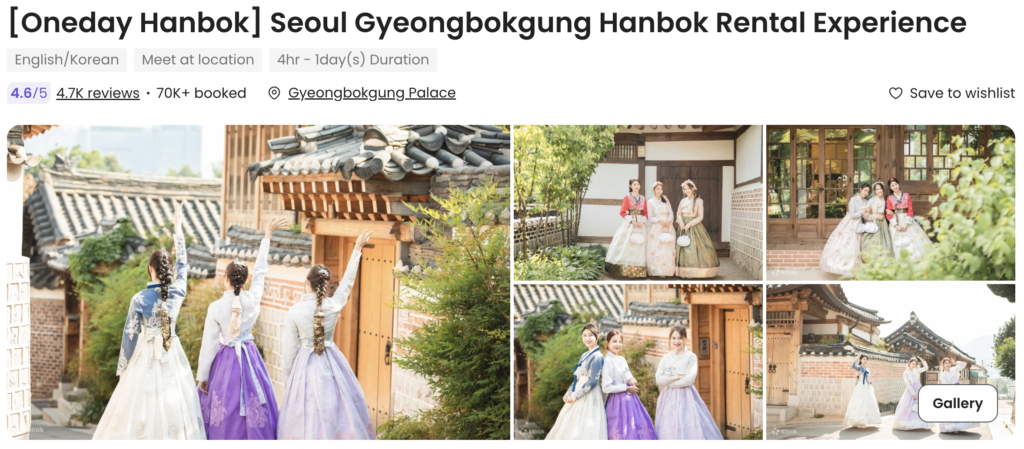
The fan experience: Rent a hanbok before entering (rental shops cluster near Exit 5 of Gyeongbokgung Station) — entry is free in hanbok and the visual payoff for photos is significant. The guard-changing ceremony at 10 AM and 2 PM adds atmosphere. Read our full Gyeongbokgung Palace Guide for logistics and the best photography positions.
북촌 한옥마을 (Bukchon Hanok Village) — Goblin, The Heirs, True Beauty
Home to hundreds of traditional houses, Bukchon Hanok Village is a Korean traditional village carefully preserved to showcase its 600-year-old history. It has served as a backdrop for K-dramas including Ghost Doctor, Goblin, My Roommate is a Gumiho, The Heirs, Flower of Evil, and more. Seoulism
The reason Bukchon appears in so many dramas is structural: it is the only neighborhood in Seoul where narrow alleys of traditional wooden hanok houses descend a hillside with rooftop views across the modern city. The contrast — ancient architecture, contemporary skyline beyond — is exactly the visual tension that K-drama directors reach for repeatedly.
The Goblin connection: The alley scenes where Gong Yoo’s character walks through traditional streets use Bukchon extensively. The specific lane most fans look for is Bukchon-ro 11-gil — the steeply descending alley with the most dramatic downhill composition.
Practical tips: Because it’s a real residential area, local authorities limit visiting hours and ask tourists to be quiet and respectful of residents. Arrive before 10 AM for the best light and the quietest experience. The hanbok you rented for Gyeongbokgung will still be valid — and Bukchon in hanbok is, objectively, the best photograph you will take in Seoul. Seoulism
덕수궁 돌담길 (Deoksugung Palace Stonewall Walkway) — Goblin, One Spring Night, The Beauty Inside
One of Seoul’s most consistently filmed locations across decades of Korean drama — a stone wall walkway stretching nearly a kilometer alongside Deoksugung Palace, lined with trees that turn gold in autumn and pink in cherry blossom season.
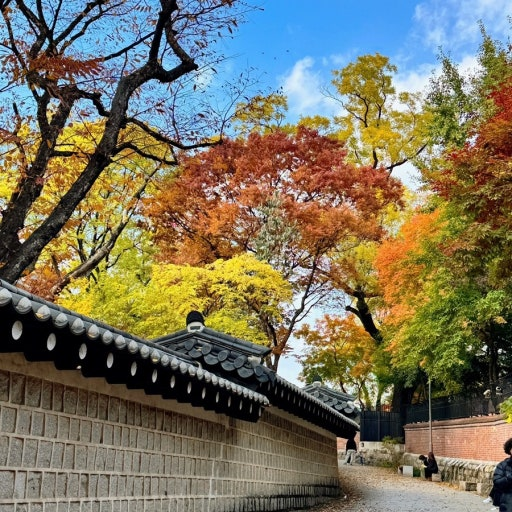
The Deoksugung Palace Stonewall Walkway makes frequent appearances in K-dramas due to the picturesque pedestrian footpath located near Deoksugung Palace. It is a perfect blend of urban space, historical motif, and nature. IMDb
Goblin: The walkway appears in multiple scenes as a romantic strolling location — the stone wall and autumn foliage framing became one of the show’s signature visual motifs.
One Spring Night: The series used the walkway as a recurring meeting point between the two leads — the kind of unhurried, tree-lined path that becomes shorthand in Korean drama for emotional transition.
The walkway is especially beautiful in autumn and spring. Walking the full path leads to Deoksugung Palace on one end and the Seoul Museum of Art on the other. IMDb
Getting there: Nearest subway is City Hall Station (Line 1 or 2, Exit 2). The walkway runs along the palace’s south wall — free to walk at any time.
N서울타워 / 남산 (N Seoul Tower / Namsan) — My Love From the Star, Boys Over Flowers, Itaewon Class
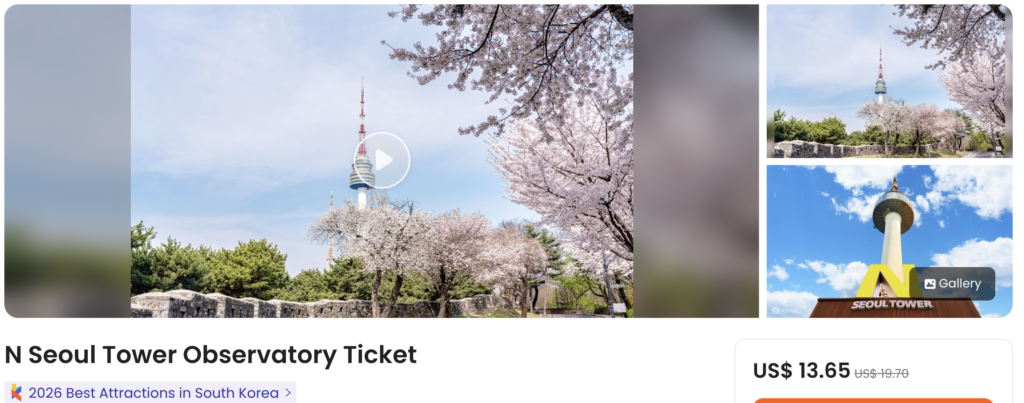
N Seoul Tower rises above the city atop Namsan Mountain and is a beacon for K-drama fans and couples alike. Featured in beloved series like My Love From the Star and Boys Over Flowers, it is famous for the love lock tradition, where couples fasten padlocks on the tower’s fences as a symbol of their bond. Hilton
The tower is also a popular date spot featured in Boys Over Flowers, The Legend of the Blue Sea, My Love From Another Star, Itaewon Class, and The Last Empress, among many other shows. Seoulism
The love lock connection: The fence surrounding the tower observation deck is covered in padlocks left by couples — a tradition that K-drama fans have adopted as a pilgrimage act even when not in a couple. Bring your own lock; they are also sold at the base of the mountain.
Practical logistics: The tower can be reached by cable car or a scenic hike through Namsan Park. The cable car takes approximately 5 minutes. The hike takes 20–30 minutes through a pleasant forested path. Visit at sunset for the city lights sequence — the skyline from the observation deck at dusk is exactly what the drama directors were shooting. Hilton
청계천 (Cheonggyecheon Stream) — Signal, My Mister, Stranger
An 11-kilometer urban stream running through the center of Seoul, lined with lanterns, art installations, fountains, and bridges — one of the most pleasant walks in the city and a recurring drama location for its combination of accessibility and unexpected calm within the dense urban core.
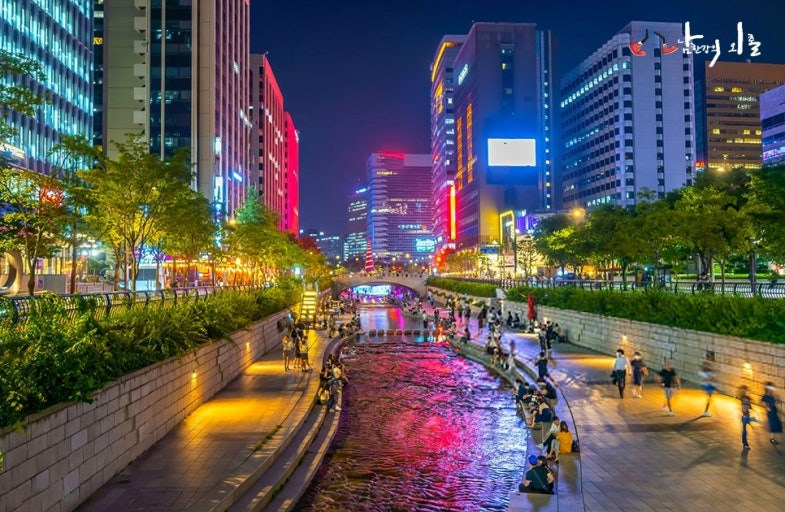
Cheonggyecheon Stream runs through the heart of Seoul, lined with lanterns, fountains, artworks, bridges, and outdoor exhibitions, making it perfect for romantic scenes. Backroad Planet
Signal (시그널): The thriller used Cheonggyecheon for several key scenes — the stream’s combination of pedestrian accessibility and visual distinctiveness (the stone banks, the lantern reflections at night) makes it a natural location for scenes requiring Seoul atmosphere without a specific landmark.
Night visit: The stream is illuminated at night and significantly more beautiful after dark than during daylight hours. The lantern reflections on the water — particularly in the sections near Gwanggyo Bridge — are among the most photographeable scenes in central Seoul.
Getting there: Multiple access points. Nearest to the upstream start (and most photographed section): Gwanghwamun Station, Line 5.
이태원 / 녹사평 (Itaewon / Noksapyeong) — Itaewon Class
Itaewon Class feels very grounded because much of it was filmed in real neighbourhoods of Seoul, including Itaewon and nearby Haebangchon. The original “Danbam” exterior is from a building near Noksapyeong Station in Yongsan-gu. Marie Claire
The Noksapyeong Bridge — right by Noksapyeong Station — appears repeatedly in the show and is easily accessible on Line 6. Baekbeom Plaza in Namsan Park was used for a key scene and is popular for Namsan and city views. Marie Claire
The Oriole Bar: The “new Danbam” in the later episodes is associated with Oriole, a real rooftop bar in Haebangchon, which many fans visit for the view and atmosphere. The bar still operates — expect fan visitors on weekends. Marie Claire
Fan walk: Start at Noksapyeong Station (Line 6), cross the bridge, walk uphill through Haebangchon toward Itaewon’s main street. The entire route covers the show’s key outdoor locations in under 30 minutes.
한강 (Han River Parks) — Crash Landing on You, Itaewon Class, Start-Up
The Han River stretches across Seoul, lined with multiple parks that appear frequently in dramas like Itaewon Class and It’s Okay to Not Be Okay. These riverside parks are beloved date spots, where couples share late-night snacks, fly kites, or rent bikes. Food trucks and convenience stores make it easy to picnic just like the characters onscreen. Backroad Planet
Yeouido Hangang Park: The most filmed section — the fireworks scenes from multiple dramas, riverside picnic sequences, and the general “Seoul at night” establishing shots that appear in almost every contemporary K-drama are filmed here.
The chimaek recreation: The most authentic fan experience at the Han River is not taking photographs — it is ordering fried chicken delivery to the park (Baemin delivery works to park locations), buying beer from the CU or GS25 along the perimeter, and eating the combination that appears in approximately 40% of all Korean drama date scenes. Read our Korean Fried Chicken Guide for how to order correctly.
홍대 (Hongdae) — Coffee Prince, Love Alarm, Doom at Your Service
The youthful, indie spirit of Hongdae is captured in dramas like Love Alarm, Doom at Your Service, and Coffee Prince. Hilton
Coffee Prince (커피프린스): The 2007 drama is set almost entirely in the Hongdae area — the café culture, street busking, and artsy neighborhood character that defined early Korean drama aesthetics globally was drawn directly from Hongdae’s actual neighborhood identity at the time.
The current Hongdae: The neighborhood has changed significantly since Coffee Prince — it is considerably more commercialized — but the street busking, the independent cafés, and the general creative energy remain. The drama captured something real about the place that still exists in corners.
오징어 게임 (Squid Game) Locations — Seoul
Squid Game’s filming locations are distributed across Seoul and Incheon. Two are accessible to fans as interesting urban experiences beyond the drama connection:
Mapo Bridge (마포대교): Appears in the opening sequence of Season 1. A significant real-life context exists alongside the drama use — the bridge is also the site of Seoul’s most prominent suicide prevention campaign, with phone numbers and supportive messages embedded in the railing. The contrast between the drama usage and the real-world context is characteristically Korean: both layers exist simultaneously.
Jonggak Station (종각역): There’s a plaque on the wall commemorating the filming of Squid Game at Jonggak Station, with a QR code for an AR game you can play while waiting for the next subway car. A small detail worth finding if you’re in the area — Line 1. Seoul Searching
Korean Drama Filming Locations Seoul: How to Visit Efficiently
The Jongno-gu morning: Gyeongbokgung (9 AM) → Bukchon Hanok Village (11 AM) → Deoksugung Stonewall Walkway (afternoon). This single day covers the historical drama locations — Kingdom, Goblin, The Heirs — in a walkable sequence. Read our Gyeongbokgung Palace Guide for timing the guard ceremony into this itinerary.
The evening circuit: Cheonggyecheon Stream (sunset) → N Seoul Tower (dusk). The illuminated stream and the lit-up city from Namsan together recreate the night aesthetic of Seoul that appears in romantic drama scenes more than any other visual.
The Itaewon afternoon: Noksapyeong Bridge → Haebangchon → Itaewon main street → Han River. A 3–4 hour walk that covers Itaewon Class locations and ends at the Han River for the chimaek experience.
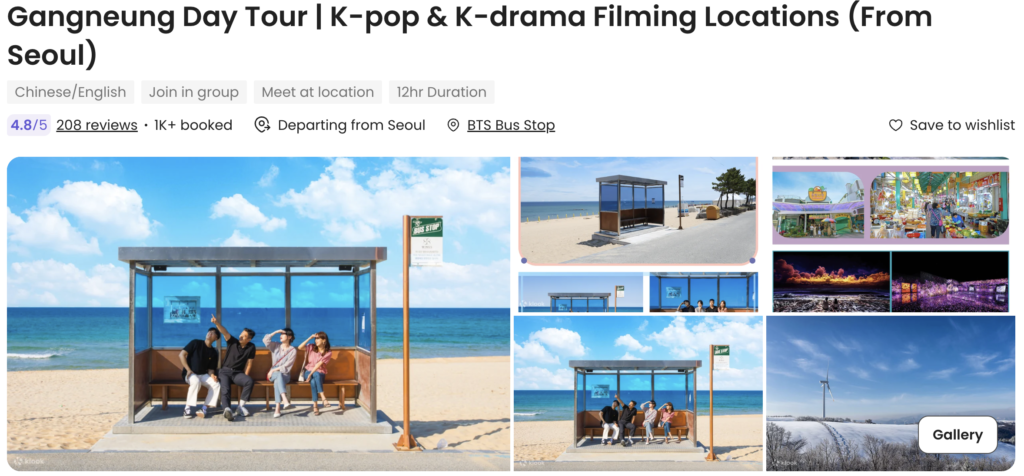
Guided tours: In Korea, you can combine Seoul with Jumunjin and other filming spots in organized day tours. Guided K-drama location tours operate daily from central Seoul — the advantage is local guide knowledge of specific spots that are not well-documented online (exact corners, scene-specific positions) and transport between locations that are not walkable. Seoul Searching
Korean Drama Filming Locations Seoul: FAQ
Can I visit all major filming locations in one day? The Jongno-gu cluster — Gyeongbokgung, Bukchon, Deoksugung walkway — is doable in a morning. The Itaewon and Han River spots work as an afternoon-into-evening circuit. Combining both in one day is possible but rushed. Two days gives a better experience.
Do I need to pay to enter any filming locations? Gyeongbokgung Palace charges ₩3,000 (free in hanbok). N Seoul Tower charges ₩16,000 for observatory access. Every other major filming location listed in this guide is free.
Which drama has the most accessible filming locations in Seoul? Itaewon Class — the entire drama is shot in real, accessible neighborhoods. Every outdoor scene can be found by walking Itaewon and Haebangchon. No entry fees, no restricted access.
Which season is best for visiting filming locations? Autumn (October–November) for the Deoksugung walkway and Bukchon — the foliage recreates the most-filmed seasonal aesthetic in Korean drama. Spring (late March to mid-April) for cherry blossom scenes. Read our Best Time to Visit Korea Guide for the full seasonal picture.
Are there guided K-drama tours available? Yes — organized tours depart daily from central Seoul and cover multiple locations with a guide who explains scene-specific context. Klook listings include both walking tours and bus tours covering wider locations beyond walking distance.


Korea Insider has lived in South Korea for 50 years and worked at international companies for over two decades — explaining Korean culture, food, and society to colleagues from the US, Europe, and Australia.
Internationally married with a Japanese spouse, Korea Insider brings both an insider’s depth and an outsider’s perspective to every topic on My Korea Tip.