
Korean fried chicken is not the same thing as fried chicken anywhere else in the world — and understanding why matters before you order your first box.
The difference is technique. The magic of Korean fried chicken lies in double-frying. The chicken is fried once at a lower temperature to cook the meat through, then after a brief rest, fried again at a higher temperature to create that signature ultra-crispy, glass-like exterior. This two-stage process removes moisture from the skin while keeping the meat juicy — producing chicken that stays crispy for 30–40 minutes after leaving the restaurant.
The result is something the New York Times once described as having a “thin, crackly and almost transparent crust” — unlike the thick, heavily breaded American version. The skin shatters on contact. The meat underneath is juicier than you expect. And then there are the sauces: sweet and sticky yangnyeom, deep soy-garlic ganjang, honey glaze, cheese powder, and dozens of others that have evolved over decades of intense nationwide competition. Kculture
As of 2026, there are 40,000 fried chicken restaurants in South Korea — with 1,800 more operated internationally by Korean brands across 60 countries, double the total of ten years prior. There are reportedly over 700 chicken brands in Korea alone. To Koreans, fried chicken is what takeout pizza is to Europeans or Americans — the default celebration food, the standard Friday night meal, the dish that appears at every birthday party and sports viewing. Kculture + 2
This guide tells you everything you need: how Korean fried chicken works, what the styles are, which brands to try, how to order like a local, and where to eat it best.
For the broader Korean food picture, read our Korean Street Food Guide — chicken sits at the center of a much richer street food and nightlife culture that’s worth understanding in full.
Korean Fried Chicken: The Styles You Need to Know
Korean fried chicken comes in a range of distinct styles, each with its own flavor profile and dedicated following. Kculture
후라이드 (Huraideu) — Classic Fried
The original and, for purists, the best. No sauce. No seasoning beyond salt and the batter itself. The entire point is the crust — that double-fried crackle that exists nowhere else in food. Eaten with the provided pickled radish (chicken-mu) and dipping sauces on the side.
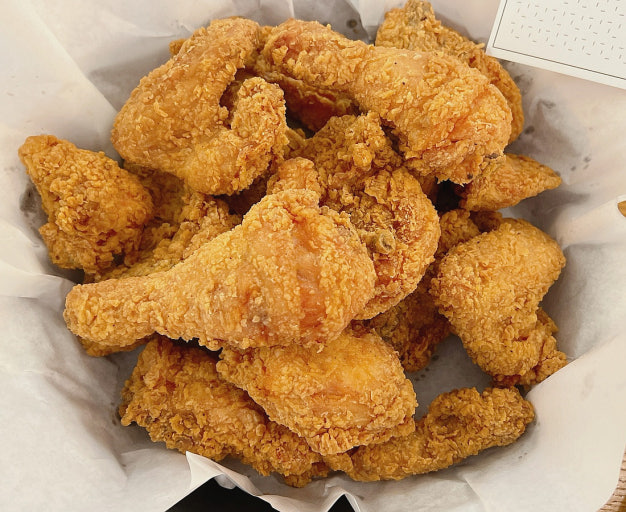
Bone-in chicken is considered tastier by purists — the meat near the bone is juicier, and the marrow adds flavor during frying. First-time visitors almost always prefer the boneless version initially and switch to bone-in by their second order. Korea Tourism Organization
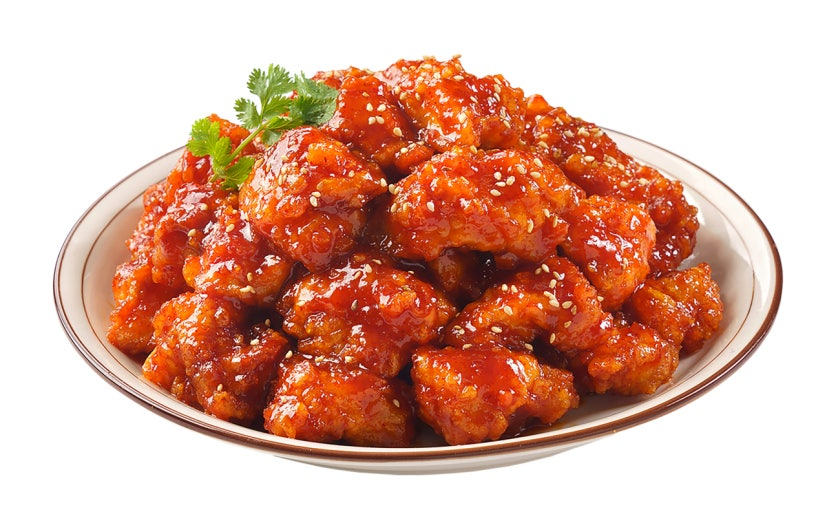
양념 (Yangnyeom) — Sweet and Spicy Seasoned
Yangnyeom-chikin is fried chicken coated in a gochujang-based sweet and spicy sauce. The sauce is applied with a brush after frying — a thin, even coat that caramelizes slightly against the hot crust and turns the exterior from golden to a deep, lacquered red. The balance of sweet and spicy is the defining taste of Korean fried chicken internationally — this is the version that went viral globally. Kculture
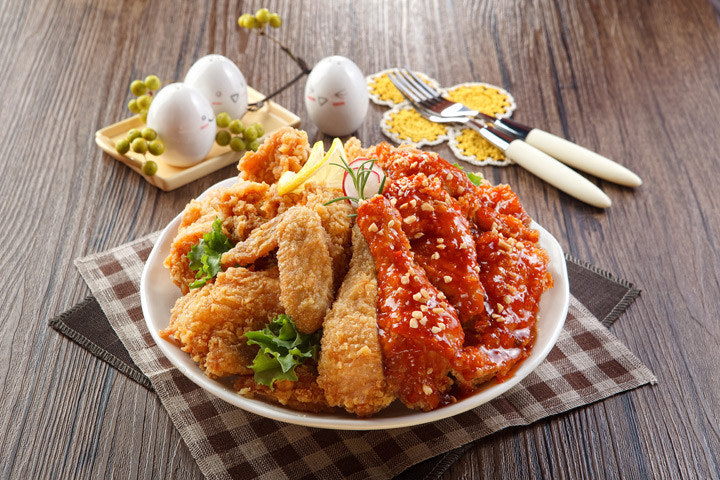
반반 (Banban) — Half and Half
Indecision is solved by the “Ban-Ban” system. You can almost always order half original fried and half seasoned, creating the perfect balance of crispy and savory. This is the correct first order for anyone new to Korean fried chicken — it covers both the clean crunch of the original and the sauce-forward yangnyeom in a single box. Semrush
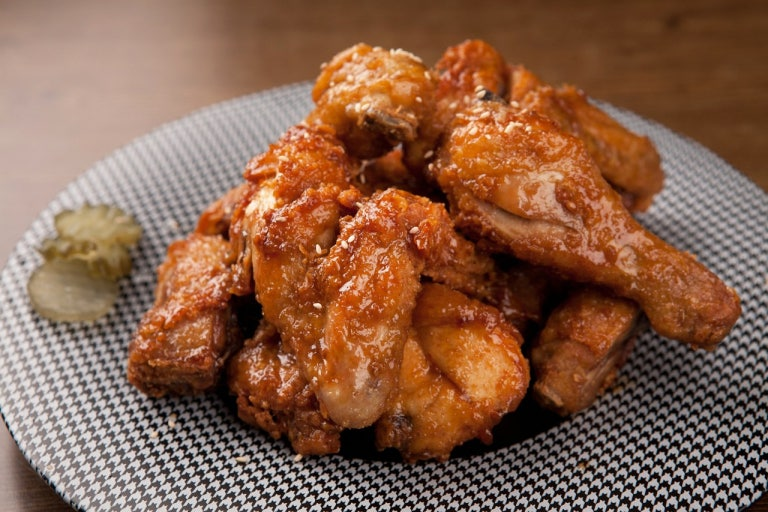
간장 (Ganjang) — Soy Sauce
Ganjang-chikin is fried chicken coated in a soy sauce-based sweet and savory sauce, which is often also garlicky. Less spicy than yangnyeom, deeper and more complex in flavor — the style most frequently recommended to visitors who are spice-averse. Kyochon’s honey soy version is the gold standard of this category. Kculture
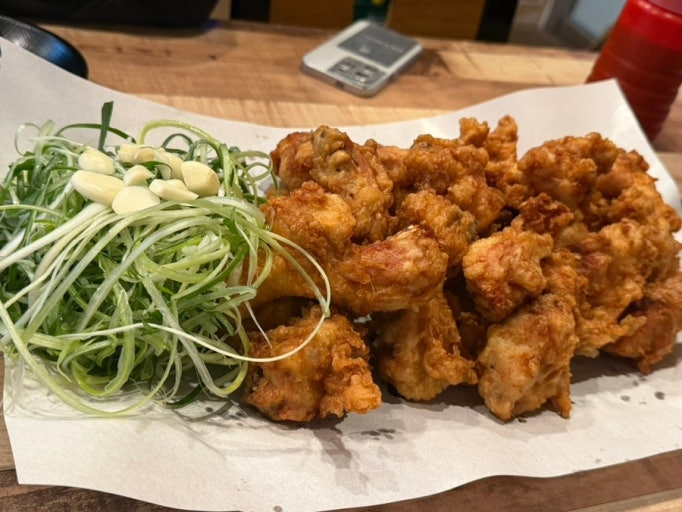
파닭 (Padak) — Scallion Chicken
Fried chicken topped with or smothered in a large amount of thinly shredded scallions. The fresh, sharp scallion cuts through the oil of the fried chicken and creates a contrast that makes the entire box lighter and more addictive than it has any right to be. Kculture
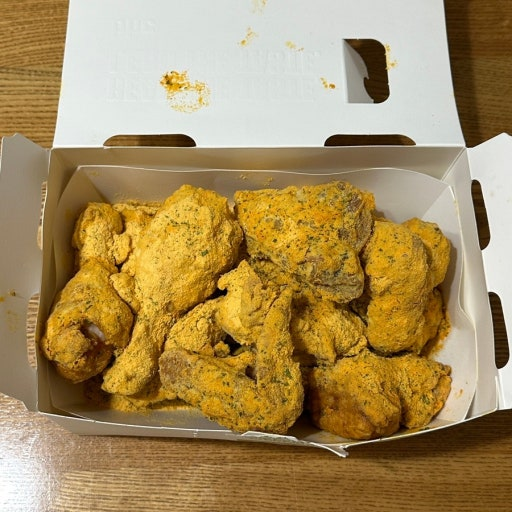
뿌링클 (Ppurinkle) — Cheese Powder
BHC’s proprietary seasoning — a blend of cheese, garlic, and onion powder that coats the chicken in a savory, addictive powder instead of a wet sauce. Currently the most-searched chicken style in Korea. Less familiar to Western palates than yangnyeom but frequently the one that produces the most instant devotion. The Korea Times
Korean Fried Chicken: The Major Brands
There are over 700 chicken brands in Korea. Most visitors are best served by starting with one of the established chains — consistent quality, English-friendly ordering at major locations, and nationwide availability. Punch Digital Marketing
BBQ (비비큐)
BBQ stands for “Best of the Best Quality” and is probably the most popular Korean fried chicken chain in Korea. Established in 1995, the brand is famous for using golden olive oil when frying, and their most famous menu item is the “Golden Olive Chicken” (황금 올리브 치킨). UME Travel
BBQ is legendary for its extreme, luxurious crunch — high-quality olive oil creates a thick, incredibly juicy, and flavorful skin. The Golden Olive Chicken is the safest first order in the entire Korean fried chicken landscape: deeply familiar enough for first-timers, good enough for locals to return to. Semrush
Must order: Golden Olive Chicken. Order ban-ban (half original, half yangnyeom) for your first visit.
교촌 (Kyochon)
Kyochon is legendary for its double-frying technique, which keeps the skin thin yet incredibly crispy. Their sauces represent the perfect harmony of “Dan-jjan” — Sweet and Salty. Semrush
For the most distinctive flavor, Kyochon’s soy-based original is different from anything you’ll find outside Korea — the chain most Koreans would recommend to a foreign friend. The honey combo — sweet, soy-glazed wings and drumsticks — is the brand’s flagship item and among the most beloved chicken preparations in the country. UME Travel
Must order: Honey Combo (허니콤보). Add the red dipping sauce for contrast.
BHC
BHC is currently the #1 searched chicken brand in Korea — the kings of magic powder seasoning. Where BBQ and Kyochon focus on classic technique, BHC competes on flavor innovation: proprietary seasoning blends, cheese powder coatings, and the kind of addictive savory combinations that keep people ordering the same thing repeatedly. The Korea Times
BHC is known for its signature “Ppurinkle” chicken, featuring a sweet and savory cheese-based seasoning. Don’t miss their crispy mozzarella-filled cheese balls — a perfect companion to your meal. Stripes Korea
Must order: Ppurinkle (뿌링클). Side of cheese balls mandatory.
굽네 (Goobne)
For something baked rather than fried, Goobne is the go-to. The “O-Dak” (oven chicken) market segment has grown by 25% year-over-year, with Goobne introducing a new line of “Basak” (Crispy) oven chicken that mimics the texture of deep-fried chicken using high-pressure air convection. A whole roasted chicken contains about 1,100 calories, compared to 2,000+ calories for a deep-fried version. UME TravelSemrush
The choice for visitors who want the Korean fried chicken experience with significantly less oil — the flavor is different from double-fried chains but genuinely excellent.
Korean Fried Chicken: Chimaek — The Cultural Ritual
“Chimaek” is a portmanteau of “chicken” and “maekju” (the Korean word for beer) — the pairing is deeply embedded in Korean social culture. Kculture
The three big Korean beer brands — Cass, Hite, and OB — are the safest choices for chimaek. They’re crisp, not too heavy, and cheap. Most fried chicken restaurants sell beer by the can, bottle, or glass.
The dynamic of chimaek is specific: the cold, highly carbonated Korean beer cuts through the fat of the fried chicken, resetting the palate and making the next piece taste as good as the first. The pickled radish (chicken-mu) serves the same function — a sharp, vinegary cleanser between bites that prevents the richness from accumulating.
Korean tradition dictates you should pour beer for others at the table — they pour for you. Never pour your own glass.
For the complete guide to Korean drinking culture and the games that accompany a chimaek session, read our Korean Drinking Games Guide. For where to experience chimaek in Seoul’s nightlife context, read our Seoul Nightlife Guide.
Korean Fried Chicken: How to Order
Bone-in vs. Boneless
Bone-in (뼈, ppyeo) is considered the tastier option by purists — the meat near the bone is juicier. Boneless (순살, sunsal) is more convenient and less messy. In 2026, boneless orders almost always incur a surcharge of ₩2,000–₩3,000. Semrush
The Ban-Ban system
Order half classic fried and half yangnyeom. This is the correct first order. Every chain offers it. Some brands even allow three-flavor combinations, though there may be a small extra charge. Semrush
One chicken = one whole bird
One order of fried chicken in Korea typically means one whole chicken (about 1kg / 2.2lbs), not a “bucket” like in Western chains. One whole chicken usually feeds two people comfortably, or one very hungry person.
Side dishes that come with your order
- Chicken-mu (치킨무): Pickled white radish — free, always included, essential. Eat between every few pieces.
- Cabbage salad: Thinly shredded cabbage with ketchup-mayo dressing — a palate reset between flavors.
- Cheese balls (치즈볼): Mozzarella-filled fried dough balls — order as an add-on at BBQ and BHC.
Useful Korean phrases for ordering
| What you want | Korean | Pronunciation |
|---|---|---|
| Half and half please | 반반으로 주세요 | Ban-ban-eu-ro ju-se-yo |
| Boneless please | 순살로 주세요 | Sun-sal-lo ju-se-yo |
| One whole chicken | 한 마리 주세요 | Han ma-ri ju-se-yo |
| Beer please | 맥주 주세요 | Maek-ju ju-se-yo |
| Takeout please | 포장해 주세요 | Po-jang-hae ju-se-yo |
Korean Fried Chicken: Where to Eat It
At a chicken restaurant (치킨집)
The sit-down experience — tables, beer on tap or by the bottle, the full chimaek ritual. The atmosphere varies from no-frills neighborhood hofs to polished chain interiors. The chicken hof has gone through phases — today you are just as likely to eat crispy bird in a minimalist, café-style interior or a high-tech kiosk center. Semrush
Most neighborhoods have multiple options within walking distance. Areas with the highest density of quality chicken restaurants: Hongdae, Itaewon, Mapo-gu, and the university districts around Sinchon and Anam. Read our Seoul Neighborhoods Guide to find your closest base.
By delivery to your accommodation
Most Koreans prefer to have fried chicken delivered as takeout. In fact, there are many chicken places with no seating at all. Korea Tourism Organization
Use Baedal Minjok (Baemin) or Coupang Eats — both have English support in 2026. Delivery fee usually ranges from ₩3,000 to ₩6,000. Select “Meet and Pay” if you don’t have a Korean domestic card registered in the app. Semrush
Delivery to hotel rooms is standard practice — front desk staff are accustomed to accepting food deliveries for guests.
Han River picnic (한강 피크닉)
Nothing beats Chimaek at the Han River — especially popular during sports events like soccer or baseball games. Fans picnic by the river with chicken delivered right to them. Stripes Korea
Order delivery directly to the Han River parks — the address system in Korea allows delivery to park locations. Buy beer from the Korean convenience stores along the park perimeter and set up at one of the riverside picnic tables. This is one of the most distinctly Korean experiences available at any price point.
Korean Fried Chicken: 2026 Price Guide
| Item | Price Range |
|---|---|
| Whole chicken (one bird, original fried) | ₩18,000–₩22,000 |
| Whole chicken (yangnyeom or specialty sauce) | ₩20,000–₩25,000 |
| Boneless surcharge | ₩2,000–₩3,000 extra |
| Cheese balls (side) | ₩3,000–₩5,000 |
| Korean beer (500ml can/bottle) | ₩3,000–₩5,000 |
| Delivery fee | ₩3,000–₩6,000 |
| Total for two people (chicken + beer + delivery) | ₩30,000–₩40,000 |
For context on how this fits into overall Korea travel spending, read our Korea Travel Budget Guide.
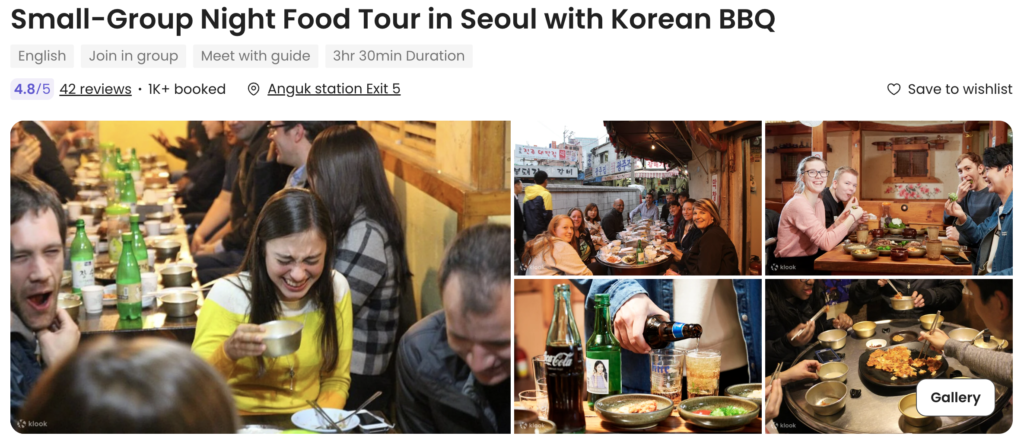
Want to try Korean fried chicken with a local who knows exactly which neighborhood hof to go to and which sauce to order? A Seoul food tour on Klook includes a chimaek stop alongside Korean BBQ, street food, and convenience store culture — the most complete single-evening introduction to how Koreans actually eat.
Korean Fried Chicken: FAQ
Is Korean fried chicken spicy? The original fried version (huraideu) is not spicy at all. Yangnyeom sauce has moderate heat — manageable for most people. If spice is a concern, order original fried or ganjang (soy sauce) style and ask for yangnyeom sauce on the side.
Why is there always pickled radish with Korean fried chicken? The chicken-mu serves as a palate cleanser — the sharp vinegar cuts through the oil between bites and prevents flavor fatigue. Trust the local science: eat the pickled radish between pieces. Semrush
Can I visit Korea and skip Korean fried chicken? Technically. But this would qualify as one of the significant Korea culture shocks in reverse — the realization later that you missed one of the country’s defining food experiences. Order it at least once.
What time do Koreans eat fried chicken? Any time. You’ll see families eating chicken at 5 PM, then office workers doing the same at 9 PM, then university students drinking beer and eating chicken until midnight. Most delivery runs until 2–3 AM.
Is Korean fried chicken available outside Seoul? Yes — the major chains (BBQ, Kyochon, BHC) operate nationwide. BBQ is the largest fried chicken chain in Korea, so you’ll spot it everywhere. In Busan, local chicken hofs near Gwangalli Beach are particularly good — read our Busan Travel Guide for the full Busan food picture. UME Travel
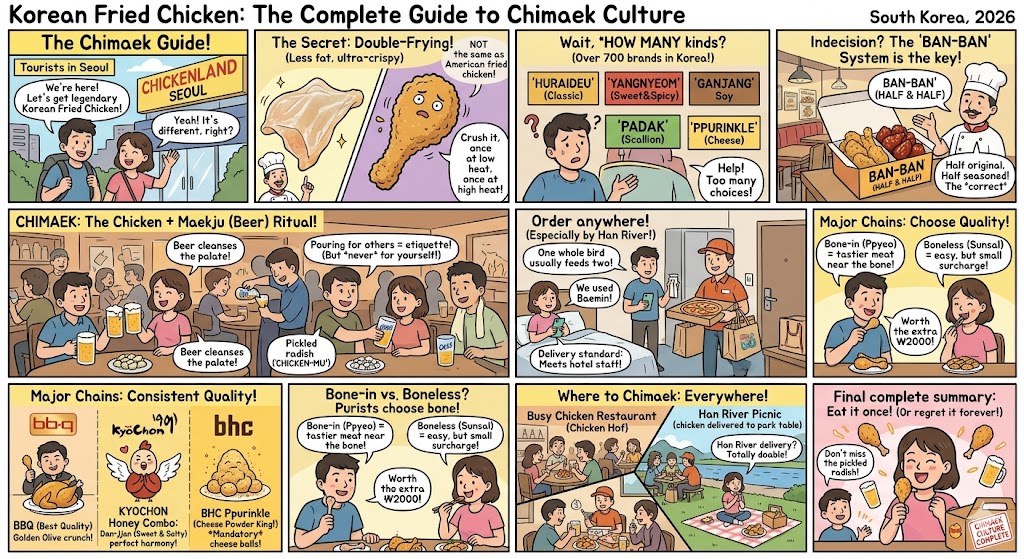
Ready for the rest of Korea’s food culture? Read our Korean Street Food Guide for the complete street eating picture, our Korean Convenience Store Guide for the late-night snacking that often follows a chimaek session, and our Seoul Nightlife Guide for how fried chicken fits into a full Seoul evening.

Korea Insider has lived in South Korea for 50 years and worked at international companies for over two decades — explaining Korean culture, food, and society to colleagues from the US, Europe, and Australia.
Internationally married with a Japanese spouse, Korea Insider brings both an insider’s depth and an outsider’s perspective to every topic on My Korea Tip.