
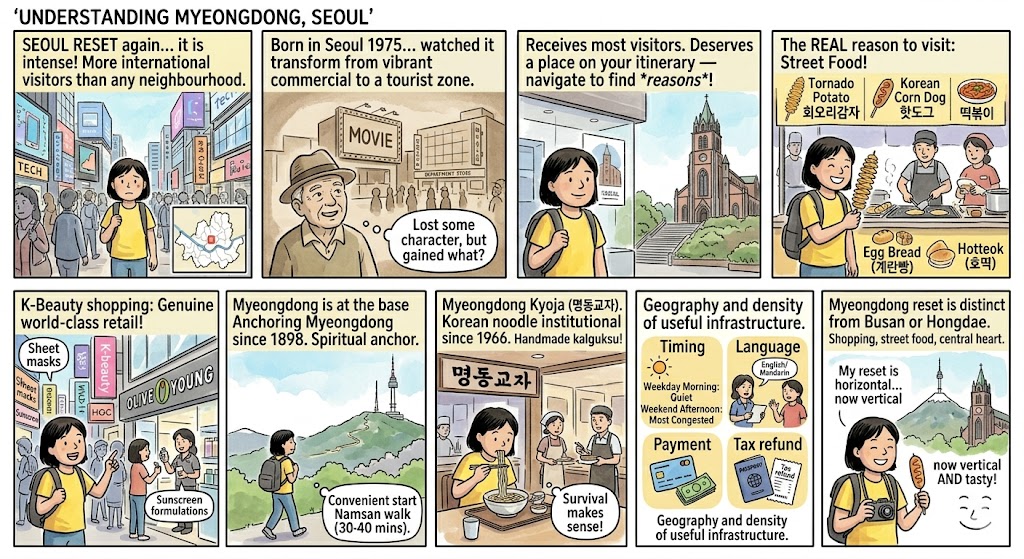
Myeongdong Seoul receives more international visitors than any other neighbourhood in Korea. On a weekend afternoon in peak season, the main street is shoulder-to-shoulder with tourists from across Asia and increasingly from Europe and North America, all navigating the same stretch of cosmetics flagships, street food vendors, and franchise restaurants. The congestion is real, the commercialism is undeniable, and Myeongdong still deserves a place on your Seoul itinerary — for reasons that require a bit of navigation to find.
I was born in Seoul in 1975 and have watched Myeongdong transform from one of Seoul’s most vibrant mixed commercial districts into a tourist zone that has both lost and retained things worth experiencing. The street food is still excellent. The K-beauty shopping is genuinely world-class at prices unavailable elsewhere. The area’s position as the geographic and cultural heart of central Seoul gives it a density of useful infrastructure that no other neighbourhood matches. What it has lost — the independent restaurants, the local shoppers, the off-tourist-circuit character — requires understanding to navigate around.
Here is what I’d tell someone before they arrive.
What Myeongdong Actually Is
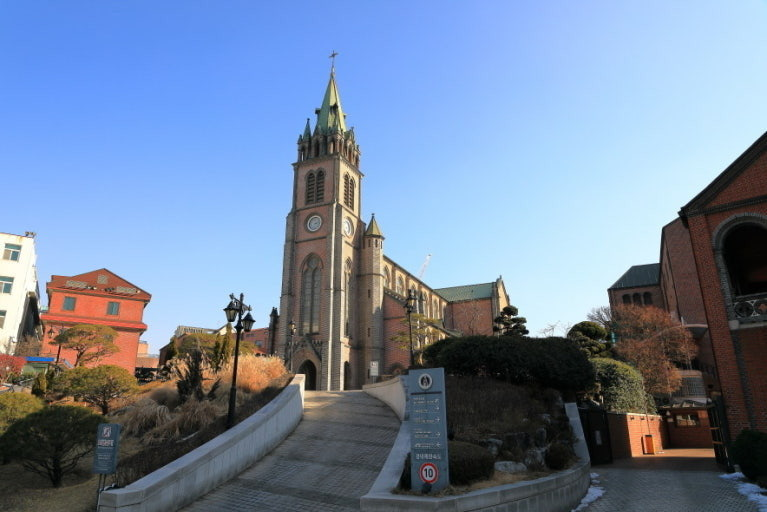
Myeongdong translates loosely as “bright district” and was, through much of the 20th century, Seoul’s most fashionable address — the location of department stores, cinema houses, boutiques, and the kind of urban energy that post-war Seoul produced as it rebuilt itself. The Myeongdong Cathedral, completed in 1898, remains the district’s spiritual anchor and one of the few buildings that has remained consistent through all the commercial transformation around it.
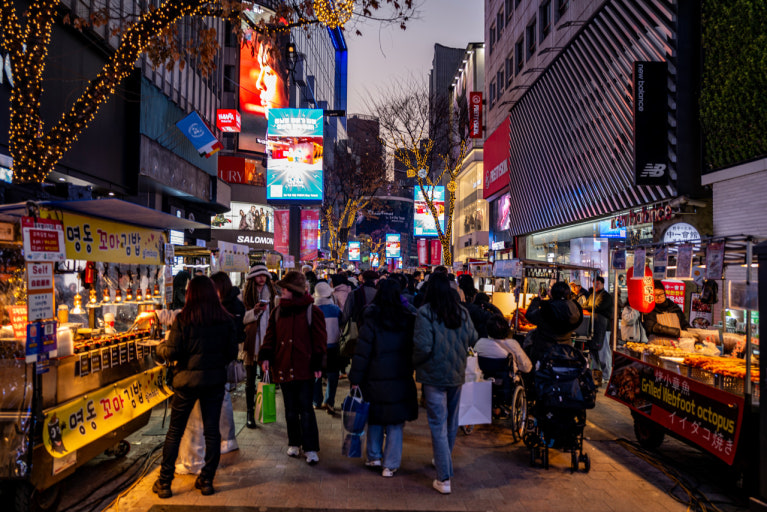
The tourism concentration intensified significantly from the 2010s as Chinese visitors began arriving in volume, drawn by the K-beauty products and Korean food that Korean Wave media had exported. At its peak, Myeongdong’s main street contained more cosmetics stores per metre than anywhere else in Asia. The post-COVID recovery has maintained the tourist density while shifting the visitor composition — fewer Chinese tourists, more Southeast Asian visitors, and a growing Western presence driven by K-culture interest.
The honest assessment: Myeongdong is not where Koreans shop for daily needs. It is where Koreans take foreign visitors and where international tourists discover Korean beauty and food culture. Within those parameters, it does its job exceptionally well.
Myeongdong Street Food: The Real Reason to Visit
The street food that lines Myeongdong’s main pedestrian strip and side alleys is, despite the tourist context, genuinely good. Several of the stalls have been operating for decades under the same family management, and the product quality reflects that continuity.
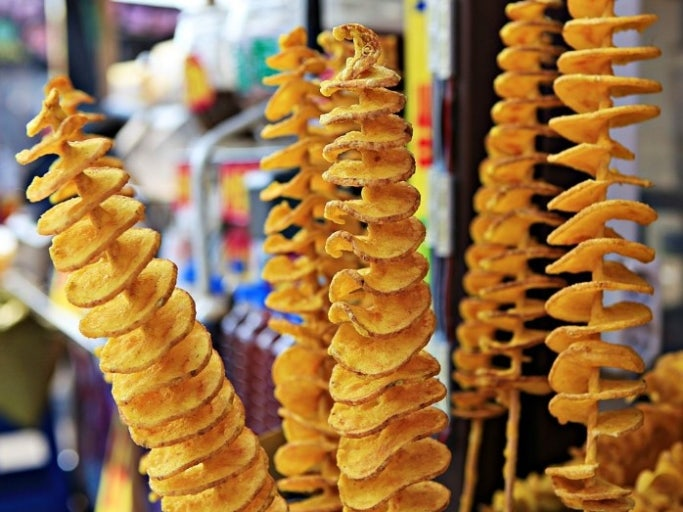
Tornado potato (회오리감자): A whole potato spiralled onto a skewer, fried, and seasoned — the visual spectacle that dominates Myeongdong’s food photography. The taste justifies the appearance: crispy exterior, fluffy interior, available with cheese, spicy seasoning, or plain salt. ₩3,000–₩5,000.
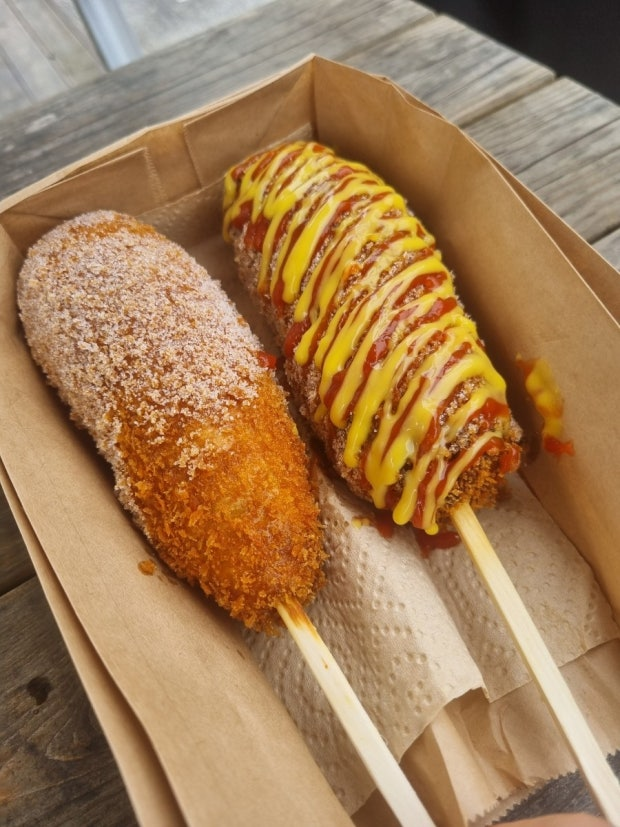
Korean corn dog (핫도그): Not the American version. The Korean corn dog uses a rice flour or panko coating rather than cornmeal, filled with a combination of mozzarella cheese and sausage, and sometimes rolled in sugar. The result is a specific texture — chewy exterior, molten interior — that has become globally recognised. Several stalls on the main Myeongdong strip claim to have originated the format. Budget ₩3,000–₩5,000.
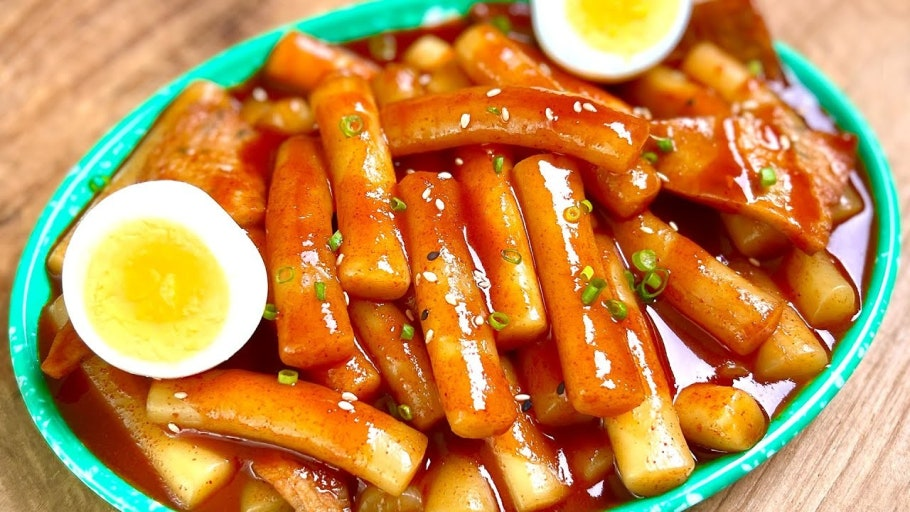
Tteokbokki (떡볶이): The spiced rice cakes that are central to Korean street food culture appear at multiple stalls, usually alongside fish cake skewers (odeng) in the same spicy broth. The Myeongdong versions are calibrated for tourists — slightly less spicy than neighbourhood market versions — which makes them accessible for first-time Korean food encounters.
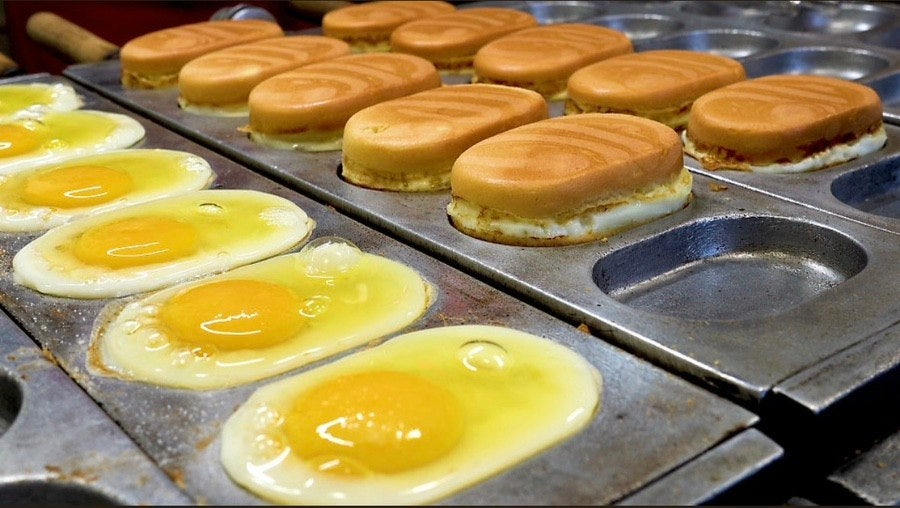
Egg bread (계란빵): A small oval bread baked around a whole egg, slightly sweet, sold warm from street ovens. One of the most specifically Korean street food items and among the cheapest at ₩2,000.
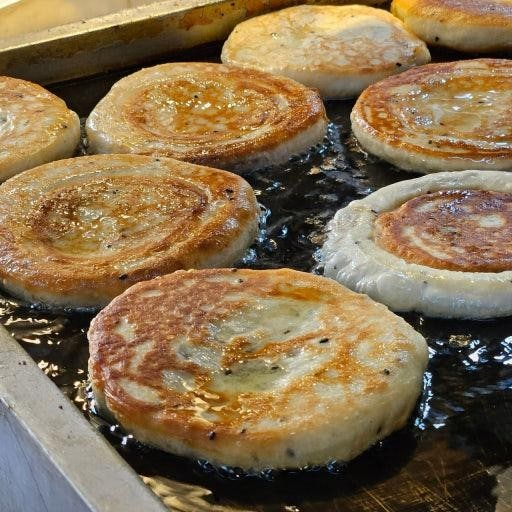
Hotteok (호떡): Sweet pancakes filled with sugar, cinnamon, and mixed seeds, pressed flat on a griddle. Best eaten immediately, messy, and worth the mess.
The practical advice: eat as you walk, budget ₩15,000–₩25,000 for a full street food circuit of the main strip, and arrive hungry. The quality of individual items varies between stalls — follow the Korean visitors rather than the longest queue.
K-Beauty Shopping: The Main Commercial Draw
Myeongdong is the global capital of accessible K-beauty retail, and shopping here for Korean skincare and cosmetics has practical advantages that online purchasing cannot replicate — the ability to test products on your own skin, receive advice from staff trained in K-beauty consultation, and access the full product range of multiple brands in a concentrated area.
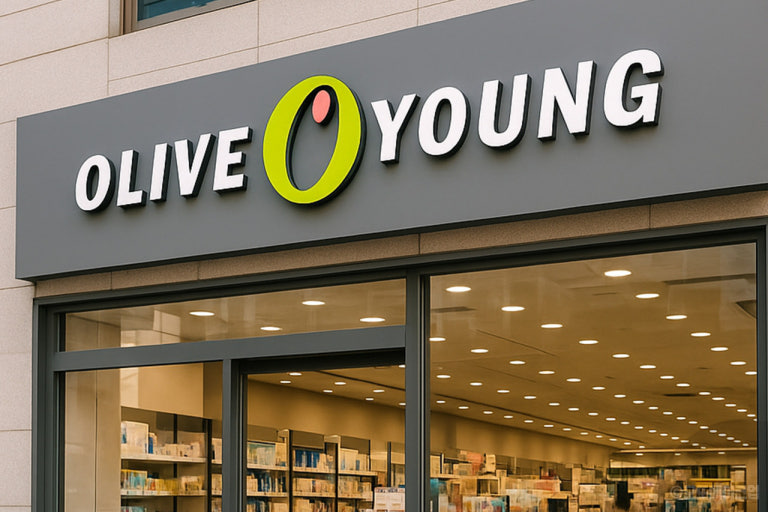
Olive Young flagship (올리브영): The dominant Korean health and beauty retailer has its largest flagship store in Myeongdong. My Olive Young guide covers the store in detail, but the short version is: this is the most comprehensive single-stop Korean beauty shopping experience available, at Korean domestic prices. Go here first to understand the full range before making individual brand decisions.
Brand flagship stores: Almost every major Korean cosmetics brand — Innisfree, Laneige, Sulwhasoo, Etude, Banila Co, The Saem — has a flagship on the Myeongdong strip with full product ranges and English-speaking staff. The advantage over department stores is that single-brand stores allow more focused testing and consultation. The Korean skincare guide covers the products and ingredients worth prioritising.
What to buy: Sheet masks, sunscreen (Korean SPF formulations are the best available globally), essence and serum concentrations of key actives (niacinamide, centella asiatica, snail mucin), and the colour cosmetics that Korean brands do best. Avoid buying international brands here — the prices are not lower than home markets and the stock is not different.
Practical shopping tip: Most stores offer tax refund on purchases above ₩30,000 for international visitors. Carry your passport and ask at the counter — the refund process in Myeongdong is streamlined by the volume of tourist shoppers and takes approximately three minutes.
Beyond Beauty: What Else Myeongdong Has
Myeongdong Cathedral (명동성당)
The Catholic cathedral that has anchored Myeongdong since 1898 is one of Seoul’s most architecturally significant buildings and one of the few places in the neighbourhood where the tourist energy pauses. The Gothic spires are visible from the main shopping street; the interior is open to visitors outside of service times. Historically the cathedral has served as a sanctuary for political dissent in periods of Korean authoritarian government — a layer of meaning that the guidebook visits don’t always convey.
Deoksugung Palace and City Hall Plaza
A 10-minute walk west of the main Myeongdong strip, Deoksugung Palace is the most accessible of Seoul’s five grand palaces — small enough to cover in an hour, architecturally interesting, and free on the last Wednesday of each month. The changing of the guard ceremony at the main gate runs three times daily. The Seoul City Hall Plaza adjacent to the palace is a public green space that fills with residents on warm evenings — one of the few genuinely local experiences in the immediate Myeongdong area.
Namsan and N Seoul Tower
Myeongdong sits at the base of Namsan mountain, making it the most convenient starting point for a Namsan walk. The trail from Myeongdong to the summit takes approximately 30–40 minutes and costs nothing. N Seoul Tower at the top charges for the observation deck but the outdoor platform below is free. The views over central Seoul from Namsan are the best accessible without paying tower admission.
Eating Properly in Myeongdong
The restaurant strip of Myeongdong — the indoor restaurants rather than street food — is expensive relative to the rest of Seoul without being exceptional in quality. Most serve Korean and Asian food at tourist-adjusted pricing, and the better Korean restaurants in adjacent neighbourhoods (Eulji-ro, Jongno, Insadong) offer more authentic experiences at lower prices.
The exceptions worth noting:
Myeongdong Kyoja (명동교자): A Korean noodle and dumpling institution that has operated in Myeongdong since 1966. The handmade kalguksu (knife noodles) and mandu (dumplings) are the kind of food that survives six decades because it’s genuinely good, not because the location is convenient. Expect a queue at lunch. Worth it.
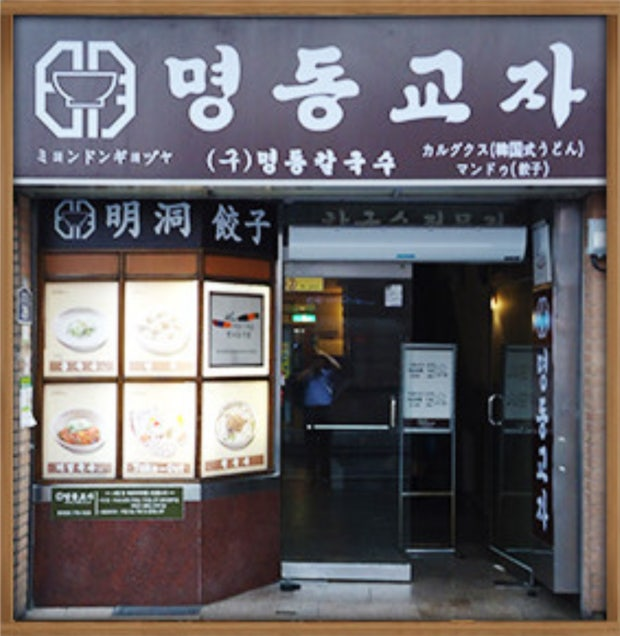
The basement food court beneath Lotte Young Plaza: Korean chain restaurants at normal Korean pricing in an underground space that most tourists walk past without noticing. The most practical option for a full Korean meal at non-tourist prices within the Myeongdong district.
Myeongdong at Night
Myeongdong’s evening energy is different from its afternoon version — the street food vendors extend their hours, the illuminated beauty store windows create a specific visual atmosphere, and the crowds thin enough by 9 PM that the main street becomes more navigable.
The free things to do in Seoul after dark in Myeongdong are limited to Namsan walks and the cathedral grounds. The evening is primarily a shopping and eating time in this neighbourhood — the nightlife is not Myeongdong’s strong suit compared to Hongdae or Itaewon.
Getting to Myeongdong
Subway: Myeongdong station (명동역) on Line 4 (blue). Exit 5 or 6 for the main shopping street. From Gangnam (Line 2 to City Hall, then Line 4): approximately 20 minutes. From Hongdae (Line 2 to City Hall, then Line 4): approximately 25 minutes.
From Incheon Airport: AREX to Seoul Station (43 minutes), then Line 4 one stop to Myeongdong. Or AREX to City Hall and walk 10 minutes. Both work well for visitors arriving with luggage looking to drop bags before exploring.
Practical Tips
Timing: Weekday mornings (before 11 AM) offer the quietest version of Myeongdong. Weekend afternoons (2–5 PM) are the most congested. If your schedule is flexible, a weekday visit significantly improves the street food and shopping experience.
Language: Myeongdong has the highest density of English-speaking retail staff in Seoul. Most beauty brand stores have at least one English speaker; many have Mandarin and Japanese speakers as well. Navigation is straightforward.
Payment: Cards accepted virtually everywhere. The street food stalls are cash-only — carry ₩30,000–₩50,000 in small bills for the street food circuit.
Tax refund: Most stores participate in the tourist tax refund system. Purchases above ₩30,000 qualify. Ask at the counter with your passport.
FAQ
Is Myeongdong worth visiting? Yes — for K-beauty shopping and street food specifically. As a neighbourhood to understand Seoul, it shows you only one version of the city. Combine it with Insadong or Jongno for a more complete picture.
What is Myeongdong famous for? K-beauty retail (the highest concentration of Korean cosmetics brands in the world), street food (particularly corn dogs, tteokbokki, and tornado potato), and proximity to Namsan and Myeongdong Cathedral.
When is the best time to visit Myeongdong? Weekday mornings for the quietest experience. Evening (from 6 PM) when the illuminated storefronts create a distinctive atmosphere. Avoid weekend afternoons during peak tourist season.
Is Myeongdong expensive? For K-beauty products, prices are the same as or lower than Korean domestic retail — significantly cheaper than international markets. For restaurants, prices are tourist-adjusted and higher than equivalent Korean food elsewhere in Seoul.
How long should I spend in Myeongdong? Two to three hours covers the main street food circuit, essential beauty shopping, and the cathedral. A full morning or afternoon allows time for Namsan and Deoksugung. Overnight stays in the neighbourhood make sense for first-time visitors prioritising central access.
Book These Before You Go

Korea Insider has lived in South Korea for 50 years and worked at international companies for over two decades — explaining Korean culture, food, and society to colleagues from the US, Europe, and Australia.
Internationally married with a Japanese spouse, Korea Insider brings both an insider’s depth and an outsider’s perspective to every topic on My Korea Tip.