
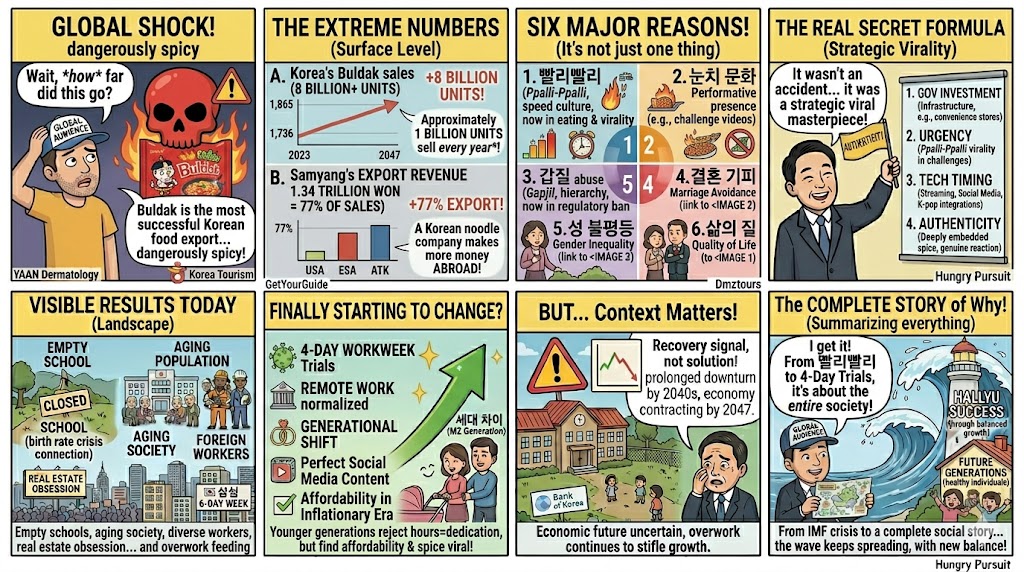
Buldak is the most successful Korean food export in history — and it got there by being almost dangerously spicy.
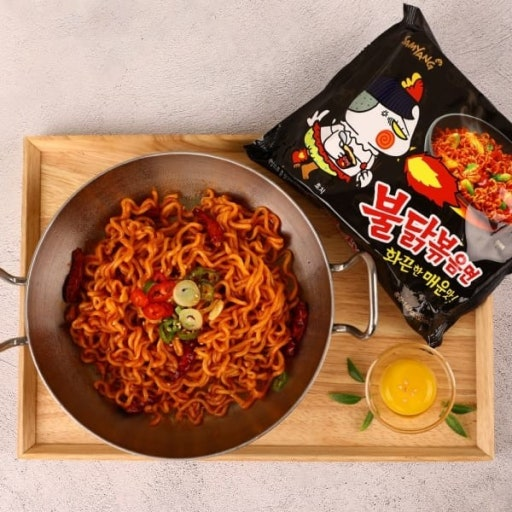
The numbers tell the story: since its launch in 2012, Buldak instant noodles have sold more than 8 billion units across over 100 countries. Approximately 1 billion units sell every year. Samyang Foods — the Korean company behind the brand — generated 1.34 trillion won ($688 million) in export revenue in a single year, representing 77% of the company’s total sales. By the end of 2025, international sales accounted for 81% of Samyang’s total revenue. A Korean noodle company now makes more money abroad than at home.
In 2024, Denmark temporarily recalled several Buldak products on the grounds that their capsaicin levels were so high they posed a risk of “acute poisoning.” The recall did not reduce demand. It increased it. Consumers worldwide searched for the product they had been told was too dangerous to eat. Samyang’s stock price rose.
This is the complete story of Buldak — how a Korean street food concept became a global cultural phenomenon, why it went viral before viral was a marketing strategy, and what it reveals about the particular moment in food culture that Korea now occupies.
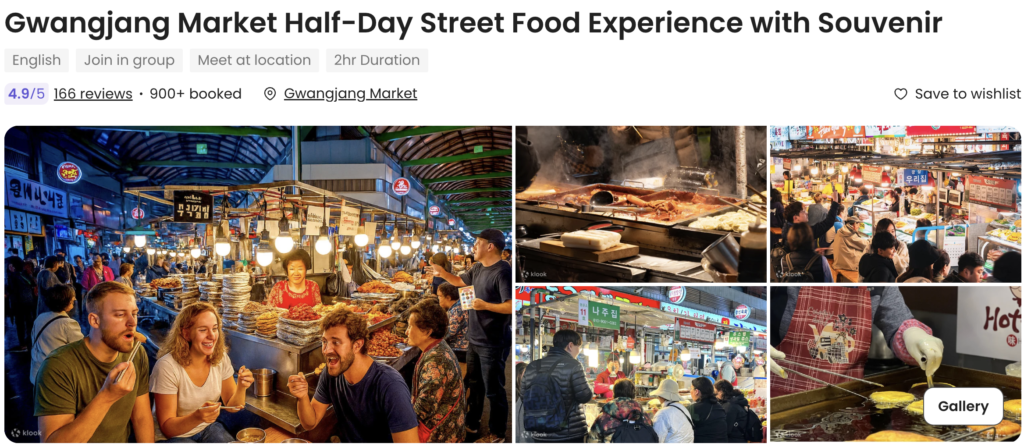
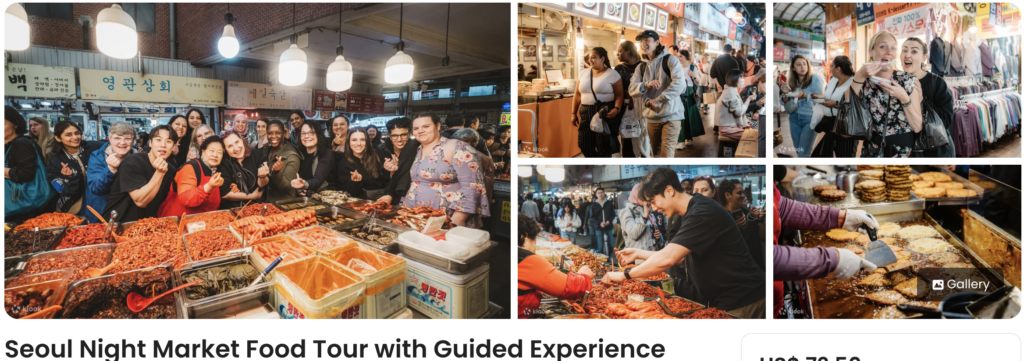
For the broader food culture that produced buldak, read our Korean Street Food Guide. For where to experience it at the source, read our Gwangjang Market Guide.
Buldak: What It Actually Is
불닭 (Buldak) translates directly as “fire chicken.” The name is literal — the original product is a stir-fried dry noodle coated in a sauce built around gochujang, gochugaru, and soy, topped with dried seaweed and sesame. Unlike traditional Korean ramyeon which is served in broth, Buldak noodles are boiled, drained, and then tossed in the sauce — creating a concentrated, coating heat that hits differently from soup-based spice.
The original Buldak Bokkeummyeon registers at 4,404 Scoville units — significantly hotter than a jalapeño pepper (2,500–8,000 Scoville) but below a habanero. The 2x Spicy version reaches 8,706 Scoville. The 3x Spicy — the one Denmark’s food authorities maintained a ban on — goes further than most people would voluntarily eat.
Samyang Foods created the product in 2012 after observing the popularity of spicy grilled chicken dishes at Korean street food stalls, particularly in Myeongdong — the tourist-heavy district of Seoul where vendors had noticed both Korean customers and foreign visitors gravitating toward the most intensely spiced options. The company’s ambition was to recreate that experience in instant noodle format. The product launched in April 2012, sold modestly, and then in 2014 everything changed.
Buldak: How It Went Viral
In 2014, before “viral marketing” was a standard line item in food company budgets, a Korean YouTuber posted a video attempting to finish a full package of Buldak noodles without drinking water. The suffering was genuine. The video spread.
What followed was the 불닭 챌린지 (Fire Noodle Challenge) — a self-replicating social media phenomenon where users across Asia, then globally, filmed themselves attempting to eat Buldak and captured their authentic physical reactions. The content format was perfect: it required no translation, no cultural knowledge, and produced immediate, unambiguous human responses — tears, sweating, shock, laughter. More than a million videos were posted across YouTube and eventually TikTok.
The challenge did something unusual for food marketing: it made the product’s difficulty the point. Finishing Buldak became a small act of courage. Not finishing it was equally shareable. Either way, the camera was rolling.
Samyang did not create the Fire Noodle Challenge. They benefited from it enormously, then built their subsequent marketing strategy around its logic — influencer partnerships, social media activations, appearances at the Coachella music festival, K-pop star integrations, surprise fan events in the United States. When a K-pop idol was spotted eating Buldak in a behind-the-scenes video, sales spiked internationally within hours.
The Denmark recall of 2024 was the same dynamic in regulatory form. The Danish Veterinary and Food Administration’s announcement that certain Buldak products posed risks of acute capsaicin poisoning generated global news coverage — and global purchasing. The products that were banned became the most searched and most ordered Korean food items in European markets for weeks.
Buldak: The Numbers Behind the Phenomenon
| items | Number |
|---|---|
| Launching | 2012 |
| Sold history | 8 billion + |
| yearly sold | 1 billion (100 countries) |
| Export sales | 0.1 billion dollars (2024) |
| every year growth | 65% |
| export portion | 81% (2025) |
Korea’s total instant noodle exports hit a record $1.52 billion — making ramyeon the first single food category in Korean export history to surpass the $1 billion threshold. Buldak is the dominant driver of that figure.
Buldak: The Full Product Universe
What began as a single product has expanded into a complete brand ecosystem.
라면 라인업 (Noodle Line): The original black package remains the flagship. Around it, Samyang has built a range that covers the full spectrum from mild to extreme:
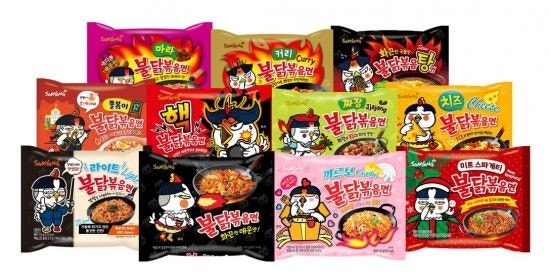
- 오리지널 (Original): 4,404 SHU — the standard
- 까르보 불닭 (Carbonara): Creamy and milder — the entry point for heat-averse converts
- 치즈 불닭 (Cheese): Cheese powder coating — the most beginner-friendly
- 2배 더 매운 (2x Spicy): 8,706 SHU — for experienced eaters
- 3배 더 매운 (3x Spicy): The Denmark-banned version
- 커리 불닭 (Curry): Spice with South Asian flavor notes
- 짜장 불닭 (Jjajang): Black bean sauce variation
- 핵불닭 (Nuclear): The extreme tier — not recommended without genuine heat tolerance
소스 및 스낵 (Sauces and Snacks): Buldak sauce is now exported to more than 50 countries and has been incorporated into restaurant menus and retail products globally. The brand has extended into Buldak potato chips, Buldak tteokbokki, Buldak fried rice, and Buldak dumplings — a full product universe built on a single flavor profile.
Buldak: How to Eat It Correctly
The product is simple. The technique makes a meaningful difference.
기본 조리법 (Standard Preparation):
- Boil noodles for 5 minutes until cooked
- Drain almost all water — leave approximately 8 tablespoons (the key step for sauce consistency)
- Add the sauce packet — stir thoroughly over low heat
- Add the flake packet (dried seaweed and sesame)
- Eat immediately — the sauce thickens as it cools
한국인들이 먹는 방법 (How Koreans Actually Eat It):
- 계란 추가 (Add an egg): A raw egg cracked directly into the hot noodles, stirred through — it tempers the heat and adds richness
- 치즈 추가 (Add cheese): A slice of processed cheese melted over the top — the fat content neutralizes capsaicin
- 밥 추가 (Add rice): The remaining sauce tossed with leftover rice after finishing the noodles — a second course
- 우유 준비 (Have milk ready): Water does not relieve capsaicin burn. Milk does. Koreans know this.
Buldak: Why This Happened Now
The Buldak phenomenon is not simply about a good product. It is the intersection of several trends that Korea was positioned to benefit from simultaneously.
글로벌 매운맛 트렌드 (Global Spicy Food Trend): Younger consumer demographics worldwide — Gen Z and Gen Alpha — show a consistent preference for intense flavor experiences over mild ones. The market for spicy foods has grown significantly across the United States, Europe, and Southeast Asia. Buldak arrived as that appetite was forming.
K-culture의 후광 효과 (K-culture Halo Effect): The global popularity of K-pop, K-drama, and K-beauty created a general curiosity about Korean products. When a K-pop idol is seen eating a specific noodle brand, that brand becomes culturally legible to audiences who have no prior food connection to Korea. Buldak benefited from the Hallyu wave without being a direct product of it.
소셜 미디어의 완벽한 콘텐츠 (Perfect Social Media Content): The Fire Noodle Challenge format — eat it, react authentically, share — works in any language. It requires no cultural knowledge to participate in. It produces shareable content by design. This made Buldak one of the first food products to scale globally through user-generated content rather than traditional advertising.
인플레이션 시대의 가성비 (Affordability in an Inflationary Era): Rising food costs in the United States and Europe expanded demand for affordable, satisfying meal options. A package of Buldak costs under $2 in most Western markets. The flavor intensity — per dollar — is extraordinary.
Buldak: Where to Experience It in Korea
편의점 (Convenience Stores): Every CU, GS25, and 7-Eleven in Korea stocks the full Buldak range. The convenience store eat-in section — small tables and hot water dispensers — is the authentic Korean Buldak setting. You prepare it yourself, eat it standing or sitting in the store, and experience the product in the environment where millions of Koreans consume it daily.
홍대 라면 라이브러리 (Hongdae Ramen Library): The CU convenience store in Hongdae operates a dedicated “Ramyun Library” — a floor-to-ceiling display of every instant noodle variety available in Korea. It has become a tourist attraction in its own right, with foreign visitors photographing and purchasing the full Buldak range. The Anjum family from Pakistan photographed there by the Washington Post is now genuinely iconic Korean food tourism imagery.
삼양 본사 (Samyang Headquarters Area): Samyang operates a visitor experience space near its facilities where the full product range is displayed and available. Less commonly visited than the convenience store experience but genuinely interesting for anyone curious about the company behind the product.
Buldak: FAQ
What does buldak mean? 불닭 (Buldak) means “fire chicken” in Korean — a reference to the spicy grilled chicken street food dishes that inspired the instant noodle product.
How spicy is Buldak really? The original registers at 4,404 Scoville units — significantly hotter than a jalapeño but manageable for people who regularly eat spicy food. The 2x Spicy at 8,706 Scoville is genuinely intense. The 3x Spicy is extreme by any standard.
Why did Denmark ban Buldak? Danish food authorities recalled specific Buldak products in 2024 citing capsaicin levels high enough to risk acute poisoning. The ban was partially reversed — two products were cleared, but the 3x Spicy remains prohibited. The recall paradoxically boosted global demand significantly.
Which Buldak flavor should I try first? Start with Carbonara (까르보) — the creamy sauce moderates the heat while retaining the flavor profile. After that, the original. Work up to 2x Spicy only after establishing your tolerance.
Where can I buy Buldak outside Korea? Buldak is available in Walmart, Costco, H-Mart, and most Asian grocery stores across the United States. It has mainstream retail distribution in the UK, Australia, Canada, and most of Europe. The full range — including varieties not available internationally — is best found in Korea.
How many Buldak products are there? The core noodle line runs approximately 15 flavors. The brand has extended into sauces, chips, tteokbokki, fried rice, dumplings, and snacks — making Buldak a full food platform rather than a single product.

Korea Insider has lived in South Korea for 50 years and worked at international companies for over two decades — explaining Korean culture, food, and society to colleagues from the US, Europe, and Australia.
Internationally married with a Japanese spouse, Korea Insider brings both an insider’s depth and an outsider’s perspective to every topic on My Korea Tip.