
This is one of the most common questions I get from foreign colleagues and friends before their first visit — and my answer is always the same: Korea is genuinely, measurably one of the safest countries in the world for international travelers.
But “safe” doesn’t mean “zero risk,” and a complete answer requires more than reassurance. This guide covers the full picture — crime statistics, nightlife safety, solo female travel, scams to watch for, and the specific situations where normal traveler awareness applies.
The Short Answer
South Korea consistently ranks among the top 10 safest countries globally for international travelers. Violent crime against foreigners is rare. Pickpocketing — a serious concern in Paris, Barcelona, and Rome — is almost nonexistent by comparison. The vast majority of visitors complete entire trips without encountering any safety issue at all.
The risks that do exist in Korea are not primarily physical. They’re scams, nightlife-related incidents, and the situational awareness that any smart traveler applies in any major city.
Before your trip, read our Korea Travel Tips Guide and Korea Scams Guide — preparation is the foundation of a safe visit.
Crime Statistics: What the Numbers Say
Korea’s crime statistics make a clear case.
South Korea’s overall crime rate is among the lowest in the OECD. Violent crime rates are a fraction of equivalent figures in the United States, United Kingdom, and most of Western Europe. Two factors drive this: an extensive CCTV network — Korea has one of the highest camera-per-capita rates in the world — and a cultural emphasis on public order that runs genuinely deep.
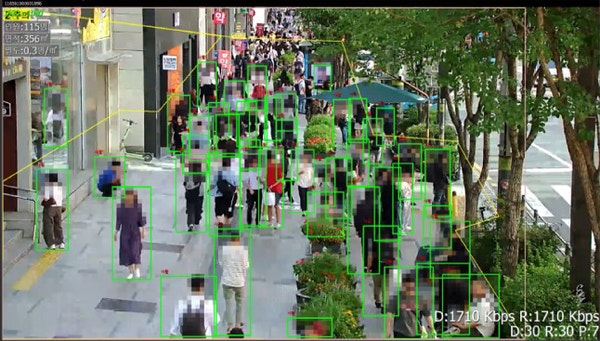
The practical reality of this shows up in daily behavior that surprises most first-time visitors:
Leaving a laptop unattended at a café table while you use the bathroom is completely standard practice among Korean locals — and it works. I’ve done it my entire adult life without incident.
People place bags on seats to “reserve” them in busy cafés without concern.
Phones left on restaurant tables routinely stay there.
Walking alone at night in major Seoul neighborhoods feels genuinely safe in a way that’s unusual among major global cities.
This level of casual public security is one of the things visitors notice most, and it reflects something real about how Korean society functions rather than just statistics on paper.
Nightlife Safety
The nightlife question deserves honest, specific treatment.
Major entertainment districts — Hongdae, Itaewon, Gangnam — are well-lit, heavily trafficked, and actively patrolled. The Seoul Metropolitan Police maintain specific nightlife patrol units in these areas precisely because the city takes visitor safety seriously. For the vast majority of visitors on a typical night out, these areas are safe and enjoyable.
That said, a few specific situations warrant awareness:
Drink spiking is rare but documented. The Australian and UK government travel advisories both note that it can occur around bars and nightlife areas. Standard precautions apply — don’t leave your drink unattended, and be cautious about accepting drinks from people you’ve just met.
Alcohol volume is the more common issue. Korean drinking culture moves fast — soju rounds come quickly, the social pressure to keep pace is real, and many visitors underestimate how the cumulative effect builds. Most nightlife safety incidents in Korea involve excessive consumption rather than external threat. Knowing your limits is genuinely the most important nightlife safety tip here.
Unlicensed taxis near entertainment districts late at night are the one transport safety issue worth flagging. Always use Kakao Taxi — Korea’s equivalent of Uber — which logs your driver’s ID and route. Flagging random vehicles outside clubs at 2am is the situation most likely to result in overcharging or worse. Read our Seoul Subway Guide for complete transport guidance, including last train times.
Venue entry policies — some venues maintain “Korean only” policies that can surprise tourists. This is becoming rarer but still occurs. It’s disorienting rather than dangerous; simply moving on to another venue is the practical response.
Solo Female Travel
This question generates significant search volume, and the honest answer is one of the most positive you’ll find for any major Asian destination.
Korea ranks consistently among the top destinations globally for solo female travelers. Street harassment is dramatically lower than in most European, American, and other Asian cities. Walking alone at night in well-lit areas of Seoul is genuinely safer than equivalent situations in the majority of major world cities.
I’ve watched many female foreign colleagues and visitors arrive with safety concerns and leave having had the most comfortable solo travel experience of their lives. This is a consistent pattern, not an exception.
Specific points worth knowing:
Street harassment is uncommon by any global standard. Catcalling and aggressive street approaches are culturally rare in Korea — this reflects genuine social norms rather than any specific policy.
Late-night transport — Kakao Taxi is the safest option, with every journey logged. Seoul’s subway runs until approximately midnight; planning your evening around the last train is wise regardless of gender.
Accommodation — Korea’s guesthouse and hotel industry in tourist areas is generally well-managed and secure. The overwhelmingly positive solo female travel reviews of Korea in major travel communities reflect real experience, not marketing.
Scams to Know About
While violent crime is rare, tourist-targeted scams exist and are worth knowing in advance.
Taxi overcharging is the most common financial risk. Always confirm the meter is running from the moment you enter. Using Kakao Taxi eliminates this risk entirely. This is the single most practical safety improvement most tourists can make.
Nightlife overcharging occurs at some venues in Gangnam and Itaewon — particularly those that aggressively recruit tourists from the street with promises of free drinks or VIP entry. If someone approaches you outside a venue with this pitch, proceed cautiously and check prices explicitly before ordering anything.
Fake monk donations appear occasionally in tourist areas — someone in Buddhist robes offers a “gift” bracelet or token then requests a donation. This is not authentic Korean Buddhist practice. Politely decline and walk away.
Inflated tourist restaurant prices near major sights are common. A quick check on Naver Maps or Google Maps reviews before entering any restaurant near Gyeongbokgung, Myeongdong, or Insadong helps calibrate expectations.
None of these situations make Korea unsafe in any meaningful sense — they’re financial inconveniences rather than dangers, and awareness alone prevents most of them. Read our dedicated Korea Scams Guide for the complete breakdown.
Emergency Information
Save these numbers before you arrive:
| Service | Number | Notes |
|---|---|---|
| Police | 112 | 24/7, English interpreters available |
| Ambulance / Fire | 119 | 24/7 emergency service |
| Korea Travel Hotline | 1330 | 24/7 tourist helpline, multiple languages |
The 1330 Korea Travel Hotline is particularly valuable. It handles everything from translation assistance to reporting tourist-specific incidents and is staffed around the clock in English, Chinese, Japanese, and other languages. This is the number to call first for any non-emergency situation where language is a barrier.
North Korea: The Question Everyone Has
The North Korea situation is the concern that gives many potential visitors pause — and it deserves a direct answer.
For the overwhelming majority of tourists on a typical Seoul visit, North Korea poses no practical safety risk. Military tensions exist and occasionally escalate rhetorically. Seoul has nonetheless operated as a normal, thriving global city for decades under this geopolitical reality. Tens of millions of people live and work here without treating it as a daily concern.
Standard advice applies: register with your embassy before visiting, monitor news during your stay, and follow official guidance if a specific situation escalates. But North Korea concerns should not prevent Korea travel — and for the vast majority of visitors, they never come up in any practical way.
Natural Risks
Korea experiences occasional minor earthquakes, summer typhoons (July–September), and significant seasonal temperature extremes — genuinely cold winters and hot, humid summers.
None of these make Korea unsafe. But timing matters: spring (March–May) and autumn (September–November) offer the most comfortable and straightforward travel conditions. Summer visits during typhoon season are manageable with normal weather awareness.
The Honest Verdict
Korea is safer than most European tourist destinations. Safer than Japan for certain categories of crime. Safer than virtually every major American city by violent crime metrics.
The combination of low-crime culture, extensive security infrastructure, responsive emergency services, and a generally orderly public environment makes Korea one of the most reliably safe destinations in Asia. The precautions that apply here are the same basic awareness you’d bring anywhere: don’t leave drinks unattended in nightlife settings, use official transport, stay aware of your surroundings after midnight in entertainment districts, and keep copies of important documents.
If safety concerns have been a reason for hesitation about visiting Korea — this should resolve them.
FAQ
Is Korea safe for tourists traveling alone? Yes — both male and female solo travelers consistently rate Korea among their safest international experiences. The low street crime, reliable transport, and generally orderly public environment make solo travel comfortable.
Is Seoul safe at night? Generally yes, particularly in well-lit areas and major neighborhoods. Normal nighttime awareness applies in entertainment districts after midnight — the same precautions you’d take in any major city.
What is the safest area to stay in Seoul? Myeongdong, Insadong, Hongdae, and Gangnam are all safe, well-trafficked tourist areas. There are no neighborhoods in central Seoul that tourists need to specifically avoid.
Is Korea safe for LGBTQ+ tourists? Korea is physically safe for LGBTQ+ visitors — violent incidents targeting tourists are extremely rare. Public displays of affection may attract attention outside specifically LGBTQ+-friendly venues, particularly in less urban areas. Itaewon in Seoul has an established LGBTQ+ scene and is the most comfortable area for openly LGBTQ+ travelers.
How safe is the subway in Seoul? Extremely safe. The Seoul Metro is well-monitored, well-lit, and used by millions of people daily. Incidents on the subway are rare. It’s one of the safest urban transit systems in the world.
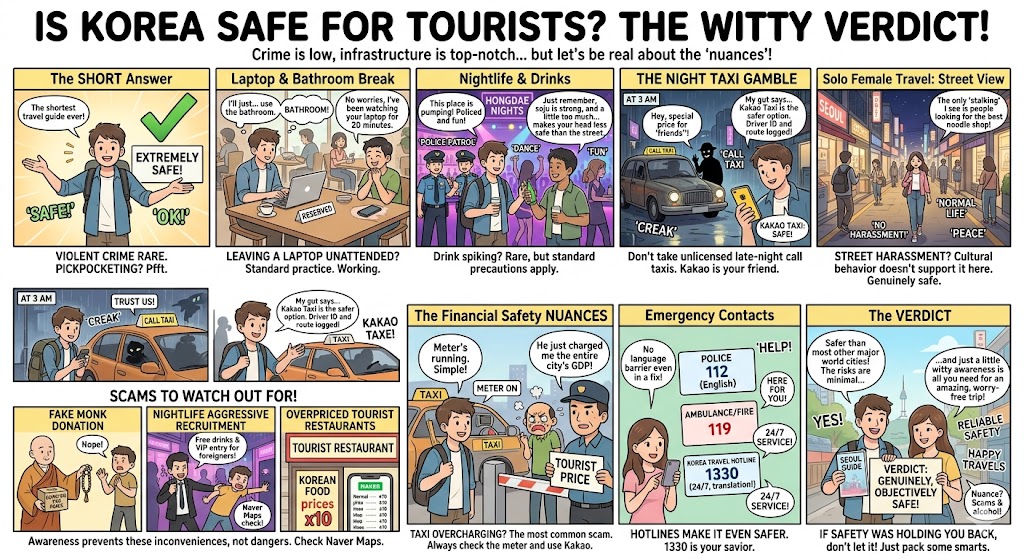
For getting from the airport safely on arrival, read our Incheon Airport to Seoul Guide — the first safety decision every Korea tourist makes.

Korea Insider has lived in South Korea for 50 years and worked at international companies for over two decades — explaining Korean culture, food, and society to colleagues from the US, Europe, and Australia.
Internationally married with a Japanese spouse, Korea Insider brings both an insider’s depth and an outsider’s perspective to every topic on My Korea Tip.