
Japanese colonial Korea lasted 35 years — from the formal annexation in 1910 to liberation in 1945 — and understanding it is essential for understanding almost everything about contemporary Korea.
The palaces you visit in Seoul were deliberately dismantled or obscured during this period. The language spoken by everyone around you was banned from schools and public spaces for decades. The names Koreans carry today are, in some families, replacements for Japanese names that were legally required during the 1940s. The division of the peninsula into North and South Korea is a direct consequence of how the colonial period ended. The complicated relationship between Korea and Japan that visitors occasionally encounter — in news, in public sentiment, in political discourse — has its roots in these 35 years.
This is not ancient history. The last generation of Koreans who lived through Japanese colonial rule died only recently. Their children are alive. Their grandchildren are the people you meet in Korean cities today.
This guide is written for visitors who want to understand what they are standing in the middle of when they visit Korea — the historical layers beneath the K-pop concerts, the palace grounds, and the restaurant tables.
For the physical evidence of this period that still exists in Seoul, read our Gyeongbokgung Palace Guide. For how this history continues to shape Korea-Japan relations, read our Korean Culture & Society Guide.
Japanese Colonial Korea: How It Happened
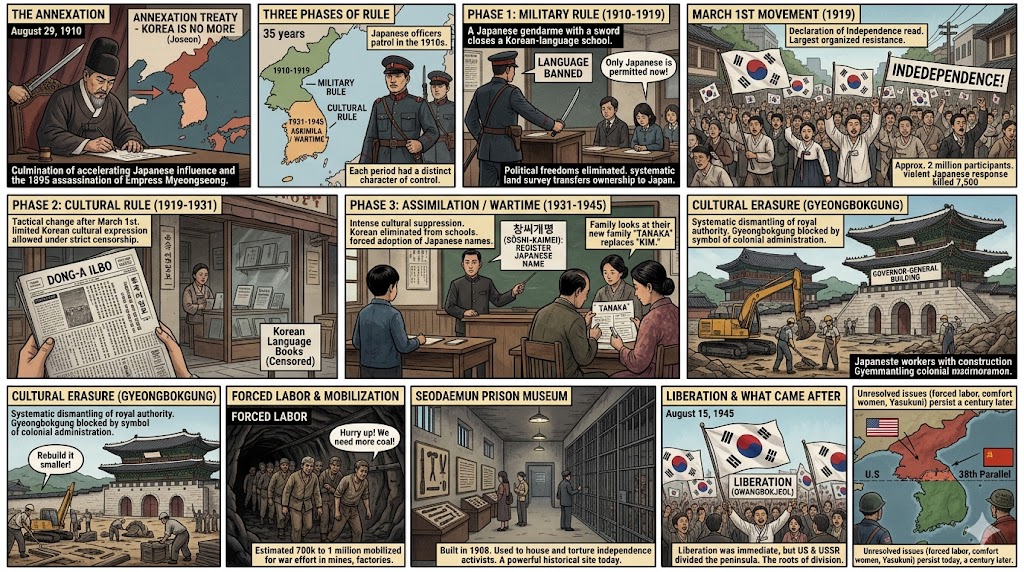
The formal annexation of August 29, 1910 was the culmination of a process that had accelerated dramatically over the preceding fifteen years.
After winning the Sino-Japanese War in 1895, Japan established increasing influence over the Korean peninsula. That same year, Japanese agents assassinated Empress Myeongseong (명성황후) — Queen Min — inside Gyeongbokgung Palace, killing the most prominent advocate for Korean independence from Japanese influence. The assassination was carried out by a group that entered the palace grounds in the early morning. It remains one of the most viscerally remembered events of the pre-colonial period for Koreans.
Following Japan’s victory in the Russo-Japanese War in 1905, Korea was forced to accept a protectorate agreement that transferred control of Korean foreign policy to Japan. The Korean emperor protested the treaty as illegitimate — signed under duress — and sent secret delegates to the 1907 Hague Peace Conference to appeal to the international community. The appeal was ignored by Western powers, who were more concerned with their own strategic interests in Asia than with Korean sovereignty.
In 1907, the Korean military was disbanded. Three years later, on August 29, 1910, Japan formally annexed Korea through the Japan-Korea Annexation Treaty — a document that Korea has long maintained was signed under coercion and therefore illegitimate under international law. The country was renamed Joseon (조선) under Japanese administration, and a Japanese Governor-General was appointed with near-absolute authority over the peninsula.
Japanese Colonial Korea: The Three Phases
The 35 years of colonial rule are typically divided into three distinct administrative periods, each with its own character and policies.
무단통치 (1910-1919) — Military Rule
The first decade was the most overtly repressive. Korean political freedoms were eliminated entirely. Freedom of assembly, association, press, and speech were abolished. Private Korean schools that did not meet Japanese standards were closed. The colonial school system taught Japanese language, promoted Japanese culture, and systematically excluded Korean language and Korean history from the curriculum.
Koreans were deprived of property through a systematic land survey (1910-1918) that transferred agricultural land to Japanese ownership or to the Oriental Development Company — a Japanese colonial institution that managed confiscated properties and redirected Korean agricultural production, particularly rice, toward Japanese domestic consumption.
By the end of the military rule period, Korean resentment had reached a breaking point.
문화통치 (1919-1931) — Cultural Rule
The March 1st Movement of 1919 — described below — forced a tactical change in Japanese colonial administration. The response to the uprising’s violence had drawn international attention and criticism. Japan shifted to what it called a “cultural policy” — a moderation of the most overt forms of repression that, in practice, maintained structural control while allowing limited Korean cultural expression.
Korean-language newspapers were permitted. Some Korean cultural organizations were allowed to operate. The overall structure of exploitation and control remained unchanged, but the methods became less nakedly military.
황민화 (1931-1945) — Assimilation / Wartime
The final and most intense phase of cultural suppression coincided with Japan’s expansion into China and its increasing involvement in what would become World War II.
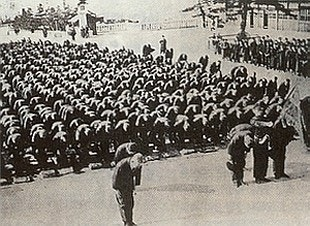
In 1938, Korean-language instruction was eliminated from schools entirely. In 1940, the policy of 창씨개명 (Sōshi-kaimei) was introduced — Koreans were required to register Japanese names. The policy was framed as voluntary but implemented through pressure, discrimination, and systematic disadvantage for those who did not comply. Families that had maintained their Korean names for centuries were forced to adopt Japanese equivalents in official records.
Korean labor and resources were mobilized for the Japanese war effort. An estimated 700,000 to 1 million Koreans were mobilized as forced laborers in Japanese mines, factories, and construction sites — including in Japan itself, under conditions that survivors and historians have described as effectively slavery.
Japanese Colonial Korea: The Cultural Erasure
The systematic suppression of Korean identity was one of the defining features of colonial rule and the aspect that Koreans remember with the most enduring bitterness.
언어 말살 (Language Suppression) Korean was removed from school curricula. Japanese became the mandatory language of education, administration, and public life. Korean families who wanted to maintain their language did so at home, in secret, teaching children in private what could not be taught in schools. Underground schools operated throughout the country. The Korean Language Society — a scholarly organization dedicated to standardizing and preserving the Korean language — continued its work until its members were arrested in 1942 and the organization dismantled.
When liberation came in 1945, the Korean language emerged intact. The decades of suppression had failed to eliminate it — proof, Koreans argue, that cultural identity cannot be destroyed through administrative decree.
역사 말살 (Historical Erasure) Korean historical documents were destroyed. Korean history was removed from school curricula and replaced with Japanese history and Japanese imperial ideology. The deliberate destruction of historical records was systematic — an attempt to sever Koreans from their own past by eliminating the evidence of it.
경복궁 훼손 (Gyeongbokgung’s Deliberate Destruction) The Japanese colonial administration systematically dismantled Gyeongbokgung Palace — the symbol of Joseon royal authority — removing hundreds of buildings from the grounds. In 1926, a massive Japanese Governor-General building was constructed directly in front of Gwanghwamun Gate, visually blocking and symbolically subordinating the palace to Japanese administrative authority.
The Governor-General building stood until 1995, when the Korean government demolished it as part of a national project to restore the palace’s original appearance. The demolition was broadcast live on Korean television and treated as a national event. The restoration of Gyeongbokgung — still ongoing — is understood by Koreans as an act of historical reclamation. Read our Gyeongbokgung Palace Guide for the full story of the palace’s destruction and reconstruction.
Japanese Colonial Korea: The March 1st Movement
On March 1, 1919, 33 Korean independence activists gathered at Taehwagwan restaurant in Seoul and publicly read a Declaration of Independence — a document asserting Korea’s right to self-determination. The reading was timed to coincide with the funeral of former Emperor Gojong, whose death had drawn crowds to Seoul from across the country.
What followed was the largest organized act of resistance in Korean history. Mass demonstrations spread from Seoul across the entire peninsula. An estimated two million Koreans participated in protests over the following weeks — in cities, towns, and rural villages — carrying Korean flags and chanting independence slogans.
The Japanese response was violent. Approximately 47,000 Koreans were arrested. Around 7,500 were killed and 16,000 wounded in the suppression of the protests. Villages where demonstrations had occurred were burned. Protesters were imprisoned and tortured at facilities like Seodaemun Prison in Seoul — which still stands as a museum today and is one of the most important historical sites in Korea for understanding the colonial period.
The March 1st Movement did not achieve Korean independence. It demonstrated the scale of Korean resistance, altered Japanese colonial policy from military to cultural rule, and became the foundational moment of modern Korean national identity. March 1st (삼일절) remains a national holiday in South Korea.
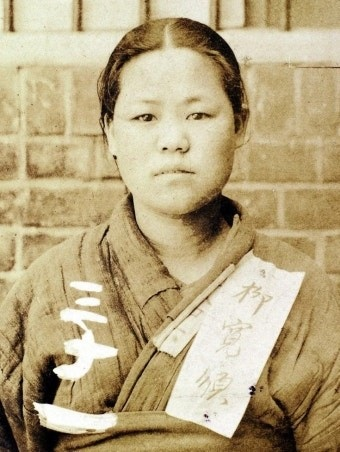
유관순 (Yu Gwan-sun): The most celebrated martyr of the March 1st Movement was a 16-year-old student named Yu Gwan-sun, who organized protests in her home village of Cheonan after schools were closed. She was arrested, tortured in Seodaemun Prison, and died in custody in September 1920 at age 17. She is the most widely recognized symbol of Korean resistance to Japanese colonial rule.
Japanese Colonial Korea: What Remains in Seoul
Colonial history is physically present in Seoul for visitors who know where to look.
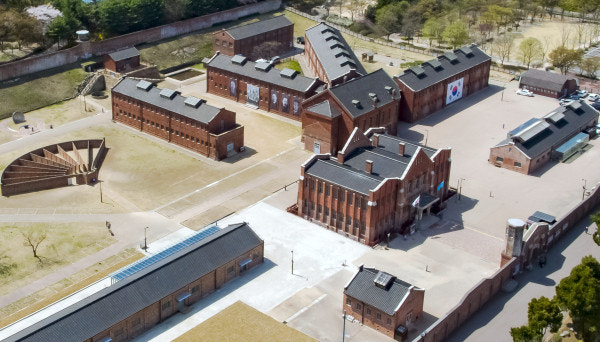
서대문형무소 (Seodaemun Prison) The most important colonial-era historical site in Seoul. The prison complex was built in 1908 and used throughout the colonial period to house, torture, and execute Korean independence activists. It is now a museum — Seodaemun Prison History Hall — with preserved cells, torture equipment, and exhibitions documenting the independence movement. Walking through the actual buildings where activists were imprisoned and executed is one of the most affecting historical experiences available in Seoul.
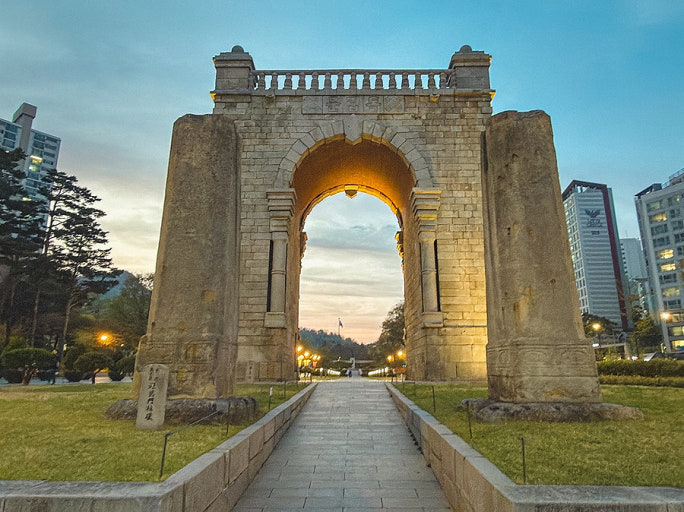
독립문 (Independence Gate) Built in 1897 — before the annexation — to symbolize Korea’s independence from Chinese suzerainty, Independence Gate stands near Seodaemun Prison as an ironic historical marker. During the colonial period, it stood as a reminder of the independence Korea had lost.
경복궁 복원 (Gyeongbokgung Restoration) The ongoing reconstruction of buildings demolished during the colonial period makes Gyeongbokgung itself a living document of colonial history. Signs throughout the palace complex explain which buildings were destroyed when and what the reconstruction effort has recovered.
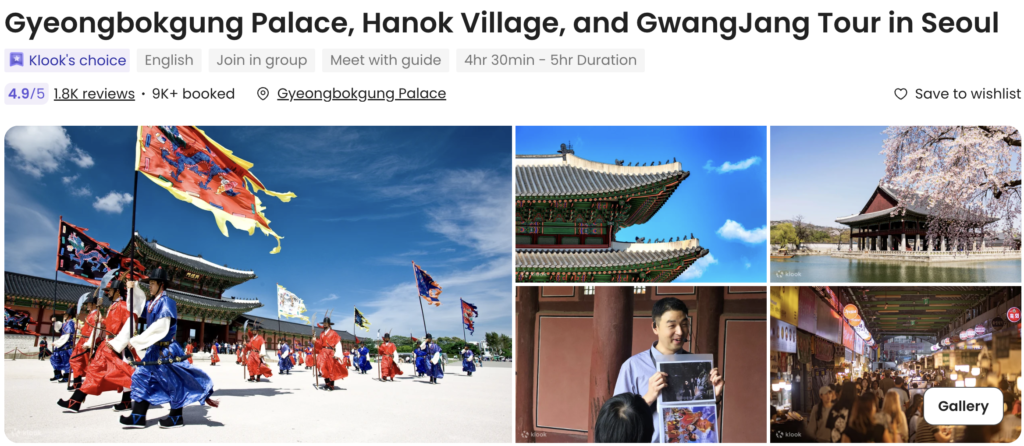
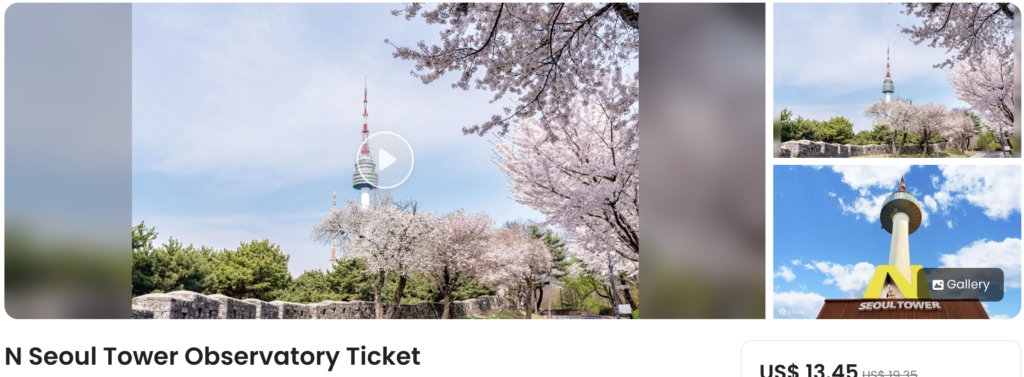
남산 (Namsan) The Japanese colonial administration built a Shinto shrine at the summit of Namsan — now the location of N Seoul Tower. The choice of Seoul’s most prominent hill for a Japanese religious structure was deliberate and symbolically loaded. The shrine was demolished after liberation, and the mountain has been reclaimed as a Korean public park — but its colonial history is part of its layered identity.
Japanese Colonial Korea: Liberation and What Came After
Japan’s defeat in World War II on August 15, 1945 — known in Korea as 광복절 (Gwangbokjeol, Liberation Day) — ended 35 years of colonial rule overnight.
Liberation was real and immediate. It was also immediately complicated. The United States and the Soviet Union divided the peninsula at the 38th parallel — the US occupying the south, the USSR occupying the north — as a temporary administrative arrangement that became permanent. Two separate governments emerged. In 1950, the Korean War began — a conflict that killed an estimated three million Koreans and left the peninsula divided along lines that persist to this day.
The relationship between the colonial period and Korea’s subsequent division is direct: Japan’s defeat created a power vacuum that the Cold War immediately filled with competing ideologies, producing the division that defines the peninsula’s geopolitics eight decades later.
Japanese Colonial Korea: Why It Still Matters
The issues left unresolved by the colonial period are not historical abstractions. They are active disputes.
강제징용 (Forced Labor): Korean courts have ordered Japanese companies to compensate Korean survivors and descendants of forced laborers — rulings that Japan contests as settled under the 1965 normalization treaty.
위안부 (Comfort Women): The question of responsibility for the systematic sexual violence against Korean women during the colonial period remains unresolved between the two governments. Survivors and their advocates continue to seek formal acknowledgment and compensation.
역사 교과서 (History Textbooks): Periodic controversies over how Japanese history textbooks describe the colonial period — whether they use language that minimizes or acknowledges the nature of Japanese actions — produce diplomatic friction and public reaction in Korea.
야스쿠니 신사 (Yasukuni Shrine): Japanese politicians’ visits to the Yasukuni Shrine — which honors Japan’s war dead, including convicted war criminals from World War II — consistently produce formal protests from the Korean and Chinese governments and public anger in both countries.
Understanding these ongoing disputes requires understanding the colonial period they emerge from. For visitors arriving from contexts where the Second World War is a settled, memorialized history, the Korean experience of the same era as something still in active legal and diplomatic contest can be disorienting. The disorientation is itself informative.
Japanese Colonial Korea: FAQ
When did Japan colonize Korea? Japan formally annexed Korea on August 29, 1910, following a series of treaties and diplomatic maneuvers that Korea has maintained were coerced and therefore illegitimate. Colonial rule lasted until August 15, 1945, when Japan’s defeat in World War II ended the occupation.
What did Japan do to Korean culture during the colonial period? Japan systematically suppressed Korean cultural identity — banning Korean-language instruction in schools, requiring Koreans to register Japanese names, removing Korean history from educational curricula, destroying historical documents, and dismantling or obscuring Korean royal and historical architecture. Korean families maintained their language and culture through private practice and underground networks.
What was the March 1st Movement? The March 1st Movement (삼일절) was a nationwide series of independence protests that began on March 1, 1919. Approximately two million Koreans participated. The Japanese response killed an estimated 7,500 Koreans and arrested 47,000. The movement did not achieve independence but became the foundational event of modern Korean national identity and remains a national holiday.
Where can visitors learn about this history in Seoul? Seodaemun Prison History Hall is the most important site — the actual prison where independence activists were held and executed, now a museum. Gyeongbokgung Palace bears the physical marks of colonial destruction and ongoing reconstruction. The Independence Park area near Seodaemun Station contains multiple monuments and the Independence Gate.
Why do Korea and Japan still have tensions today? Unresolved disputes from the colonial period — particularly forced labor compensation, comfort women recognition, and historical textbook controversies — remain active diplomatic and legal issues. Periodic events (Japanese politician visits to Yasukuni Shrine, textbook controversies, legal rulings) reactivate public sentiment in both countries. The history has not been fully acknowledged or formally resolved between the two governments.
How did Korean independence lead to the division of the peninsula? Japan’s defeat in 1945 created a political vacuum that the United States and Soviet Union filled by dividing Korea at the 38th parallel as a temporary administrative measure. Cold War rivalry prevented reunification, two separate governments were established, and the Korean War (1950-1953) cemented a division that persists today.

Korea Insider has lived in South Korea for 50 years and worked at international companies for over two decades — explaining Korean culture, food, and society to colleagues from the US, Europe, and Australia.
Internationally married with a Japanese spouse, Korea Insider brings both an insider’s depth and an outsider’s perspective to every topic on My Korea Tip.