
Must-visit places in Korea span 600 years of royal history, one of the world’s great food cities, an island that UNESCO recognized three times over, and the most heavily fortified border on earth — all within a country smaller than the state of Indiana.
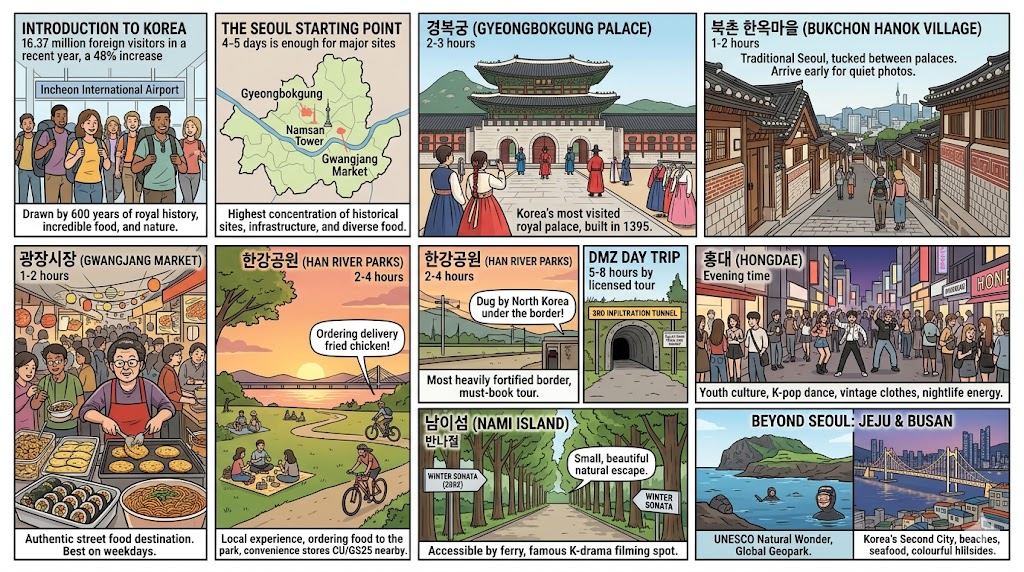
Korea welcomed 16.37 million foreign visitors in a recent year — a 48% increase from the previous year — drawn by a combination that no other country quite offers: the density of historical sites in Seoul, the dramatic natural landscape of Jeju Island, the food culture that has become globally influential, and the cultural phenomenon of K-pop, K-drama, and Korean cuisine that brings visitors from every continent.
The average visitor stays 7.8 days. That is enough time to see Seoul thoroughly, take one or two day trips, and perhaps get as far as Busan or Gyeongju. This guide is organized to help you use those days correctly — covering every essential destination, how long to spend at each, and what most visitors miss.
Must-Visit Places in Korea: Quick Reference
| 장소 | 지역 | 소요시간 | 추천 유형 |
|---|---|---|---|
| 경복궁 (Gyeongbokgung Palace) | 서울 | 2-3시간 | 모든 방문객 |
| 북촌 한옥마을 (Bukchon) | 서울 | 1-2시간 | 역사·사진 |
| N서울타워 (N Seoul Tower) | 서울 | 2시간 | 뷰·커플 |
| 광장시장 (Gwangjang Market) | 서울 | 1-2시간 | 음식 |
| 한강공원 (Han River) | 서울 | 2-4시간 | 현지 체험 |
| DMZ | 서울 근교 | 5-8시간 | 역사 |
| 남이섬 (Nami Island) | 서울 근교 | 반나절 | 자연·드라마 |
| 제주도 (Jeju Island) | 제주 | 3-5일 | 자연·휴양 |
| 부산 (Busan) | 경남 | 2-3일 | 해변·음식 |
| 경주 (Gyeongju) | 경북 | 1-2일 | 역사 |
서울 (Seoul): The Essential Starting Point
Seoul is the correct first stop for virtually every Korea itinerary. The city contains the highest concentration of historical sites, the most developed tourist infrastructure, the most diverse food options, and the cultural institutions that make Korea’s soft power globally visible. Most visitors spend four to five days here — which is enough to cover the major sites without rushing.
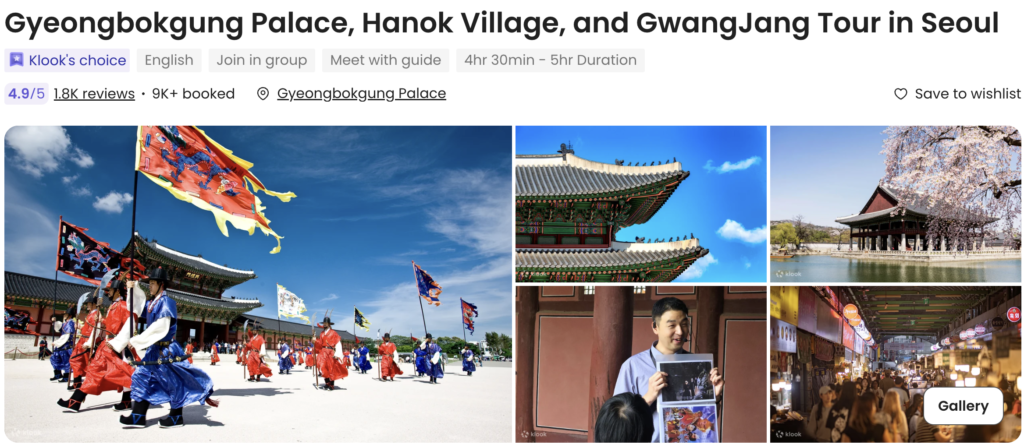
경복궁 (Gyeongbokgung Palace) — Korea’s Most Visited Site
Gyeongbokgung is the most visited tourist attraction in Seoul, with 5.6 million visitors recorded in a single year. It is the largest and most thoroughly restored of Korea’s five royal palaces — built in 1395 as the seat of Joseon Dynasty power, burned during Japanese invasions in 1592, left in ruins for nearly three centuries, partially restored in the 19th century, then deliberately dismantled during Japanese colonial rule, and currently undergoing ongoing reconstruction.
What makes it worth the top position on every Korea itinerary is not just the physical scale — though the grounds are genuinely vast — but the layering of history visible in a single visit. The changing of the guard ceremony at 10 AM and 2 PM, the floating pavilion reflected in its lily pond, the two free museums inside the compound, and the particular view south from inside the gates — modern Seoul framed by the ancient structure — are all reasons the palace justifies two to three hours even for visitors who have seen historical sites across Asia.
필수 팁: Wearing hanbok (traditional Korean dress) grants free entry. Rental shops cluster near Gyeongbokgung Station Exit 5. Read our complete Gyeongbokgung Palace Guide for the guard ceremony schedule and best photography positions.
북촌 한옥마을 (Bukchon Hanok Village) — Traditional Seoul
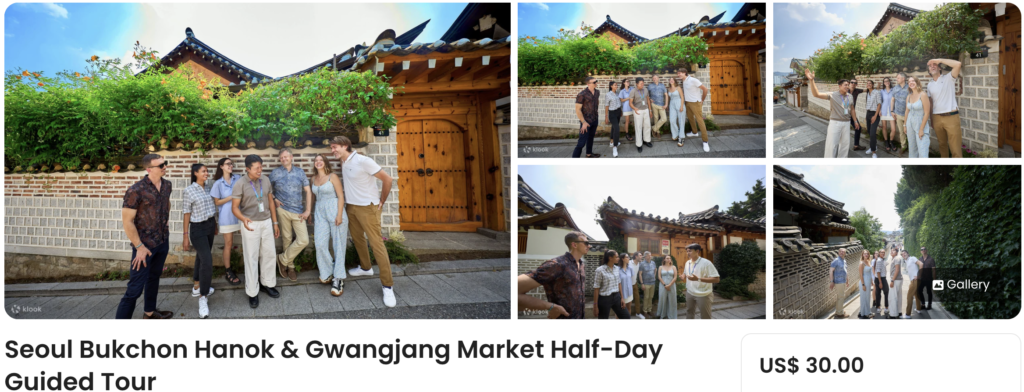
A hillside residential neighborhood tucked between Gyeongbokgung and Changdeokgung palaces, containing approximately 900 traditional wooden hanok houses. The most photographed alley — Bukchon-ro 11-gil — descends steeply between continuous rows of tiled rooftops with the modern city skyline visible at the bottom.
Bukchon is best visited immediately after Gyeongbokgung — the two are 15 minutes apart on foot, and the combination covers the full historical Seoul picture in a single morning. Arrive before 10 AM on a weekday for the quietest experience. Tourist visiting hours are 10 AM to 5 PM.
Read our full Bukchon Hanok Village Guide for the new visiting restrictions and best photo spots.
N서울타워 / 남산 (N Seoul Tower / Namsan) — Seoul’s Landmark
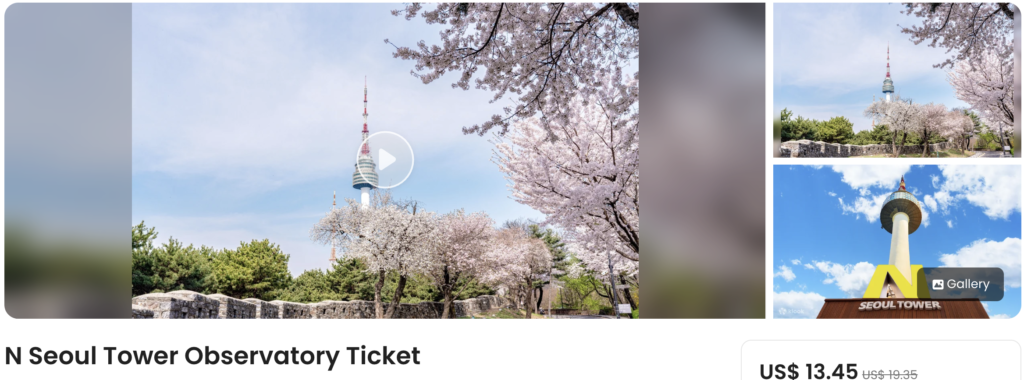
The tower that defines Seoul’s skyline sits atop Namsan Mountain at 479 meters above sea level, offering 360-degree views across the city and, on clear days, to the mountains beyond. The observation deck, the love lock tradition, and the cable car experience are the standard visitor experience — but the mountain itself, with its walking trails and the city views from the slopes, is equally worth time.
The tower appeared in Korean dramas including My Love From the Star and Boys Over Flowers, making it a K-drama filming location as well as a natural landmark. Read our Korean Drama Filming Locations Guide for the drama context.
광장시장 (Gwangjang Market) — The Food Destination
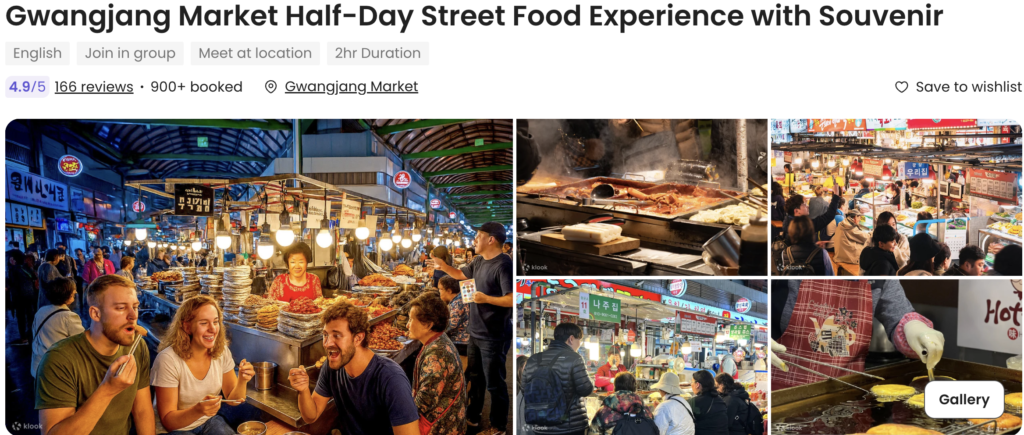
Korea’s oldest continuously operating market, established in 1905, with a food alley that became globally famous through Netflix’s Street Food: Asia. The bindaetteok (mung bean pancakes), mayak gimbap (bite-sized seasoned rice rolls), hand-cut kalguksu noodles, and yukhoe (beef tartare) represent some of the most authentic and distinctive Korean street food available in Seoul.
Budget 1-2 hours and arrive on a weekday before 2 PM for the best experience and the most manageable crowds. Read our full Gwangjang Market Guide for what to order and how to avoid tourist pricing.
한강공원 (Han River Parks) — Seoul’s Living Room
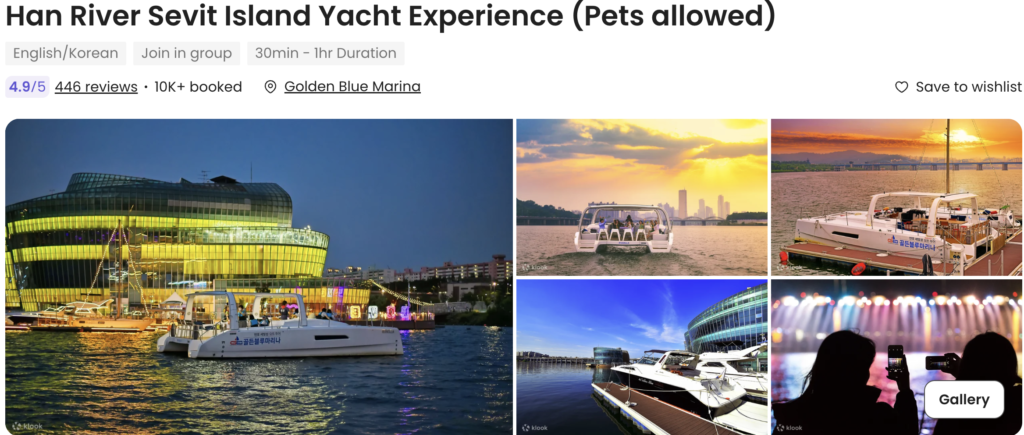
The Han River parks are where Seoulites actually live — cycling, picnicking, ordering delivery fried chicken, flying kites, and doing nothing particular in the best possible way. The river runs through the center of the city with multiple parks along both banks, and spending an evening here is one of the most genuinely local experiences available without leaving Seoul.
Buy convenience store snacks from any CU or GS25 along the perimeter, find a spot on the grass or a riverside bench, and watch Seoul operate in its most relaxed register. Read our Korean Fried Chicken Guide for how to order delivery directly to the park.
홍대 (Hongdae) — Seoul’s Youth Culture District
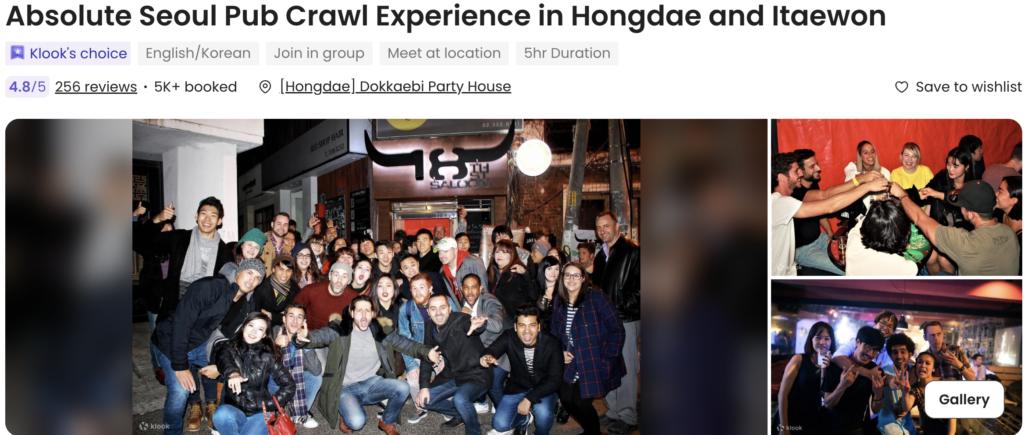
The neighborhood around Hongik University is where Seoul’s creative energy concentrates — independent music venues, street performers, independent cafés, K-pop dance studios, vintage clothing, and the most concentrated nightlife in the city. Walking Hongdae on a Friday or Saturday evening gives you the most immediate sense of what contemporary Korean youth culture actually looks, sounds, and feels like.
서울 근교 (Day Trips from Seoul)
비무장지대 DMZ — The World’s Most Heavily Fortified Border
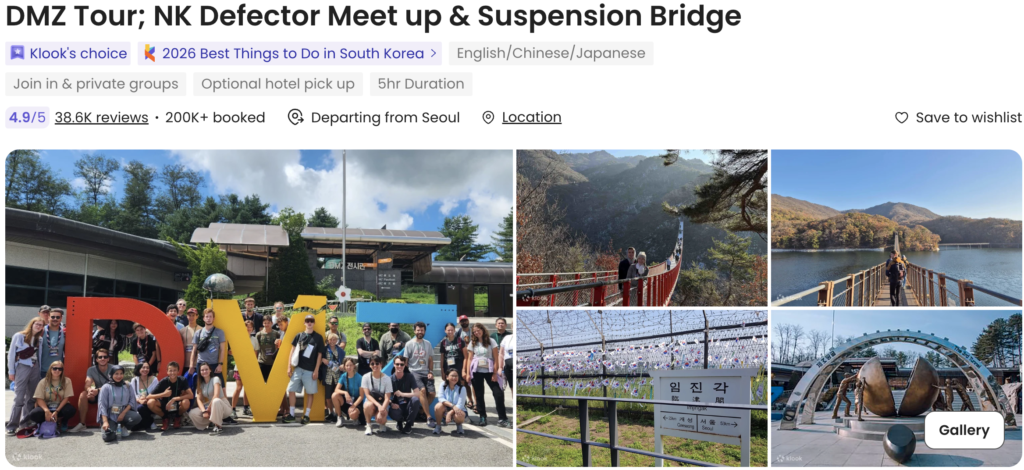
An hour north of Seoul by tour bus, the Demilitarized Zone is unlike any other day trip in the world. The Third Infiltration Tunnel — dug by North Korea under the border in 1978 — the Dora Observatory looking into North Korea, and Dorasan Station (a fully built train station with no trains) together constitute one of the most conceptually strange and historically affecting experiences available to any traveler.
Access is by licensed tour only — no independent visits permitted. Read our full DMZ Tour Guide for how to book, what to wear, and what to realistically expect.
남이섬 (Nami Island) — The K-Drama Island
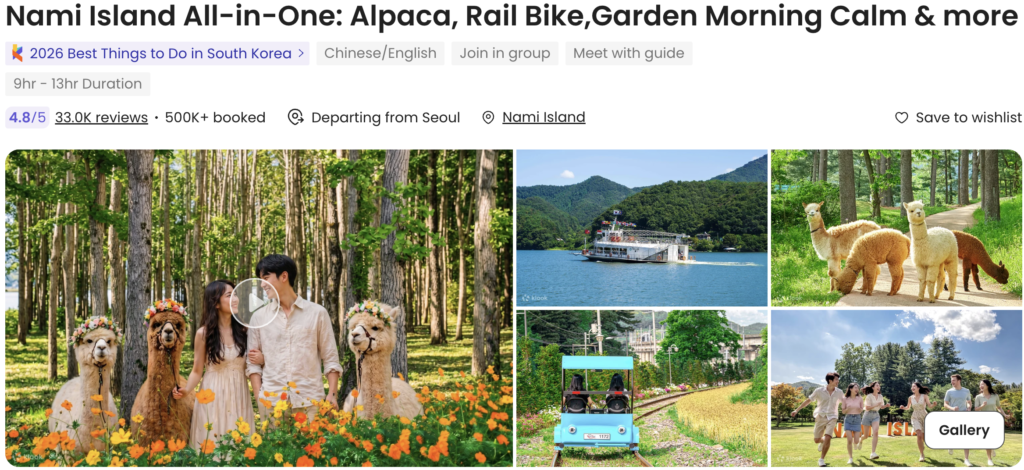
A small island in the North Han River, accessible by ferry from Gapyeong — approximately 1.5 hours from Seoul. Famous as the filming location of Winter Sonata (2002) — the Korean drama that launched the first wave of Korean cultural exports across Asia — and subsequently used in dozens of other productions. The island’s tree-lined promenades, seasonal foliage, and car-free paths make it one of Korea’s most consistently beautiful natural destinations across all four seasons.
The return ferry and entry cost approximately ₩16,000. Most visitors combine Nami Island with the Petite France cultural village or the Garden of Morning Calm nearby.
서울 밖 (Beyond Seoul)
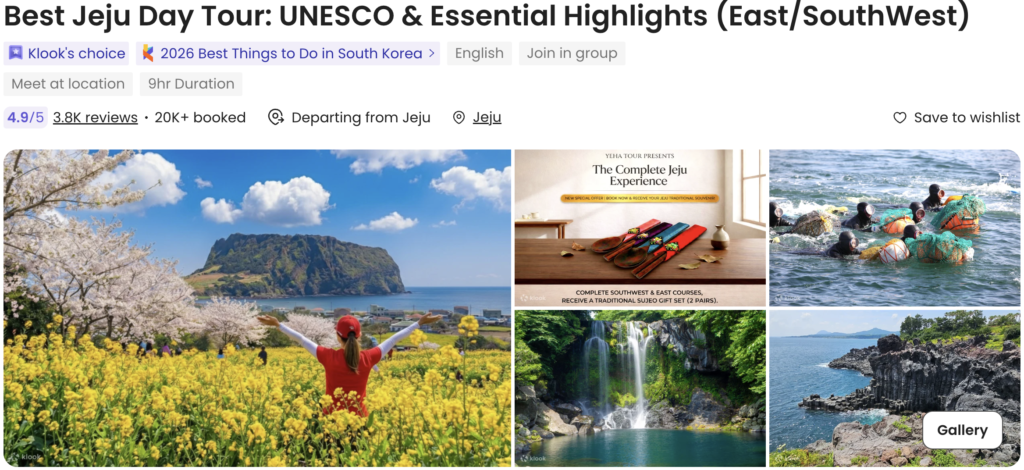
제주도 (Jeju Island) — Korea’s Natural Wonder
A UNESCO World Natural Heritage Site, Global Geopark, and Biosphere Reserve — one of only a handful of places on earth to hold all three designations simultaneously. Jeju is a volcanic island 90 kilometers south of the Korean peninsula, with a landscape unlike anything on the mainland: lava tube caves, volcanic craters, black rock coastlines, tangerine orchards, and Hallasan Mountain rising to 1,950 meters at the island’s center.
The Seoul-Jeju flight takes approximately one hour and departs every 15-20 minutes during peak hours. Plan a minimum of three nights. Renting a car is strongly recommended — Jeju has no subway system. Read our full Jeju Island Travel Guide for the complete breakdown of east side, west side, south coast, and Hallasan hiking.
Seongsan Ilchulbong (Sunrise Peak) at dawn, haenyeo diving culture along the eastern coast, Jeju black pork BBQ for dinner, and O’sulloc Tea Museum’s green tea fields.
부산 (Busan) — Korea’s Second City
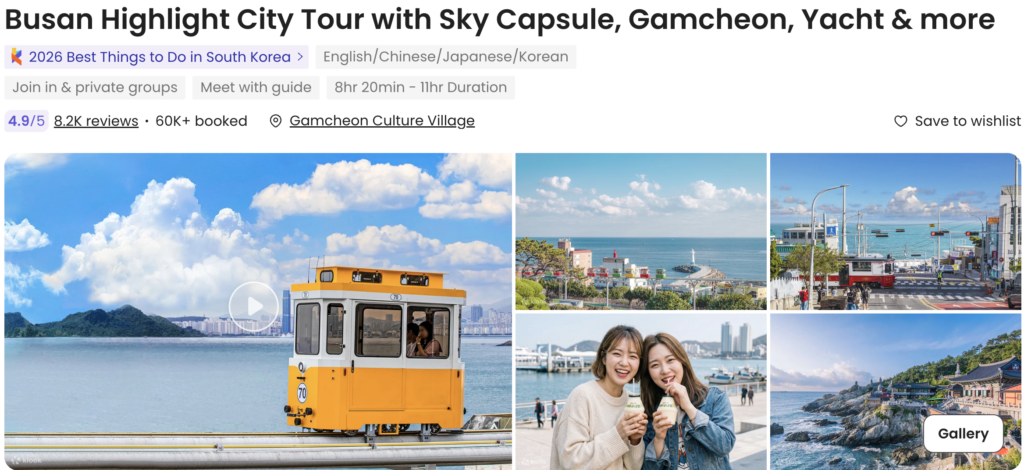
Korea’s largest port city sits on the southeastern coast — a two-and-a-half hour KTX train ride from Seoul. Busan is what Seoul would be if it were built around beaches and mountains instead of a river: denser, louder, more salt-aired, with some of the best seafood in the country and a visual drama that Seoul’s flat urban geography cannot match.
핵심 장소:
- 광안리 (Gwangalli Beach): The beach with the Gwangan Bridge illuminated at night — one of Korea’s most photographed views
- 감천문화마을 (Gamcheon Cultural Village): A hillside neighborhood of colorful terraced houses, murals, and installations — Korea’s answer to Santorini
- 자갈치시장 (Jagalchi Market): The largest seafood market in Korea — buy raw fish and have it prepared upstairs on the spot
- 해동용궁사 (Haedong Yonggungsa): A Buddhist temple built directly on coastal cliffs, with waves breaking below the prayer halls
경주 (Gyeongju) — Korea’s Ancient Capital
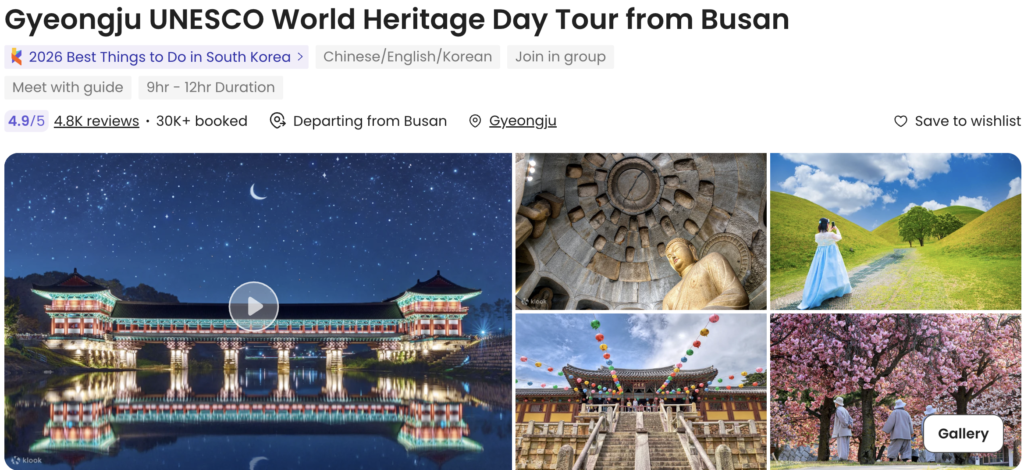
Gyeongju was the capital of the Silla Kingdom for nearly a thousand years — from 57 BCE to 935 CE — and the city is effectively an open-air museum. Royal burial mounds rise from the center of the city like green hills. The Bulguksa Temple complex and Seokguram Grotto are UNESCO World Heritage Sites. Anapji Pond reflects the ruins of a pleasure garden built in 674 CE.
Korea’s history extends back long before the Joseon Dynasty that most Seoul-based tourism focuses on. Gyeongju provides the context — a thousand years of a different kingdom, a different aesthetic, and a different relationship between Buddhist culture and royal authority. Two hours by KTX from Seoul.
방문 시 실용 정보 (Practical Information)
최적 방문 시기 (Best Time to Visit) Spring (April-May) for cherry blossoms and comfortable temperatures. Autumn (October-November) for foliage and clear skies. Both seasons produce the most photographed versions of every destination on this list.
교통 (Getting Around) Seoul’s subway system connects all major city attractions and is one of the most efficient in the world. T-Money card works on all public transport including buses. For Jeju Island, rent a car. For Busan and Gyeongju, take KTX — the high-speed rail covers the Seoul-Busan route in 2.5 hours.
예산 (Budget) Korea is significantly more affordable than Japan or Western Europe. A comfortable mid-range daily budget for accommodation, food, and transport in Seoul runs approximately ₩150,000-250,000 ($110-180) per person. Read our Korea Travel Budget Guide for the complete breakdown.
FAQ
How many days do I need in Korea? Seven to eight days is the sweet spot for first-time visitors — enough for four to five days in Seoul, one day at DMZ or Nami Island, and either Busan or Jeju as the final destination. Ten days adds both. Two weeks allows Gyeongju and more time on Jeju.
What is the single most important place to visit in Korea? Gyeongbokgung Palace — it is the most visited attraction for good reason. For visitors with limited time, the palace plus Bukchon Hanok Village plus Gwangjang Market covers the three most distinct and memorable Seoul experiences in a single day.
Is Korea safe for tourists? South Korea consistently ranks among the world’s safest countries for tourists. Seoul is routinely listed among the safest major cities globally. The standard precautions apply — pickpockets exist in crowded markets, tourist scams at certain high-traffic areas — but the baseline safety level is exceptional.
Do I need to speak Korean? Not for the tourist circuit. Major attractions, most restaurants in tourist areas, and all major transport hubs have English signage. Google Translate’s camera function handles menus. Papago (the Korean navigation and translation app) is more accurate than Google for Korean-English translation and is worth downloading before arrival.
Can I do Korea as a budget trip? Yes — more easily than Japan or most of Western Europe. Convenience store food (excellent and varied), budget guesthouses and hostels, and the free or low-cost entry to most major historical sites make Korea genuinely accessible on a tight budget.

Korea Insider has lived in South Korea for 50 years and worked at international companies for over two decades — explaining Korean culture, food, and society to colleagues from the US, Europe, and Australia.
Internationally married with a Japanese spouse, Korea Insider brings both an insider’s depth and an outsider’s perspective to every topic on My Korea Tip.