
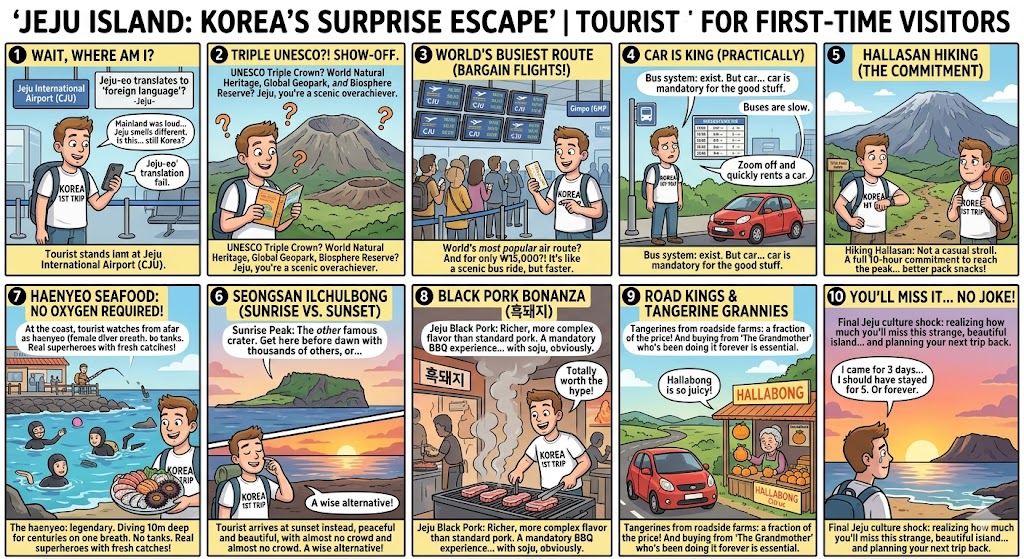
Jeju Island is the one place in Korea that even Koreans treat like a foreign country.
Koreans who live on the mainland talk about going to Jeju the way Americans talk about going to Hawaii — a complete escape from city life, a place where the air smells different, the pace slows down, and the landscape looks like it was assembled by someone who wanted to prove a point about natural beauty. Volcanic craters, black lava rock coastlines, tangerine orchards, waterfalls that drop directly into the ocean, and a UNESCO-recognized natural environment that competes with anything else in Asia.
Then there’s the food. The seafood culture. The haenyeo — the legendary female free divers who have been harvesting the ocean floor without oxygen tanks for centuries and were awarded UNESCO Intangible Cultural Heritage status in 2016. The black pork. The hallabong citrus. The grandmother selling tangerines by the roadside who has been doing it since before you were born.
This complete Jeju Island travel guide covers everything — how to get there, what to see, where to eat, when to visit, and the things that will genuinely surprise you about Korea’s most beloved island destination.
Before your trip, read our Best Time to Visit Korea Guide for seasonal planning and our Korea Travel Budget Guide to understand what Jeju will cost.
Jeju Island Travel Guide: Why Jeju Is Special
Jeju Island sits about 80km south of the Korean peninsula — far enough to have developed its own dialect (Jeju-eo, so distinct from standard Korean that mainland Koreans often can’t understand it), its own food culture, its own mythology, and its own very particular personality.
The island was formed entirely by volcanic activity. Hallasan — the dormant volcano at Jeju’s center and South Korea’s highest mountain at 1,950 meters — dominates the island’s skyline and shapes everything about Jeju’s geography, ecology, and culture. The entire island is essentially a giant lava field that has been softened over millennia by rainfall, vegetation, and the sea.
Jeju is also one of the very few places in the world that holds a triple UNESCO designation — World Natural Heritage Site, UNESCO Global Geopark, and UNESCO Biosphere Reserve simultaneously. The island earned each designation for different reasons, which tells you something about the depth of what’s here.
And then there’s the tourism. Jeju receives over 15 million visitors per year — a remarkable number for an island of 700,000 residents. Koreans account for the vast majority, but international visitor numbers have grown consistently as Jeju’s reputation spreads. Understanding how to navigate Jeju around the crowds — and away from them — is the most valuable thing this Jeju Island travel guide can teach you.
Jeju Island Travel Guide: How to Get There
Getting to Jeju is straightforward from Seoul — and the flight is genuinely one of the world’s great short-haul travel bargains.
By plane: Seoul to Jeju is the world’s busiest air route. Korean Air, Asiana, Jeju Air, T’way, Jin Air, and others operate dozens of daily flights from both Gimpo (GMP) and Incheon (ICN) airports. Flight time is approximately 1 hour. Prices booked in advance start from as low as ₩15,000–₩30,000 one-way on budget carriers — though ₩60,000–₩120,000 is more typical for reasonable booking windows.
By ferry: Slower and more scenic — ferries run from several Korean ports including Mokpo and Wando to Jeju. Journey time is 3–12 hours depending on the port and vessel type. Ferry travel is significantly cheaper than flying and offers a different experience of the island’s geography, but most visitors flying directly to Jeju skip this option.
Booking tip: Book flights through Naver Flight for the most comprehensive comparison of Korean domestic routes. Korean budget airlines frequently offer promotional fares that make Jeju genuinely cheap to reach.
Jeju Island Travel Guide: Getting Around Jeju
This is the most important practical section of this Jeju Island travel guide — because getting around Jeju without a plan is genuinely difficult.
Unlike Seoul, where the subway handles virtually everything, Jeju has no subway system. Public buses exist but are slow, infrequent, and don’t reach many of the island’s best attractions efficiently. Jeju is fundamentally a car destination.
Renting a car: Strongly recommended for anyone who wants to see more than Jeju City. International driving licenses are accepted (bring your home country license plus an IDP if required). Car rental companies cluster around Jeju International Airport. Prices start from approximately ₩40,000–₩80,000 per day for a compact vehicle. Roads are excellent, traffic outside peak seasons is manageable, and GPS navigation in English is available on most rental vehicles.
Taxis: More practical than buses for specific attractions. Kakao Taxi works on Jeju exactly as it does in Seoul. For tourists who want to see multiple attractions without driving, some taxi drivers offer half-day or full-day tour packages — typically ₩100,000–₩150,000 for 4–8 hours covering multiple sites.
Electric scooters and bicycles: Available for rent in tourist areas. Jeju has a dedicated cycling path (Jeju Olle Trail for walking, separate cycling routes) that covers much of the coastline. Best for fit travelers with flexible schedules who aren’t trying to cover maximum distance.
Jeju Island Travel Guide: What to See
Jeju has enough to fill a week of serious exploration. This Jeju Island travel guide covers the non-negotiables first.
Hallasan National Park (한라산국립공원)
Korea’s highest mountain and Jeju’s defining natural feature. Hiking Hallasan is one of the great outdoor experiences available anywhere in Korea — but it requires planning. There are multiple trails to the summit (Seongpanak and Gwaneumsa routes reach the crater; Yeongsil and Eorimok routes stop short). Summit trails close at specific times depending on season to ensure all hikers descend before dark, and the park enforces these cut-off times rigorously.
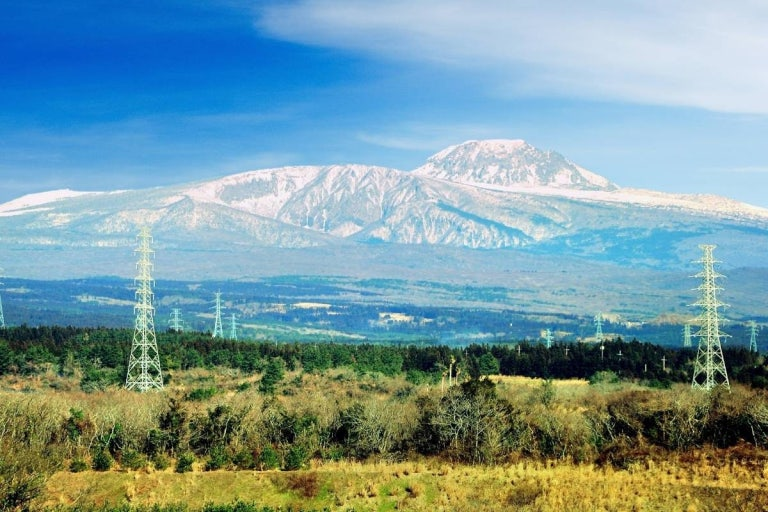
The summit view — looking down into the crater lake (Baekrokdam) with the sea visible in every direction — is extraordinary on a clear day and genuinely worth the 9–10 hour round trip the longer trails require. Check Hallasan National Park’s official site for current trail conditions and closure information before attempting the summit.
Seongsan Ilchulbong (성산일출봉) — Sunrise Peak
The most photographed location in Jeju and one of the most dramatic natural formations in Korea. Seongsan Ilchulbong is a tuff cone — a volcanic crater — that rises 182 meters directly from the ocean at Jeju’s eastern tip. Its name means “Sunrise Peak” for good reason: watching the sun rise over the ocean from the crater rim is one of those travel experiences that lives up to its reputation.
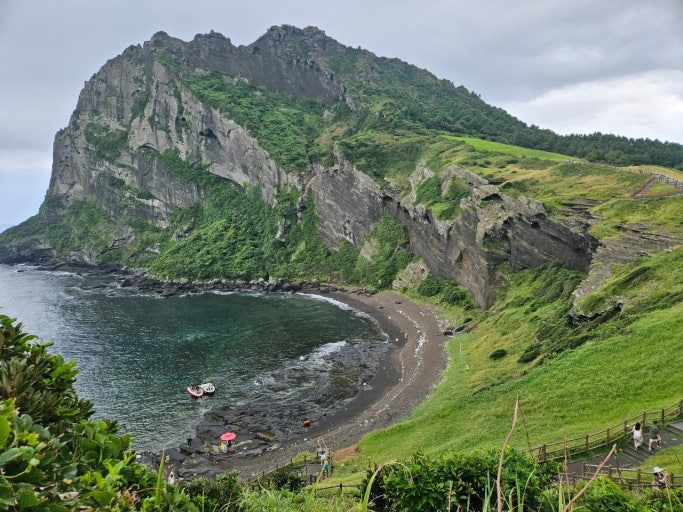
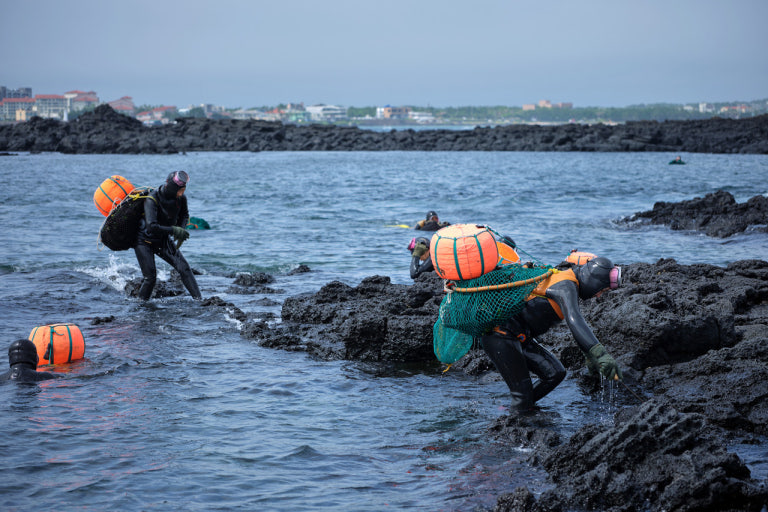
Getting there: drive or taxi to the base, then climb the 99m ascent path (30–40 minutes, stone steps, steep but very manageable). Entry fee ₩2,000. Haenyeo diving demonstrations happen daily at the base — one of the best places to see Jeju’s legendary female divers in action.
Sunrise tip: Arriving before dawn means parking chaos and queues. A spectacular alternative is to arrive at Seongsan in late afternoon, watch the sunset instead of sunrise, and enjoy the formation in dramatically different but equally beautiful light with a fraction of the crowd.
Manjanggul Cave (만장굴)
One of the longest lava tube caves in the world — 7.4km of underground tunnel created when the outer surface of a lava flow cooled and hardened while molten lava continued flowing beneath, eventually draining and leaving the tube behind. Approximately 1km is open to visitors. The interior is cathedral-like — vast, otherworldly, and genuinely cool even in summer (the cave maintains a constant 11–21°C temperature year-round).
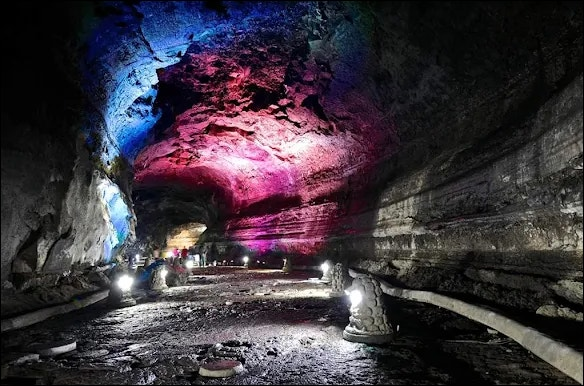
Entry fee ₩4,000. The cave is always popular but never aggressively crowded — one of Jeju’s most rewarding experiences for visitors willing to venture slightly off the main tourist circuit.
Jeju Olle Trail (제주 올레길)
The Jeju Olle Trail is a network of 437km of walking paths that circle the entire island in 26 sections. Created in 2007 and now one of Korea’s most celebrated hiking routes, the Olle Trail passes through coastal cliffs, volcanic fields, tangerine orchards, traditional villages, and beaches in a sequence that provides the most intimate possible encounter with Jeju’s natural and cultural landscape.
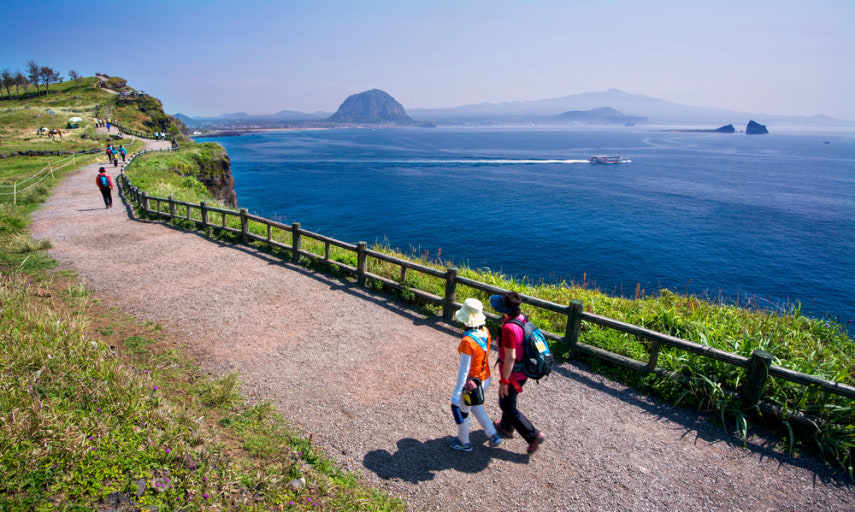
You don’t need to walk all 437km — individual sections range from 9km to 24km and can be completed as day walks or combined over multiple days. Jeju Olle’s official website provides trail maps, condition updates, and passport stamp information (completing sections earns passport stamps in a system beloved by dedicated hikers).
Cheonjeyeon and Cheonjiyeon Waterfalls
Jeju has two famous waterfall systems that appear in virtually every Jeju Island travel guide, and they are genuinely worth visiting despite the tourist infrastructure that has developed around them.
Cheonjeyeon (천제연, “Pond of the Emperor of Heaven”) is a three-tiered waterfall system with the water falling into jade-green pools — more serene and less visited than its rival. Cheonjiyeon (천지연, “Heaven and Earth Pond”) is Jeju’s most famous single waterfall — 22 meters high, particularly dramatic after rainfall. Entry to both is approximately ₩2,500.
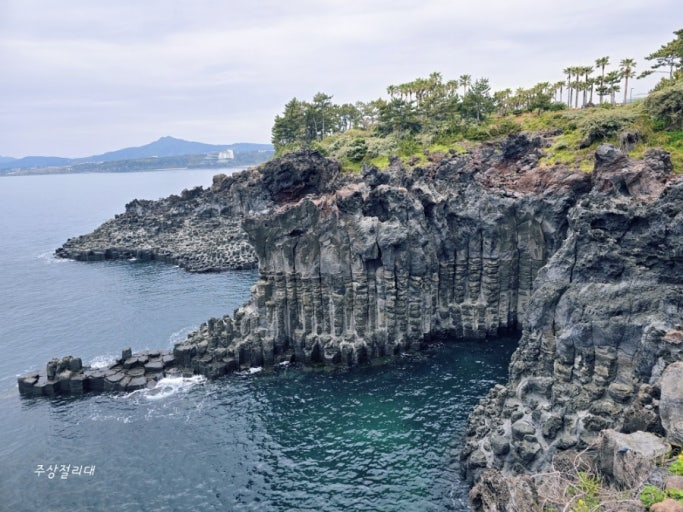
Jusangjeolli Cliff (주상절리대)
A 2km stretch of hexagonal basalt columns that form the coastline near Jungmun — created when lava flows met the sea and cooled rapidly into geometric patterns. The columns stack like natural architecture, and the waves crash against them with theatrical effect. One of Jeju’s most genuinely impressive geological formations and completely free to visit.
Jeju Island Travel Guide: Food
Jeju food is a chapter of Korean cuisine unto itself — and one of the most compelling reasons to visit the island.
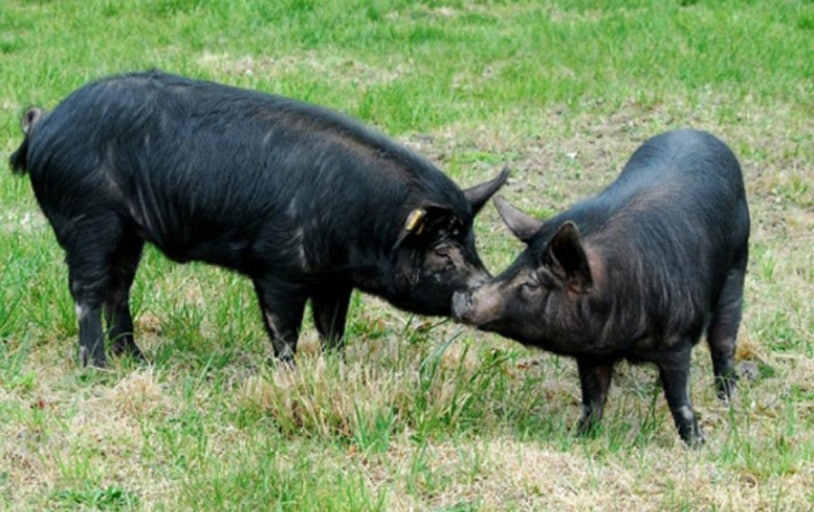
Jeju Black Pork (흑돼지, heukdwaeji): The non-negotiable meal of any Jeju visit. Jeju’s native black pigs produce pork with a distinctly richer, more complex flavor than mainland Korean pork. Eating black pork samgyeopsal in Jeju — ideally at a restaurant in the famous Black Pork Street (흑돼지거리) in Jeju City — is one of the great eating experiences in all of Korea. Expect to pay ₩20,000–₩30,000 per person including soju. Read our Korean BBQ Guide for the full samgyeopsal experience context.
Haenyeo Seafood: Jeju’s haenyeo (해녀) — the legendary female free divers who harvest abalone, sea cucumber, sea urchin, and various shellfish without oxygen tanks — produce seafood that is extraordinarily fresh and available at restaurants throughout the island. Haenyeo seafood restaurants near Seongsan and Hamdeok Beach serve raw seafood platters (회, hoe) assembled from the morning’s catch. Sea urchin (성게, seongge) bibimbap and abalone porridge (전복죽, jeonbokjuk) are the signature dishes.
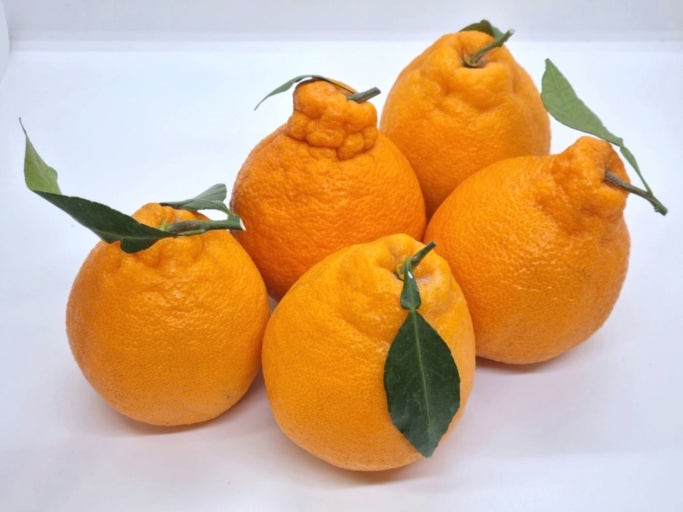
Hallabong (한라봉): Jeju’s most famous agricultural product — a cross between a mandarin orange and a ponkan that grows exclusively on Jeju and is considered one of Korea’s finest citrus fruits. Available fresh from roadside stalls throughout tangerine season (November–January) and in juice, jam, and candy form year-round. Buying directly from roadside farms costs significantly less than airport or tourist-area prices.
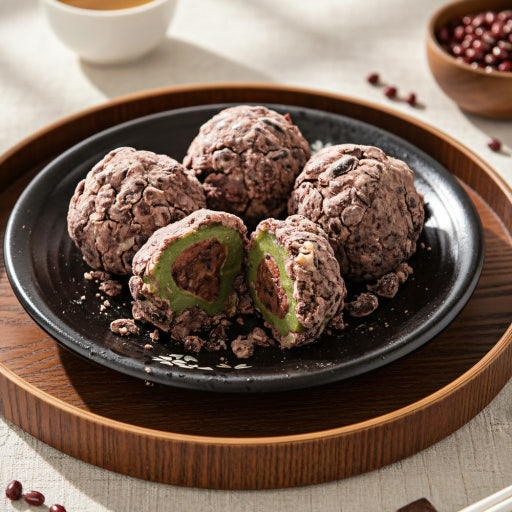
Omegi-tteok (오메기떡): Jeju’s traditional rice cake made from black millet — slightly chewy, mildly sweet, and completely unlike anything available on the Korean mainland. Sold at traditional markets and specialty shops throughout Jeju.
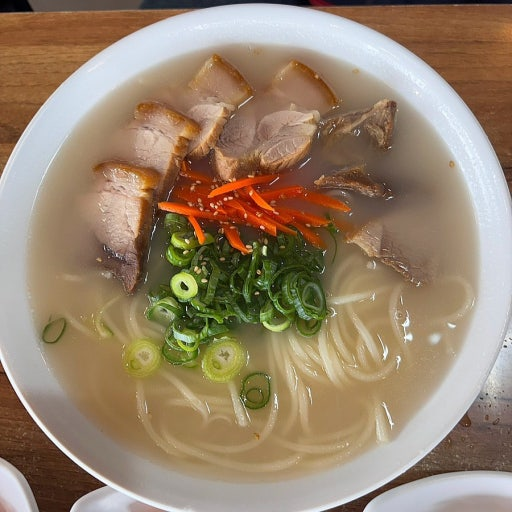
Jeju pork noodles (고기국수, gogi guksu): A Jeju specialty — wheat noodles in a rich, clean pork broth topped with sliced pork. Simple, deeply satisfying, and very cheap (₩8,000–₩10,000). Find it at traditional markets and local restaurants away from the main tourist strip.
Jeju Island Travel Guide: Where to Stay
Jeju’s accommodation ranges from budget guesthouses to luxury resorts, and the right choice depends entirely on how you plan to explore the island.
Jeju City: The island’s main city offers the best transport connections, widest restaurant selection, and most diverse accommodation options. Ideal base for visitors without a rental car who want to day-trip to major attractions. Guesthouses from ₩30,000/night; mid-range hotels from ₩80,000/night.
Seongsan/East Jeju: Best base for Hallasan summit attempts and Seongsan Ilchulbong sunrise visits. Quieter and more scenic than Jeju City. Limited but charming guesthouse options.
Jungmun Resort Area: Jeju’s upscale tourism zone — large resort hotels, the Jusangjeolli Cliff, and proximity to the best surfing beaches. Expensive but convenient for resort-focused travelers.
Accommodation tip: Jeju’s peak seasons — summer (July–August) and cherry blossom period (late March–April) — require accommodation booking 2–3 months in advance. Off-season (November–February) offers dramatically lower prices and significantly fewer crowds.
Jeju Island Travel Guide: When to Visit
Jeju has a subtropical climate that makes it warmer than the Korean mainland year-round — but each season offers a distinctly different experience.
Spring (March–May): Cherry blossoms arrive in Jeju before anywhere else in Korea — typically mid-March, two weeks ahead of Seoul. The combination of early blossoms and Hallasan’s spring colors makes this Jeju’s most photogenic season. Peak crowds in April.
Summer (June–August): Hot, humid, and busy. Beach season peaks at Hamdeok and Hyeopjae beaches. Typhoon risk exists in August — check forecasts. Popular with Korean domestic tourists; international visitors are proportionally fewer.
Autumn (September–November): Hallasan’s foliage peak in October makes this the best season for hiking. Tangerine harvest season brings roadside stalls selling Korea’s finest citrus. Comfortable temperatures and beautiful light.
Winter (December–February): The least visited season and the most underrated. Hallasan receives snow that turns the mountain into a genuinely spectacular winter landscape. Significantly lower prices. The haenyeo continue diving in all but the coldest conditions. A completely different and surprisingly compelling version of Jeju.
For the complete Korea seasonal breakdown, read our Best Time to Visit Korea Guide.
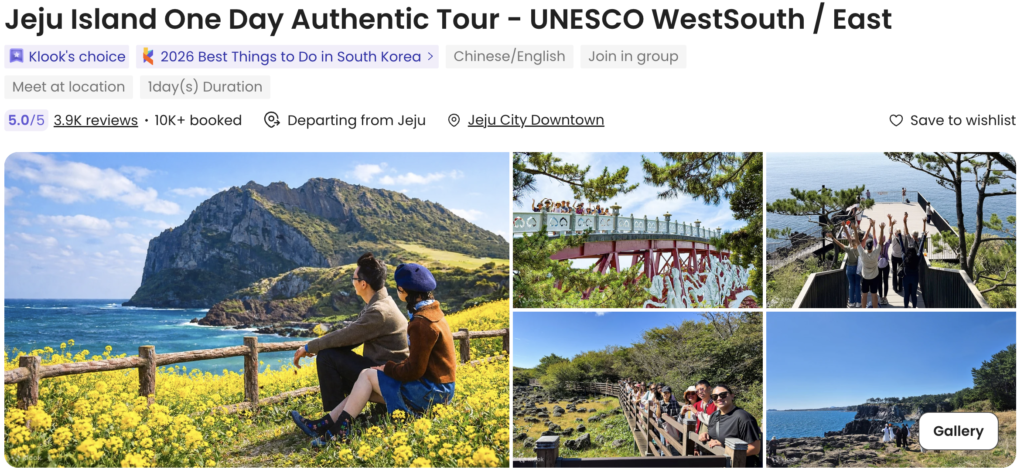
Not renting a car? Jeju day tours on Klook cover all the major highlights with an English-speaking guide and hotel pickup included
Jeju Island Travel Guide: Practical Tips
Rent a car. This Jeju Island travel guide cannot emphasize this enough. Jeju without a car means missing most of what makes it worth visiting. The island’s best experiences — volcanic coastlines, rural haenyeo villages, mountain trailheads, hidden beaches — are simply not accessible by public bus.
Download Kakao Map. More accurate than Google Maps for Jeju’s rural roads and attraction locations. Essential for navigation without a Korean-speaking companion.
Visit haenyeo diving demonstrations early. The demonstrations at Seongsan typically run in the morning and can be cancelled due to weather or sea conditions. Check current schedules before making it the centerpiece of your day.
Buy tangerines from roadside farms. The price is a fraction of what you’ll pay at airports or tourist shops, and you’ll be buying directly from the family that grew them.
Allow at least 3 full days. Jeju is frequently underestimated in terms of how much there is to see. Two days feels rushed. Three days covers the highlights comfortably. Five days allows real depth.
Jeju is visa-free for most nationalities. Unlike mainland Korea, which has specific entry requirements, Jeju operates a special visa-free regime for citizens of many countries. Check Jeju’s visa-free policy before assuming your standard Korean entry visa requirements apply.
Ready to plan your full Korea trip? Read our Seoul 3 Day Itinerary for the mainland experience, and our Busan vs Seoul Guide if you’re deciding which Korean cities to combine with Jeju.

Korea Insider has lived in South Korea for 50 years and worked at international companies for over two decades — explaining Korean culture, food, and society to colleagues from the US, Europe, and Australia.
Internationally married with a Japanese spouse, Korea Insider brings both an insider’s depth and an outsider’s perspective to every topic on My Korea Tip.