
Korean restaurant etiquette is one of those things that looks complicated from the outside and becomes completely intuitive once someone explains it properly. I’ve watched foreign colleagues freeze at Korean restaurant tables, unsure whether to sit, pour, eat, or wait — and the discomfort is entirely avoidable with a few minutes of context.
This guide covers everything: how to seat yourself, how to order, how to handle the shared dishes, drinking rules, tipping culture, and how to pay. By the end, you’ll have enough to eat comfortably at any Korean restaurant, from a casual lunch spot to a formal dinner with Korean colleagues.
For more on Korean food, read our Korean Food for Beginners Guide and Korean BBQ Guide.
Why Korean Restaurant Etiquette Is Different
Most of the confusion foreigners experience at Korean restaurants comes from two sources: the shared dish format and the drinking hierarchy. Neither is complicated — they just operate on different assumptions than Western restaurant culture.
Korean meals are built around sharing. The table arrives with a central dish — or several — and a surrounding collection of banchan (반찬), the small shared side dishes that come free with every meal. Nobody has their own plate of side dishes. Everyone reaches into the same bowls. This is normal, expected, and not considered unhygienic in Korean dining culture.
The drinking rules are layered with age hierarchy — a Confucian influence that shapes Korean social interaction broadly. Pouring your own drink, drinking before elders, and handling a glass incorrectly are the most common mistakes foreigners make. All are easy to avoid once you know the pattern.
Korean Restaurant Etiquette: Getting Seated
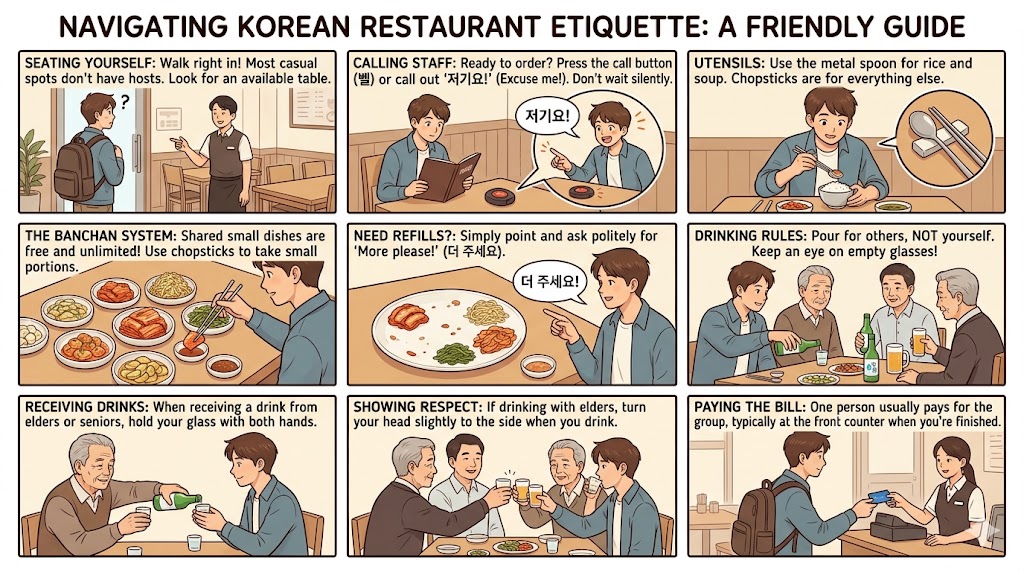
Most Korean restaurants are sit-down establishments where you seat yourself. There’s no host or hostess waiting to escort you — simply walk in, find an available table, and sit down.
Floor seating (좌식) is common in traditional Korean restaurants. You remove your shoes at the entrance and sit on cushions at a low table. The etiquette here is practical: don’t point the soles of your feet at other diners, and sit cross-legged or to one side rather than stretching your legs out toward others.
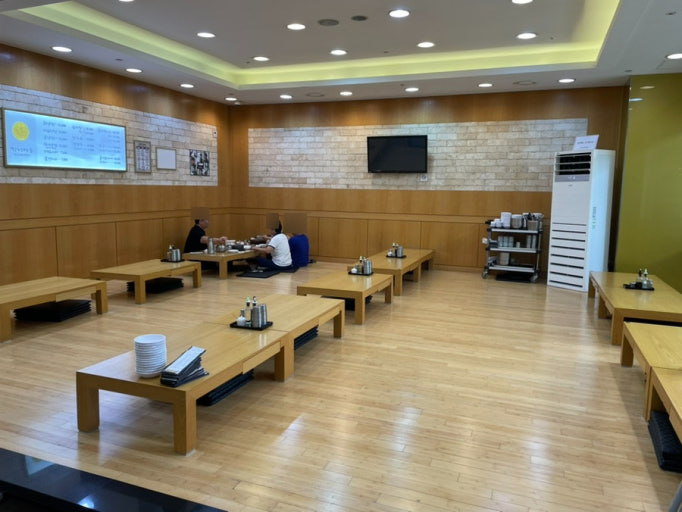
Chair seating (입식) follows standard restaurant norms. No special rules apply beyond general politeness.
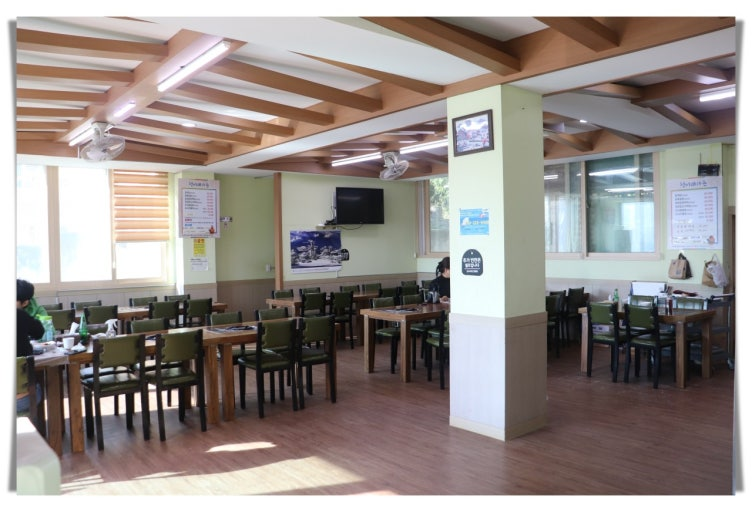
Seating hierarchy: When dining with Korean colleagues or older Koreans, the most senior person sits farthest from the entrance — the “seat of honor” in Korean dining culture. If you’re the guest, you’ll often be directed to this seat. If you’re the junior, don’t take it.
How to Order at a Korean Restaurant
Call the staff — Korean restaurant etiquette involves calling waitstaff when you’re ready, not waiting for them to come to you. The standard method is pressing the call button (벨) on the table — most Korean restaurants have one — or saying “저기요” (jeo-gi-yo), meaning “excuse me,” loudly enough to be heard.
Waiting silently for staff to notice you is not the Korean way. Staff will not hover over your table checking in. You call when you need something.
Menus are often picture-based, which helps enormously for non-Korean speakers. Point at what you want if the language barrier is real — staff at most restaurants handle this comfortably.
Water and utensils are usually self-serve in casual Korean restaurants. Look for a water dispenser and utensil holder on the table or near the counter. Fetching your own water is completely normal and expected.
Korean Restaurant Etiquette: The Banchan System
Banchan — the small shared side dishes that arrive before or with your meal — is the aspect of Korean dining culture that surprises foreigners most consistently.
Banchan is free and unlimited. The small dishes of kimchi, seasoned vegetables, fish cakes, and other accompaniments that fill the table are included with your meal at no extra charge. In most Korean restaurants, you can ask for refills of any banchan simply by pointing at the empty dish and asking “더 주세요” (deo ju-se-yo) — “more please.”
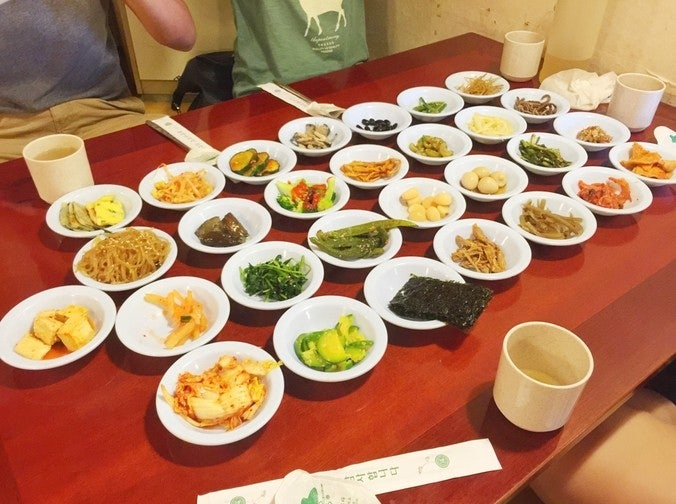
Banchan is shared. Everyone at the table eats from the same dishes. Use the serving end of your chopsticks (or dedicated serving utensils if provided) to take portions — don’t dig through a dish looking for the best pieces, and don’t take so much that others won’t have enough.
Don’t mix banchan dishes. Each banchan has its own flavor profile. Taking a piece of kimchi and placing it directly into the japchae defeats the purpose of having separate dishes.
Banchan etiquette with rice: Koreans generally eat banchan alongside rice rather than on top of it. The exception is certain dishes specifically designed to be mixed — bibimbap being the obvious example.
Chopstick and Spoon Etiquette
Korean chopstick etiquette has a few specific rules that differ from Chinese and Japanese practice:
Use the spoon for rice and soup. Korean dining uses both chopsticks and a flat-bottomed metal spoon. The spoon is for rice, soup, and liquid dishes. Chopsticks are for everything else. Using chopsticks to eat rice is considered impolite in traditional Korean table settings.
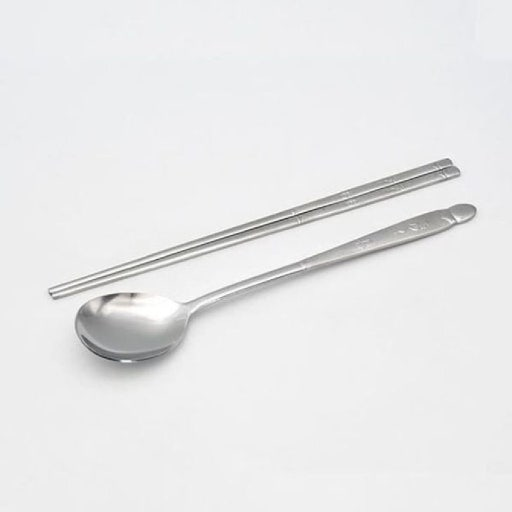
Don’t stick chopsticks upright in rice. This resembles incense sticks at a funeral and carries the same negative association it does throughout East Asian cultures. Place chopsticks horizontally on the chopstick rest or across your bowl when not using them.
Don’t pass food chopstick-to-chopstick. This is another funeral association — bones are passed this way during Korean cremation ceremonies. Place food on someone’s plate or bowl instead.
Metal chopsticks are standard in Korea — different from the wooden chopsticks used in Japan and China. They’re heavier and require slightly more grip. This is normal and not a sign of a low-quality restaurant.
Hold your bowl: Unlike Japanese dining culture, Koreans do not lift their rice bowls from the table while eating. The bowl stays on the table; you lean slightly toward it.
Korean Restaurant Etiquette: Drinking Rules
Drinking etiquette is where Korean restaurant culture diverges most noticeably from Western norms, and it’s worth understanding properly before dining with Korean colleagues or older Koreans.
Pour for others, not yourself. The fundamental rule of Korean drinking culture is that you fill others’ glasses, not your own. Keep an eye on the glasses of the people around you and refill them when they’re low. Someone will do the same for you. Pouring your own glass — particularly soju — signals either social unawareness or deliberate antisocial behavior.
Receive drinks with two hands. When someone pours for you, hold your glass with both hands, or place your left hand under your right forearm as a gesture of respect. This applies particularly when the person pouring is older or more senior.
Wait for the most senior person to drink first. At a table with clear hierarchy — a work dinner, a family meal — wait until the most senior person has raised their glass before drinking. This rule relaxes considerably in casual settings among friends of similar age.
Don’t refuse the first drink. Refusing the first glass offered by a host is considered impolite in traditional Korean dining culture. If you don’t drink alcohol, it’s completely acceptable to say so before the meal starts — but declining mid-pour after accepting is awkward. A non-alcoholic alternative can usually be requested.
Turn away when drinking in the presence of elders. A traditional Korean drinking etiquette rule — when drinking in the presence of someone significantly older, turn your head slightly to the side when raising the glass to your lips. This gesture of deference is less commonly practiced among younger Koreans today but is still observed in formal settings.
For complete guidance on Korean drinking culture, read our Korean Soju Guide.
Eating Etiquette at the Korean Table
Don’t start eating before the most senior person. At formal meals or dinners with older Koreans, wait for the most senior person to pick up their utensils before starting. In casual settings among friends, this rule is rarely enforced strictly.
Eat at a similar pace to others. Finishing dramatically faster or slower than the table is mildly impolite. Korean meals are communal experiences — the pace of eating is collective.
Don’t blow your nose at the table. This is considered significantly more impolite in Korean dining culture than in many Western contexts. Excuse yourself and go to the restroom if needed.
Slurping noodles is acceptable. Unlike in Western dining culture, slurping noodles and soup is completely normal and not considered rude. It indicates enjoyment.
Talking with food in your mouth follows the same norms as most cultures — it’s impolite. Cover your mouth if you need to speak while chewing.
Korean Restaurant Etiquette: Paying the Bill
One person pays. Korean dining culture strongly favors one person paying the entire bill — not splitting it. The concept of going Dutch (각자내기) exists but is considered less generous and is more common among close friends of similar age than at formal or mixed-age dinners.
The most senior person usually pays. At work dinners and meals with hierarchy, the senior person typically pays. This is connected to the broader Korean social norm of older people being expected to treat younger ones.
Pay at the counter, not the table. In most Korean restaurants, you pay at the front counter rather than leaving money at the table. After finishing your meal, simply go to the counter and pay. Leaving cash on the table and walking out is unusual and can cause confusion.
No tipping. Korea does not have a tipping culture. Leaving a tip will likely confuse or embarrass the staff. Service charges are occasionally included at high-end restaurants but are noted on the bill. Don’t tip.
Calling for the bill: Say “계산해 주세요” (gye-san-hae ju-se-yo) — “bill please” — at the counter or use the table call button. Don’t make a writing gesture in the air — this is not a Korean convention.
Korean BBQ Etiquette: Additional Rules
Korean BBQ has its own subset of etiquette worth covering separately, since it’s often the first Korean restaurant experience for foreign visitors.
The staff will usually grill for you at proper Korean BBQ restaurants, particularly the first round. Don’t start grilling before they’ve set up the grill and started the first batch.
Don’t put ssamjang directly on the meat. Ssamjang (쌈장) — the fermented paste — is for wrapping with lettuce leaves. Put the meat, a piece of garlic, a slice of chili, and a small amount of ssamjang inside a lettuce leaf and eat it in one bite.
Scissors are a cooking tool. Korean BBQ restaurants provide scissors for cutting meat — this is completely standard and not a sign of anything unusual. Use them freely.
Order side dishes to share. Doenjang jjigae, kimchi jjigae, or naengmyeon are standard companions to Korean BBQ. These are typically shared across the table.
Read our complete Korean BBQ Guide for everything about ordering, grilling, and eating Korean BBQ properly.
Quick Reference: Korean Phrases for Restaurants
| Situation | Korean | Pronunciation |
|---|---|---|
| Excuse me (call staff) | 저기요 | Jeo-gi-yo |
| More please | 더 주세요 | Deo ju-se-yo |
| Bill please | 계산해 주세요 | Gye-san-hae ju-se-yo |
| Delicious | 맛있어요 | Ma-shi-sseo-yo |
| Not spicy please | 안 맵게 해주세요 | An maep-ge hae ju-se-yo |
| I don’t eat meat | 고기를 안 먹어요 | Go-gi-reul an meo-geo-yo |
| Water please | 물 주세요 | Mul ju-se-yo |
For a broader Korean language primer, read our Korean Phrases for Travelers Guide.
Summary: Korean Restaurant Etiquette at a Glance
The rules that matter most, in order of importance:
1. Pour for others, not yourself — and receive with two hands. 2. Wait for the most senior person to eat and drink first at formal meals. 3. Banchan is shared and free — use the call button to ask for refills. 4. Pay at the counter, not the table. No tipping, ever. 5. Call staff with the table bell or “저기요” — don’t wait to be noticed. 6. Don’t stick chopsticks upright in rice. 7. Use the spoon for rice and soup, chopsticks for everything else.
Most Korean restaurant etiquette is about collective harmony and age respect — once you understand that underlying logic, the specific rules start to feel natural rather than arbitrary.
FAQ
Do I need to tip at Korean restaurants? No. Korea has no tipping culture. Leaving a tip will confuse staff and is not expected or required at any type of Korean restaurant.
Is it rude to ask for a fork at a Korean restaurant? Most Korean restaurants catering to tourists will have forks available. Asking is not rude — though making an effort with chopsticks is appreciated. Many Koreans find it genuinely charming when foreigners try.
Can I refuse alcohol at a Korean dinner? Yes, but communicate it before the meal starts rather than mid-pour. Saying “저는 술을 못 마셔요” (I can’t drink alcohol) is completely acceptable and will be respected without issue.
Is it acceptable to share food from my personal plate in Korea? Yes — sharing food across the table is completely normal in Korean dining culture. Offering a taste of your dish to others at the table is friendly and common.
What should I do if I drop chopsticks or a spoon? Ask for a replacement — “젓가락 주세요” (chopsticks please) or “숟가락 주세요” (spoon please). Don’t use utensils that have fallen on the floor.
How loud is it acceptable to be in a Korean restaurant? Korean restaurants tend to be lively and relatively loud by Western standards. Animated conversation is completely normal. Extremely loud or disruptive behavior is as unwelcome as it is anywhere, but normal conversation volume is fine.
Is it okay to leave food on my plate? Yes — leaving food is acceptable and does not carry the same “insult to the cook” implication it does in some cultures. Finishing everything is fine too. Neither is required.
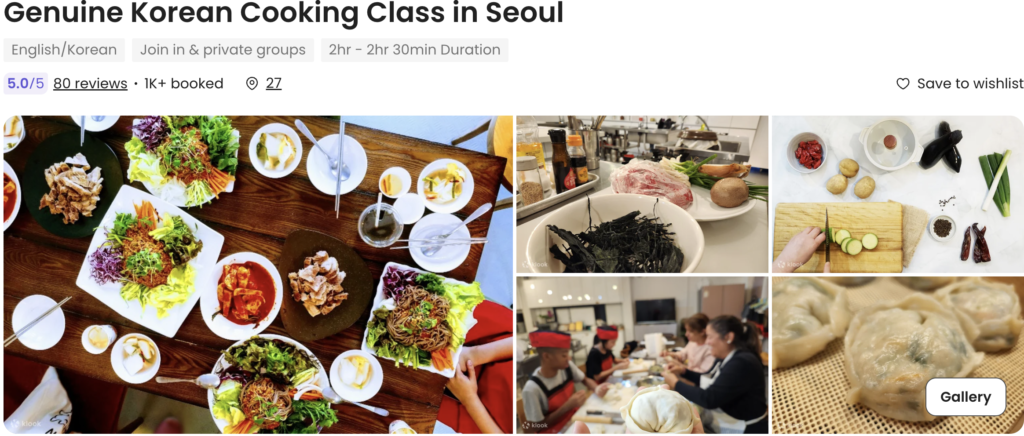
Do you want to learn Korean cooking style? If you want it, go to below ‘Klook’
더 알아보기: Korean BBQ Guide · Korean Food for Beginners · Korean Phrases for Travelers

Korea Insider has lived in South Korea for 50 years and worked at international companies for over two decades — explaining Korean culture, food, and society to colleagues from the US, Europe, and Australia.
Internationally married with a Japanese spouse, Korea Insider brings both an insider’s depth and an outsider’s perspective to every topic on My Korea Tip.