
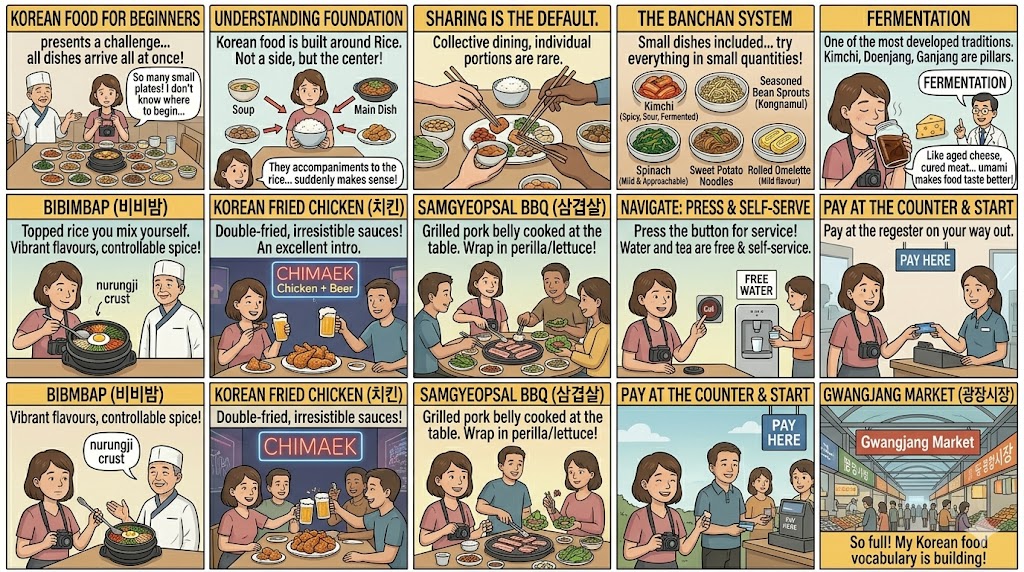
Korean food for beginners presents a specific challenge that most other Asian cuisines don’t: it arrives all at once. You sit down at a Korean restaurant and before you’ve ordered anything, the table fills with small dishes — kimchi, spinach, bean sprouts, something pickled, something braised — and you’re expected to know what to do with all of it. Then the menu arrives, and if you don’t read Korean, you’re making decisions based on pictures and optimism.
I’ve been eating Korean food my entire life — born in Seoul in 1975, raised on the food that’s now showing up in Michelin guides in New York and London. I’ve also watched hundreds of foreign colleagues encounter it for the first time over 23 years in international business, and I know exactly which dishes open people up to Korean cuisine and which ones close them down. This guide is built around that knowledge.
Start here. Work outward from here. The rest follows.
Understanding Korean Cuisine: The Foundation
Before the specific dishes, a few structural points that make everything else easier to understand.
Korean food is built around rice. Not rice as a side dish — rice as the centre of the meal, around which everything else is arranged. A traditional Korean meal is rice, soup, and an array of side dishes (banchan). Understanding this architecture makes the overwhelming table of small dishes suddenly make sense: they’re all accompaniments to the rice.
Fermentation is fundamental. Korean cuisine has one of the most developed fermentation traditions of any food culture. Kimchi, doenjang (fermented soybean paste), ganjang (soy sauce), and gochujang (fermented chili paste) are the four flavour pillars of Korean cooking. They produce the deep, complex, slightly funky umami quality that makes Korean food taste distinctly itself. If you’ve eaten aged cheese, cured meat, or sourdough bread, you already understand why fermentation makes food taste better. Korean cuisine just applies that principle more comprehensively.
Spice levels vary enormously. Korean cuisine has a reputation for being uniformly spicy that is not entirely deserved. Some dishes are fiercely hot; many others are not spicy at all. The dishes I recommend for beginners in this guide are calibrated to introduce Korean flavours without the capsaicin level that either excites or defeats people depending on their heat tolerance.
Sharing is the default. Korean dining is fundamentally communal. Dishes are placed in the centre of the table and eaten collectively. Individual portions are the exception rather than the rule. This is worth knowing before your first Korean restaurant visit — the correct response to a dish arriving is to put some in your bowl or plate, not to claim the whole thing.
The Banchan System: What All Those Small Dishes Are
The small dishes that arrive before or alongside your main order are called banchan (반찬). They are included in the price of your meal — not extras, not appetizers you’ll be charged for — and they are meant to be eaten throughout the meal alongside rice and your main dish.
Common banchan you’ll encounter as a beginner:
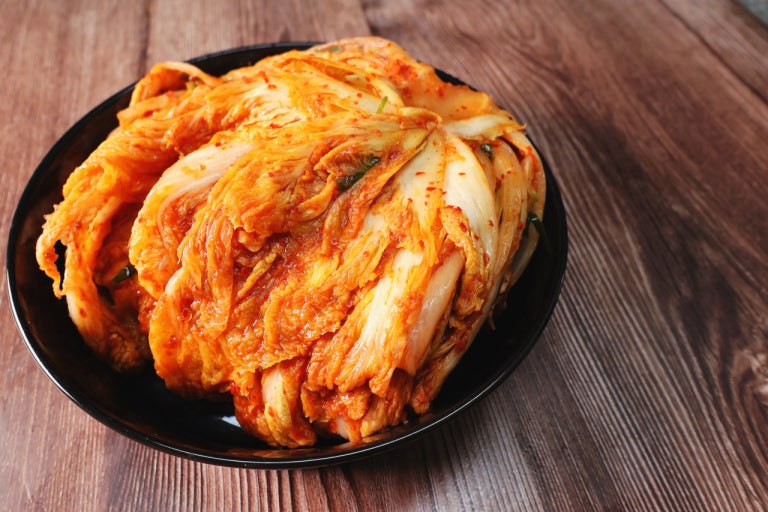
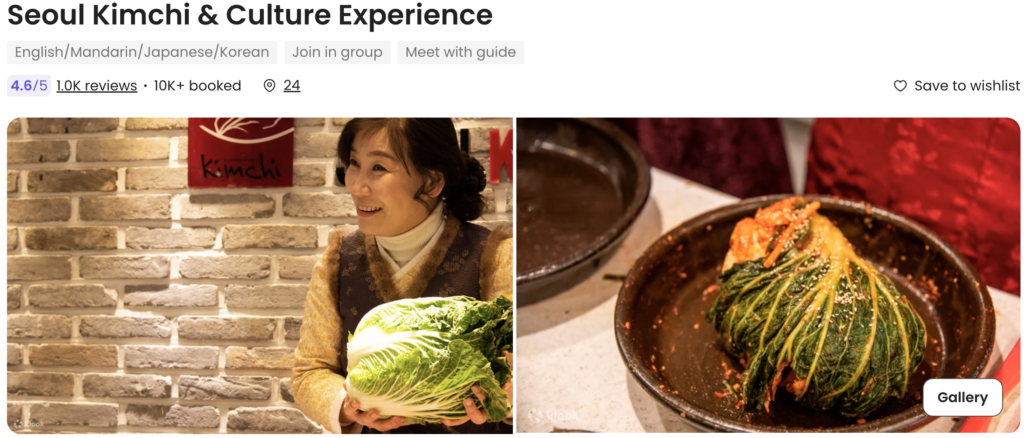
Kimchi (김치) — Fermented cabbage with chili, garlic, and ginger. The most fundamental banchan and the one that appears at virtually every Korean meal. Start with a small amount if you’re unsure — it’s spicy, sour, and funky, and it’s an acquired taste that most people acquire quickly once they understand what it’s doing alongside the rice. My full kimchi guide explains the varieties and what makes each one different.
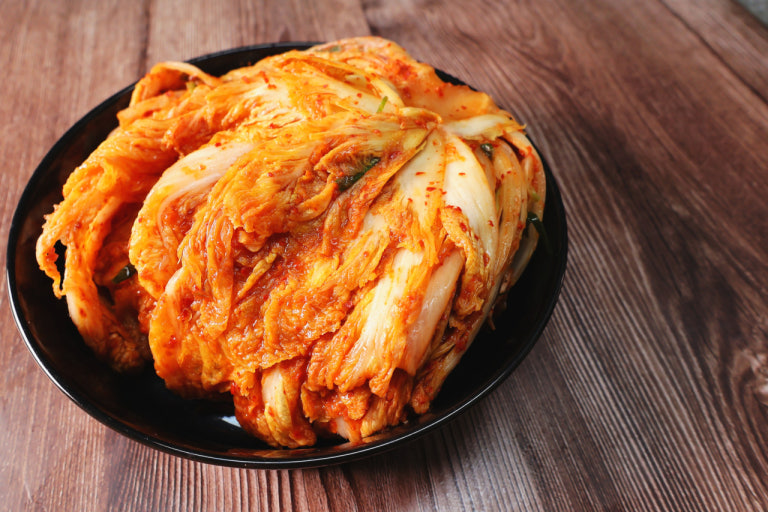
Kongnamul (콩나물) — Seasoned bean sprouts, usually blanched and dressed with sesame oil and garlic. Mild, nutty, and a good palate rest between stronger flavours. Most beginners enjoy this immediately.
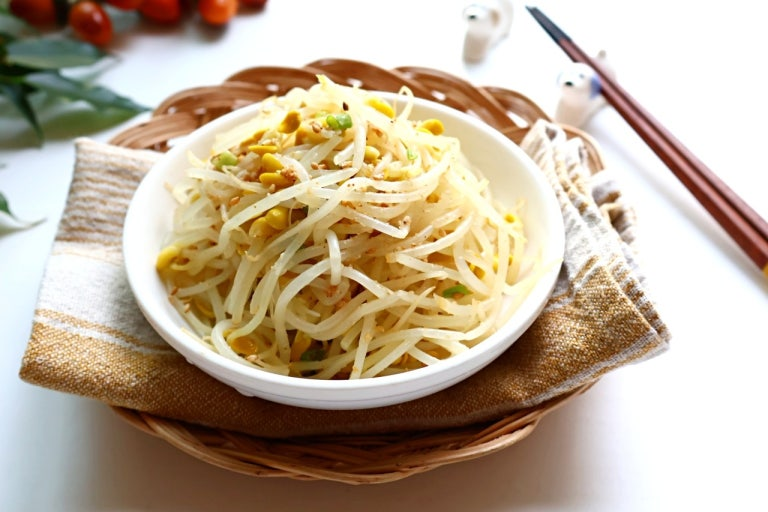
Sigeumchi namul (시금치나물) — Seasoned spinach, similar preparation to the bean sprouts. Mild and approachable.
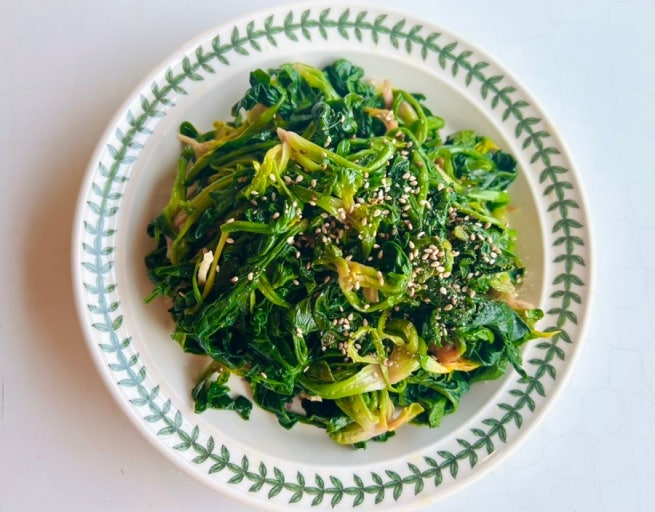
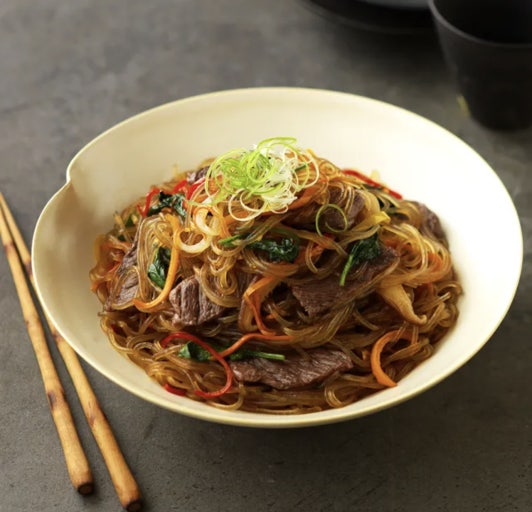
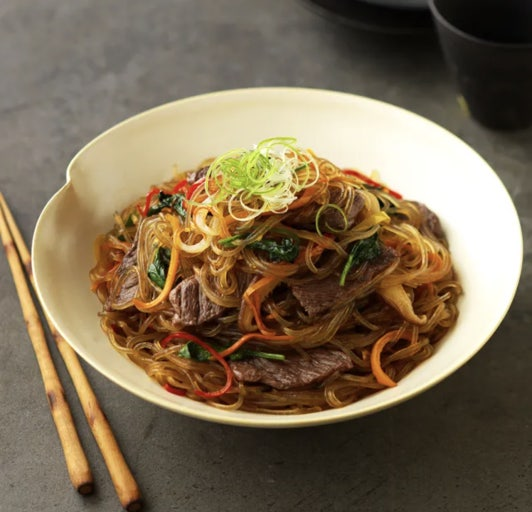
Japchae (잡채) — Glass noodles made from sweet potato starch, stir-fried with vegetables and often beef. Slightly sweet, chewy, and one of the most universally liked Korean dishes among first-timers.
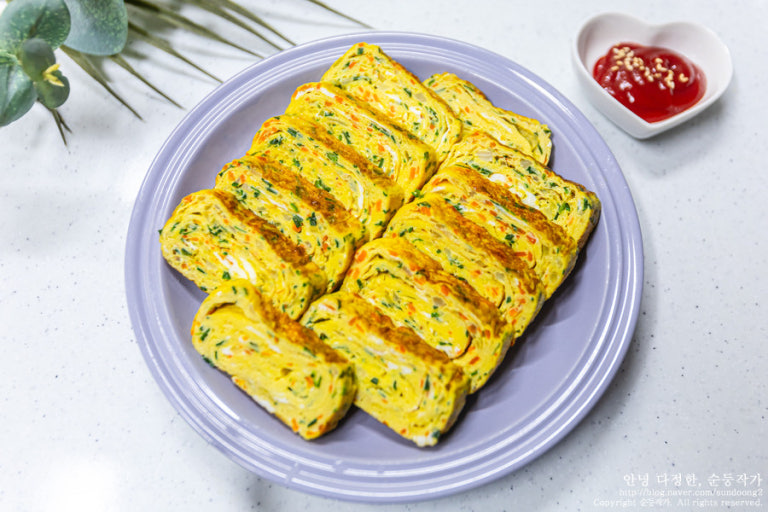
Gyeran mari (계란말이) — Rolled omelette, often with vegetables inside. Recognisable in format and mild in flavour — a reliable banchan for beginners.
The rule with banchan: try everything in small quantities. You won’t love all of it immediately, but you’ll be surprised how much you like.
The Best First Korean Foods
These are the dishes I’d recommend for someone trying Korean food for the first time, ordered from most universally accessible to slightly more adventurous.
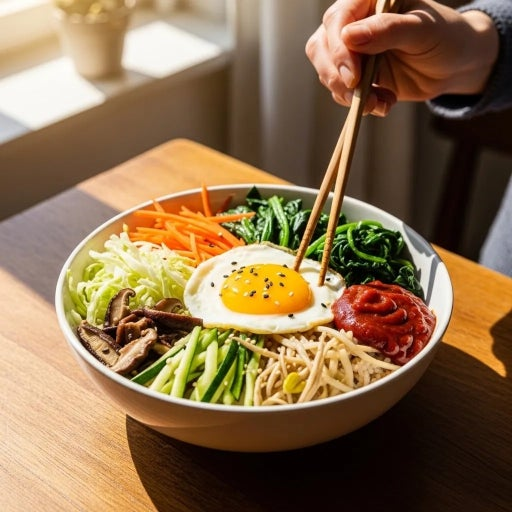
Bibimbap (비빔밥) The most beginner-friendly Korean dish and a genuine representation of what Korean cuisine does well. A bowl of rice topped with individually prepared vegetables, a fried egg, and gochujang sauce on the side — you mix everything together yourself before eating. The flavours are vibrant, the textures are varied, and the spice level is controllable because you add the chili sauce yourself. Order dolsot bibimbap (돌솥비빔밥) for the version served in a hot stone bowl that crisps the rice at the bottom — the crust (nurungji) is considered the best part.
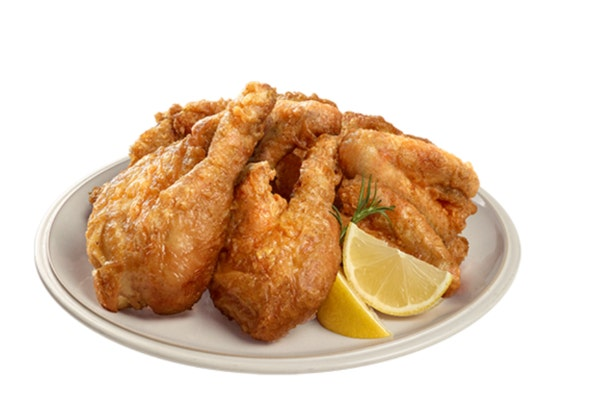
Korean Fried Chicken (치킨) The double-fried chicken that has taken over global food culture is also the best possible introduction to Korean food for anyone who’s nervous about unfamiliar ingredients. The skin is thinner and crispier than Western fried chicken, the sauces — soy garlic and sweet-spicy yangnyeom being the two standards — are immediately compelling, and the chimaek tradition (chicken plus cold beer) is one of the most enjoyable eating experiences in Seoul. My Korean fried chicken guide covers the best styles and where to find them.
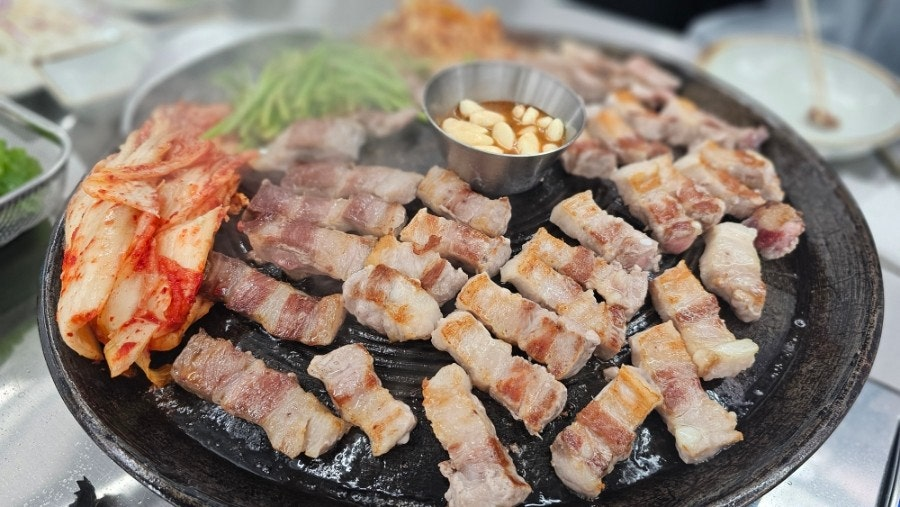
Samgyeopsal (삼겹살) Grilled pork belly, cooked at the table on a charcoal or gas grill. You wrap the cooked meat in perilla leaves or lettuce with garlic, sliced green onion, and a dab of ssamjang (a thick, slightly spicy sauce). The interactive cooking element removes the pressure of ordering correctly — you’re simply grilling meat — and the wrapping ritual is intuitive once someone shows you once. My Korean BBQ guide covers the full experience including how to order and cook.
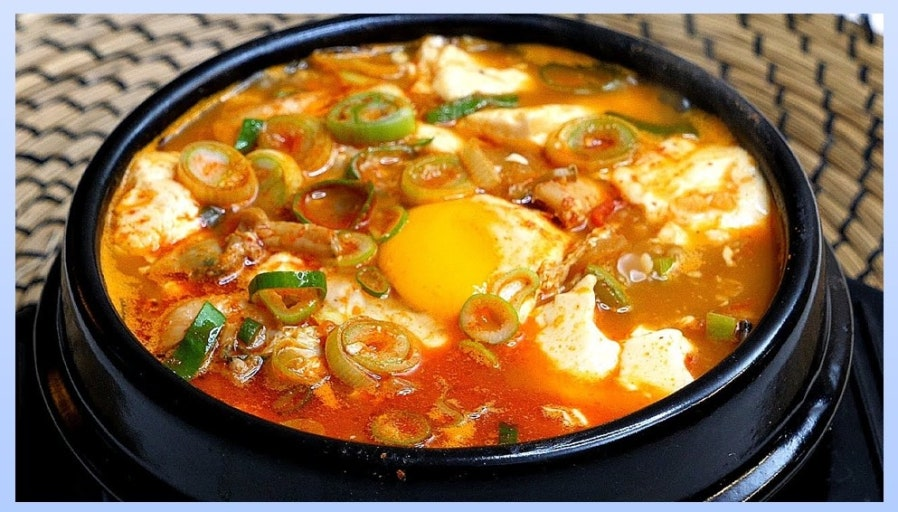
Sundubu jjigae (순두부찌개) Soft tofu stew, served bubbling in a stone pot. The broth is slightly spicy and intensely savoury, the tofu is silken and mild, and the egg cracked into it at the table adds richness. One of the most comforting Korean dishes and a good introduction to the stew culture that defines Korean dining alongside rice.
Japchae (잡채) The glass noodle dish mentioned in the banchan section also appears as a main course in many restaurants. Sweet, slightly chewy, studded with vegetables and beef — it is one of the Korean dishes most immediately liked by first-timers and worth ordering specifically if you see it on the menu.
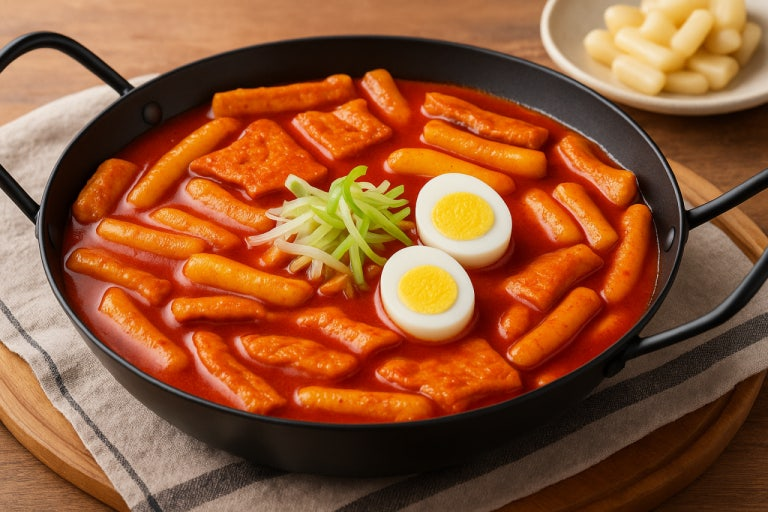
Tteokbokki (떡볶이) Chewy rice cakes in a bright red-orange sauce that is more sweet than it is spicy in its standard form. A beloved Korean street food that you’ll find at markets and pojangmacha (street stalls) across Seoul. The texture — genuinely chewy, slightly glutinous — is unfamiliar to most Western palates and either loved or disliked on first encounter. Try it at Gwangjang Market where it’s made properly.
Foods to Approach Carefully as a Beginner
These dishes are beloved by Koreans and worth trying — but they’re more challenging for first-timers for specific reasons worth knowing in advance.
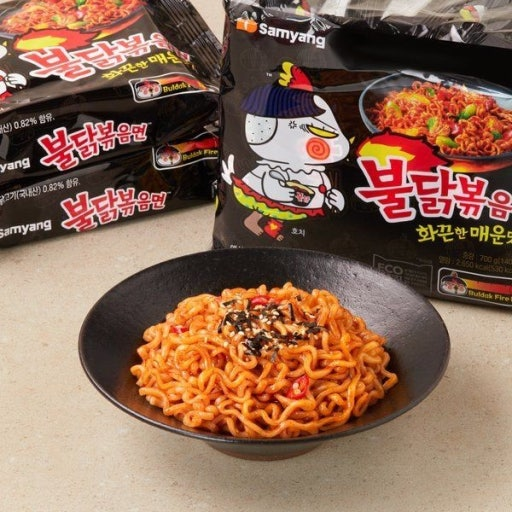
Buldak (불닭) — The fire noodles that went viral globally are genuinely extremely hot. I enjoy them; many Koreans find them intense. Start with the original flavour and have cold milk or yogurt ready rather than water, which spreads capsaicin rather than neutralising it. My buldak guide explains the full heat scale.
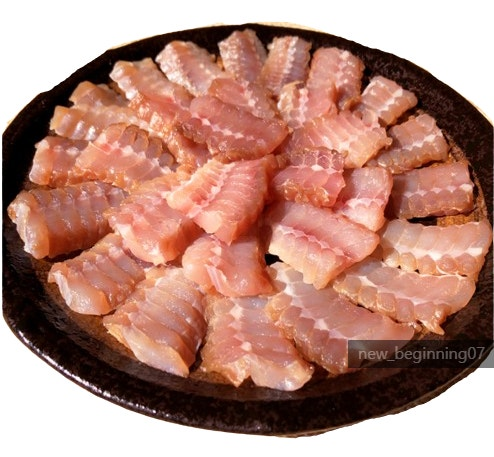
Hongeo (홍어) — Fermented skate fish, served raw, with a powerful ammonia smell that is entirely intentional. A beloved delicacy in Korea’s Jeolla region. Not a first-timer dish; this one requires working up to.
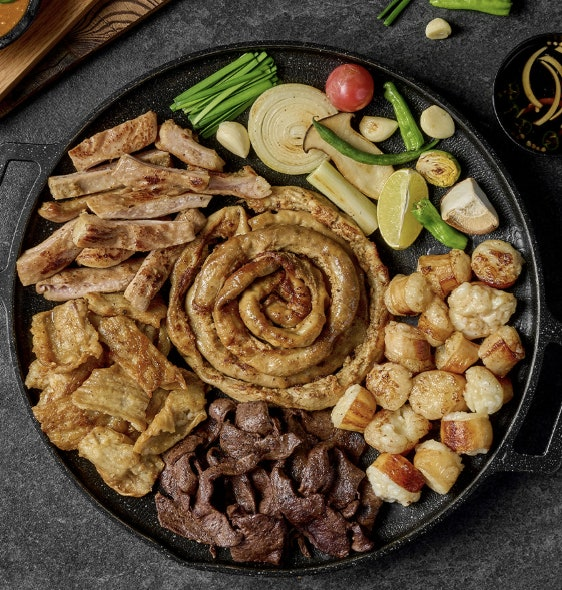
Gopchang (곱창) — Grilled small intestine. The texture and flavour profile are an acquired taste that requires Korean barbecue experience before attempting.
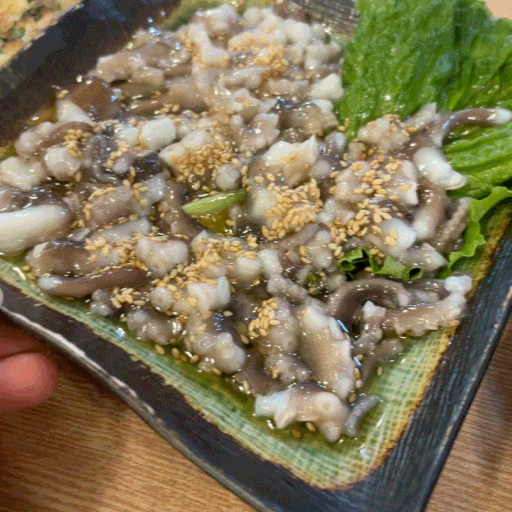
Sannakji (산낙지) — Live octopus, served still moving. Safe to eat, technically impressive, and an experience — but absolutely not a first meal in Korea.
How to Navigate a Korean Restaurant
The water and tea are free and self-service. Most Korean restaurants have a water dispenser or pitcher on the counter that you help yourself to. Don’t wait to be served water.
Press the button. Most Korean restaurants have a call button on the table (sometimes a small buzzer, sometimes a button built into the table). Press it when you’re ready to order — don’t wave at staff.
Ordering strategy for beginners: Pick one rice dish (bibimbap or a dolsot option), one meat dish if you want protein (samgyeopsal at a barbecue restaurant, or dakgalbi), and let the banchan fill the rest of the table. Don’t try to order everything at once.
Soup comes with the meal. At a traditional Korean restaurant, soup is usually included with the set rather than being a separate order. It arrives as part of the meal structure alongside rice.
Pay at the counter. In most traditional Korean restaurants, you pay at the register on your way out rather than at the table. Don’t sit waiting for a bill.
Korean Food by Meal Time
Breakfast: Traditional Korean breakfast is rice, soup (typically doenjang jjigae or miyeok-guk), and banchan — the same structure as lunch and dinner but lighter. Modern Korean breakfasts increasingly include toast, eggs, and coffee from the nearest café. Hotel breakfasts often offer both versions.
Lunch: The most common Korean lunch is a set meal (백반, baekban) — rice, a main dish, soup, and several banchan, priced between ₩8,000–₩15,000. This is the best value meal of the day and the format most likely to give you a complete picture of Korean home cooking.
Dinner: The meal that stretches longest and involves the most variety. Korean barbecue, seafood at a proper restaurant, or a full Korean table spread are all dinner-appropriate. The drinking culture that accompanies Korean dinner — soju, beer, or makgeolli — is worth engaging with even partially: the social ritual of pouring for others and toasting properly (with two hands or one hand supporting the other) is part of the meal experience.
Late night: Korea’s late-night food culture is serious. Ramyeon (instant noodles cooked to order), Korean fried chicken delivered to your door, and the pojangmacha street stalls that appear after dark are all specifically late-night formats. Don’t feel like meals need to be finished by 9 PM — many of the best Korean eating experiences happen after midnight.
Where to Start Eating in Seoul
Gwangjang Market for your first Korean market meal — bindaetteok, mayak gimbap, and naengmyeon in an atmospheric covered market that has been feeding Seoulites since 1905.
Any samgyeopsal restaurant in Mapo or Hongdae for your first Korean barbecue — the neighbourhood restaurants here cater to Korean university students and young professionals rather than tourists, which means the food is good and the prices are honest.
A dolsot bibimbap restaurant in Insadong for a complete, manageable, visually beautiful first Korean meal if you’re genuinely uncertain about where to start.
FAQ
Is Korean food spicy? Some dishes are very spicy. Many are not spicy at all. The dishes recommended for beginners in this guide — bibimbap, japchae, samgyeopsal, kongnamul — range from mild to moderately spiced. Ask about spice level when ordering and most Korean restaurants can adjust.
What is the most important Korean food to try first? Bibimbap for a complete, manageable introduction to Korean flavours. Korean BBQ (samgyeopsal) for the full Korean dining experience. Korean fried chicken for the most immediately crowd-pleasing entry point.
Is Korean food healthy? Korean cuisine is vegetable-heavy, fermentation-forward, and lower in processed ingredients than most Western fast food. The banchan system means every meal includes significant vegetable variety. Certain dishes — Korean fried chicken, heavy barbecue — are less virtuous nutritionally but the overall diet is considered one of the healthier traditional food cultures.
Can vegetarians eat Korean food? More easily than you might expect, but with caveats. Many Korean dishes contain meat or seafood-based stocks. Dedicated vegetarian and vegan Korean restaurants exist in Seoul, particularly in the Insadong and Haebangchon areas. Buddhist temple food (사찰음식, sachal eumsik) is the most refined vegetarian Korean dining tradition.
What should I drink with Korean food? Soju (Korea’s national spirit, clear and slightly sweet) is the traditional pairing for most Korean meals. Beer mixed with soju (somaek) is equally common. Makgeolli (milky rice wine) pairs particularly well with pancakes and fried foods. Non-alcoholic: sikhye (sweet rice punch) or boricha (barley tea, usually served free at restaurants).
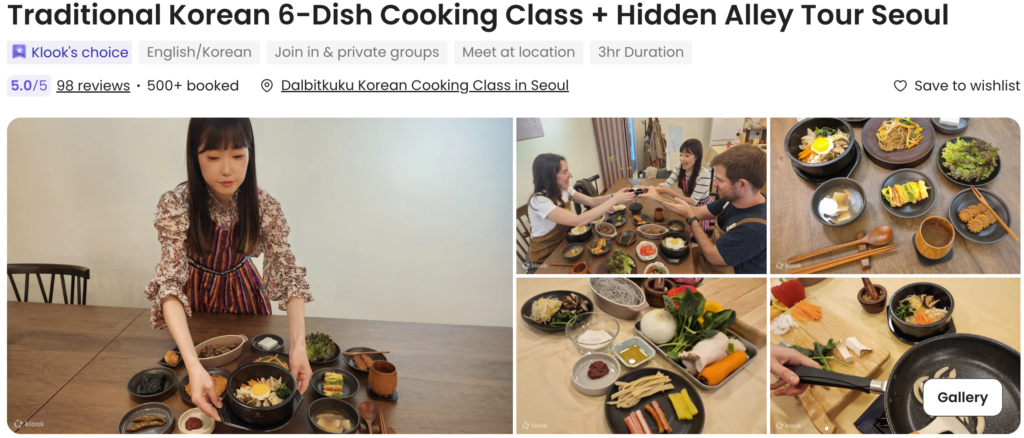
Experience Korean Food Properly

Korea Insider has lived in South Korea for 50 years and worked at international companies for over two decades — explaining Korean culture, food, and society to colleagues from the US, Europe, and Australia.
Internationally married with a Japanese spouse, Korea Insider brings both an insider’s depth and an outsider’s perspective to every topic on My Korea Tip.