
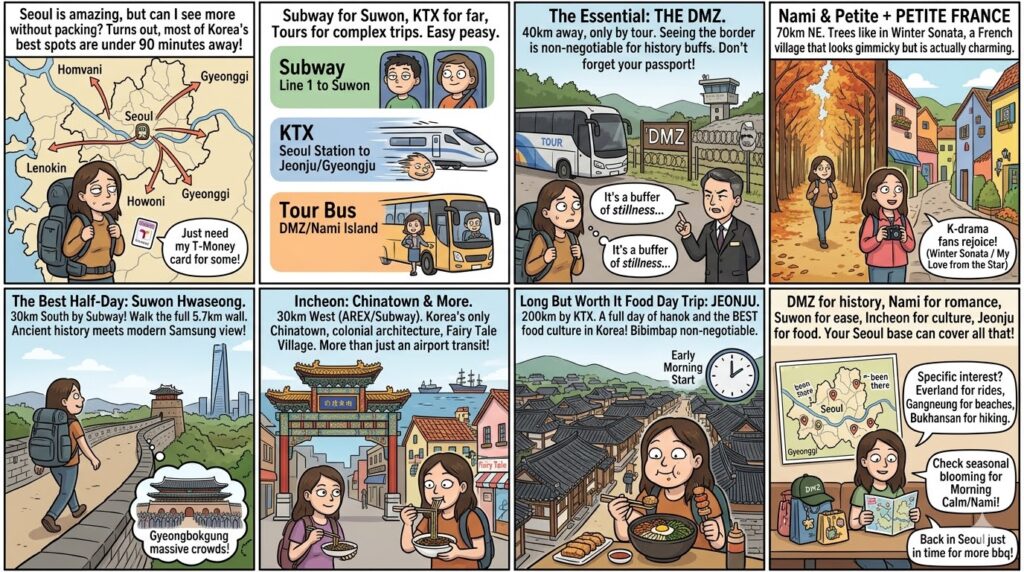
The best Seoul day trips don’t require leaving Korea’s best city for long — most of what makes the country worth visiting beyond the capital sits within 90 minutes by train, bus, or organized tour. The DMZ is 40 kilometres north. Nami Island is an hour northeast. Suwon’s UNESCO-listed fortress is 30 minutes by subway. Incheon’s century-old Chinatown is 45 minutes on the airport rail.
I was born in Seoul in 1975 and have made most of these journeys more times than I can count — for work, for family, for the specific kind of reset that leaving the city for a day provides even when you live there. What follows is an honest ranking of what’s genuinely worth the travel time, what pairs well together, and what to skip if your Seoul days are limited.
If you’re planning a longer trip, my Seoul itinerary 5 days guide covers the city itself in detail, and my Korea itinerary 7 days guide shows how day trips fit into a broader Korea trip structure.
Before You Go: Day Trip Transport in Seoul
Seoul’s transport network makes day trips significantly easier than they are from most major Asian capitals.
Subway reaches Suwon, Incheon, and several destinations within the greater Seoul metropolitan area directly — no separate ticket required beyond your T-Money card top-up.
KTX (high-speed rail) connects Seoul to Gyeongju in approximately 2 hours and to other regional destinations that would otherwise require an overnight stay. Seoul Station and Suseo (Gangnam) Station are the main departure points.
Organized tours handle the logistics for destinations that require multiple connections — the DMZ (which requires a licensed operator regardless), Nami Island, and combination tours that bundle two destinations efficiently. For first-time visitors, organized transport saves planning time that is genuinely better spent on the ground.
Check my best time to visit Korea guide for seasonal considerations — several of the destinations below have specific peak seasons that affect both the experience and crowd levels significantly.
The Essential Day Trips: Worth Every Minute of Travel
1. DMZ — The Most Important Day Trip in Korea
Distance from Seoul: 40km north Travel time: 1 hour by organized tour bus Duration: Full day
The Demilitarized Zone between South and North Korea is unlike anywhere else on the planet — a 4-kilometre wide buffer of enforced stillness that divides a peninsula still technically at war. Every visitor to Korea should see it. It contextualises everything else about modern Korean history, culture, and the specific urgency behind the economic and cultural development that the rest of this blog covers.
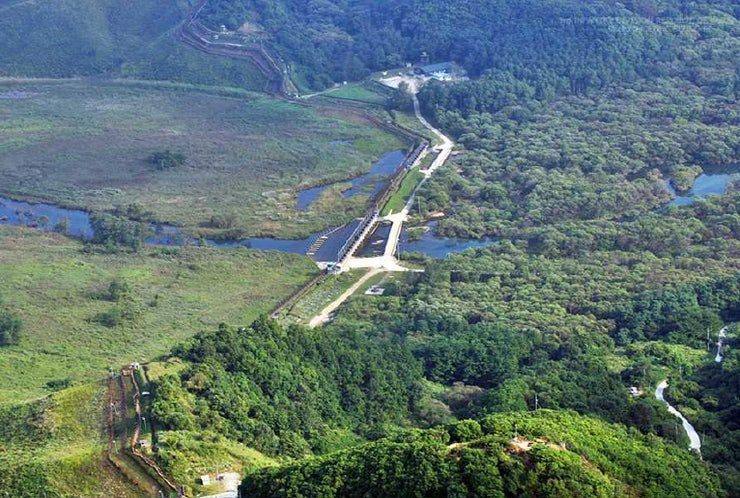
You cannot visit independently. All access requires an organized tour with a licensed operator, which handles transport from central Seoul, entry permits, and English-language narration. The standard tour covers the Third Infiltration Tunnel dug by North Korea and discovered in 1978, Dora Observatory with views into North Korea on clear days, and Dorasan Station — a fully functional railway terminal built in anticipation of reunification that currently serves no trains.
Book in advance. Peak season tours sell out weeks ahead. My full DMZ Tour from Seoul guide covers all tour options, inclusions, and the photography restrictions that catch visitors off guard.
Verdict: Non-negotiable. Do this regardless of your other day trip choices.
2. Nami Island + Petite France — The Scenic Combination
Distance from Seoul: 70km northeast Travel time: 90 minutes by bus + ferry Duration: Full day
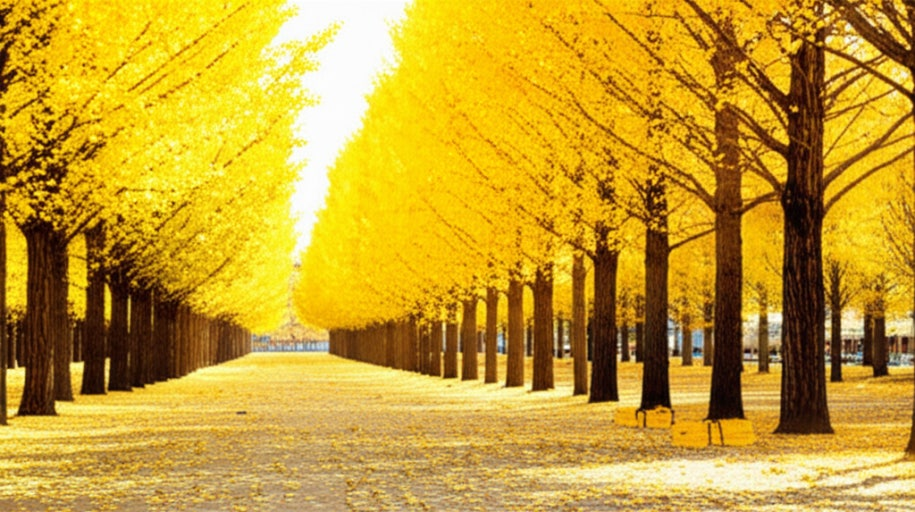
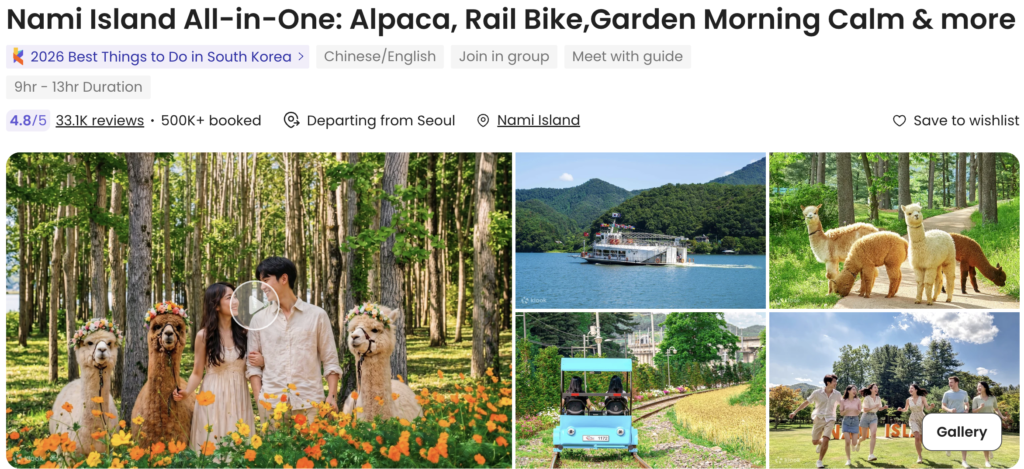
Nami Island (남이섬) is a tear-shaped island set in the Han River, covered by tree-lined paths that become extraordinary in specific seasons — poplar canopy in summer, auburn tunnel in autumn, snow-dusted bare branches in winter. It became an international romantic landmark through the Korean drama Winter Sonata and has maintained its reputation across two decades. The ferry crossing from the dock takes five minutes and is part of the experience.
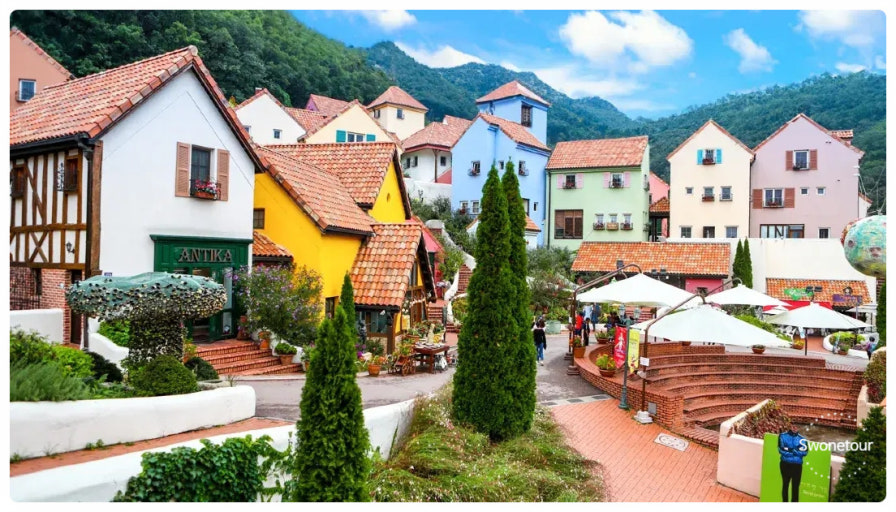
Petite France (쁘띠프랑스) — a French-themed cultural village on a hillside 20 minutes from the Nami Island ferry dock — sounds gimmicky and is, in fact, charming. The architecture, the rose gardens, and the views over the surrounding reservoir make it worth the 90 minutes even for visitors who are suspicious of themed attractions. It also appeared in the Korean drama My Love from the Star, which gives it cultural currency with K-drama fans.
The two work well combined in a single day — Nami Island in the morning, Petite France in the afternoon, back to Seoul for dinner.
Verdict: Excellent in autumn (October–November) and winter. Overtouristed in spring cherry blossom season — manageable if you arrive early, frustrating if you don’t.
3. Suwon Hwaseong Fortress — Half Day or Full Day
Distance from Seoul: 30km south Travel time: 45 minutes by subway (Line 1 direct) Duration: Half day to full day
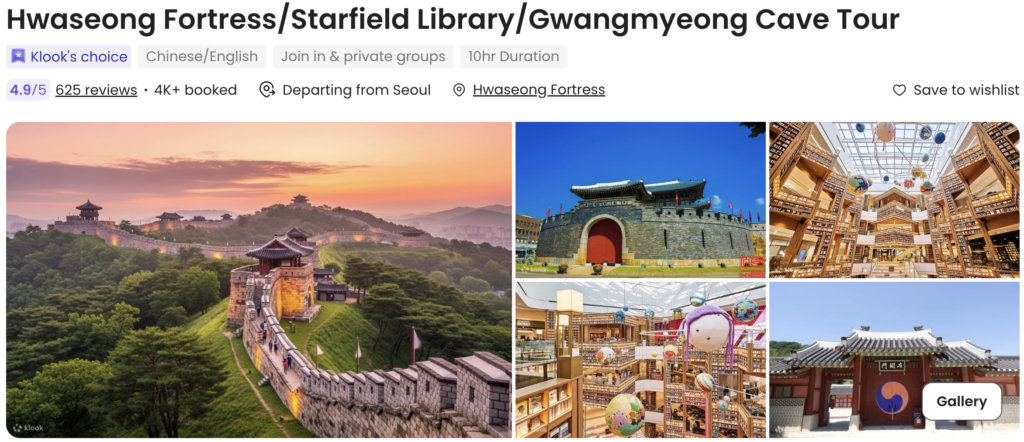
Suwon’s Hwaseong Fortress is a UNESCO World Heritage Site and one of the most undervisited major historical attractions in Korea. The fortress wall — 5.7 kilometres of intact 18th-century fortification — circles a hill above the city and can be walked in full in about two hours. The views over Suwon from the upper bastions are genuine, the architecture is meticulously preserved, and the crowds are a fraction of what you’ll encounter at Gyeongbokgung in Seoul.
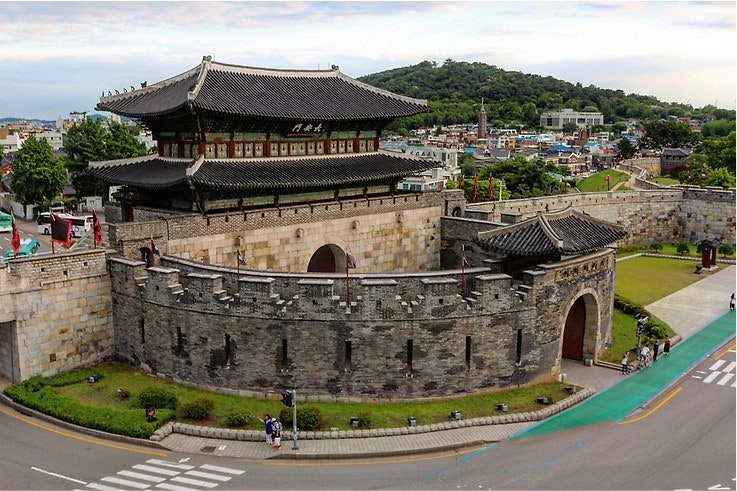
Suwon is also Samsung’s home city — the company’s global headquarters and semiconductor campus are visible from certain points on the fortress wall, which produces a view that summarises modern Korea in a single frame: 18th-century military architecture and 21st-century chip fabrication in the same sightline.
The subway connection is direct and inexpensive. This is the most effortless major day trip from Seoul.
Verdict: The best half-day trip from Seoul. Combine with a visit to the Korean Folk Village (20 minutes from Suwon) for a full day.
4. Incheon — Chinatown, Colonial History & Waterfront
Distance from Seoul: 30km west Travel time: 45 minutes by AREX or subway Duration: Half day to full day
Incheon is where most international visitors to Korea arrive — and almost all of them transit straight to Seoul without looking around. That’s a mistake.
Incheon’s Chinatown — Korea’s only significant Chinese neighbourhood — dates from the late 19th century and has a distinctly different atmosphere from anything in Seoul. The surrounding area includes Jayu Park (the oldest Western-style park in Korea), the Open Port district with its Japanese and Chinese colonial-era architecture, and the steep streets of the Songwol-dong Fairy Tale Village, which has become one of the more unexpectedly photogenic corners of the greater Seoul area.
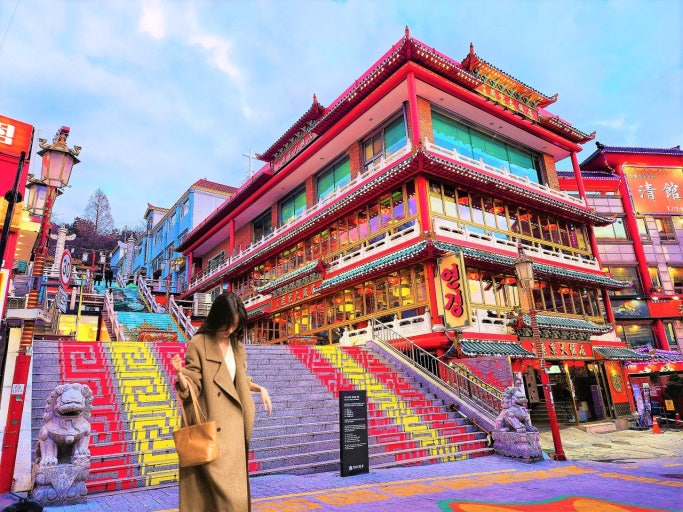
The newer Songdo district — a purpose-built smart city on reclaimed land — offers a completely different kind of Incheon visit: futuristic urban planning, Central Park modelled loosely on New York’s, and the kind of architectural ambition that Korea applies to its new developments.
Verdict: Best as a half-day addition to a longer Seoul trip rather than a standalone destination. Particularly good for visitors interested in Korean colonial history.
5. Garden of Morning Calm — Seasonal Highlight
Distance from Seoul: 60km northeast Travel time: 90 minutes by bus Duration: Half day
The Garden of Morning Calm (아침고요수목원) is a 330,000 square metre botanical garden in the mountains northeast of Seoul that becomes genuinely extraordinary during two specific windows: spring (April–May) when azaleas and tulips fill the terraced gardens, and the winter illumination festival (December–February) when the entire garden is lit after dark.
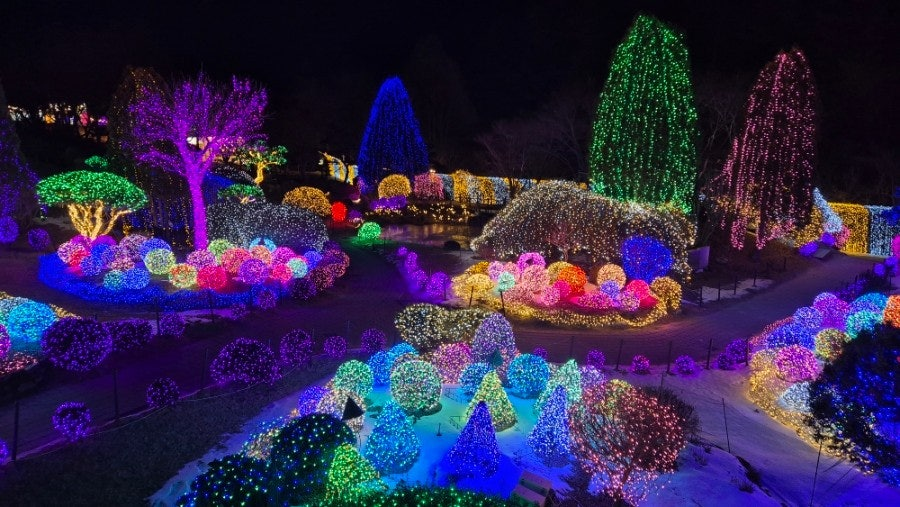
Outside these peak periods, the garden is pleasant but not essential. Within them, it earns its reputation as one of the most visually dramatic experiences in the greater Seoul area. The combination tour with Nami Island is the most common format and makes efficient use of a full day.
Verdict: Worth the journey in cherry blossom season or winter illumination only. Skip in summer and early autumn.
6. Jeonju — Hanok Village and the Best Korean Food Outside Seoul
Distance from Seoul: 200km southwest Travel time: 2 hours by KTX Duration: Full day (long)
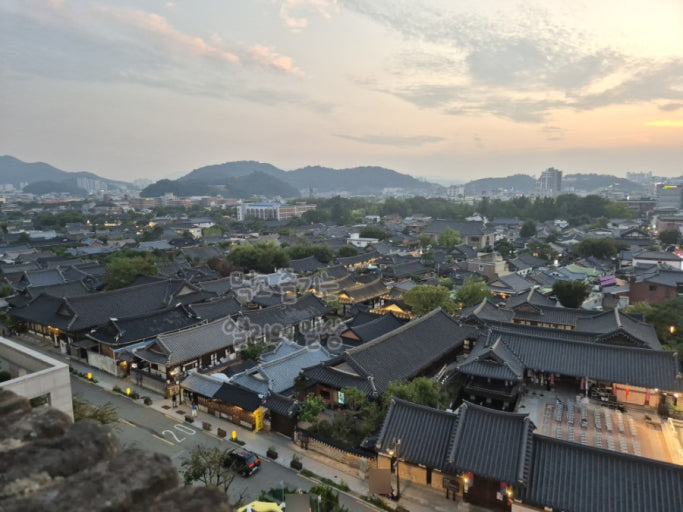
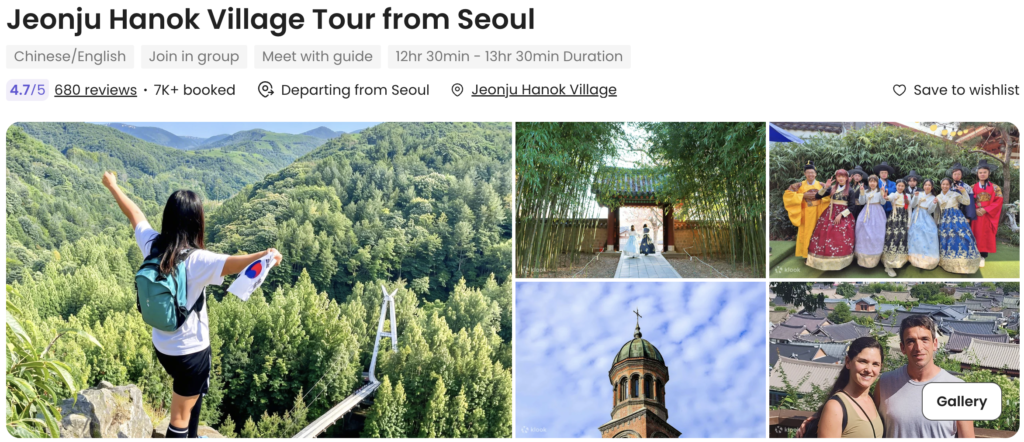
Jeonju is the cultural capital of Korea’s Jeolla region and home to the country’s largest and best-preserved hanok village — 700 traditional houses in a neighbourhood that has remained largely intact while the rest of Korean cities modernised around it. It is also, without serious competition, the food capital of Korea.
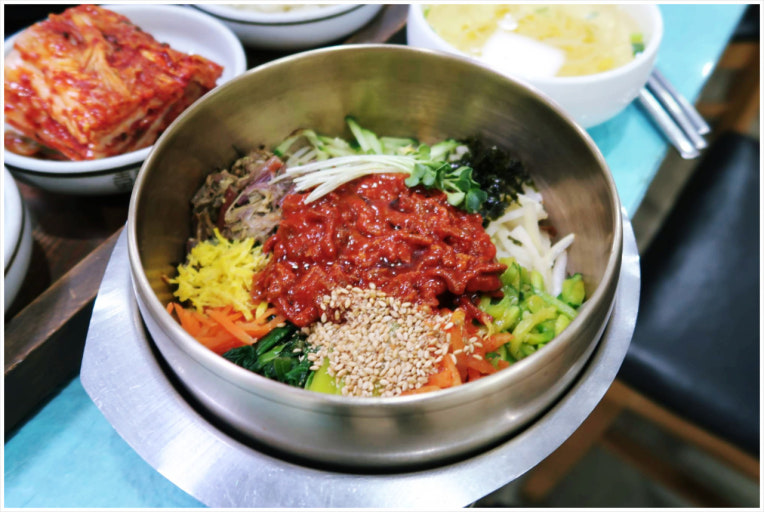
Jeonju bibimbap — the city’s signature dish and arguably the best version of the dish available anywhere — is served at restaurants that have been making it for generations. The local street food, the makgeolli (rice wine) culture, and the specific cuisine of the Jeolla region are worth a dedicated visit.
Two hours each way by KTX is the honest limit for a comfortable day trip. You’ll have approximately four to five hours on the ground if you take a morning train and return in the early evening — enough for the hanok village, one proper meal, and some street food. More time is better; an overnight stay turns Jeonju into a genuinely complete experience.
Verdict: The best food day trip from Seoul. Requires an early start; worth it.
Day Trips for Specific Interests
Theme parks: Everland (Korea’s largest, 50km south) and Lotte World (in Seoul itself) both work as full-day experiences. Everland requires more travel; Lotte World is subway-accessible. Both are better in spring and autumn than summer heat.
Beaches: The nearest beaches to Seoul are at Incheon (accessible but not Korea’s best), or approximately 90 minutes east at Gangneung on the east coast. Gangneung is worth the journey for serious beach days, combining with nearby Gyeongpodae Lake and the city’s excellent café scene.
Mountain hiking: Bukhansan National Park begins within Seoul’s city limits and requires no travel beyond the subway to its trailhead stations. For day trips specifically to mountains, Soraksan (3 hours north) and Jirisan (3.5 hours south) both require overnight stays to do justice to.
FAQ
What is the best day trip from Seoul? The DMZ for historical and experiential significance. Suwon Hwaseong for ease and quality of experience relative to travel time. Nami Island in autumn for visual impact.
Can I visit the DMZ without a tour? No. All civilian access to the DMZ requires an organized tour with a licensed operator. Independent access is not permitted.
Is Gyeongju possible as a day trip from Seoul? Technically yes — 2 hours each way by KTX leaves approximately 4 hours on the ground. Enough for the royal tomb park and Bulguksa Temple, not enough to do the city justice. An overnight stay is significantly better.
What is the easiest day trip from Seoul? Suwon — direct subway connection, 45 minutes, no additional transport required. The Hwaseong Fortress is a 10-minute walk from Suwon station.
When is the best time for Seoul day trips? April–May for Nami Island and Garden of Morning Calm in bloom. October–November for autumn colour everywhere. The DMZ is year-round and largely weather-independent.
How far is Nami Island from Seoul? Approximately 70 kilometres northeast. The journey takes 90 minutes by bus from Seoul to the ferry dock, plus a 5-minute ferry crossing to the island.
Book These Before You Go

Korea Insider has lived in South Korea for 50 years and worked at international companies for over two decades — explaining Korean culture, food, and society to colleagues from the US, Europe, and Australia.
Internationally married with a Japanese spouse, Korea Insider brings both an insider’s depth and an outsider’s perspective to every topic on My Korea Tip.