
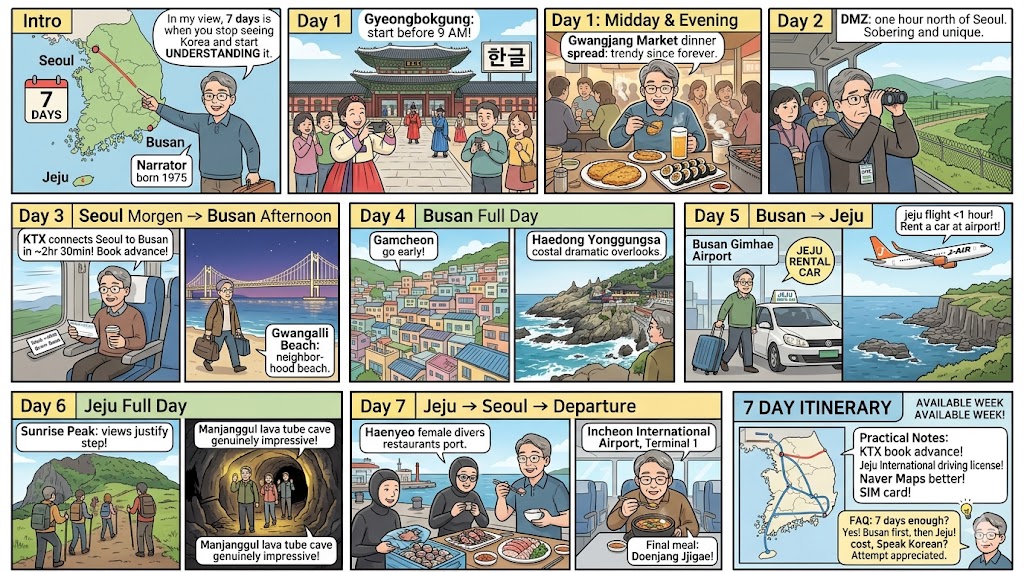
A korea itinerary 7 days is, in my view, the first trip length where you stop just seeing Korea and actually start to understand it. Three days gives you Seoul’s greatest hits. Five days lets you breathe. Seven days adds the two places that complete the picture — Busan, which is everything Seoul isn’t, and Jeju, which is everything the mainland isn’t.
I was born in Seoul in 1975 and have spent my entire life watching visitors arrive with ambitious plans and leave wishing they’d had more time. Seven days, structured correctly, is enough to leave feeling satisfied rather than rushed. The key is accepting early that you can’t do everything — and building a plan around what actually matters.
This itinerary covers the three destinations that, together, give you the fullest version of Korea available in a single week.
Before You Start: The Logistics That Matter
Getting around: The KTX high-speed train connects Seoul to Busan in about 2 hours 30 minutes and is the backbone of this itinerary. Domestic flights connect Seoul (Gimpo airport) to Jeju in about an hour. Both are easy to book in advance and significantly more comfortable than the equivalent bus journeys.
Where to stay: Base yourself in Myeongdong or Jongno for Seoul — central, walkable, and well-connected. In Busan, Haeundae Beach area or Seomyeon both work well for a two-night stay. In Jeju, the city centre (Jeju-si) is the most practical base for a short visit.
Budget: Expect ₩150,000–₩220,000 per day ($110–$160 USD) for accommodation, meals, local transport, and entry fees, excluding the KTX and flights.
If you only have five days, I have a separate Seoul itinerary 5 days that keeps everything within the capital. Seven days is when the rest of Korea becomes worth adding.
Day 1: Seoul — Palaces, Markets & Your First Korean Dinner
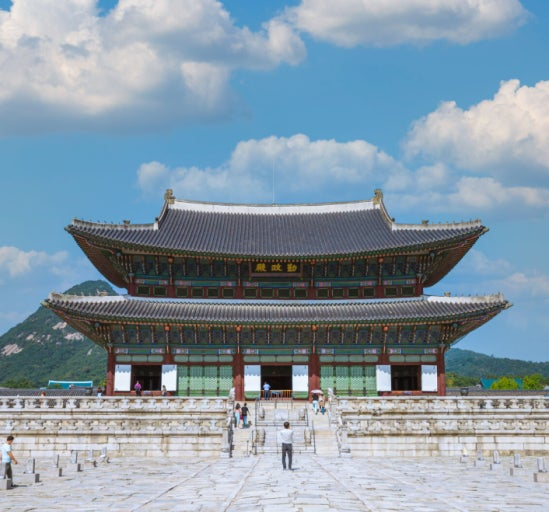
Morning: Gyeongbokgung
Start where the Joseon Dynasty started. Arrive before 9:00 AM, rent a hanbok at one of the shops near the main gate, and walk the palace complex before the groups arrive. The changing of the royal guard ceremony runs at 10:00 AM — worth timing your arrival around. My full Gyeongbokgung Palace guide covers everything you need to know before you visit, including the smaller pavilions most people miss.
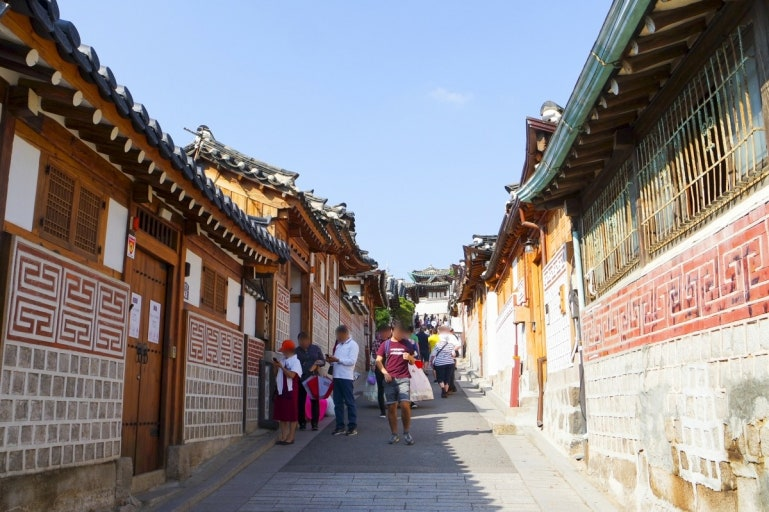
Late Morning: Bukchon Hanok Village
Walk northeast from the palace into Bukchon Hanok Village — 15 minutes on foot through Samcheong-dong’s gallery-lined streets. The alleyway views over traditional rooftops toward Namsan Tower are the defining image of old Seoul. Keep your voice down — real people live here.
Afternoon: Insadong & Samcheong-dong
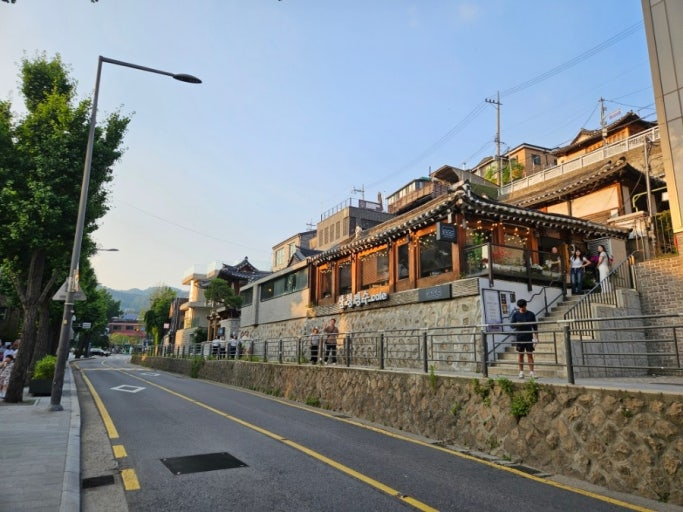
Lunch in Insadong at a traditional Korean restaurant — a set meal of rice, soup, and multiple side dishes (백반, baekban) served in a tile-floored house is the ideal first Korean meal. Spend the afternoon exploring the streets between Insadong and Samcheong-dong at a relaxed pace.
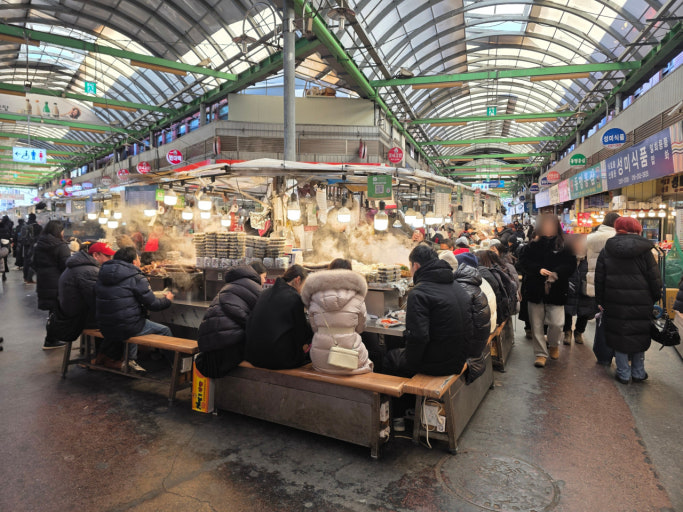
Evening: Gwangjang Market
End Day 1 at Gwangjang Market for dinner. Sit at a stall, order the bindaetteok and mayak gimbap, and let the market do the rest. Budget ₩15,000–₩25,000 for a full spread. This is the version of Korean food that existed before anyone called it trendy.
Day 2: DMZ Day Trip
Clear the full day. The Demilitarized Zone is the single most historically significant thing you can experience in Korea, and it sits one hour north of central Seoul. You cannot visit independently — all access requires an organized tour — and booking ahead is essential, particularly between April and October.
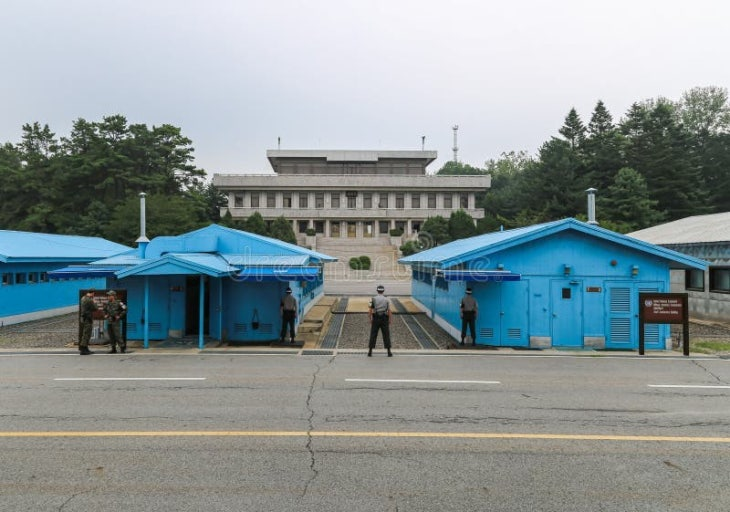
The standard tour covers the Third Infiltration Tunnel (dug by North Korea and discovered in 1978), Dora Observatory with views into North Korea on clear days, and Dorasan Station — a functioning railway station built in anticipation of reunification that currently goes nowhere. It is sobering, fascinating, and unlike anywhere else.
My full DMZ Tour from Seoul guide covers all the tour options, what each includes, and the photography rules that catch visitors off guard every time.
Return to Seoul by late afternoon. Keep the evening simple — a bowl of sundubu jjigae (soft tofu stew) near your hotel and an early night. You have a train to catch tomorrow.
Day 3: Seoul Morning → Busan Afternoon
Morning: One final Seoul morning. Spend it in Seongsu-dong if you haven’t been — the former industrial district turned café and design hub is the best two-hour walk in the city for understanding what contemporary Korean culture looks like when it’s not performing for tourists.
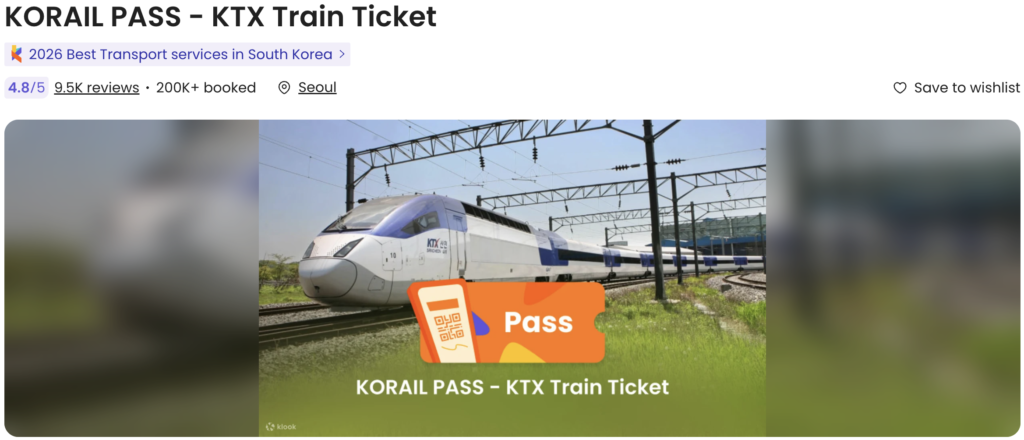
Midday: Take the KTX from Seoul Station to Busan. The train leaves regularly, the journey takes approximately 2 hours 30 minutes, and the seats are comfortable. Book in advance, especially for weekend travel.
Afternoon in Busan: Drop your bags and walk to Gwangalli Beach. It’s less famous than Haeundae but more interesting — the Gwangan Bridge lights up at night and the bars and restaurants along the waterfront are where Busan locals actually spend their evenings. This is not a tourist zone. It is a neighbourhood that happens to have a beach.
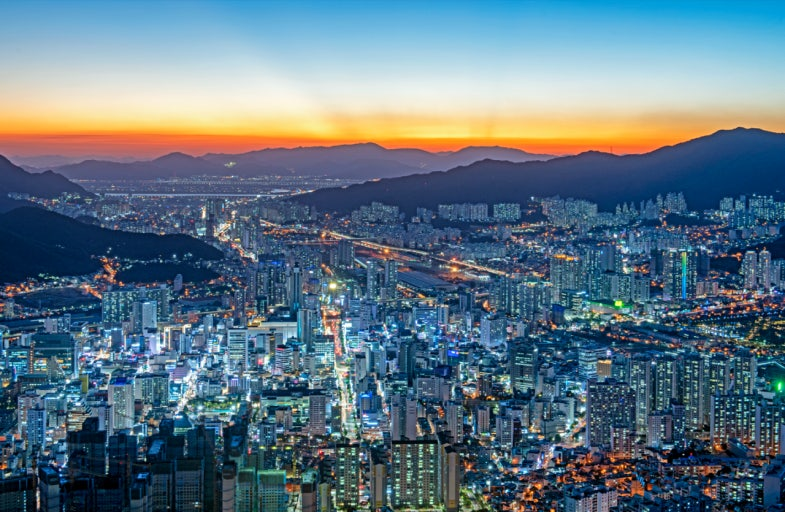
Dinner: Busan is Korea’s seafood capital. Find a hoe (회) restaurant near the Jagalchi fish market area, order a mixed sashimi platter, and eat it with the soju that will be placed in front of you whether you ordered it or not.
Day 4: Busan Full Day
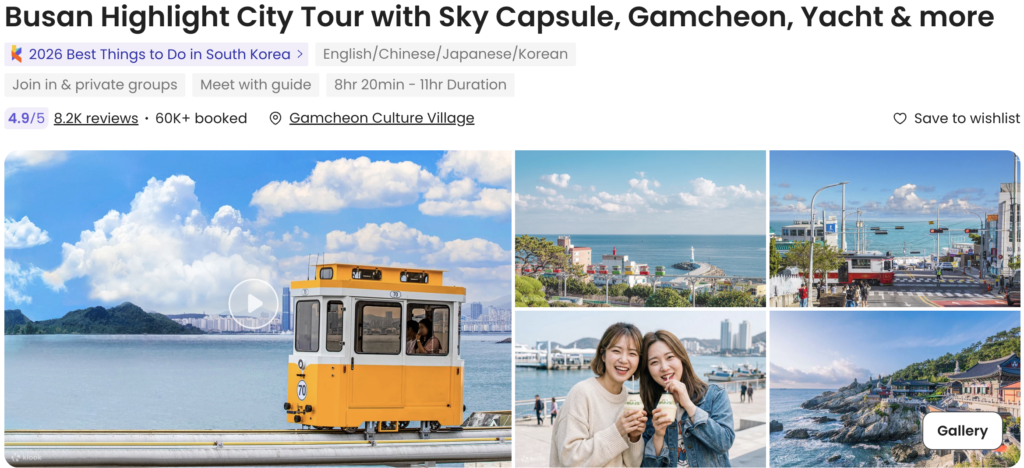
Morning: Gamcheon Culture Village
The hillside neighbourhood of pastel-coloured houses is Busan’s most photographed attraction and deservedly so — the views down over the city and the bay are extraordinary, and the village itself has real art installations among the tourist cafés. Go early (before 10 AM) for the best light and the smallest crowds.
Afternoon: Haedong Yonggungsa Temple
A Buddhist temple built directly on coastal rocks at the sea’s edge, with waves crashing below the prayer halls. It is one of the most atmospherically dramatic religious sites in Korea — and almost entirely overlooked by visitors who stay in the city centre. Take a local bus from Haeundae (about 20 minutes) rather than a taxi.
Evening: BIFF Square & Nampodong
The area around Busan International Film Festival Square in Nampodong is the city’s historic commercial heart — street food stalls, cinema history, and the gukje market that has been feeding Busan residents since the Korean War. End the evening with ssiat hotteok (seed-filled sweet pancakes) from one of the street vendors — Busan’s specific version of the snack is better than anything you’ll find in Seoul.
Day 5: Busan → Jeju
Morning: Fly from Gimhae International Airport (Busan) to Jeju International Airport. The flight takes approximately 55 minutes. Multiple airlines operate the route and fares are reasonable if booked in advance.
Afternoon in Jeju: Rent a car at the airport. Jeju without a car is a significantly diminished experience — the public buses are infrequent, the distances are real, and the best things on the island are not in the city centre.
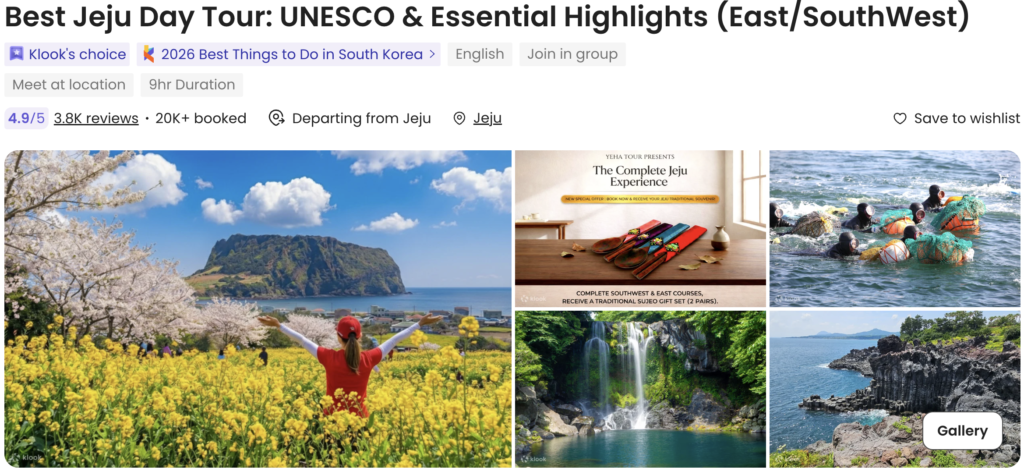
Drive to the southern coast. Stop at Jusangjeolli Cliff — dramatic hexagonal basalt columns rising from the sea, formed by volcanic lava cooling in the ocean. Then continue to Jungmun Beach, the widest and most dramatic beach on the island.
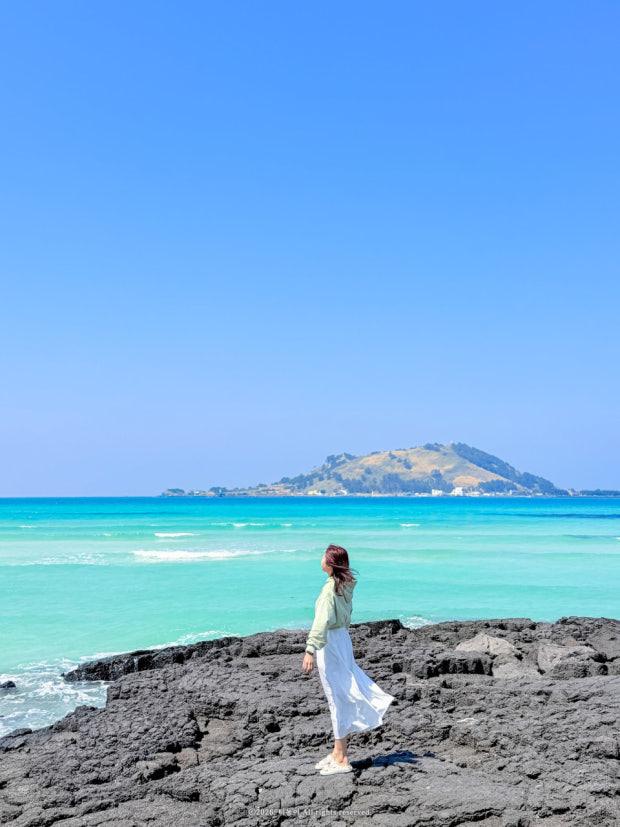
Evening: Dinner in Seogwipo, Jeju’s second city on the southern coast. Black pork (흑돼지, heukdwaeji) — the dark-skinned pigs native to Jeju — is the island’s signature dish and genuinely different from the pork you’ll eat on the mainland. Find a local restaurant, order the samgyeopsal, and eat it the Jeju way: with raw garlic, jeot (fermented seafood condiment), and local soju.
Day 6: Jeju Full Day
Morning: Hallasan
Korea’s highest mountain sits at 1,947 metres in the centre of Jeju. You don’t need to summit it to appreciate the landscape — even the lower trails through Hallasan National Park give you the volcanic interior of the island in ways the coastal drive doesn’t. The Eorimok trail is the most accessible for a half-day hike.
Afternoon: East Coast Drive
Drive Jeju’s east coast. Stop at Seongsan Ilchulbong (Sunrise Peak) — a volcanic crater rising from the sea that looks like nothing else on the Korean peninsula. The climb takes about 20 minutes and the views justify every step. Continue to the Manjanggul lava tube — a 13,000-year-old volcanic cave that extends for 7 kilometres underground. The section open to visitors covers about a kilometre and is genuinely impressive.
Evening: Return to Jeju-si
Dinner in the city at one of the haenyeo (female diver) restaurants near the old port. Haenyeo have been free-diving for seafood around Jeju for centuries and their tradition was designated a UNESCO Intangible Cultural Heritage in 2016. Ordering their catch for dinner is the most culturally specific meal you can have on the island.
Day 7: Jeju → Seoul → Departure
Morning: Fly from Jeju back to Incheon International Airport (Seoul). Flights run throughout the day — book a morning departure to give yourself buffer time before any international connection.
If you have time: The area around Incheon Airport has improved significantly in recent years. Terminal 1’s transit zone has a Korean Cultural Street, traditional craft demonstrations, and a casino if that’s relevant. For visitors with a longer connection, a fast trip to Incheon’s Chinatown (30 minutes by subway from the airport) is a manageable half-day option.
Departure: Korea’s international airport handles volume efficiently. Allow the standard time and spend whatever is left eating one final bowl of whatever you most want to eat again. For me, it’s always doenjang jjigae. Your answer by the end of this trip will tell you something about which version of Korea found you.
Practical Notes
- KTX booking: Book through Korail’s website or app. Trains fill on weekends and holidays
- Jeju car rental: International driving licence required for most rental companies. Book in advance during peak season (May–June, September–October)
- Weather: July–August is hot and humid with typhoon risk. April–May and September–October are optimal
- Cash: Carry ₩50,000–₩100,000 in small bills. Markets and some traditional restaurants are cash-only
- Data: Get a SIM card at Incheon Airport on arrival. Naver Maps works better than Google Maps throughout Korea
FAQ
Is 7 days enough for Korea? Seven days covers the three essential Korean experiences — Seoul’s historic and modern districts, Busan’s coastal culture, and Jeju’s volcanic landscape — without feeling rushed. It is the minimum I’d recommend for a first visit that goes beyond the capital.
Should I visit Busan or Jeju first on a 7-day Korea trip? Busan first, then Jeju. The KTX from Seoul to Busan is fast and simple, and flying Busan to Jeju is straightforward. Reversing the order requires backtracking through Seoul or less convenient connections.
How much does a 7-day Korea trip cost? Budget ₩150,000–₩220,000 per day for accommodation, food, and local transport. Add approximately ₩80,000–₩120,000 for the KTX Seoul–Busan return and ₩100,000–₩200,000 per person for domestic flights to and from Jeju, depending on how far in advance you book.
Do I need to speak Korean for a 7-day trip? No. English signage is extensive in Seoul, Busan’s major tourist areas are well-signed, and Jeju handles significant international tourism. That said, learning a few basic phrases will change how Koreans receive you in restaurants and markets. Even an attempt is appreciated in a way that feels genuine rather than performative.
What’s the best time of year for a 7-day Korea itinerary? April to early June for cherry blossoms and mild temperatures. Mid-September to early November for autumn colour and comfortable weather. Avoid the July–August peak season if possible — hot, humid, and significantly more crowded.
Book These Before You Go

Korea Insider has lived in South Korea for 50 years and worked at international companies for over two decades — explaining Korean culture, food, and society to colleagues from the US, Europe, and Australia.
Internationally married with a Japanese spouse, Korea Insider brings both an insider’s depth and an outsider’s perspective to every topic on My Korea Tip.