
Insadong is the neighborhood I take every foreign visitor to on their first day in Seoul — not because it’s the most exciting neighborhood in the city, but because it’s the most immediately legible. Within a few hours of walking its main street and side alleys, you understand something about Korean aesthetic culture, Korean commercial culture, and Korean history that takes much longer to absorb in other parts of the city.
It’s also, frankly, one of the most tourist-friendly areas in Seoul without feeling like it was built for tourists. The balance is unusual and worth experiencing.
Before exploring Insadong, read our Seoul Neighborhoods Guide and Things to Do in Seoul for broader context on navigating the city.
What Is Insadong?
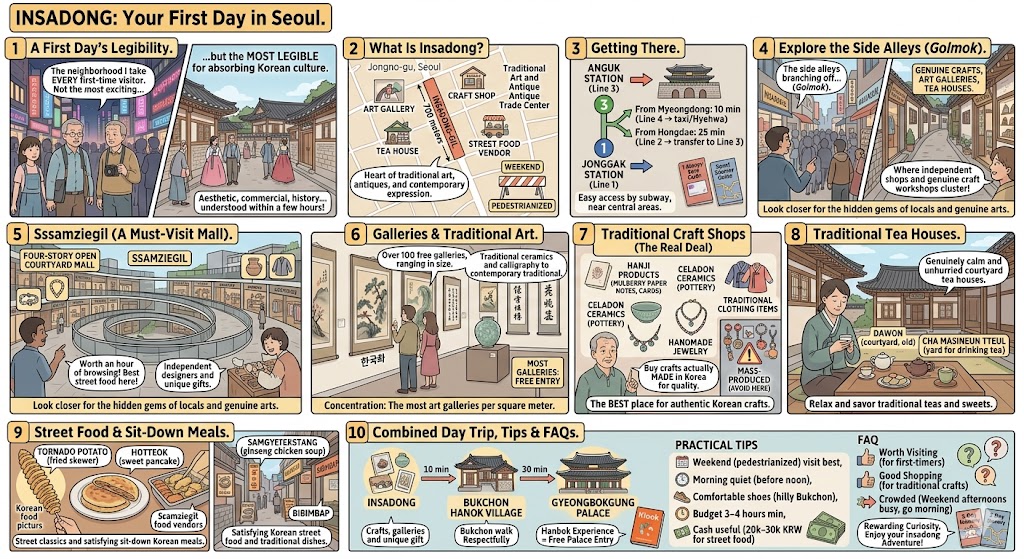
Insadong (인사동) is a neighborhood in Jongno-gu, central Seoul, built around a single main street — Insadong-gil — that runs roughly north-south for about 700 meters. It’s been the center of Seoul’s traditional art and antique trade for decades, and that identity has shaped everything around it: the galleries, the tea houses, the craft shops, the street food vendors.
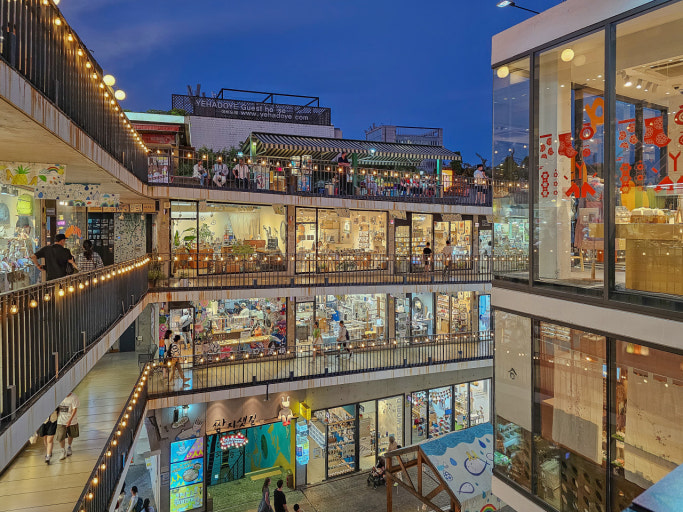
What makes Insadong genuinely interesting rather than just historically significant is how it has absorbed commercial pressure without completely losing its character. Seoul real estate is expensive, and neighborhoods close to the city center tend to homogenize quickly. Insadong has resisted this more successfully than most — partly through deliberate preservation policy, partly through the commercial logic of its own tourism appeal.
The street is pedestrianized on weekends, which transforms the experience significantly. If you have a choice, visit on a Saturday or Sunday afternoon.
Getting to Insadong
By subway: The easiest approach is Anguk Station (Line 3), Exit 6 — a five-minute walk brings you to the northern end of Insadong-gil. Alternatively, Jonggak Station (Line 1) puts you at the southern end.
From major Seoul areas:
- From Myeongdong: 10 minutes (Line 4 to Hyehwa, or taxi)
- From Hongdae: 25 minutes (Line 2 to Euljiro 3-ga, transfer to Line 3)
- From Gangnam: 30 minutes (Line 2 to Euljiro 3-ga, transfer to Line 3)
Read our T-Money Card Guide and Seoul Subway Guide before your first journey.
What to Do in Insadong
Walk Insadong-gil and the Side Alleys
The main street is the obvious starting point, but the side alleys — called golmok — are where the more interesting independent shops tend to cluster. The alleys branching off to the east and west of the main street have a higher concentration of genuine craft workshops, smaller galleries, and tea houses that attract locals rather than exclusively tourists.
Ssamziegil (쌈지길) is the main commercial complex about halfway down the street — a four-story open courtyard mall built specifically for independent designers and craft sellers. It’s worth an hour of browsing and has some of the best street food in the area at its ground-floor vendors.
Galleries and Traditional Art
Insadong has more art galleries per square meter than anywhere else in Seoul — over 100 at last count, ranging from major commercial galleries to single-room spaces showing emerging artists. Most are free to enter. The focus is predominantly on traditional Korean painting (한국화), calligraphy, and ceramics, alongside contemporary work that engages with traditional forms.
I’ve been coming to these galleries for decades. The quality varies considerably, but the concentration means you can cover significant ground in a short time and find something genuinely worth seeing at almost any visit.
Traditional Craft Shops
Insadong is the best place in Seoul to buy traditional Korean crafts that are actually made in Korea — hanji (traditional paper), celadon ceramics, handmade jewelry, wooden crafts, and traditional clothing items. The price premium over mass-produced alternatives is real but justified by quality.
A practical note: some shops near the main street entrance sell items that are manufactured in China rather than Korea. Walking further into the street and into the side alleys generally leads to more authentic products. If provenance matters to you, ask directly — reputable shops are straightforward about where their items come from.
Bukchon Hanok Village (북촌한옥마을)
A 15-minute walk from the northern end of Insadong brings you to Bukchon Hanok Village — one of the best-preserved collections of traditional Korean houses (hanok) in Seoul. The combination of Insadong and Bukchon makes for a natural full-day itinerary covering traditional Korean culture from two different angles.
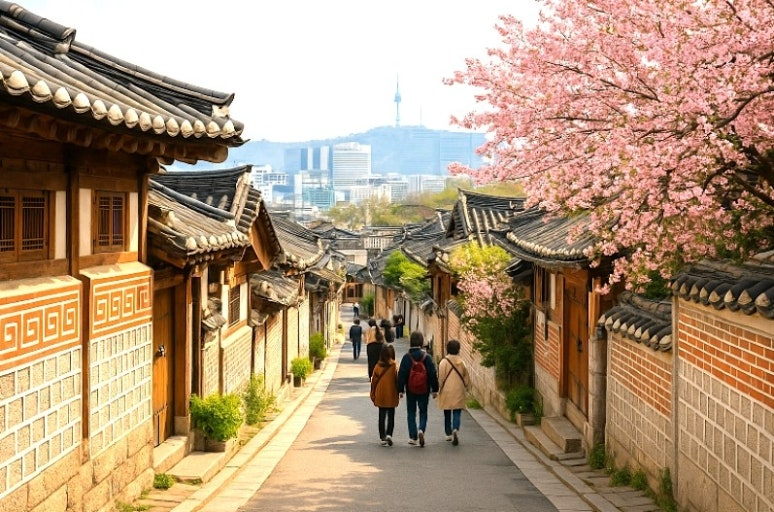
Read our Bukchon Hanok Village Guide for what to see there and how to navigate it respectfully — the village is a residential area and noise guidelines apply.
Gyeongbokgung Palace
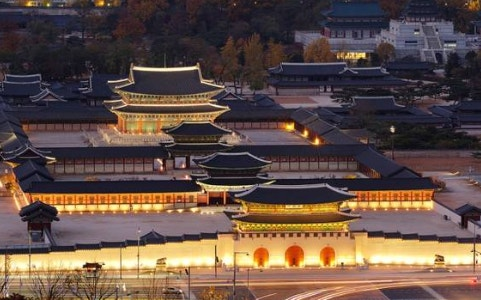
From the northern end of Insadong, Gyeongbokgung Palace is a 20-minute walk through Bukchon. The combination of all three — Insadong, Bukchon, Gyeongbokgung — is the single best traditional Seoul day trip available. Read our Gyeongbokgung Palace Guide for opening hours, admission, and the hanbok rental options available at the palace gates.
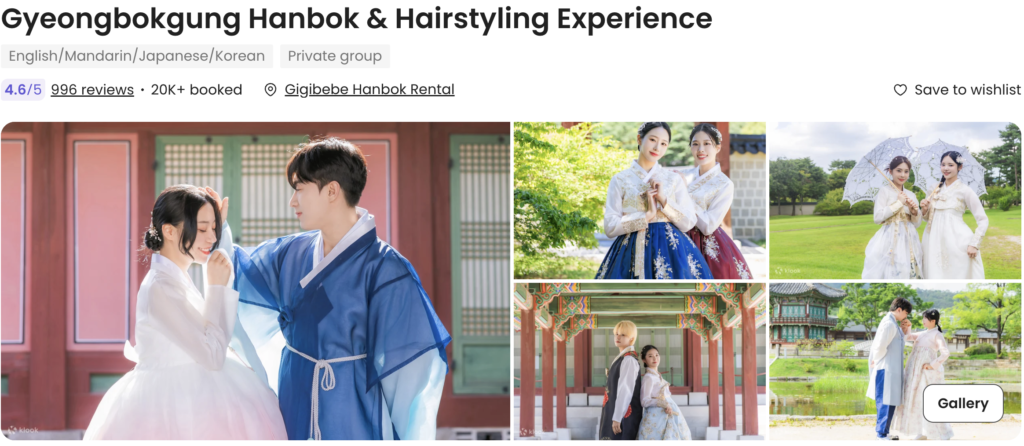
Book a. Gyeongbokgung Hanbok Experience on Klook — wearing hanbok while exploring the palace allows free entry and makes for genuinely memorable photos.
Where to Eat and Drink in Insadong
Traditional Tea Houses
Insadong has the highest concentration of traditional Korean tea houses (찻집) in Seoul. These are not cafés in the Western sense — they serve traditional teas (green tea, barley tea, chrysanthemum tea, jujube tea) alongside traditional Korean sweets (tteok, hangwa) in settings that are genuinely calm and unhurried.
Dawon (다원) — One of the oldest and most respected tea houses in Insadong, located in a traditional courtyard. The combination of the setting and the tea quality makes this worth a deliberate stop rather than an incidental one.
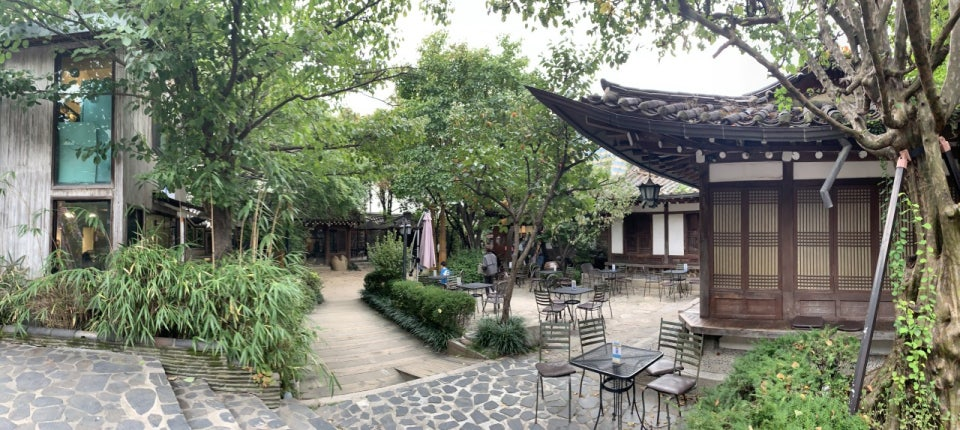
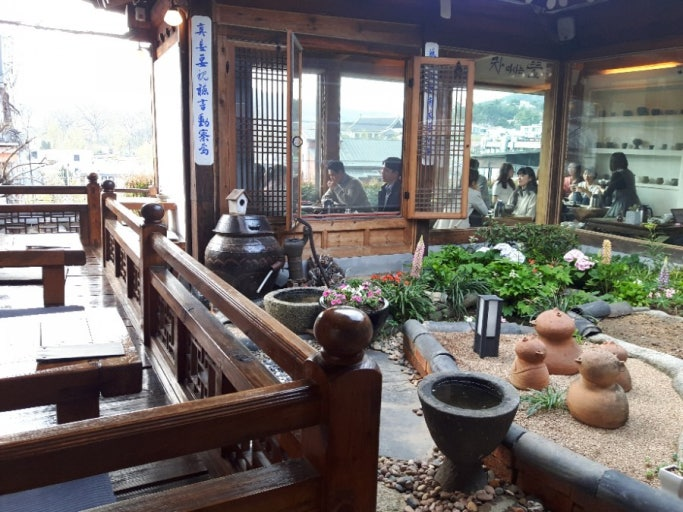
Cha Masineun Tteul (차 마시는 뜰) — A courtyard tea house tucked behind the main street, consistently cited by locals as one of the best in the area. The name translates roughly as “yard for drinking tea.”
Street Food
Insadong’s street food scene is worth navigating specifically. The most distinctive items:
Tornado potato (회오리 감자) — A whole potato spiral-cut and fried on a skewer. Found at vendors throughout the street. Crispy, simple, and satisfying in the way only street food can be.
Hotteok (호떡) — Sweet pancakes filled with brown sugar, cinnamon, and nuts. A Korean street food classic that’s particularly good in autumn and winter. The Insadong versions tend to be higher quality than those found near major tourist sites.
Ssamziegil food vendors — The ground floor of Ssamziegil has rotating food stalls serving traditional Korean snacks alongside more contemporary options. Worth circling before deciding what to order.
Sit-down meals:
The side streets around Insadong have a range of Korean restaurants serving traditional dishes. Samgyetang (ginseng chicken soup), bibimbap, and various jeon (Korean pancakes) are well-represented and generally well-executed compared to tourist-area equivalents. Read our Korean Food for Beginners Guide for a primer on what to order.
Shopping in Insadong
Insadong is the right place to buy traditional Korean souvenirs — the selection is more authentic and the quality more consistent than in Myeongdong or near major tourist sites.
What’s worth buying:
Hanji products — Traditional Korean paper made from mulberry bark. Notebooks, cards, gift wrapping, and decorative items made from hanji are available throughout the street. Genuinely beautiful and genuinely Korean.
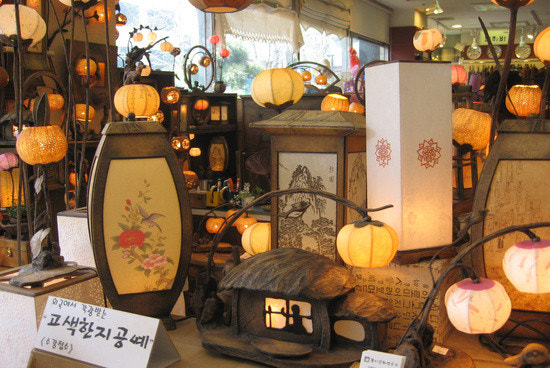
Celadon ceramics — Traditional Korean pottery in the distinctive blue-green glaze. Small pieces make practical souvenirs; larger pieces require careful packing but are worth it for serious collectors.
Handmade jewelry — Several workshops in the Insadong side alleys produce silver and mixed-metal jewelry incorporating traditional Korean design motifs. Better quality and more original than the mass-produced alternatives elsewhere.
Norigae (노리개) — Traditional Korean decorative pendants originally worn with hanbok. Beautiful as ornamental pieces and genuinely Korean in origin.
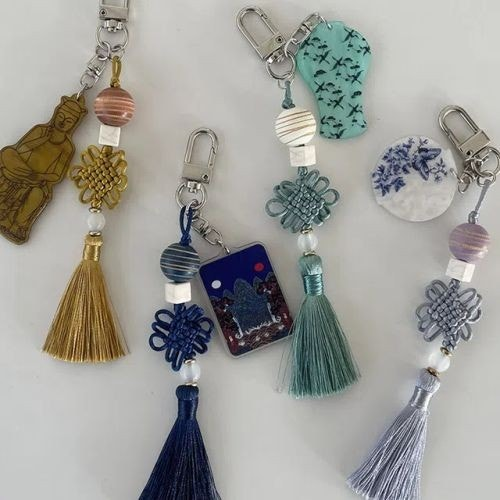
What to avoid: Mass-produced magnets, keychains, and phone cases near the main entrance to the street. These are available everywhere in Seoul and don’t represent Insadong’s actual character.
For broader Seoul shopping guidance, read our Shopping in Seoul Guide and Shopping Areas in Seoul Guide.
Insadong at Night
Insadong is primarily a daytime and early evening destination. The galleries close by 6–7pm, the tea houses by 9pm, and the street food vendors by 10pm on most evenings.
What remains open later is a smaller collection of bars and restaurants on the side streets — less distinctive than the daytime offer, but pleasant enough for a quiet evening meal or drink after a day of exploring.
If nightlife is the priority for the evening, Insadong is an easy taxi or subway ride from Hongdae (25 minutes) or Itaewon (20 minutes). Read our Seoul Nightlife Guide for the full picture.
Day Trip: Combining Insadong with Nearby Areas
Insadong + Bukchon + Gyeongbokgung — The classic traditional Seoul day. Start with Insadong in the morning, walk north through Bukchon in the afternoon, and finish at Gyeongbokgung before closing time (typically 6pm in summer). This itinerary covers more traditional Korean culture per hour than almost any other combination in the city.
Insadong + Changdeokgung Palace — Changdeokgung is a 15-minute walk northeast of Insadong and less crowded than Gyeongbokgung. The Secret Garden (후원) within the palace grounds requires a separate ticket and guided tour but is one of the most beautiful spaces in Seoul.
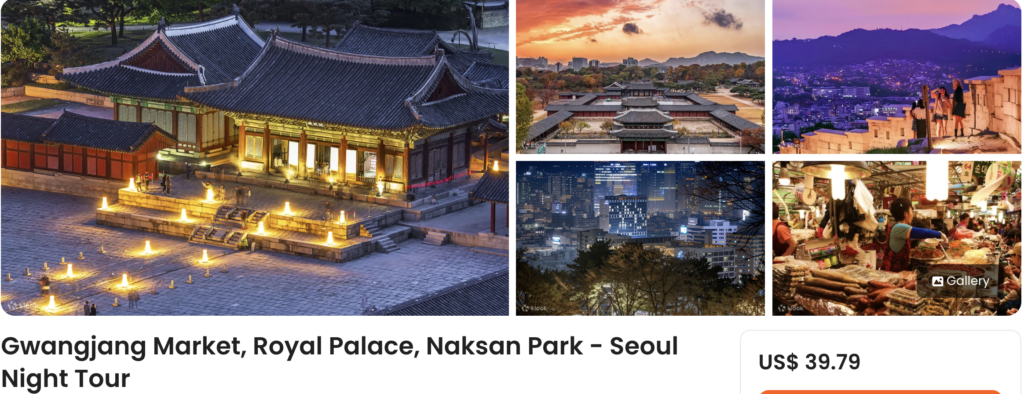
Insadong + Gwangjang Market — Gwangjang Market is a 20-minute walk southeast — a covered traditional market with exceptional street food. Combining both in a single day covers traditional art culture and traditional food culture in the same itinerary. Read our Gwangjang Market Seoul Guide for what to eat there.
Book a Gwangjang Market Food Tour on Klook to explore the market with a guide who knows exactly where to go.
For a complete Seoul itinerary, read our 5-Day Seoul Itinerary and Seoul 3-Day Itinerary.
Practical Tips
Visit on a weekend. The main street is pedestrianized on Saturdays and Sundays, which makes the experience significantly more comfortable and atmospheric. Weekday visits work fine but feel more commercial.
Go in the morning. Insadong is quieter before noon. The galleries are freshly opened, the tea houses have space, and the side alleys are navigable before the afternoon crowds arrive.
Wear comfortable shoes. The main street is flat, but the Bukchon extension involves significant uphill walking on uneven stone surfaces.
Budget 3–4 hours minimum. A rushed hour on the main street misses most of what makes Insadong worth visiting. The galleries, tea houses, and side alleys require time to appreciate properly.
Cash is useful. Most shops accept cards, but some smaller craft workshops and street food vendors prefer cash. Having ₩20,000–₩30,000 in cash available covers most purchases and street food.
FAQ
Is Insadong worth visiting? Yes, particularly for first-time visitors to Seoul. It’s the most concentrated and accessible introduction to traditional Korean material culture available in the city.
How long should I spend in Insadong? Three to four hours for a focused visit covering the main street, Ssamziegil, a tea house stop, and the key side alleys. A full day if combining with Bukchon and Gyeongbokgung.
Is Insadong good for shopping? For traditional Korean crafts and souvenirs, it’s the best option in Seoul. For fashion, electronics, or K-beauty, Myeongdong or Hongdae are better suited.
Is Insadong expensive? Street food is cheap (₩2,000–₩5,000 per item). Tea houses are moderately priced (₩8,000–₩15,000 per person). Craft shops range widely — small hanji items start at ₩3,000, quality ceramics run ₩30,000–₩200,000+.
Is Insadong crowded? Weekend afternoons can be very busy on the main street. Arriving before noon or exploring the side alleys significantly reduces crowd pressure.
Explore more: Bukchon Hanok Village Guide · Gyeongbokgung Palace Guide · Seoul 3-Day Itinerary

Korea Insider has lived in South Korea for 50 years and worked at international companies for over two decades — explaining Korean culture, food, and society to colleagues from the US, Europe, and Australia.
Internationally married with a Japanese spouse, Korea Insider brings both an insider’s depth and an outsider’s perspective to every topic on My Korea Tip.