
The Korea’s economic miracle is the fastest sustained economic growth in recorded history — and I watched most of it happen from the inside.
I was born in Seoul in 1975. My parents grew up in a Korea where electricity was rationed and imported goods were aspirational to the point of being almost mythological. By the time I finished university, Samsung was a global brand, Hyundai was the best-selling car in several European markets, and Korea was hosting the G20 summit. That happened in one generation. My generation. I didn’t fully appreciate the scale of it until I started working in multinational corporations and sat across from colleagues from Europe and the United States who had studied Korea’s development as an economic case study — while I had simply lived it.
What follows is my attempt to explain not just what happened, but why. Because the standard explanation — “hard work and government support” — is true and almost completely useless as an answer.
First, Understand How Bad It Was
This part is important, because without it the transformation makes no sense.
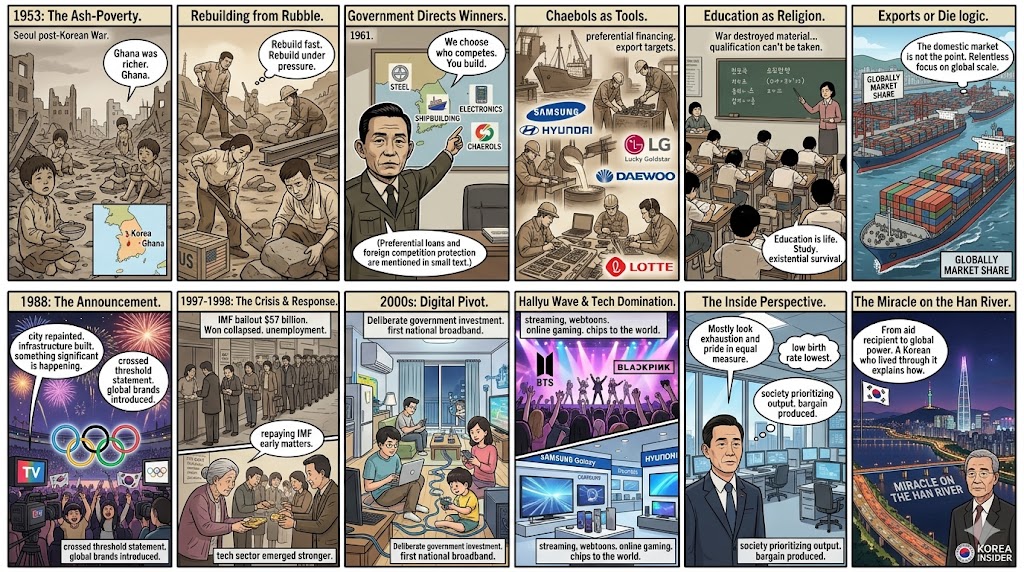
When the Korean War ended in 1953, South Korea’s GDP per capita was lower than Ghana’s. The country had been colonized by Japan for 35 years, liberated, and then immediately torn apart by a war that killed an estimated three million people and left the peninsula physically devastated. Seoul had been captured and recaptured four times. There was essentially no industrial base, no significant natural resources, and no obvious reason to believe the country would become anything other than a permanent aid recipient.
My grandparents’ generation rebuilt from that. Not comfortably, not gradually — they rebuilt fast, under pressure, in a country that knew it had an armed and hostile neighbor 40 kilometers from the capital. That geographic and historical reality shapes everything that follows. The urgency wasn’t manufactured. It was entirely real. You can read the history of the Japanese colonial period and understand how deeply that wound ran — and how much of Korea’s drive to industrialize was inseparable from a determination to never again be in a position of dependence.
By 1960, Korea’s per capita income was approximately $80 USD. By 2023, it was over $33,000. That is not a gradual improvement. That is a different country.
The Three Engines That Actually Drove It
1. A government that made decisions the private sector wouldn’t
The Park Chung-hee government, which came to power in 1961, made a choice that most democratic governments are structurally unable to make: it decided which industries Korea would compete in globally, and then directed the entire force of state financing, trade policy, and regulatory protection toward making that happen.
Steel, shipbuilding, petrochemicals, electronics. These weren’t sectors where Korea had natural advantages. They were sectors the government decided Korea would develop advantages in — and then engineered the conditions to make it happen. The chaebols — the family-controlled conglomerates that still define Korean corporate life — were the instrument of that policy. Samsung, Hyundai, LG, Daewoo, Lotte. They received preferential financing, government contracts, and protection from foreign competition in exchange for meeting export targets.
I want to be clear about something that often gets softened in the international telling: this was not a gentle or democratic process. The Park era involved serious political repression. Korean workers in the 1970s labored under conditions — hours, pay, workplace safety — that would be illegal today, and many of those who protested those conditions paid a severe personal price. The economic miracle was real. The human cost attached to it was also real. Koreans hold both things simultaneously in a way that outside observers, who tend to want a cleaner narrative, often find uncomfortable.
2. Education as the national religion
If you want to understand Korean education culture, you have to understand it as an economic survival strategy, not just a cultural quirk. My parents’ generation made education the family priority because they had watched a war destroy everything material — property, businesses, savings — and they understood that the one thing that couldn’t be taken from a person was their qualifications.
Korea’s literacy rate went from approximately 22% at the end of Japanese colonial rule to over 97% within two decades. University enrollment expanded massively through the 1970s and 80s. Engineering and technical education in particular received direct government investment. The result was a human capital pipeline that fed the chaebol expansion and the export machine that followed.
I went through this system. The Korean work ethic that Western colleagues find almost incomprehensible doesn’t come from nowhere — it comes from growing up in a culture that treated education and professional performance as existential, not aspirational.
3. Exports as the only viable strategy
Korea is a small country with almost no natural resources. There is no oil, no significant mineral wealth, no agricultural surplus to sell. The only thing Korea could produce and sell to the world was manufactured goods — and that required competing on quality and price against countries with decades of head start.
The export obsession that still defines Korean corporate culture today — the relentless focus on global market share, the willingness to price aggressively, the preference for scale over margin — is a direct product of that constraint. Samsung didn’t become the world’s largest memory chip producer by focusing on the domestic market. It became the largest producer by deciding, early, that the domestic market wasn’t the point.
Working in multinational corporations in Korea for over two decades, I’ve seen this mentality operate from the inside. Korean companies negotiate differently, plan differently, and measure success differently from their Western counterparts — and almost all of those differences trace back to the export-or-die logic that shaped the industry’s formative decades.
The Inflection Points That Changed Everything
1988 Seoul Olympics
The 1988 Olympics were not just a sporting event in Korea. They were a statement — a deliberate announcement to the world that Korea had crossed a threshold. I was 13 years old. I remember the city being repainted, infrastructure being built at a pace that felt impossible, and a palpable sense that something significant was happening. For a country that had been defined internationally by war and poverty, hosting the Olympics was a recalibration of the national identity.
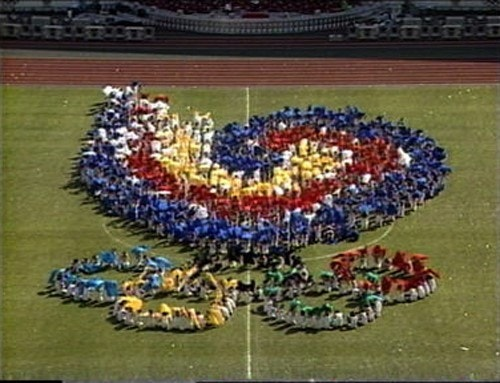
The global television exposure introduced Korean brands — Samsung, Hyundai, Lucky Goldstar (later LG) — to audiences that had never heard of them. It opened Korea to foreign investment and began the gradual opening of markets that had been protected since the 1960s.
1997-1998 IMF Crisis
This one is harder to frame as a positive inflection point, because it wasn’t. The Asian financial crisis hit Korea with particular severity — the won collapsed, unemployment spiked, major chaebols including Daewoo went bankrupt, and Korea required an IMF bailout of $57 billion. I was in my early 20s and entering the job market. The crisis was not abstract.
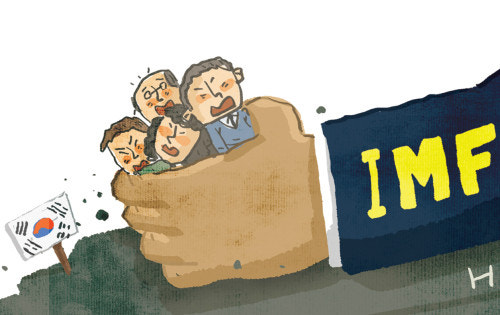
But the response to the crisis reshaped the economy in ways that ultimately strengthened it. Chaebol restructuring removed some of the most leveraged and least competitive businesses. Corporate governance improved under IMF conditions. The tech sector — less dependent on the debt-heavy structures that collapsed — emerged from the crisis relatively intact and began the acceleration that produced Samsung Electronics as a global powerhouse within a decade.
Korea repaid the IMF loan early. That detail matters more to Koreans than it probably registers internationally.
2000s: The Digital Pivot
Korea rolled out the world’s first national broadband infrastructure in the late 1990s and early 2000s — faster and more comprehensive than anything available in the United States or Europe at the time. This was again a deliberate government investment, not a market-led outcome. The result was that Korean companies developed digital products and services for a consumer base that was years ahead of global averages in connectivity and digital literacy.
This is why Korean entertainment — streaming, webtoons, online gaming — developed the way it did. Korea had the infrastructure, the audience, and the habits before most of the world caught up.
What It Looks Like From the Inside
People ask me what the miracle looks like from a Korean perspective, and my honest answer is that it mostly looks like exhaustion and pride in roughly equal measure.
The growth came at a cost — to the environment, to work-life balance, to political freedom in certain periods, and to the social fabric in ways Korea is still reckoning with. The birth rate that is now the lowest in the world is not a coincidence. It is, at least in part, the accumulated result of a society that spent several decades prioritizing economic output above almost everything else, and produced a generation of young people who looked at that bargain and decided it wasn’t one they wanted to make.
The Korea that visitors experience today — the K-pop, the food, the technology, the infrastructure — is the output of that process. The complicated interior of the process is what makes Korea worth understanding, not just visiting.
FAQ
What was Korea’s GDP per capita before the economic miracle? In 1960, South Korea’s GDP per capita was approximately $80 USD — lower than many sub-Saharan African nations at the time. By 2023, it exceeded $33,000 USD. That increase, sustained over six decades, is what economists call the Miracle on the Han River.
How long did Korea’s economic miracle take? The most intensive period of growth ran from roughly 1962 to 1996 — about 35 years. During that period, Korea averaged annual GDP growth of around 8-9%. No country of comparable size has sustained that rate for that long.
Did Korea receive foreign aid during its development? Yes — significant US aid in the 1950s and early 1960s was critical to stabilizing the post-war economy. Japan also paid reparations under the 1965 normalization treaty, funds which the Korean government directed into infrastructure and industrial development. Both sources of external capital were important in the early phase.
Why didn’t other countries replicate Korea’s model? Several tried. The combination of factors that made it work in Korea — a highly educated population, a government willing to make long-term industrial bets, a specific geopolitical context that provided US market access and security guarantees, and a cultural orientation toward collective sacrifice for national advancement — has proven difficult to replicate in full. Singapore comes closest; others have had partial success.
Is Korea’s economic growth continuing today? Korea is now a mature, high-income economy and no longer grows at miracle-era rates. Current challenges include demographic decline, high household debt, and the pressure of Chinese industrial competition. The next phase of Korean economic development — probably centered on advanced semiconductors, biotech, and cultural exports — is being actively contested and is far from certain.
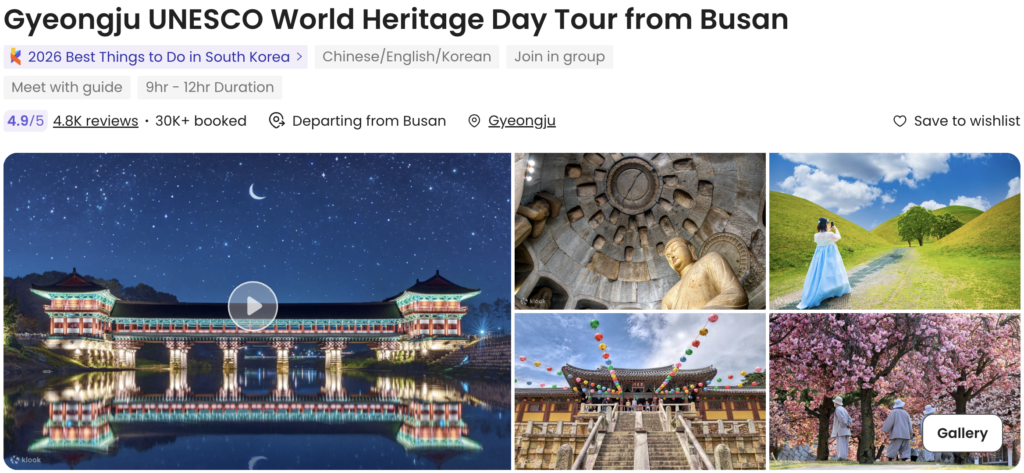
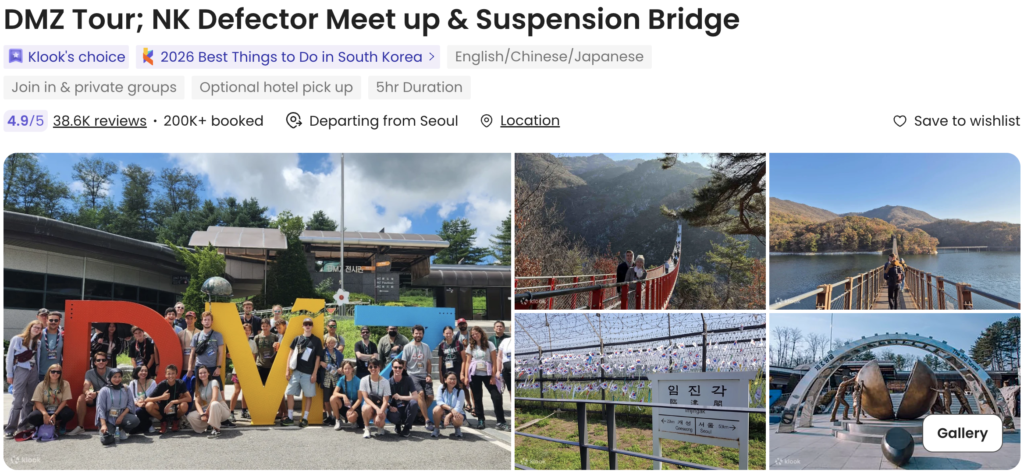
See the Miracle in Person
Korea’s economic transformation isn’t abstract history — it’s written into the landscape. These three experiences give you the clearest sense of how far this country has come, and what it came from.

Korea Insider has lived in South Korea for 50 years and worked at international companies for over two decades — explaining Korean culture, food, and society to colleagues from the US, Europe, and Australia.
Internationally married with a Japanese spouse, Korea Insider brings both an insider’s depth and an outsider’s perspective to every topic on My Korea Tip.