
Korean food going global is the kind of phrase that sounds like marketing until you actually look at the numbers. There are now over 40,000 Korean restaurants operating outside Korea. Kimchi is stocked in mainstream supermarkets across the United States, Australia, and most of Western Europe. Buldak ramen regularly sells out on Amazon. The Michelin Guide has awarded stars to Korean restaurants in New York, London, and Paris. And none of this existed in any meaningful form twenty years ago.
I was born in Seoul in 1975, which means I grew up eating Korean food before anyone outside Asia had an opinion about it. I remember the first time a foreign colleague at my company — a British executive visiting Seoul in the early 2000s — tried samgyeopsal at a restaurant near our office. He spent the rest of the meal asking why nobody had told him about this. That reaction, which I witnessed dozens of times over the years, has since scaled to a global audience of hundreds of millions. The curiosity is real. The question worth asking is why it took this long — and what actually drove it.
The Numbers Are Hard to Argue With
Let me put some figures on this before going further.
- Korean restaurant revenue outside Korea exceeded $10 billion USD in 2023, according to the Korea Food Industry Association
- Kimchi exports hit a record $160 million USD in 2023 — nearly double the figure from a decade earlier
- Buldak (fire noodles by Samyang) generated over $1 billion USD in global sales in 2024 alone
- Korean cuisine was the #1 most searched international food category on Google in the United States in 2023
- The number of Korean restaurants in the US grew by over 60% between 2015 and 2024
These aren’t niche figures. Korean food has crossed from ethnic restaurant circuit to mainstream global cuisine — and that crossing happened faster than almost any other national food culture in modern history. French cuisine took centuries. Japanese food took decades. Korean food did it in roughly fifteen years.
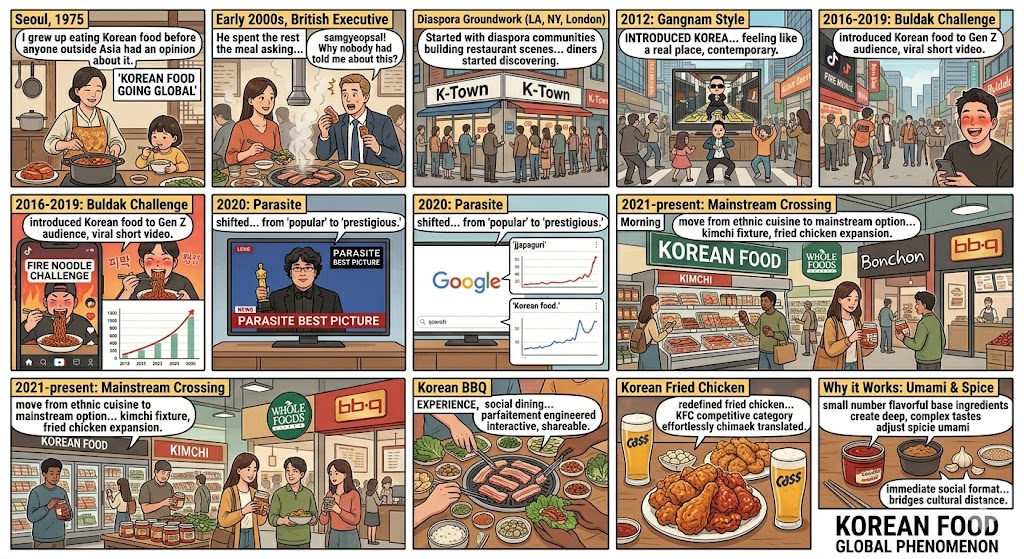
How It Actually Happened: The Real Timeline
The standard explanation gives the credit to K-pop and K-dramas — the idea that the Hallyu Wave created cultural interest in Korea that pulled food along with it. That’s partly true. But it’s not the full story, and it gives too little credit to the food itself.
2000s: The diaspora lays the groundwork
Korean food’s global expansion started not with celebrity chefs or Netflix documentaries, but with Korean diaspora communities in Los Angeles, New York, Sydney, and London quietly building restaurant scenes that non-Korean diners started discovering. Koreatown in Los Angeles — home to the largest Korean population outside Korea — had been developing a serious restaurant culture since the 1970s. By the 2000s, it was genuinely one of the best places to eat in the city, and food writers were starting to notice.
2012: Gangnam Style and the attention shift
PSY’s Gangnam Style introduced Korea to a global audience that had minimal prior awareness of the country. It sounds trivial in the context of a food history, but it matters: for millions of people outside Asia, it was the first time Korea felt like a real, contemporary place rather than a geopolitical abstraction. Cultural curiosity followed. Food was a natural entry point.
2016–2019: Buldak goes viral
The “Fire Noodle Challenge” — in which people filmed themselves attempting to eat Samyang’s extraordinarily spicy buldak ramen — spread across YouTube and eventually Instagram and TikTok at a scale that no marketing budget could have manufactured. The buldak phenomenon introduced Korean food to a global Gen Z audience through exactly the format that generation pays attention to: short video, participatory, slightly dangerous-looking. Samyang’s export revenue quadrupled between 2016 and 2019.
2020: Parasite and the Michelin moment
Bong Joon-ho’s Parasite winning the Academy Award for Best Picture in 2020 was a cultural inflection point that extended well beyond film. Food writers immediately noted the significance of jjapaguri — the dish featured in the film — and searches for Korean food spiked globally within 24 hours of the ceremony. It was the moment that Korean culture shifted, in global perception, from “popular” to “prestigious.”
In the same period, Michelin stars began appearing on Korean restaurants outside Korea — not at Korean-American fusion concepts, but at restaurants serving recognizably Korean food prepared with serious technique.
2021–present: The mainstream crossing
Post-pandemic, Korean food completed its move from ethnic cuisine to mainstream option in major Western markets. Whole Foods made kimchi a permanent fixture in its refrigerated section. Korean fried chicken chains — including Bonchon and bb.q Chicken — expanded aggressively across North America and Europe. Korean tasting menus appeared at restaurants that had previously served exclusively European cuisine. The conversation shifted from “have you tried Korean food?” to “which Korean restaurant do you prefer?”
The Foods That Led the Charge
Not all Korean food went global at the same pace or for the same reasons. A few specific dishes did the heavy lifting.
Kimchi
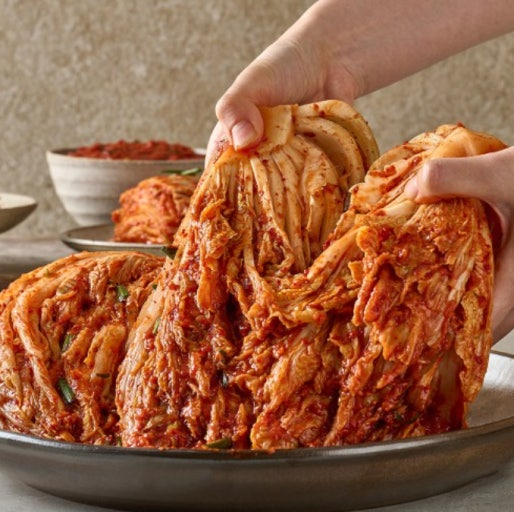
Kimchi went global not just as a food but as a health product. The fermented vegetable dish — spicy, funky, probiotic-rich — landed at exactly the moment that Western consumers became obsessed with gut health, fermentation, and functional foods. Kombucha, kefir, sauerkraut: kimchi slotted into an existing trend and offered something more interesting than any of them. I find it mildly amusing that a food my grandmother made in earthenware pots buried in the backyard is now sold in glass jars at Whole Foods for twelve dollars. She would have had thoughts about that.
Korean BBQ
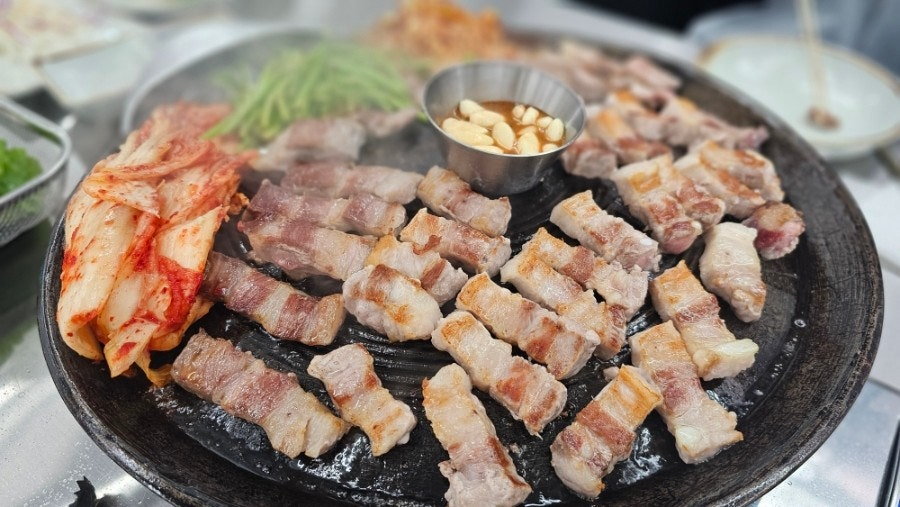
Korean BBQ succeeded globally because it’s not just food — it’s an experience. The tabletop grill, the communal cuts of meat, the banchan spread, the ssamjang, the wrapping ritual. In an era of Instagram and social dining, Korean BBQ is almost perfectly engineered for the way people want to eat now: interactive, shareable, photogenic, and designed for groups. It also scaled well. A Korean BBQ restaurant is harder to make badly than many other cuisine types, which meant the global expansion was relatively consistent in quality.
Korean Fried Chicken
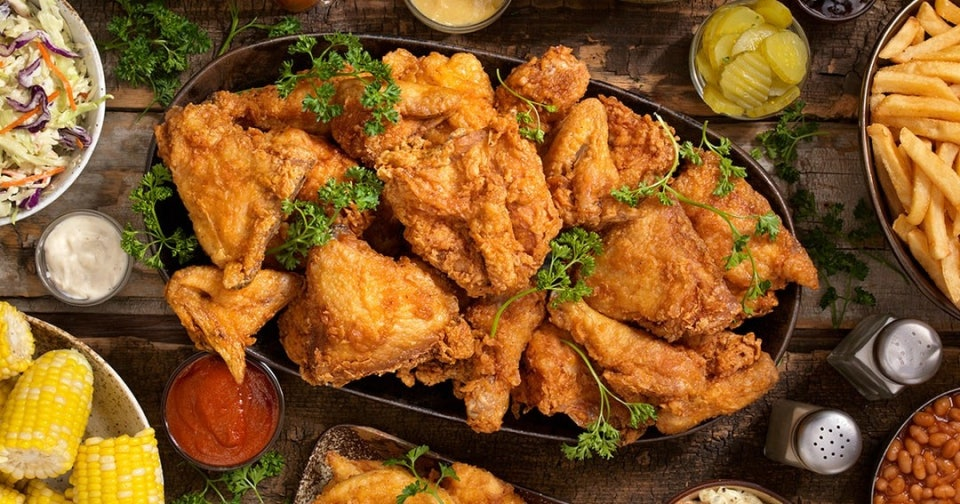
Korean fried chicken — double-fried, thinner-skinned, crispier, saucier than its American counterpart — arrived in Western markets and immediately redefined what fried chicken could be. The chimaek combination (chicken and beer) translated effortlessly to sports-watching cultures. KFC — the Korean kind — is now a competitive category in markets where fried chicken has been a domestic institution for decades. That is a remarkable thing to have achieved.
Buldak / Instant Noodles
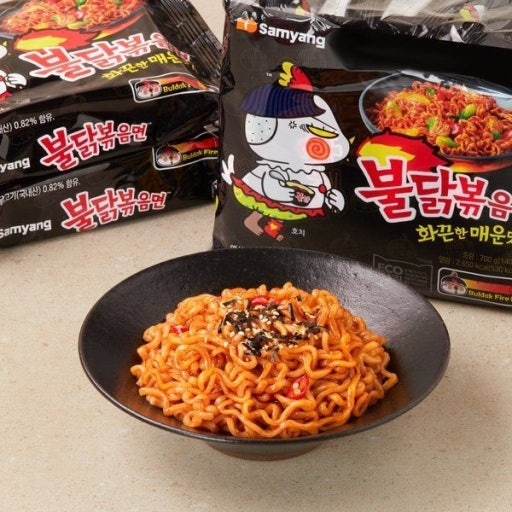
The viral trajectory of buldak is worth studying as a marketing case study independent of the food itself. Samyang made a product so extreme it generated its own challenge culture, which generated its own content ecosystem, which turned a Korean convenience store product into a globally recognizable brand. The shelf space that buldak now occupies in international supermarkets was purchased not through advertising but through YouTube.
Why Korean Food Works Globally
Some national cuisines travel well and some don’t. Korean food, it turns out, travels exceptionally well — for reasons that become obvious once you understand the flavor architecture.
Korean cooking is built on a small number of intensely flavorful base ingredients — gochujang (fermented chili paste), doenjang (fermented soybean paste), ganjang (soy sauce), garlic, sesame — that create deep, complex tastes without requiring elaborate technique from the diner. The result is food that is simultaneously unfamiliar and immediately satisfying. The spice levels are adjustable. The umami is immediate. The social format — shared dishes, group dining, food as the vehicle for conversation — maps onto how most of the world already prefers to eat.
I’ve spent over two decades in boardrooms with international colleagues, and food has always been the fastest way to bridge cultural distance. Korean food, in my experience, closes that distance faster than almost anything else. You put a plate of samgyeopsal on a table and the conversation that follows is different from the one you’d have over a hotel restaurant meal.
What This Looks Like from Inside Korea
From where I sit, the globalization of Korean food is genuinely gratifying — and occasionally puzzling. There is a version of Korean cuisine being sold in Western cities that Koreans would find unrecognizable: oversweetened, underseasoned, texturally compromised to accommodate unfamiliar palates. That is an inevitable part of any cuisine’s global journey, and it doesn’t bother me as much as it does some people. The gateway version of any food culture has value if it leads people toward the real thing.
What does strike me is how the global attention has changed how Koreans think about their own food culture. For a long time, Korean food was simply food — something you ate because you were hungry, not something you discussed. The current generation of young Korean chefs, returning from training abroad and opening restaurants in Seoul, bring a self-consciousness about Korean cuisine that is entirely new. The result is a Seoul restaurant scene that has become, in the last decade, one of the most interesting in Asia. The global attention didn’t just export Korean food outward. It reflected something back inward that changed the domestic conversation too.
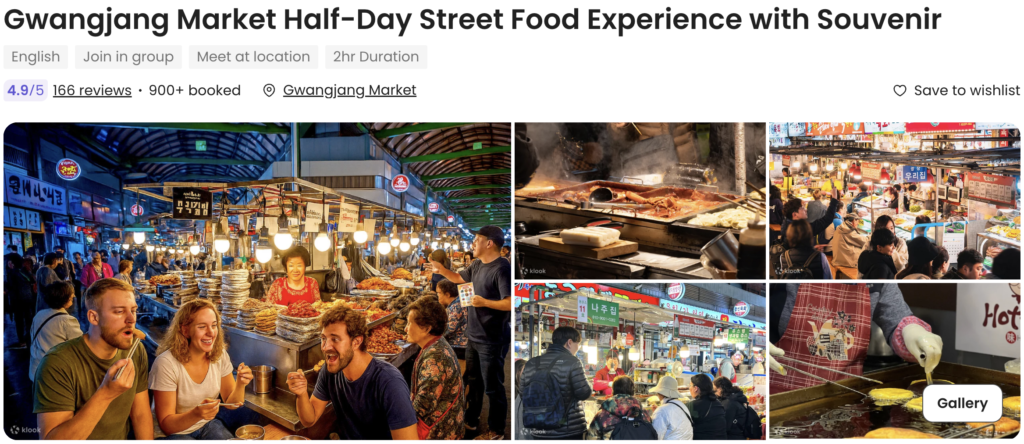
If you want to experience Korean food at its source, Gwangjang Market and a proper Korean street food crawl through the back streets of Mapo or Mangwon will tell you more about what this cuisine actually is than any Michelin-starred interpretation of it.
FAQ
What Korean food is most popular internationally? Korean BBQ and Korean fried chicken lead in restaurant format globally. Kimchi is the most widely distributed Korean product in international supermarkets. Buldak ramen has the largest social media footprint of any Korean food product.
Is Korean food healthy? Korean cuisine is generally vegetable-heavy, fermentation-forward, and lower in processed sugar than many Western food cultures. Kimchi and other fermented dishes have documented probiotic benefits. That said, Korean food also includes significant quantities of red pepper, sodium, and — in the BBQ context — grilled fatty meats. It is a varied cuisine, not a health food category.
Why did Korean food become popular so recently? The timing reflects the convergence of several factors: Korean diaspora communities building quality restaurant scenes, the Hallyu Wave creating cultural interest in Korea, social media providing a distribution mechanism for viral food content, and a global shift toward fermented and umami-rich foods that happened to align with Korean flavor profiles.
What Korean dishes should a first-time visitor try? Samgyeopsal (grilled pork belly), bibimbap, sundubu jjigae (soft tofu stew), japchae (glass noodles), and tteokbokki (spicy rice cakes) cover a reasonable range of what Korean cooking does well. Beyond that, eat whatever the person next to you is having.
Are Korean restaurants outside Korea authentic? It varies significantly. Korean-American restaurants in cities with established Korean communities — Los Angeles, New York, Toronto — tend to be more authentic than Korean restaurants in markets without Korean diaspora populations. The best Korean food outside Korea is generally found wherever Koreans themselves choose to eat, which is a useful heuristic in any unfamiliar city.
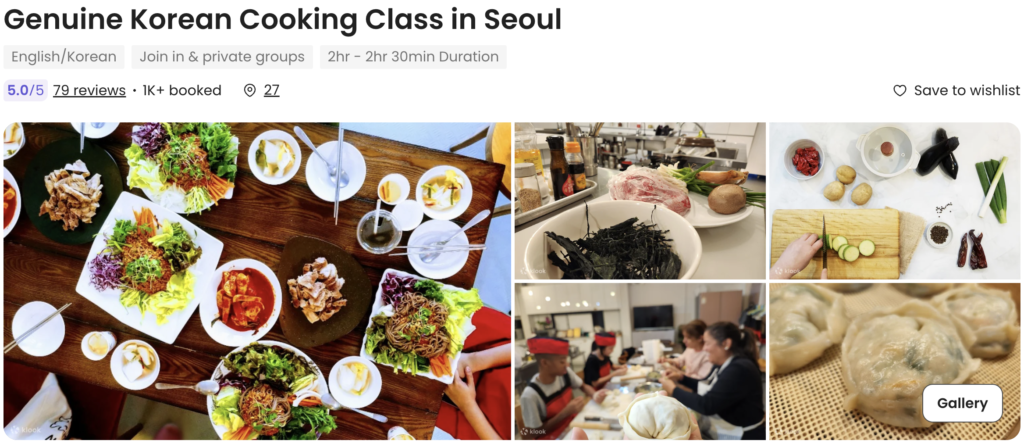
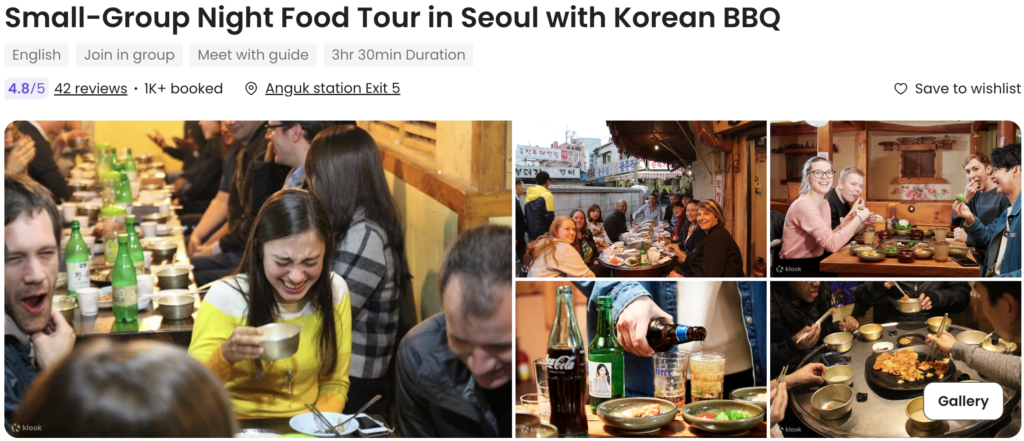
Eat It at the Source
Reading about Korean food and actually eating it in Seoul are two entirely different experiences. These are the best ways to do it properly.

Korea Insider has lived in South Korea for 50 years and worked at international companies for over two decades — explaining Korean culture, food, and society to colleagues from the US, Europe, and Australia.
Internationally married with a Japanese spouse, Korea Insider brings both an insider’s depth and an outsider’s perspective to every topic on My Korea Tip.