
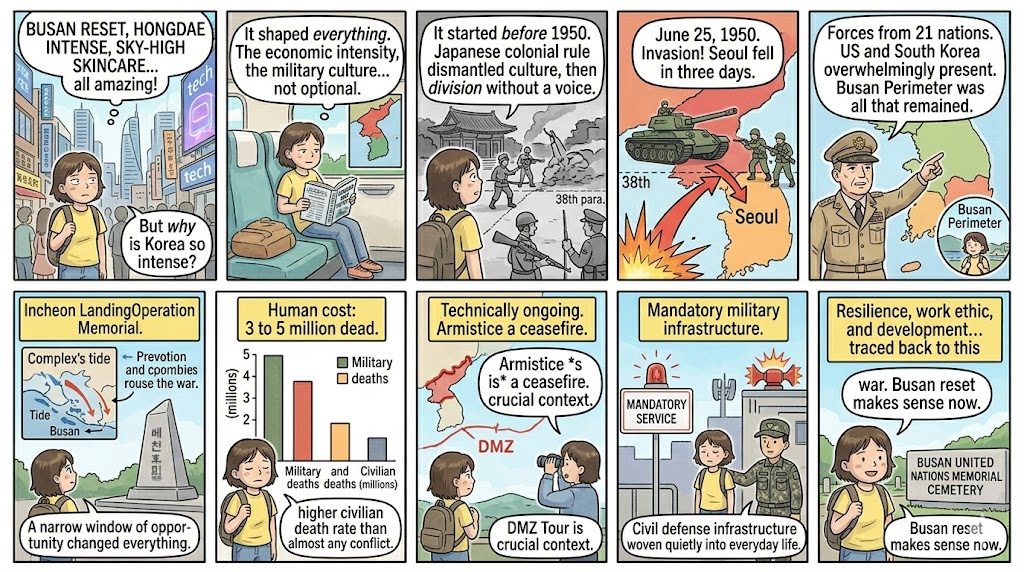
The Korean War is the conflict that shaped everything you see in modern South Korea — the economic intensity, the military culture, the specific urgency behind the development that turned one of the world’s poorest countries into a global technology exporter within a single generation. Understanding it is not optional context for a Korea trip. It is the context for almost everything else.
I was born in Seoul in 1975 — 22 years after the armistice that ended the active fighting. My parents’ generation grew up in the war’s immediate aftermath. My grandparents lived through it. The specific quality of Korean resilience, the work ethic that foreign colleagues find almost incomprehensible, the defensive infrastructure woven quietly into everyday life — all of it traces back to three years of conflict that killed an estimated three million people and left the peninsula physically devastated. The war officially ended in ceasefire, not peace treaty. It has not technically ended yet.
Before the War: The Context That Made It Possible
The Korean War did not begin in 1950. It began, in the sense that matters, with 35 years of Japanese colonial rule that ended in 1945, followed by an immediate division of the peninsula that the Korean people had no meaningful voice in.
The Japanese colonial period (1910–1945) dismantled existing Korean political structures, suppressed language and culture, and extracted economic resources for Japanese industrial development. When Japan surrendered at the end of World War II, Korea expected independence. What it received instead was division — the Soviet Union occupying the north above the 38th parallel, the United States occupying the south below it, each installing governments aligned with their respective political systems.
The division was intended as a temporary administrative arrangement pending a unified government. It became permanent within five years, as the two occupation powers installed ideologically incompatible systems that made reunification negotiations functionally impossible. By 1948, there were two separate Korean states: the Republic of Korea in the south, and the Democratic People’s Republic of Korea in the north. Both claimed legitimate authority over the entire peninsula. Both were correct that the other’s claim was illegitimate.
The War: What Actually Happened
On June 25, 1950, North Korean forces crossed the 38th parallel with approximately 75,000 soldiers and Soviet-supplied armour. The invasion was swift and initially devastating — Seoul fell within three days.
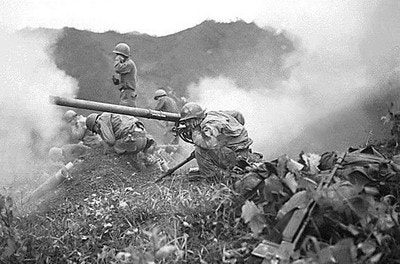
The United Nations Security Council, in the absence of the Soviet representative who was boycotting meetings over a separate dispute, authorized military intervention under US command. Forces from 21 nations eventually participated, though the US and South Korea provided the overwhelming majority of troops and casualties.
By September 1950, UN forces had been pushed to a small perimeter around Busan — the only major South Korean city not to fall. The Korea Economic Miracle that followed was built partly from the specific character that surviving this period required; Busan’s role as the last city standing has shaped its identity ever since.
General Douglas MacArthur’s amphibious landing at Incheon in September 1950 reversed the military situation dramatically. UN forces pushed north, recaptured Seoul, and advanced toward the Chinese border. China entered the war in October 1950 with approximately 300,000 troops, pushing UN forces back south. Seoul changed hands four times during the conflict.
The front lines stabilised near the 38th parallel in mid-1951. Peace negotiations began that year and continued for two years while fighting continued. The armistice was signed on July 27, 1953.
The Human Cost
The numbers are difficult to absorb.
South Korean military deaths: approximately 137,000. US military deaths: 36,500. Deaths from other UN nations: approximately 3,000. North Korean military deaths: estimated 215,000–350,000. Chinese military deaths: estimated 180,000–400,000.
Civilian deaths are harder to calculate but are estimated at between 2 and 3 million across the peninsula. The Korean War had a higher civilian death rate relative to total casualties than almost any conflict of the 20th century. Villages were destroyed, families permanently separated across what became the demilitarized zone, and the infrastructure of both Korean states was comprehensively demolished.
Approximately 10 million Koreans were separated from family members by the division — parents from children, siblings from siblings — with no mechanism for contact, reunion, or even information exchange for decades. Some of these families have held reunion events in recent years through inter-Korean agreements. Most never had the opportunity.
My grandparents’ generation carries this history not as historical knowledge but as lived experience. The specific quality of Korean family attachment — the intensity of the bonds, the weight given to familial obligation — is incomprehensible without understanding what it meant to lose family permanently across a line drawn by foreign powers.
Why It Still Matters: The Unfinished War
The Korean War did not end in 1953. The armistice agreement is a ceasefire — a suspension of hostilities — not a peace treaty. South Korea and North Korea remain technically at war. The demilitarized zone that divides the peninsula is not a border between peacetime states. It is the front line of a conflict that has been paused for over 70 years.
This is not a legal technicality with no practical consequence. It means that South Korea maintains mandatory military service for all male citizens — every Korean man serves approximately 18–21 months in the military as a fundamental civic obligation shaped directly by the reality of ongoing confrontation. It means that civil defense infrastructure — emergency sirens, underground shelters, drills — is woven into the physical fabric of Korean cities. It means that North Korea is not simply a neighbouring country but an armed opponent separated from Seoul by 40 kilometres.
Standing at the DMZ — as every visitor to Korea should — makes this immediate rather than abstract. The distance between the two Koreas is not metaphorical. It is a specific number of kilometres, measurable on a map, with armed soldiers standing watch on both sides of a line that was supposed to be temporary.
Korean War Sites Every Visitor Should Know
Korean War Memorial Museum, Seoul
Located in Yongsan, the Korean War Memorial Museum is one of the most significant military history museums in Asia and admission is free. The outdoor grounds display full-scale aircraft, armoured vehicles, and naval vessels from the conflict. The indoor galleries document the war chronologically with extraordinary specificity — maps, personal accounts, equipment, and the kind of archival detail that makes the human scale of the conflict comprehensible in ways that statistics alone cannot.
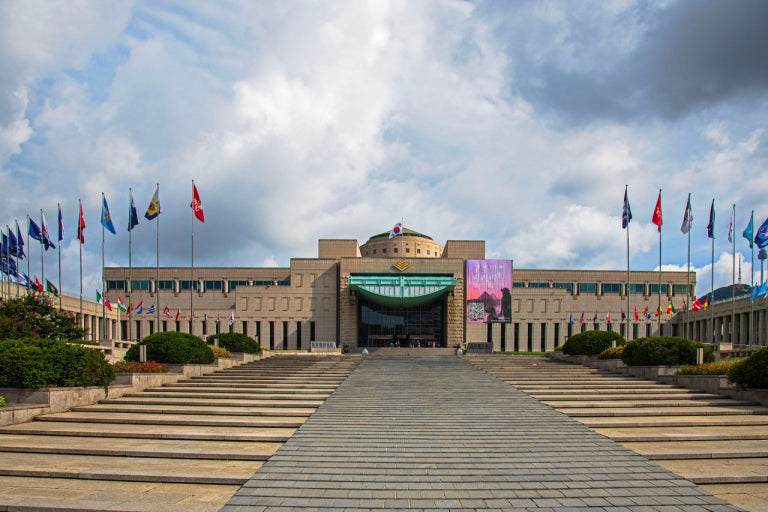
Budget three hours minimum. Go early in the week when the crowds are lightest and the emotional weight of the experience has space to land.
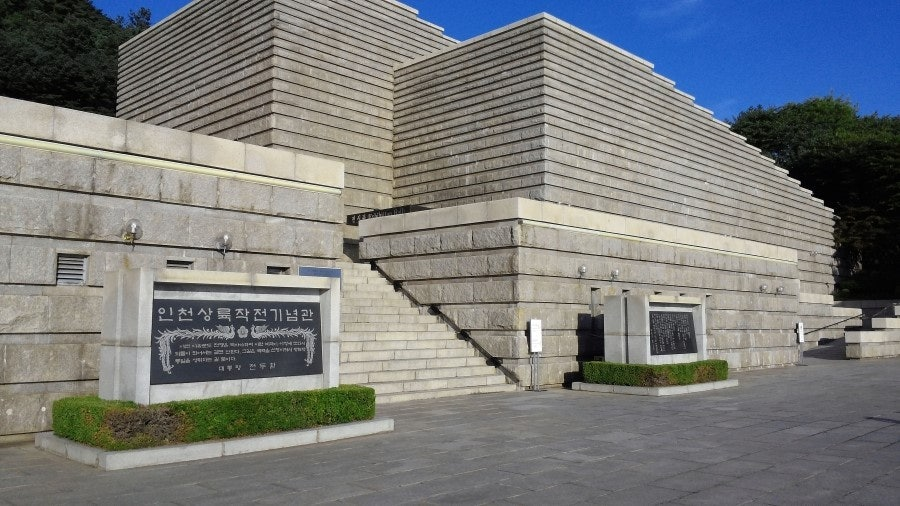
Incheon Landing Operation Memorial Hall
The port of Incheon was the site of MacArthur’s amphibious landing that reversed the war’s initial trajectory. The memorial hall documents the operation with specific attention to the tactical brilliance and extraordinary risk of the assault — the tides at Incheon are among the most extreme on the Korean peninsula, and the landing window was narrow enough that failure would have meant catastrophic loss. The memorial contextualises Incheon in ways that its current identity as an airport gateway city obscures entirely.
The DMZ and Panmunjom
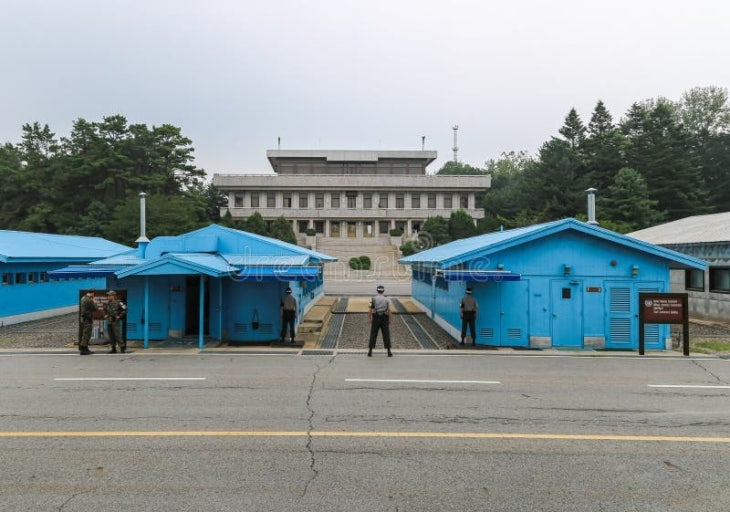
The DMZ Tour from Seoul remains the single most important Korean War-related experience available to visitors. Standing at the armistice line, entering the blue conference buildings at Panmunjom where negotiations were conducted, and looking through binoculars at the North Korean village visible from Dora Observatory — these experiences provide physical and emotional context that no museum visit replicates.
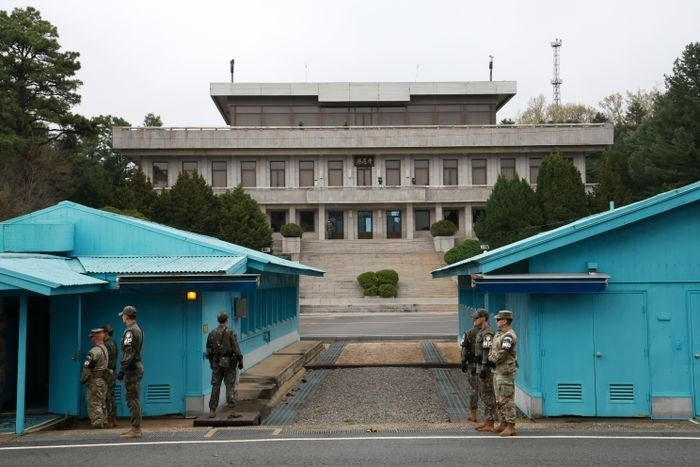
Book through a licensed operator well in advance. Access to the Joint Security Area requires additional clearance and a separate tour type from standard DMZ visits.
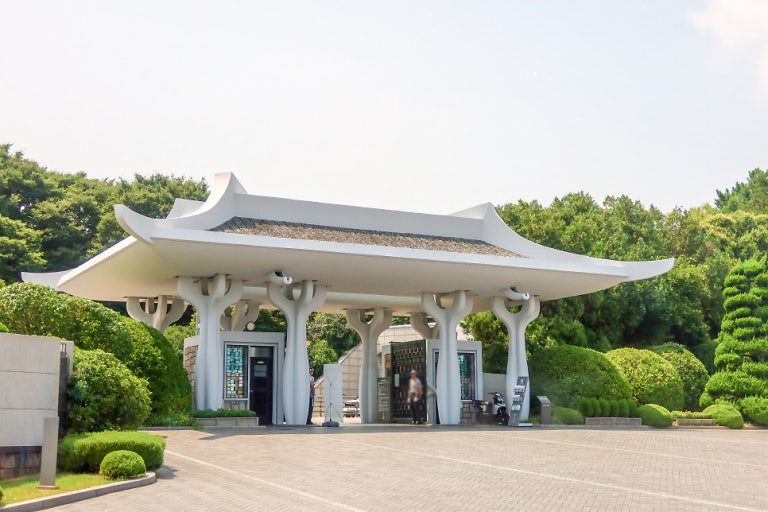
Busan United Nations Memorial Cemetery
The only UN military cemetery in the world, containing the remains of 2,300 soldiers from 11 nations who died during the Korean War. The grounds are maintained jointly by South Korea and the UN and have a quality of silence that is qualitatively different from tourist sites. A genuinely moving place to spend an hour — particularly for visitors from the nations whose soldiers are interred there.
What Koreans Think About the War Today
Korean attitudes toward the Korean War are more complex than outside observers typically assume.
The war is taught in Korean schools as a fundamental national experience — not as ancient history but as something that shaped living generations. The separation of families across the DMZ remains an active emotional and political issue for Koreans in ways that no equivalent exists in most countries. Reunification — whether possible, desirable, and on what terms — is a genuine political question in South Korean public life rather than a settled matter.
The generational divide is significant. Koreans who grew up in the immediate post-war decades have a relationship to the conflict that is direct and personal. Koreans of my generation have inherited the consequences without the direct experience. Younger Koreans, who grew up in a prosperous and internationally connected Korea, have a more variable relationship with a conflict that is now more than 70 years in the past.
What unites most Koreans is the recognition that the war is not finished — that the armistice is not peace — and that the specific quality of South Korean development is inseparable from the urgency produced by that reality. The economic miracle that observers find remarkable from the outside was, from the inside, driven partly by the understanding that failure had specific and proximate consequences.
FAQ
When did the Korean War start and end? The Korean War began on June 25, 1950, when North Korean forces crossed the 38th parallel. The armistice was signed on July 27, 1953. A peace treaty has never been signed — the war is technically ongoing as a suspended conflict.
Who fought in the Korean War? South Korea, the United States, and forces from 20 other nations under UN command fought against North Korea and China. The Soviet Union provided material support to North Korea but did not commit ground forces officially.
How many people died in the Korean War? Estimates vary but total deaths — military and civilian across all parties — are generally estimated at between 3 and 5 million. South Korean military deaths were approximately 137,000; US military deaths were approximately 36,500.
Is the Korean War the “Forgotten War”? The Korean War is called the Forgotten War in the United States, where it received less cultural and historical attention than World War II and Vietnam. It is not forgotten in Korea — it is a defining national experience that shaped the country’s entire subsequent development.
Can visitors see Korean War sites? Yes. The Korean War Memorial Museum in Seoul is free and excellent. The DMZ and Panmunjom are accessible through organized tours. The UN Memorial Cemetery in Busan is open to visitors. Incheon has a Landing Operation Memorial Hall.
Is it safe to visit Korea given the North Korea situation? Yes. South Korea has maintained stable civilian life throughout the decades of armistice, and Seoul’s daily reality is not one of visible military tension. The proximity of North Korea is a geopolitical reality that Koreans manage as background context rather than active threat.
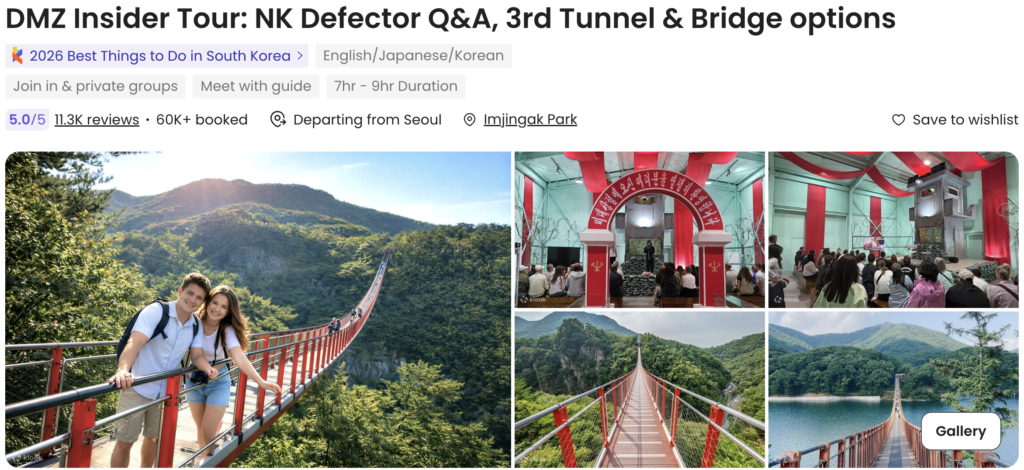
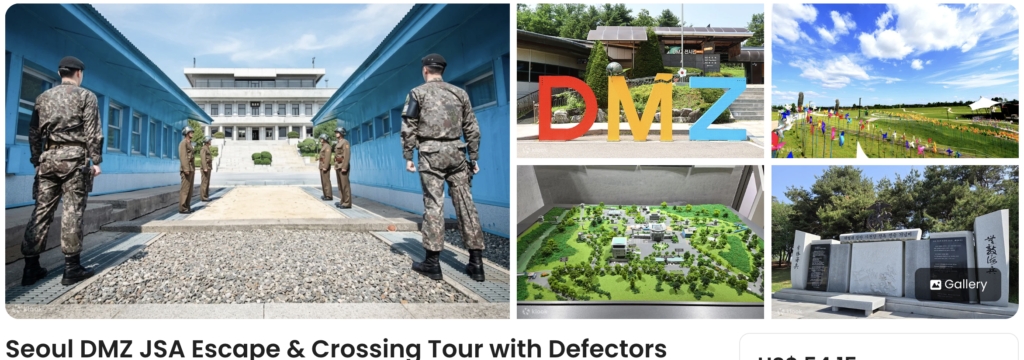
Visit the Sites That Tell This Story

Korea Insider has lived in South Korea for 50 years and worked at international companies for over two decades — explaining Korean culture, food, and society to colleagues from the US, Europe, and Australia.
Internationally married with a Japanese spouse, Korea Insider brings both an insider’s depth and an outsider’s perspective to every topic on My Korea Tip.