
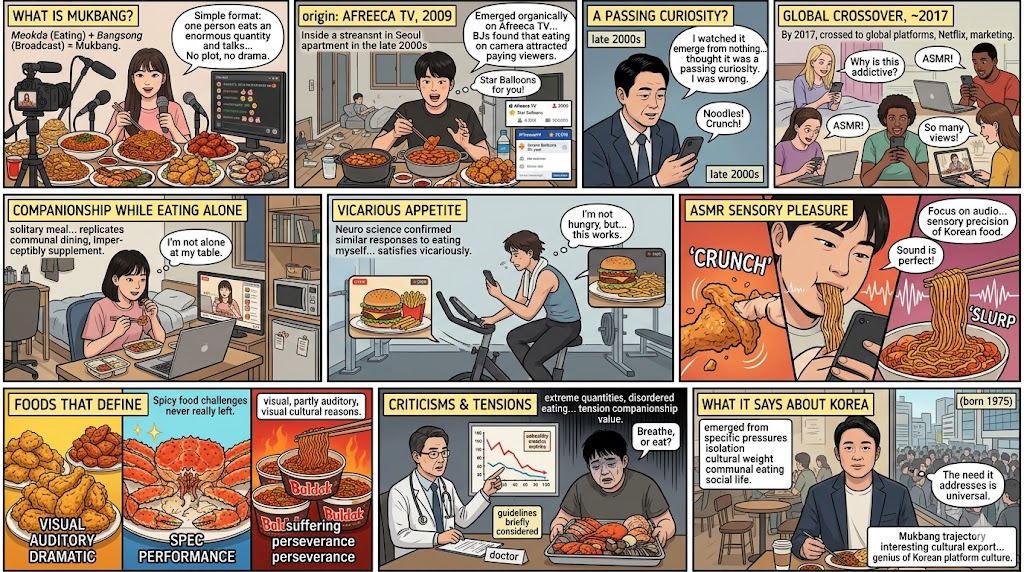
Mukbang — the word combines the Korean for eating (먹다, meokda) and broadcast (방송, bangsong) — is one of those cultural exports that makes perfect sense once you understand the society it came from, and almost no sense at all if you encounter it without context. The format is simple: one person sits in front of a camera, eats an enormous quantity of food, and talks — or doesn’t talk — while an online audience watches. That’s it. No plot, no competition, no dramatic arc.
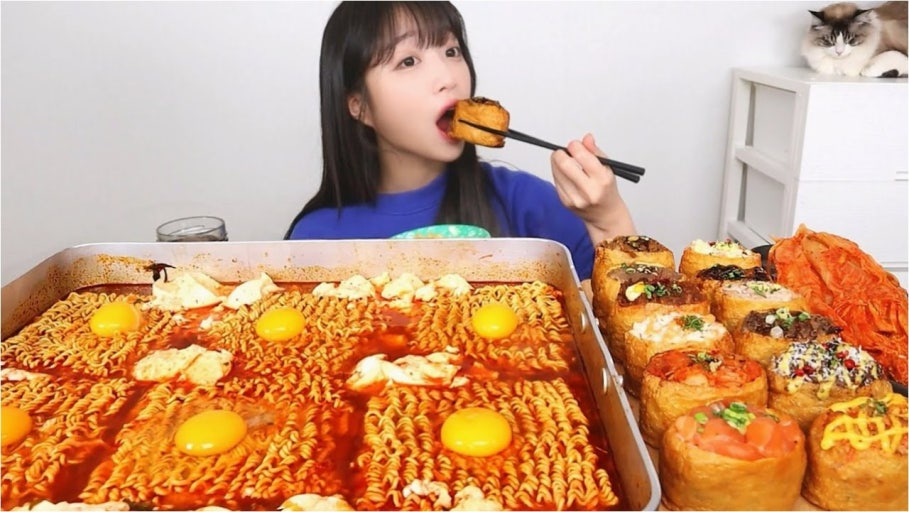
It now generates hundreds of millions of views monthly across YouTube, TikTok, and streaming platforms. Major food brands pay significant money to have their products featured. Creators have built careers, and in some cases fortunes, from the format. And it started, like a lot of things that went quietly global, on a Korean platform that most people outside Korea had never heard of.
I was born in Seoul in 1975. I watched mukbang emerge from nothing in the late 2000s and assumed, initially, that it was a passing internet curiosity. I was wrong about that in a way that I find genuinely instructive — both about how culture travels and about what the format was actually solving for the people watching it.
Where It Came From: Afreeca TV, 2009
The origin story of mukbang is specific. It didn’t emerge from a major media company or a deliberate content strategy. It emerged from Afreeca TV — a Korean live streaming platform that predated Twitch and YouTube Live by several years — where individual broadcasters (BJs, short for “broadcast jockeys”) streamed whatever they felt like in real time to paying audiences.
Around 2009 and 2010, a small number of BJs discovered that eating on camera attracted viewers. Not performing while eating. Not cooking. Just eating — deliberately, expressively, often in large quantities — while interacting with the chat. The audience response was immediate and disproportionate to anything the format’s apparent simplicity would suggest.
By 2011, mukbang had a name and a recognizable format. By 2014, South Korean media was writing about it as a significant cultural phenomenon. By 2017, it had crossed into English-language YouTube and begun the global expansion that would eventually land it on Netflix, in American food marketing campaigns, and in the vocabulary of people who have never visited Korea.
Why People Watch: The Psychology Is More Honest Than It First Appears
The instinctive Western reaction to mukbang — “why would you watch someone else eat?” — tends to resolve itself quickly once you sit with the actual viewing experience. The psychology at work is more layered than the format suggests.
Companionship while eating alone
Korea has one of the world’s fastest-growing single-person household rates. By 2024, over 34% of Korean households were single-occupant — a dramatic social shift from the multi-generational family structures that defined Korean life for most of its history. The pressure of Korean work culture means many people eat alone, at irregular hours, in small apartments.
Watching a mukbang creator eat while talking to the camera replicates, imperfectly but meaningfully, the social experience of sharing a meal. You’re not alone at your table. Someone is there, eating with you, filling the silence. This sounds trivial until you understand that eating together — communal, shared, loud — is deeply embedded in Korean food culture. The solitary meal is, in Korean social terms, a diminished experience. Mukbang offers a digital supplement.
This connection to Korea’s declining birth rate and rising solo-living culture is not incidental. The format emerged at exactly the moment Korean society was restructuring around smaller, more isolated living units.
Vicarious eating and appetite satisfaction
There is documented evidence — from food psychology research — that watching others eat activates similar sensory responses to eating yourself. Mirror neurons. Appetite by proxy. For viewers on restrictive diets, or simply not hungry enough for the meal being displayed, mukbang offers a form of vicarious satisfaction that has real neurological grounding. This explains why the format works across cultures where the loneliness driver may be less pronounced.
ASMR and sensory pleasure
Many mukbang creators — particularly those who work without talking — focus on the audio of eating: the crunch of fried chicken skin, the slurp of noodles, the crack of seafood shells. This overlaps significantly with ASMR content, which has its own enormous global following. The sensory precision of Korean food — the textural contrast of Korean fried chicken, the sizzle of Korean BBQ hitting a hot grill — makes it particularly well-suited to this format.
The Foods That Define the Format
Not all food is equal in mukbang. Certain dishes dominate the format for reasons that are partly visual, partly auditory, and partly cultural.
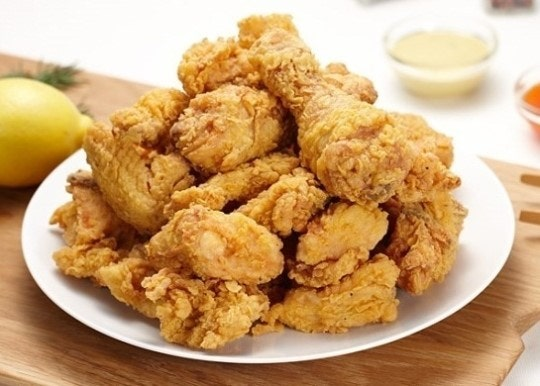
Korean fried chicken is perhaps the single most common mukbang food — crispy, saucy, designed to be eaten in quantity, and aurally satisfying in a way that translates immediately on camera. The chimaek combination (chicken plus beer) appears so frequently in mukbang content that international viewers often assume it’s a meal format invented by the creators, not a deeply established Korean social ritual.
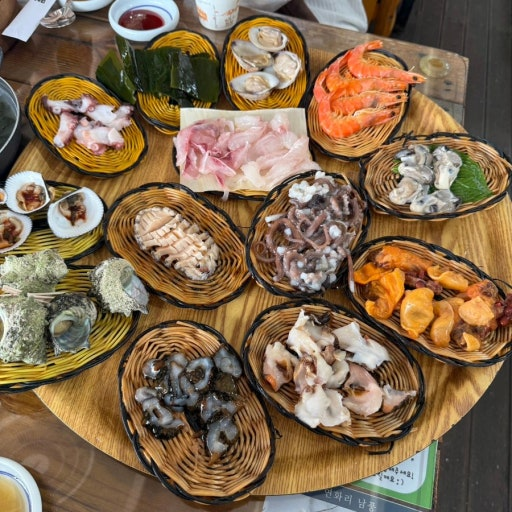
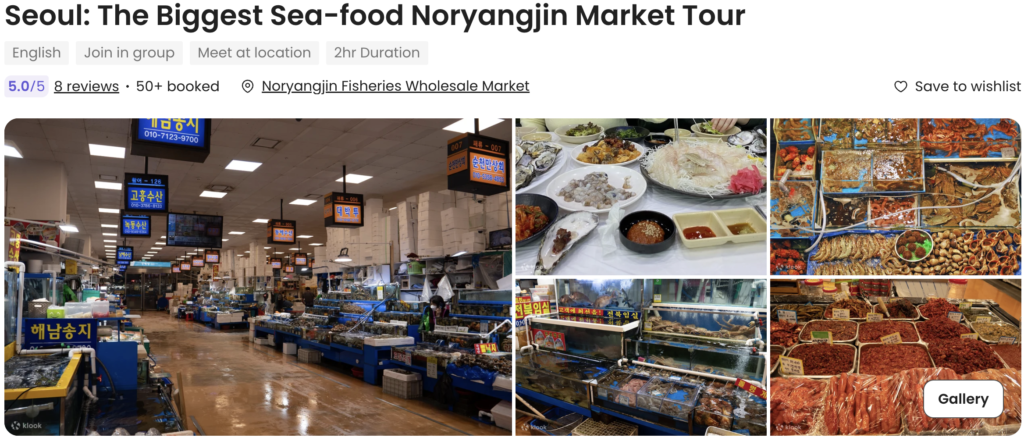
Seafood — particularly large-format seafood like king crab, abalone, and whole grilled fish — performs well because the scale is visually dramatic and the process of eating it is inherently performative. Korean seafood mukbang creators often work with live or very fresh product, which adds a layer of spectacle.
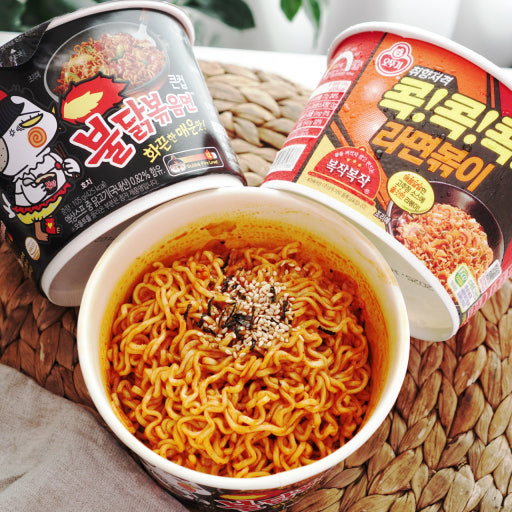
Spicy food challenges entered the mukbang ecosystem through the buldak fire noodle challenge and never really left. The combination of visible suffering, perseverance, and the universally legible nature of spice tolerance makes this subcategory particularly accessible to international audiences who may not know the food but understand the experience.
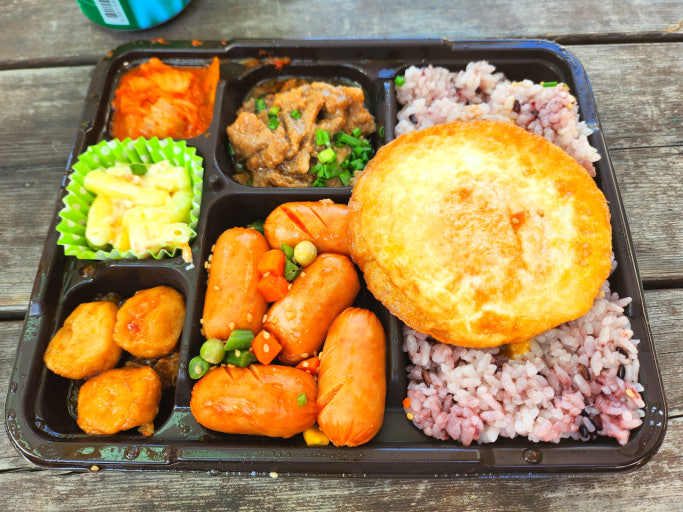
Convenience store food has its own mukbang sub-genre — creators assembling elaborate meals from Korean convenience store products, documenting the combinations and hacks that have developed into their own cultural knowledge base. Given that Korean convenience stores operate at a completely different level of food quality from their Western counterparts, this content functions simultaneously as entertainment and as genuinely useful consumer information.
How Mukbang Went Global
The international spread of mukbang followed the Hallyu Wave in a broader sense — K-pop and K-drama created a global audience already oriented toward Korean content, and that audience encountered mukbang through algorithm-driven recommendation on YouTube and later TikTok.
But mukbang’s global success wasn’t purely parasitic on K-pop’s audience. The format had independent appeal that crossed cultural boundaries more completely than almost any other Korean content export. You don’t need to understand Korean to watch mukbang. You don’t need cultural context. The sensory experience is immediate and universal.
By 2018, major American YouTubers were producing mukbang-style content — eating large meals on camera, adopting the word “mukbang” explicitly, and driving search traffic that led international viewers back to Korean originators. The format had completed the crossover from foreign curiosity to global content category in under a decade.
Having spent over two decades in international business, I find this trajectory genuinely interesting from a cultural export perspective. Most cultural products require significant context transfer — you need to understand something about the source culture to fully engage. Mukbang is one of the rare Korean exports that required almost none. It worked on its own terms, for its own reasons, across audiences that had no prior relationship with Korea.
The Criticisms: They’re Not Wrong
Mukbang has attracted serious criticism from nutritionists and public health researchers, and some of it is warranted.
The quantities consumed in professional mukbang content are, by any standard, extreme. Some creators regularly consume 5,000–10,000 calories in a single broadcast. There is documented evidence of viewers developing disordered eating relationships with mukbang content — either using it to trigger appetite suppression or, conversely, to normalize overconsumption. The Korean government’s Korea Communications Commission briefly considered content guidelines for mukbang in 2019, though formal regulation was not implemented.
The creators themselves have mixed records on health outcomes. Several prominent Korean mukbang BJs have publicly discussed the physical consequences of sustained high-volume eating. The business model — which rewards volume, frequency, and increasingly extreme quantities — creates structural incentives that run counter to the health of the people creating the content.
This tension sits awkwardly alongside the companionship and community value that mukbang also genuinely provides. Both things are true, and the format’s global expansion has exported both the benefit and the risk.
What Mukbang Says About Korea
I find mukbang more interesting as a social document than as entertainment. The format emerged directly from specific pressures in Korean society — the isolation of single-person living, the cultural weight attached to communal eating, the performance demands of Korean social life — and found an audience that extended far beyond Korea because those pressures, in various forms, exist everywhere.
The loneliness of eating alone is not a Korean problem. It is a modern urbanization problem. Korea just happened to produce the cultural technology for addressing it first, because Korea was further along the urbanization and social atomization curve than most countries when the format emerged.
My wife, who is Japanese, pointed out early in mukbang’s global expansion that Japan had developed a similar but distinct phenomenon — video diaries of solo eating, more restrained and less performative than Korean mukbang — around roughly the same period, for roughly the same reasons. Two societies experiencing similar structural shifts, producing parallel cultural responses. That parallel is worth noting for anyone who thinks of mukbang as uniquely Korean. The format is Korean. The need it addresses is universal.
FAQ
What does mukbang mean in Korean? Mukbang (먹방) combines the Korean words for eating (먹다, meokda) and broadcast (방송, bangsong). It literally means “eating broadcast.” The word entered English-language dictionaries — including Merriam-Webster — in 2021.
Who started mukbang? No single creator is credited with inventing the format. It emerged organically on the Korean platform Afreeca TV around 2009–2010, when multiple broadcasters independently discovered that eating on camera attracted paying viewers. The format developed collectively rather than from a single originating moment.
Do mukbang creators actually eat all the food? The most established Korean mukbang creators do eat what they consume on camera — the live streaming format, which dominated the early years, made editing difficult. Off-camera compensations including extended fasting before broadcasts, intensive exercise regimens, and in some reported cases medically concerning behaviors are part of the professional landscape. Not all creators operate at extreme volume; the format has diversified significantly.
Why is mukbang so popular outside Korea? The format’s cross-cultural success reflects several factors: the universal sensory appeal of watching food being eaten, the companionship value for viewers eating alone, the ASMR dimension of food sounds, and the accessibility of the content — no language comprehension required to engage with the core experience.
Is mukbang bad for you? Watching mukbang is not inherently harmful. The health concerns are concentrated among: creators consuming extreme quantities regularly, and viewers who develop disordered eating relationships with the content. For the majority of viewers, mukbang functions as entertainment with no measurable negative health impact.
Eat Like a Mukbang Creator in Seoul
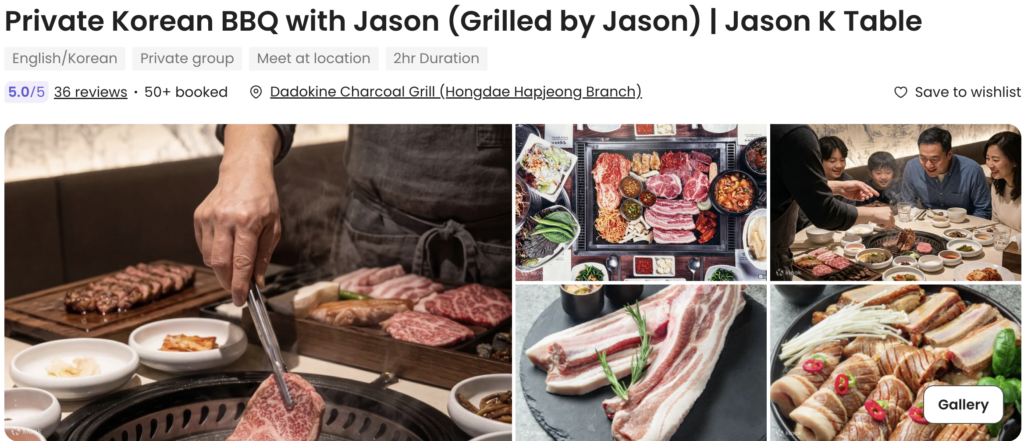
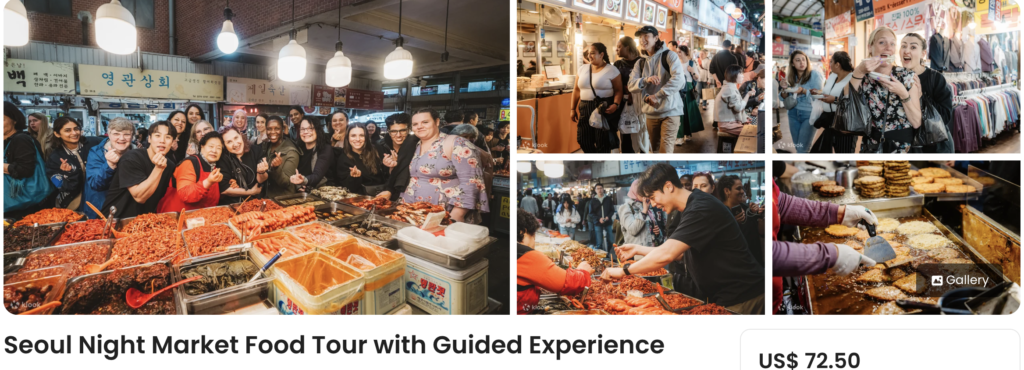
The foods that dominate mukbang content are, conveniently, the same foods that make Seoul one of the best eating cities in Asia. These experiences put you at the source.

Korea Insider has lived in South Korea for 50 years and worked at international companies for over two decades — explaining Korean culture, food, and society to colleagues from the US, Europe, and Australia.
Internationally married with a Japanese spouse, Korea Insider brings both an insider’s depth and an outsider’s perspective to every topic on My Korea Tip.