
Gyeongbokgung Palace is the most visited historical site in Korea — and most visitors see a fraction of what it actually contains.
I’ve taken more foreign visitors to Gyeongbokgung than I can count — colleagues from the United States, Europe, and Australia who arrived in Seoul with vague impressions of Korea and left with something they couldn’t quite articulate. The palace does something to people. It doesn’t matter how many historical sites they’ve seen elsewhere in Asia. Standing inside those gates, with modern Seoul visible over the ancient walls, produces a specific kind of silence. I’ve watched it happen dozens of times. It still surprises me. What most visitors miss — and what I always make sure to explain before we enter — is that what you’re looking at is not the original palace. Most of what stands here today has been rebuilt. The original was burned, dismantled, and deliberately obscured during 35 years of Japanese colonial rule. Walking through Gyeongbokgung is not just a visit to a historical site. It’s a visit to an act of cultural reclamation that is still in progress.
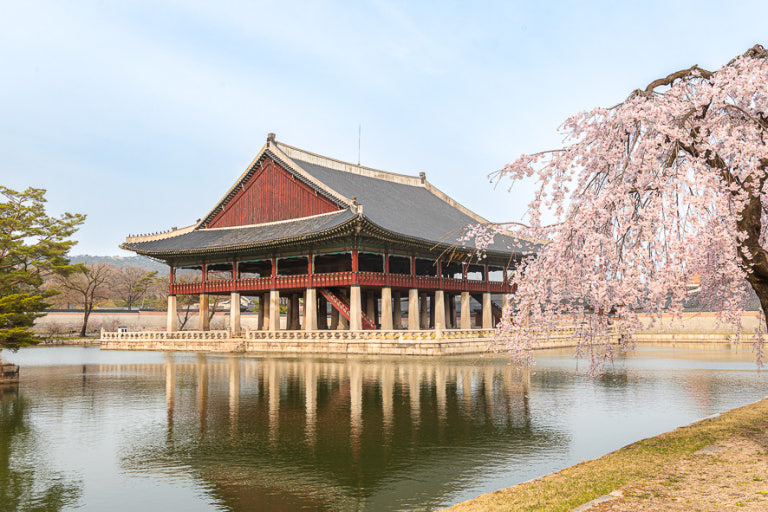
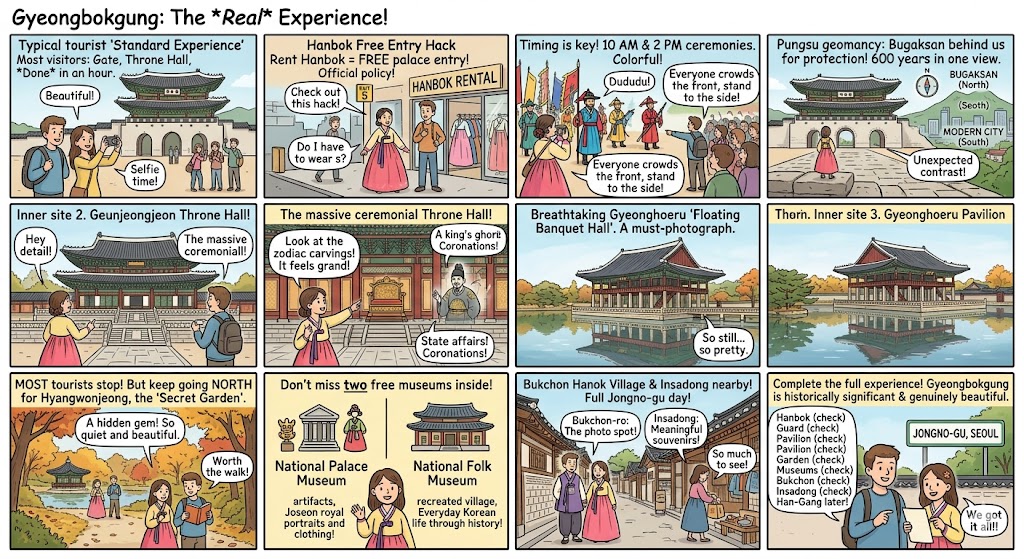
The standard experience goes like this: arrive at the main gate, take photos of Gwanghwamun, walk through the first courtyard, photograph the throne hall, and leave within an hour. This is the version of Gyeongbokgung that most tourists get. It’s beautiful, but it misses the floating pavilion reflected in a lily pond at the rear of the grounds, the two free museums inside the compound, the hexagonal hermitage that feels like a secret garden, the guard ceremony that still gives longtime Seoul residents chills, and the particular quality of looking south from inside the palace to see the modern city framed by the ancient gate.
Built in 1395 by King Taejo, the first king of the Joseon Dynasty, Gyeongbokgung served as the main royal palace for over five centuries. The name translates as “Palace Greatly Blessed by Heaven.” It was burned during the Japanese invasions of 1592, left in ruins for nearly 300 years, briefly restored in the 19th century, then systematically dismantled again during Japanese colonial occupation — an act of deliberate cultural erasure that Koreans remember with particular bitterness. The ongoing reconstruction since 1990 has restored much of its original footprint, and what stands today is both historically significant and genuinely beautiful. Gangnammedicalconcierge
This guide covers everything: free entry, the hanbok hack, the changing of the guard ceremony, every major site inside the palace, and how to combine Gyeongbokgung with the surrounding neighborhood for a full day.
Before you go, read our Best Time to Visit Korea Guide — Gyeongbokgung in cherry blossom season and autumn foliage is one of the most photographed experiences in the country, and timing matters enormously.
Gyeongbokgung Palace: Essential Information
| Detail | Info |
|---|---|
| Address | 161 Sajik-ro, Jongno-gu, Seoul |
| Hours | 9 AM – 5 PM (extended to 6 PM in spring/autumn) |
| Closed | Every Tuesday |
| Adult entry | ₩3,000 (~$2.20 USD) |
| Free entry | Under 25 / Over 65 / Wearing hanbok |
| Guard ceremony | 10 AM and 2 PM (except Tuesday) |
| Nearest subway | Gyeongbokgung Station, Line 3, Exit 5 |
The Tuesday closure catches more visitors off guard than almost any other fact about Seoul tourism. Check the day of your visit before planning your itinerary.
Gyeongbokgung Palace: The Hanbok Free Entry Hack
Wearing a hanbok (traditional Korean dress) gets you free entry to Gyeongbokgung Palace. Hanbok rental shops are clustered near Exit 5 of Gyeongbokgung Station — rentals cost ₩10,000–₩35,000 for 2 to 4 hours and include the free palace entry. Fora Travel
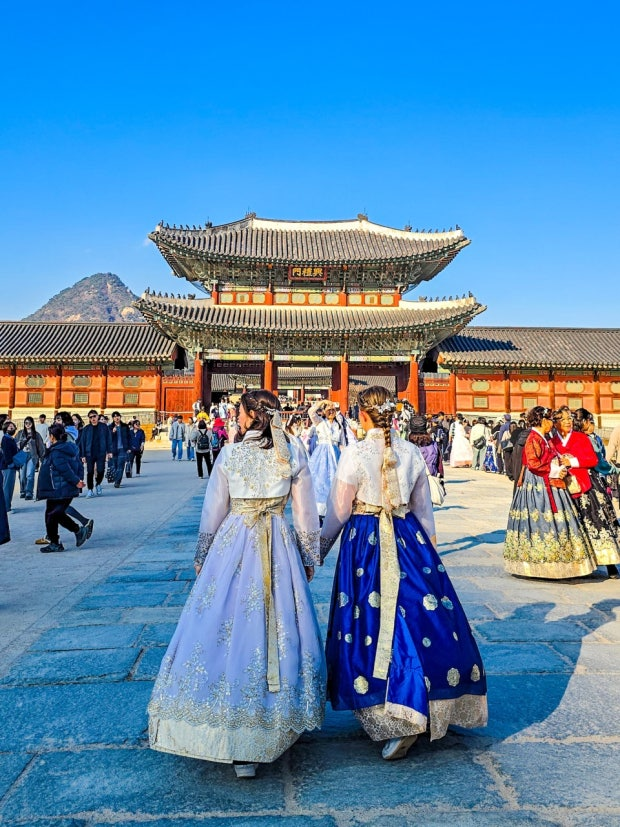
This is not a rumor or a loophole — it is the official policy, designed to encourage cultural engagement. The result is that on any given day, hundreds of visitors wander the palace grounds in colorful traditional dress, which creates the most visually extraordinary crowd atmosphere of any site in Seoul.
Practical hanbok tips:
- Rental shops on the east side near Anguk Station have more variety and slightly better prices than the west side near Gyeongbokgung Station — both work perfectly
- Book premium hanbok if photography matters: the higher-end rentals (₩25,000–₩35,000) use better fabric and photograph dramatically better than budget options
- Wear comfortable shoes underneath. The entire palace ground is rough stone and uneven dirt paths. Traditional Korean shoes (kkotshin) are extremely uncomfortable for two hours of walking — the full-length skirt of the female hanbok covers your feet entirely, so wearing running shoes underneath is invisible and strongly recommended
- Morning rentals are better than afternoon — you’ll be done before peak heat and crowds
The free admission more than covers the rental cost if you were planning to visit anyway. Treat the rental price as the entry fee with a costume included.
Gyeongbokgung Palace: How to Get There
By subway (recommended):
- Gyeongbokgung Station, Line 3, Exit 5 — walk straight ahead, the main Gwanghwamun Gate is directly in front of you. 3-minute walk.
- Gwanghwamun Station, Line 5, Exit 2 — 5-minute walk north to the gate. Better if coming from Myeongdong or central Seoul.
By taxi: Enter “경복궁” (Gyeongbokgung) in Kakao T. Approximately ₩8,000–₩15,000 from central Seoul depending on traffic.
For complete Seoul subway navigation guidance, read our Korea Travel Tips Guide.
Gyeongbokgung Palace: The Changing of the Guard Ceremony
The royal guard-changing ceremony is one of the most memorable free experiences in Seoul — and the single thing most worth timing your palace visit around.
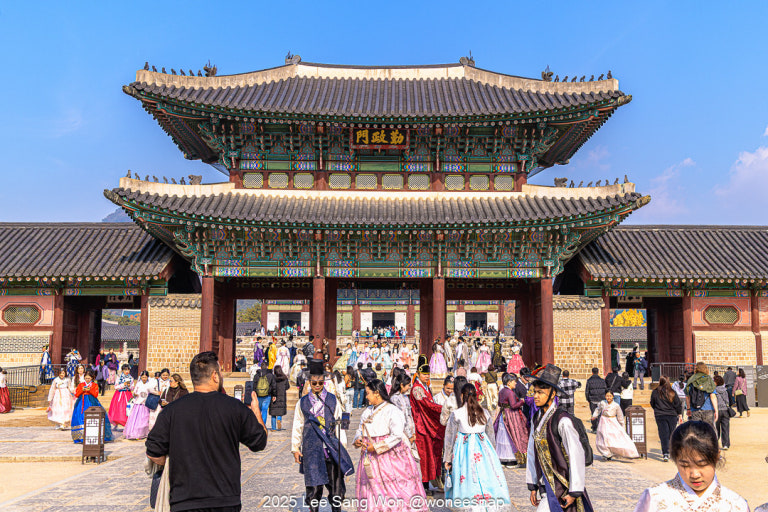
The ceremony takes place at 10:00 AM and 2:00 PM daily except Tuesday, lasting approximately 20 minutes. Guards in colorful Joseon Dynasty military uniforms carry traditional weapons and flags in a precise choreographed ritual originally established in 1469. The Wagamama Diaries
Where to watch: The main ceremony is at Heungnyemun Gate — the inner gate inside the main Gwanghwamun entrance. A separate guard patrol happens at the outer Gwanghwamun Gate at 10 AM, 2 PM, and 3:30 PM — this is completely outside the paid area and free to watch without entering.
Insider positioning tip: Everyone crowds at the front center. Stand to the side instead — near the left wall as you face the gate. Better angle for photos, fewer heads in your shot. Arrive 15–20 minutes early for a clear position. Sky Vacations
Stand on the rubber circles near the gate — that’s where the guards line up. You can also take photos with the guards before and after the ceremony. Korea Tourism Organization
The 10 AM ceremony is less crowded than 2 PM. On weekdays, both are significantly more manageable than weekends.
Gyeongbokgung Palace: What to See Inside
광화문 (Gwanghwamun Gate) — The Main Gate
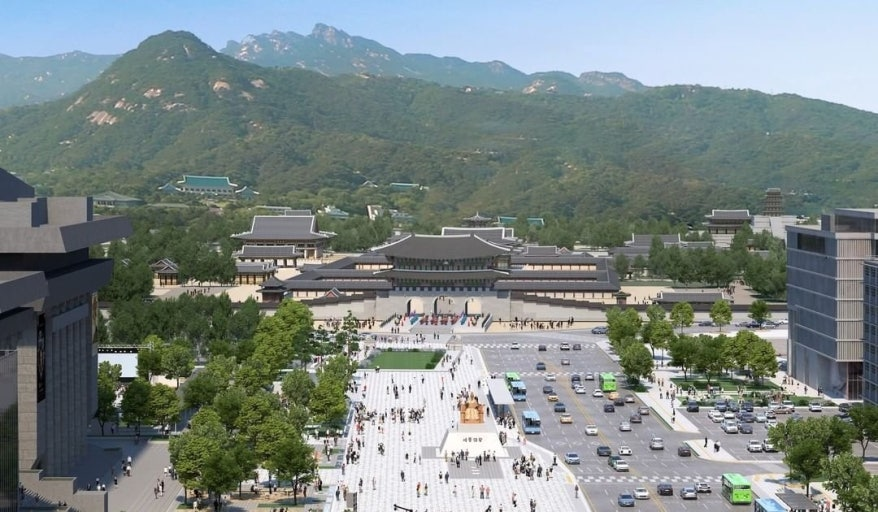
The defining image of Korean royal architecture and one of the most photographed structures in the country — a massive stone and timber gate facing south, with Bugaksan Mountain rising behind the palace and the modern city visible beyond. The gate has been moved, damaged, and relocated multiple times throughout its history; the current position, restored in 2010, is finally the original location.
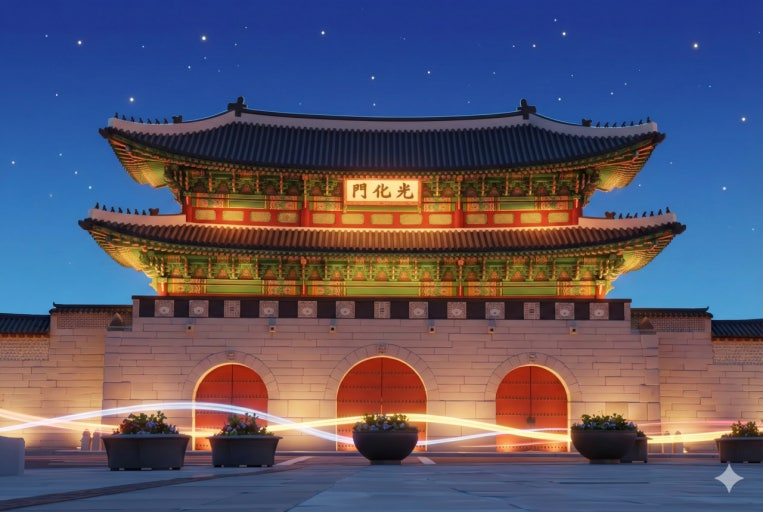
The mountain framing is deliberate — the palace was positioned according to pungsu (Korean geomancy) principles, with the mountain as a protective backdrop and the city spreading south below. The view from inside looking out through the gate at modern Seoul, with the palace behind you, captures 600 years of Korean history in a single glance.
근정전 (Geunjeongjeon) — The Throne Hall
The throne hall hosted state affairs and coronations for Joseon kings, positioned centrally for its ceremonial importance. Its elevated stone platform and ornate carvings create a majestic atmosphere. The two-tiered stone platform surrounding the building, decorated with carvings of the twelve zodiac animals and four directional guardians, is one of the finest examples of Joseon ceremonial architecture. BeautyMatter
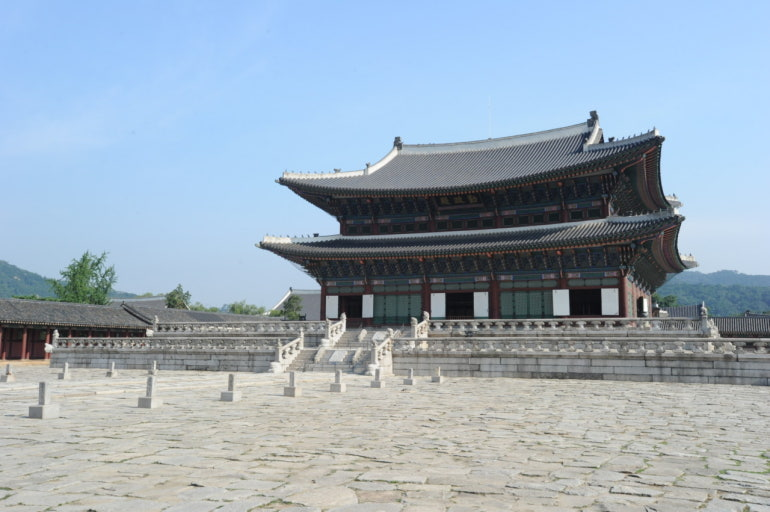
You cannot enter the throne hall itself, but the surrounding courtyard — where officials once knelt in ranked formations during royal audiences — gives a vivid sense of the scale of Joseon court ceremony.
경회루 (Gyeonghoeru Pavilion) — The Floating Banquet Hall
A large pavilion “floating” on a man-made pond, used for royal banquets. The reflection of the building on the water is breathtaking. This is the most photographed spot in Gyeongbokgung after the main gate — a two-story wooden pavilion set on 48 stone columns rising from a rectangular pond, the whole structure designed so that the building’s reflection completes the composition. BeautyMatter
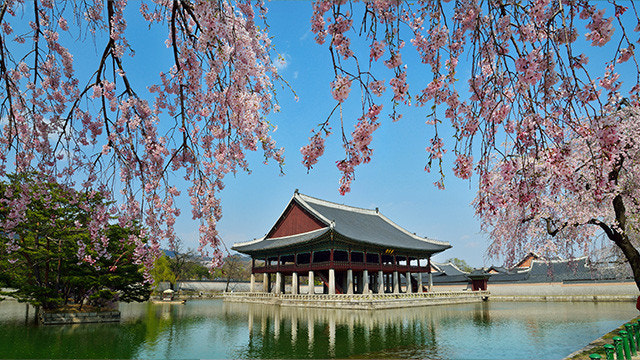
Best photographed in morning light from the east, or at the rare night tour sessions in spring and autumn when the pavilion is illuminated over the still water.
향원정 (Hyangwonjeong Pavilion) — The Secret Garden
Walk further back to the north side of the palace. You will find a smaller, hexagonal pavilion on an island connected by a wooden bridge. It is much quieter here and feels like a secret garden. It is especially beautiful in autumn with red leaves. BeautyMatter
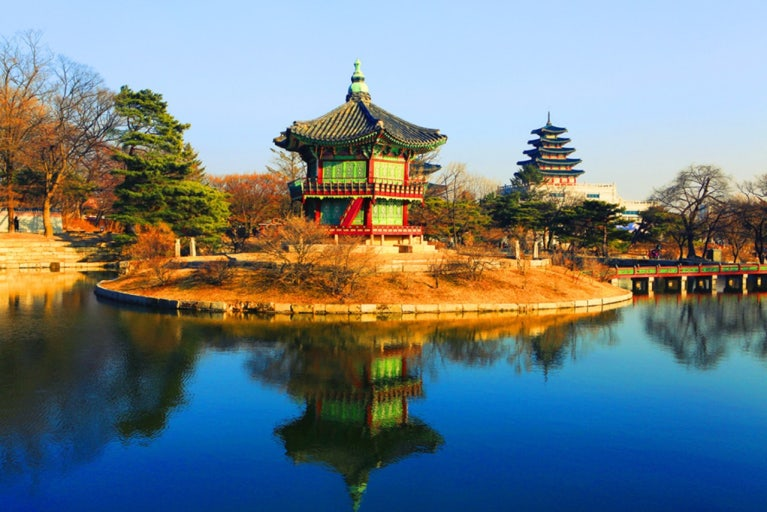
Most visitors don’t walk this far. The majority stop at the throne hall and turn back, which means Hyangwonjeong is consistently the least crowded significant spot in the palace — and arguably the most beautiful. Allow 20 minutes of quiet sitting here if the weather is good.
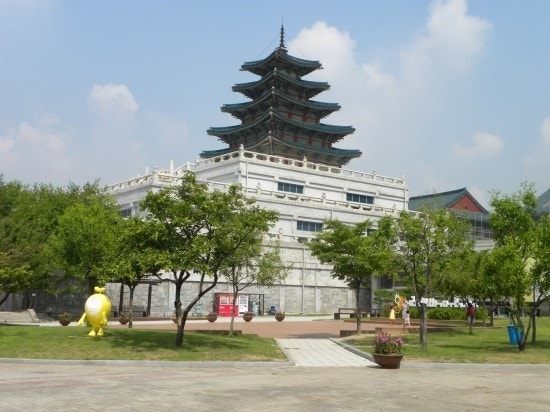
국립민속박물관 (National Folk Museum of Korea)
Located in the northeast corner of the grounds. This museum documents everyday Korean life through the centuries — housing, clothing, food, and seasonal customs. More accessible and less formal than the Palace Museum. The outdoor display areas include recreated traditional village structures. Allow 45 minutes. Free for all visitors. Fora Travel
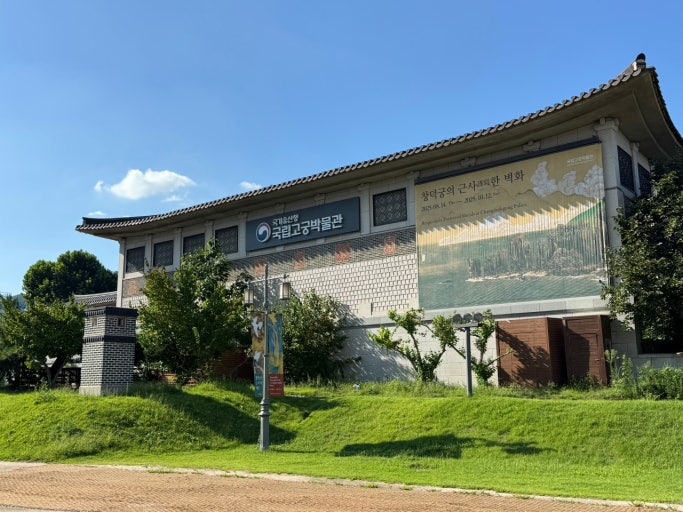
국립고궁박물관 (National Palace Museum of Korea) — Free
Located to the right of the main gate. The museum holds over 40,000 artifacts from the Joseon Dynasty — royal portraits, ceremonial objects, court clothing, and historical documents. Free for all visitors. Essential context for everything else you see in the palace. Fora Travel
Gyeongbokgung Palace: Free English Tour
Most visitors who wander alone see buildings and take photos but understand very little. Joining the free English tour changes the experience entirely — 90 minutes with a knowledgeable guide who explains the historical, political, and architectural significance of each building. Sky Vacations
Free English tours depart from the information center near the ticket office. Check the official Gyeongbokgung website for current tour times — typically morning departures on select days. No reservation required; just show up at the departure point.
Gyeongbokgung Palace: Night Tour (Seasonal)
Gyeongbokgung’s night tours require advance booking through official channels. Tickets typically open 3–6 months before tour dates, with spring and autumn sessions selling out within hours of release. Hwahae
The night tour — the palace illuminated after dark, with the Gyeonghoeru pavilion reflected in floodlit water — is genuinely one of the most beautiful experiences in Seoul. If your travel dates fall in April–May or October–November, attempt to book as soon as tickets open. The official booking link is available through the Gyeongbokgung Palace website.
Gyeongbokgung Palace: What to Do Nearby
Gyeongbokgung is perfectly positioned for a full-day Jongno-gu itinerary — the surrounding neighborhood contains some of the best non-palace experiences in Seoul.
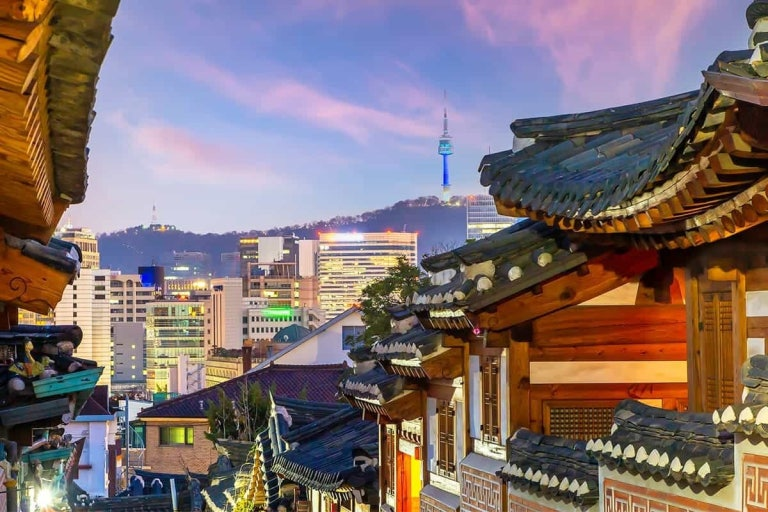
북촌 한옥마을 (Bukchon Hanok Village)
Gyeongbokgung Palace is only a 20-minute walk from the famous Bukchon Hanok Village. A hillside neighborhood of traditional wooden houses, its most photographed lane — Bukchon-ro 11-gil — descends steeply between two rows of hanok with rooftop views across the city. Keep your hanbok on for the walk — it will still be valid and the contrast of traditional dress against traditional architecture is the best photograph you’ll take in Seoul. The Wagamama Diaries
인사동 (Insadong)
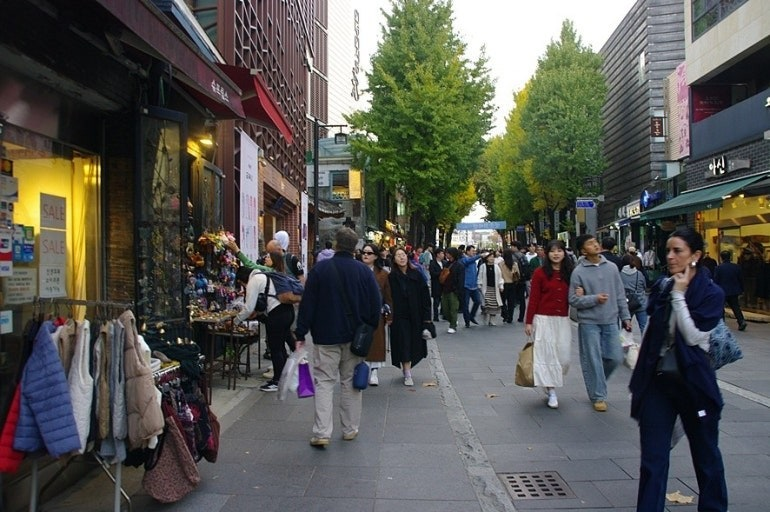
A 15-minute walk southeast of the palace — Seoul’s traditional arts and crafts district with galleries, ceramics shops, hanji (traditional paper) stores, and the Ssamziegil courtyard market. The best place in Seoul to buy meaningful souvenirs. See our Shopping Areas in Seoul Guide for the full Insadong picture.
익선동 (Ikseon-dong)
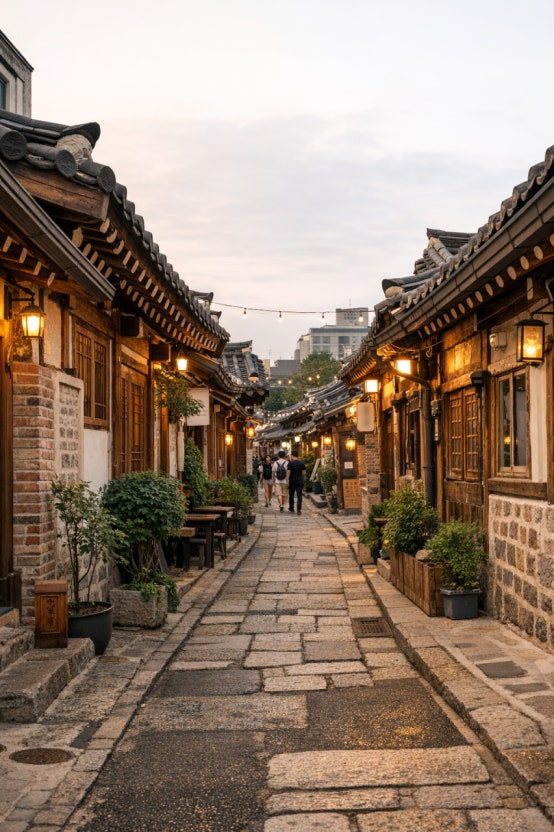
A renovated hanok alleyway five minutes east of Insadong — concept cafés and design stores in traditional wooden buildings. One of the most pleasant short detours in northern Seoul. Read our Korean Café Culture Guide to understand why the café-in-hanok combination has become one of Seoul’s defining aesthetic experiences.
광화문 광장 (Gwanghwamun Square)
The broad public plaza south of the main gate, featuring the statue of Admiral Yi Sun-sin and, further south, the statue of King Sejong — the monarch credited with creating the Korean alphabet, hangul. Walking this axis from the palace gate south through the square gives the clearest sense of how the palace was once the literal and symbolic center of the Korean state.
Want to experience Gyeongbokgung with expert historical context? A guided Gyeongbokgung Palace tour on Klook includes hanbok rental, the guard ceremony, and an English-speaking guide who explains what you’re looking at — the difference between seeing the palace and understanding it.
Gyeongbokgung Palace: Practical Tips
Visit on a weekday morning. Weekday mornings before 10 AM give you the palace in relative quiet before tour groups arrive. Weekend afternoons during cherry blossom season (late March to mid-April) and autumn foliage (October) produce crowd levels that significantly affect the experience.
The 10 AM ceremony plus morning light. Arriving at 9 AM gives you 45 minutes in morning light before the guard ceremony — the best photography conditions at the palace. Watch the ceremony at 10 AM, then explore the rear of the grounds while the midday crowd builds.
Don’t skip the rear. Most visitors only see the main gate and the throne hall. The real treasures — Hyangwonjeong Pavilion and the quiet north section — are what most tourists miss. One Eye Beauty
Budget 2–3 hours minimum. The palace grounds are large. Two hours covers the main sites without rushing. Three hours adds both museums and time at Hyangwonjeong. Half a day with the hanbok rental, guard ceremony, and a museum is a complete and unhurried experience.
Combine with the neighborhood. The most complete Seoul day combines Gyeongbokgung in the morning with Bukchon Hanok Village and Insadong in the afternoon. This is the itinerary that captures both royal and traditional Seoul in a single day. Read our Seoul Neighborhoods Guide to plan the best base for this itinerary.
The culture shock of the contrast. Standing inside Gyeongbokgung’s rear garden and looking back at the modern Seoul skyline visible above the ancient walls is one of those Seoul moments that visitors consistently describe as unexpected and affecting. Read our Korea Culture Shock Guide to understand why this particular country produces this particular reaction so reliably.
Gyeongbokgung Palace: FAQ
Is Gyeongbokgung free? Adults 25–64 pay ₩3,000 (~$2.20). Under 25, over 65, and anyone wearing a hanbok enter free. The two museums inside the grounds are free for all visitors.
Can I take photos inside? Yes, throughout the grounds. Photography inside the throne hall is restricted in some areas — follow the posted signs.
Is Gyeongbokgung worth it? It is the most historically significant site in Seoul and one of the most beautiful in Korea. Yes.
What’s the difference between Gyeongbokgung and the other palaces? Gyeongbokgung is the largest and most restored — the one with the guard ceremony, the most museums, and the biggest grounds. Changdeokgung (a short walk east) has the UNESCO-listed Secret Garden. Deoksugung (near City Hall) has the most interesting architecture fusion. If you visit one palace, it should be Gyeongbokgung. For history context that deepens the palace visit significantly, read our Gyeongju Travel Guide — Gyeongju predates the Joseon Dynasty by a thousand years and gives essential Korean historical context.

Korea Insider has lived in South Korea for 50 years and worked at international companies for over two decades — explaining Korean culture, food, and society to colleagues from the US, Europe, and Australia.
Internationally married with a Japanese spouse, Korea Insider brings both an insider’s depth and an outsider’s perspective to every topic on My Korea Tip.